

The Menzies Institute for Medical Research at the University of Tasmania, is one of Australia’s leading health and medical research institutes.
We strive for a world where the diseases that currently touch every Tasmanian – such as multiple sclerosis, dementia, arthritis, heart disease and cancer – are halted. How to prevent, treat and cure these diseases is known, and the benefits are available to everyone.
We work collaboratively with the community and consumers, other researchers, health services, government, industry and funders to achieve our purpose of enabling healthier, longer and better lives for Tasmanians through internationally significant medical research.
We undertake excellent laboratory, clinical and population health research in themes that reflect the burden of disease in the Tasmanian community and our expertise in addressing these conditions. Our local research is of global significance.
Research themes
We aim to improve the health of Tasmanians through research that addresses our high rates of preventable chronic disease and the social factors that affect health, leveraging Tasmania’s unique genealogical resources that support genetic research.
Director, Professor Tracey Dickson
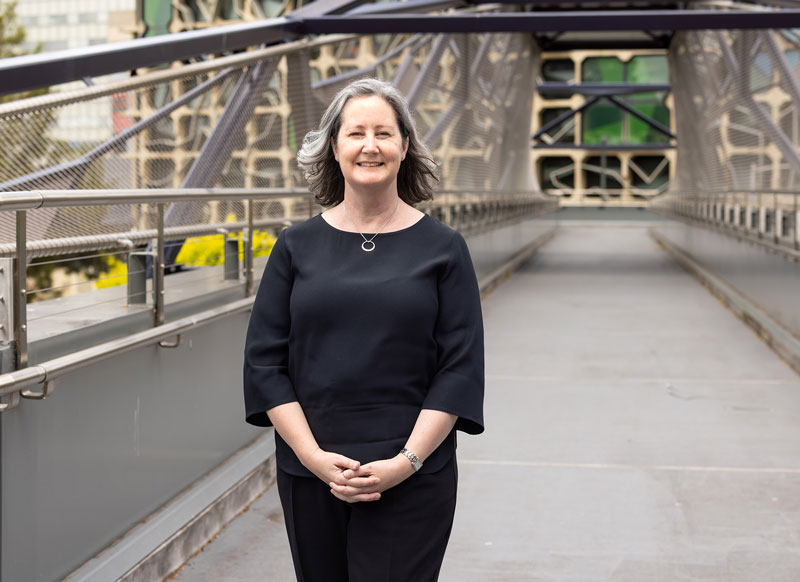
Professor Tracey Dickson is a neuroscientist specialising in neurodegenerative diseases, particularly determining the cellular mechanisms underlying Motor Neuron disease and Parkinson’s disease. In January 2022, she was appointed as Director of the Menzies Institute for Medical Research, at the University of Tasmania – the first Tasmanian to be appointed to this prestigious role.
Tracey grew up on the North West Coast in Burnie and completed her BSc (Hons) and PhD at the University of Tasmania, investigating the neuropathological changes that characterise early Alzheimer’s disease. She undertook post-doctoral training at the Mount Sinai School of Medicine, in New York City. Tracey has held both early and mid-career national Fellowships, and has an extensive track record in securing research funding through the NHMRC and ARC as well as through organisations such as Motor Neuron Disease Australia, and Fight MND. She has held the roles of Deputy Director at Menzies and Associate Dean Research within the College of Health and Medicine. Through her research Tracey has worked closely with community organisations throughout Tasmania and is deeply committed to community engagement.
Our Board
- More information is available above at Director.
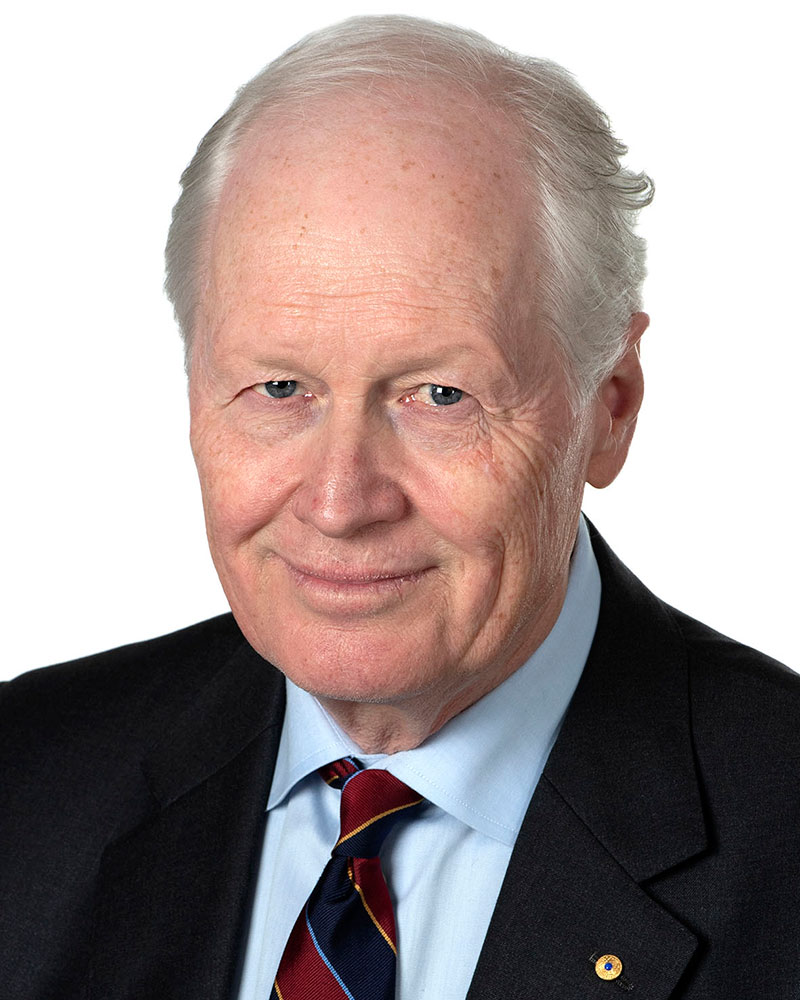
Professor Geoffrey Donnan AO is Professor of Neurology, University of Melbourne, and former Director of The Florey Institute of Neuroscience and Mental Health (2009-2018). He is currently Co-Chair of the Australian Stroke Alliance, a collaboration of more than 30 organisations with the aim of improving acute prehospital stroke care for all Australians.
Professor Donnan has a major research interest in acute stroke management, both its clinical and experimental aspects. He showed that brain tissue could have prolonged survival after stroke and, when salvaged, improved clinical outcomes. This provided the rationale for acute stroke therapies. He conducted the first clinical trials of clot dissolving agents (thrombolysis) in Australia and has been a leader in these trials worldwide, leading to the introduction of thrombolysis as the first and most effective form of therapy for acute stroke. Latterly, he has also been a leader in trials of thrombectomy (clot removal by catheter) in acute stroke, one of the most effective interventions in modern medicine.
National contributions have included founding President of the Stroke Society of Australia, President of the Australian Association of Neurologists and Founding Co-Chair of the Australian Stroke Trials Network and Neuroscience Trials Australia. He also was involved with the establishment of Neurosciences Victoria and the Australian Clinical Trials Alliance, serving on their founding boards.
Professor Donnan has been involved in a number of international initiatives. He was President of the World Stroke Organization (2006-8) and was involved in the establishment of the World Neurology Foundation and the World Stroke Foundation (Secretary). He is currently a member of the selection committee for the annually awarded Brain Prize, the most prestigious and valuable prize in neuroscience worldwide. He has chaired the scientific/executive committees of a number of international meetings including the 6th International Symposium on Thrombolysis and Acute Stroke (2000), World Stroke Congress (2000) and World Congress of Neurology (2005) and was co-chair of the Education Committee for the World Stroke Congress, Vienna (2008). He has received a number of prestigious international awards including the William Feinberg Award (USA, 2007), World Stroke Organization Leadership Award (2012), Karolinska Institute Award (Sweden, 2012) and European Stroke Congress Wepfer Award (2014). He is a founding Fellow of the Australian Academy of Health and Medical Sciences.

Rebecca is the Managing Director/Chief Executive Officer of Aurora Energy the Tasmanian state-owned energy retailer. Rebecca has significant executive experience in the utilities sector in Australia and New Zealand in both the public and private sectors. Rebecca also has non-executive director experience in the not-for-profit sector and with industry bodies.
Rebecca is passionate about creating and realising value for customers, organisations, employees, shareholders and the broader community. She has proven performance in the creation and execution of strategy, which is supported by her strong ability to collaborate, constructively challenge, facilitate change, and culture leadership.
Rebecca holds a Master of Business Administration, and a Bachelor of Computer Science and is a member of the Australian Institute of Company Directors.
Edward is an experienced executive who has held roles in finance, marketing consulting, and heavy industry and manufacturing over the past thirty years. Edward’s most recent executive role was with Australian investment advisory firm Evans and Partners where he was a Partner and Executive Director during a decade with the business. He has extensive experience advising high-net-worth individuals, not-for-profit organisations and family groups on their investment strategies.
Edward is a non-executive director of Maddie Riewoldt's Vision, a former director of Cricket Tasmania, former director and Chair of The Primary Club of Australia (Victoria) and produces and hosts ‘The Wide Open Road’ Podcast series focusing on athlete transition to life after sport.
He graduated from the University of Tasmania with a Bachelor of Arts, has a Graduate Diploma of Marketing from Monash University and is a Member of the Australian Institute of Company Directors.
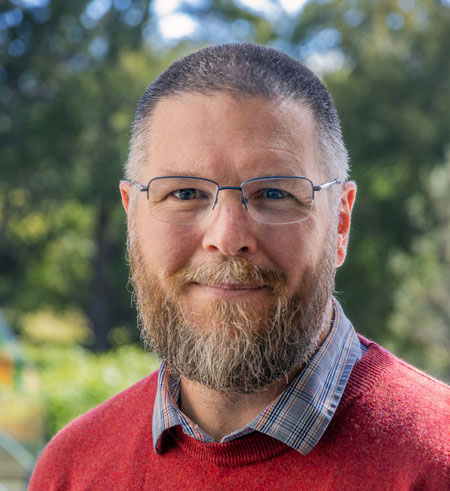
Professor Zosky is Deputy Vice-Chancellor Health at the University of Tasmania.
Professor Zosky is an academic leader with two decades of experience in the tertiary sector in roles focused on research and research performance and, more recently, tertiary level learning and teaching programs. He is a collaborative, energetic and decisive leader who has designed, led and implemented transformative change to deliver on organisational strategy.
Professor Zosky is an internationally recognised expert in respiratory and environmental health and leads a research program that has attracted ~ $15.5 million in competitive research funding from Government and Industry; resulting in >140 peer-reviewed research outputs.
His work spans molecular, in vitro, in vivo, clinical, epidemiological and public health approaches to improve health. Professor Zosky’s work has had wide-ranging impact through knowledge generation, influencing public opinion and industry practice, and guiding legislation.
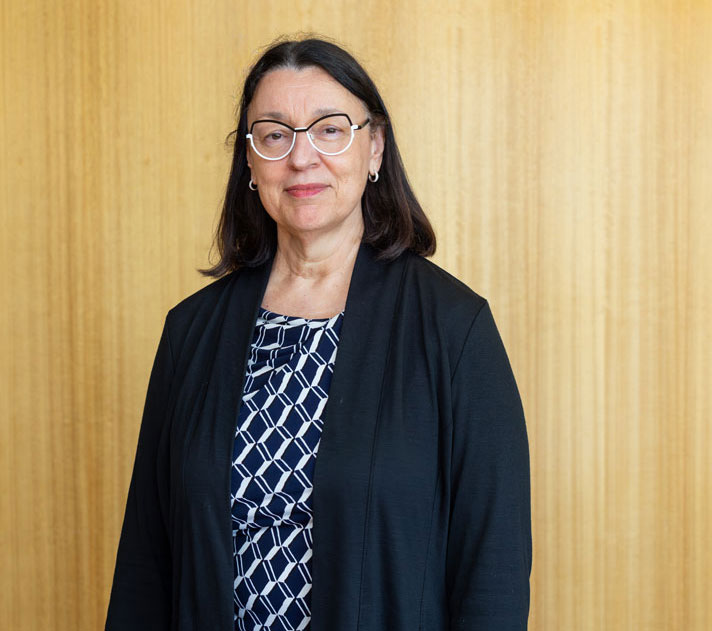
Professor Glenda Halliday, University of Sydney Brain and Mind Centre & Faculty of Medicine and Health
Professor Glenda Halliday is a career neuroscientist specialising in neurodegeneration (h-index 146, >111,000 cites, Google Scholar). She has been a Fellow of the National Health & Medical Research Council (NHMRC) since 1990, and is currently a NHMRC leadership fellow at The University of Sydney. Glenda started her research in neuroscience by studying the neurochemical dopamine and its systems in a variety of animal species, including humans. Her focus on understanding the brain and its workings in people has distinguished her neuroscience career.
Her research has provided the evidence base for international diagnostic criteria for neurodegenerative diseases. Recognitions include memberships to the Australian Academy of Science and the Australian Academy of Health and Medical Sciences and an Order of Australia, as well as through the following and other awards;
- 2023 Distinguished Achievement Award, Australian Neuroscience Society;
- 2022 NSW Scientist of the year
- 2021 Robert A. Pritzker Prize for Leadership in Parkinson’s Research by the Michael J Fox Foundation
- 2020 and 2014 NHMRC Elizabeth Blackburn Awards
- 2016 Cozzarelli Prize for outstanding 2015 paper, National Academy of Sciences, USA
- 2011 Nina Kondelos Prize for outstanding neuroscience, Australian Neuroscience Society.
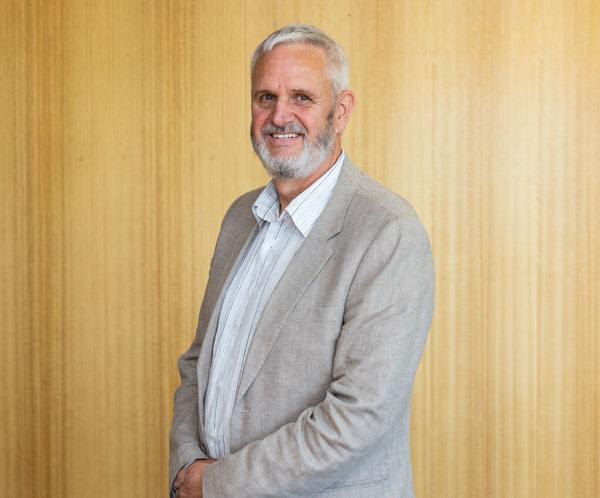
Phil has recently completed 10 years as the inaugural CEO of Primary Health Tasmania, a non-government, not-for-profit organisation working to connect care and keep Tasmanians well and out of hospital. It was established under the Australian Government’s Primary Health Networks Program to support and enable a coordinated, primary care focused health system.
He has worked in the general practice and primary health care sector for more than 29 years almost exclusively at executive leadership levels and is well known to providers, government and system, policy and organisational administrators across the state and nationally.
Working in complex system environments, he has led Tasmanian primary health service commissioning, several transformative system and organisational reconfigurations and establishment of new and innovative services and solutions supporting the system and primary health providers to improve the health of Tasmanians.
Phil is a director on the Board of Community Based Support (Tas), and has just completed roles with the Australian Institute of Health & Welfare Primary Health Advisory Committee, the Tasmanian Health Senate, and Premier’s Advisory Committees for Primary Care and Mental Health and Suicide Prevention, the Tasmanian Data Linkage Management Committee and the national PHN Primary Health Insights joint venture.
Latest news
Read more newsPublications
Latest Bulletin
The Menzies Research Institute Tasmania regularly publishes the Bulletin, a newsletter containing news on research success, new research projects, fundraising events and other Institute activities.
Sign-up for our bulletin
Contact us


Street address
Medical Science Precinct
17 Liverpool Street Hobart
Tasmania

Postal address
Medical Science Precinct
17 Liverpool Street Hobart
TAS 7000 Australia
For information on parking options near Menzies visit the Hobart City Council.