

Project details
Status: Completed
At a glance
- This research studied the welfare and productivity of dairy cattle when managed with Halter virtual fencing technology in Tasmanian conditions.
- A 5-week trial was run at TIA's Dairy Research Facility at Elliott in North-West Tasmania.
- The two focus areas included the technology's ability to allocate pasture and herd cows to the dairy. These two uses were identified by dairy farmers as the most beneficial applications of the technology.
- This is the world's longest study of virtual-fencing on lactating dairy cows, and the first to study the application of Halter technology.
Virtual fencing research at TIA
Learn more about TIA's virtual fencing research program and associated research projects.
The need for research
Virtual fencing (VF) technology provides an opportunity to rethink the management of livestock grazing systems. All commercially available VF technologies enable cattle containment at pasture, but currently only the Halter™ technology includes a function to actively shift dairy cows from the paddock to the milking parlour.
However, VF technology must maintain or improve animal welfare compared to the status quo. This is recognised by producers, who identify public perception of animal welfare as a risk to adoption of VF technology.
The trial
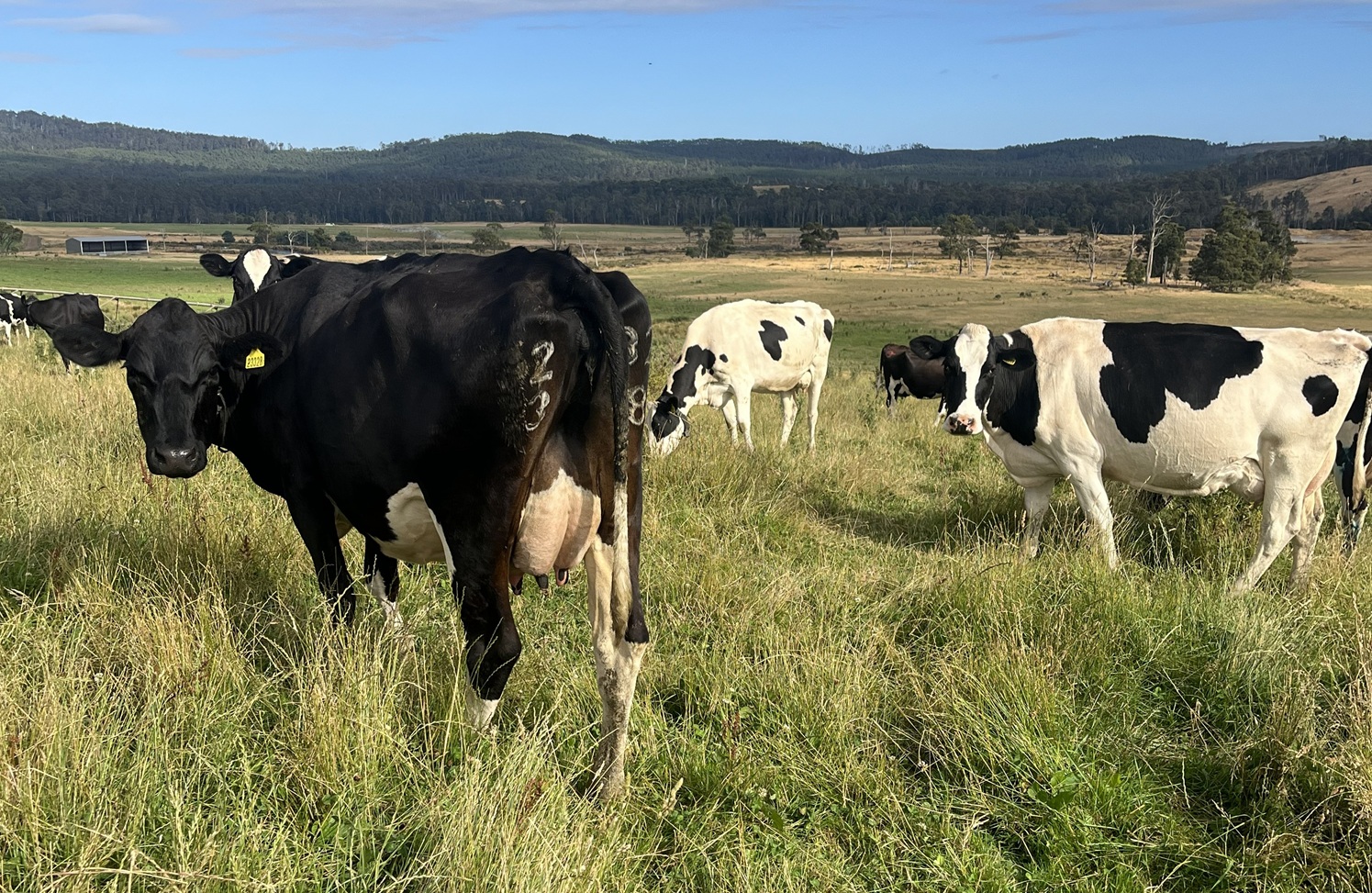
80 mid-lactation dairy cows were split into two groups and managed with either conventional practices, characterised by electric-fencing and herding by a stockperson, or Halter management, using virtual fencing and herding technology.
The group managed using Halter technology had a 10-day training period and 4-week management period.
Data was collected during the trial to provide key indicators of cow welfare. This included measures of milk cortisol concentrations, milk production, live weight and body condition changes, and behaviour.
We found that cows quickly learn to respond to the sound cue when the technology is holding them in a paddock. Most of this learning occurs within 1 day.
“My observations indicate that dairy cows can learn how to respond to a virtual fence within 24 hours and we had animals bring themselves to the dairy after using the technology for just four days. I was actually surprised by how quickly the animals adapted to this new way of being managed," Dr Megan Verdon, TIA Research Fellow.
Benefits of virtual fencing
The benefits of VF technology identified by livestock producers include greater pasture utilisation, reduced wildlife conflicts, and improved management of riparian areas, and fire or drought affected land.
Labour and time savings, flexibility and convenience are also among the common advantages mentioned by producers.
Related resources
Related stories
Acknowledgements:
We thank Holly Coad, Laura Field, and Pia Benvenutti for their assistance in data collection for this study. We also thank the staff at the TDRF for their support in operating this research, and Halter provision of the behaviour data.