

If you've caught a tagged fish or want to know what to do when you catch one, here's everything you need to know. Scroll down for more specific info on catching a tagged lobsters or sand flathead, and our fish frame collection project.
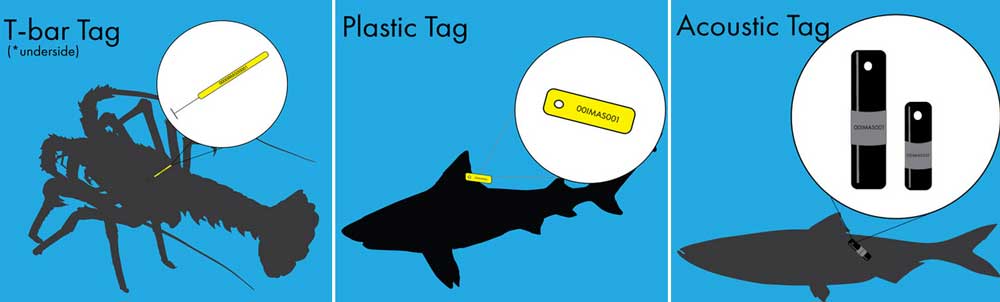
Record info about the tagged fish
If you happen to catch a tagged fish, please record the following information:
- tag number
- type of fish
- size of fish
- sex of fish (for lobsters)
- where you caught it
- date you caught it
You can report this to IMAS by:
- Mobile: 0409 277 140
- Email: fish.tag@utas.edu.au
Don’t forget to provide your contact details too!
Caught a tagged lobster? Report it and win!
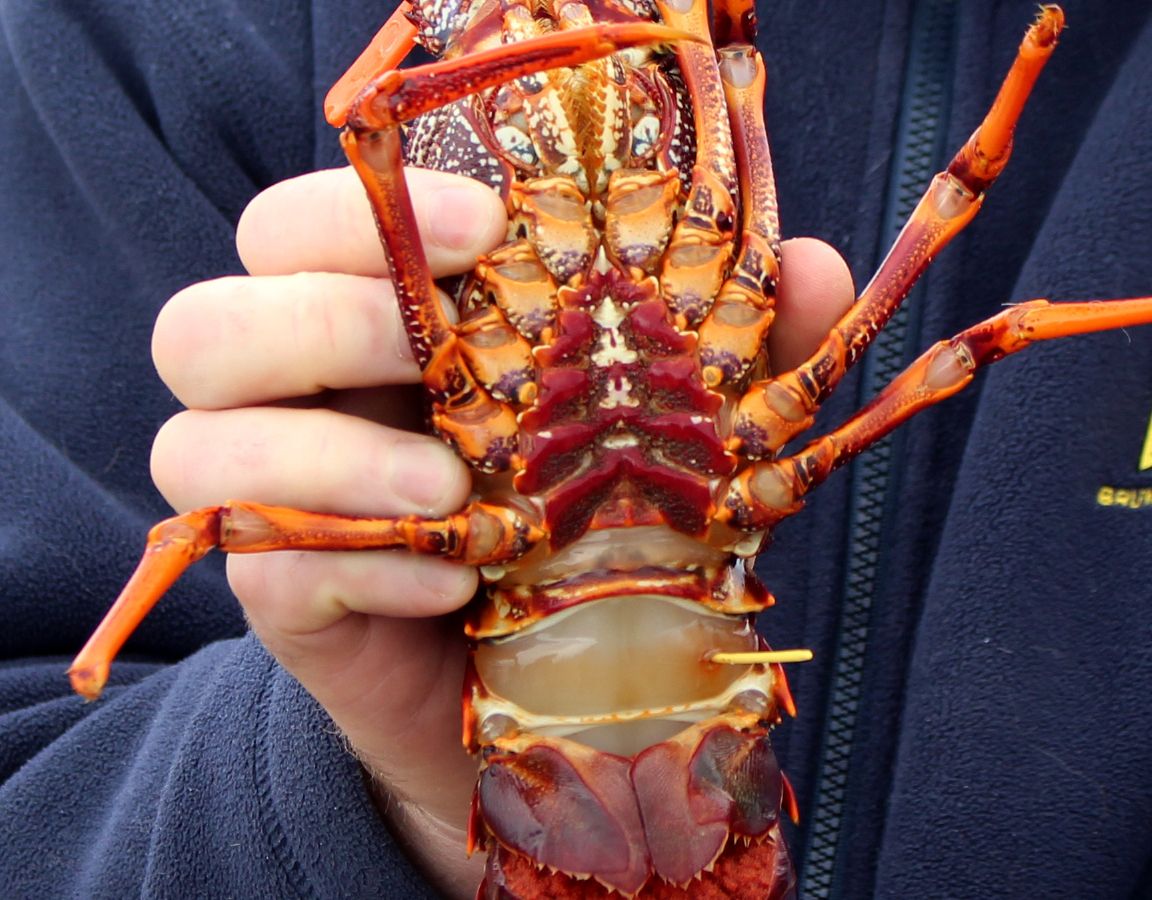 If you catch and report a tagged lobster to IMAS during the fishing season, you will be contributing to vital research aiming to keep our rock lobster fishery healthy and sustainable – and you’ll go in the draw to win great prizes through our Rock Lobster Tag Lottery!
For every tag you report, you will receive one entry into the lottery which is drawn quarterly and features some great prizes. Plus, you’ll also go into our annual major draw prize for the chance to win a big end-of-season prize!
For the 2025-26 season, our generous sponsors are Tamar Marine, Go Dive, Pennicott Wilderness Journeys, Mures Tasmania, Stormline, Tasweld, Blundstone Australia, Voyager Lures, Spotters Sunglasses, and Baily Marine.
How to report tagged lobster catches:
Record size, sex, catch location, date and tag number and send the details to IMAS by:
- Mobile: 0409 277 140
- Email: fish.tag@utas.edu.au
If the tagged lobster is undersize, please don't remove the tag. Just leave the tag in and take a photo of it before releasing the lobster.
Sand Flathead Tagging Program and Tag Lottery
We’re tagging Sand Flathead to enhance our understanding of their growth rate and movement in Tasmanian waters. This will help improve the fishery’s health and sustainability.
Fishers can contribute to this vital research by reporting tagged Sand Flathead to IMAS. And you’ll go into our Sand Flathead Tag Lottery draw, with three fishers sharing a prize pool of $600 every six months.
How to report a tagged Sand Flathead
If you catch a tagged flathead, here’s what you need to report:
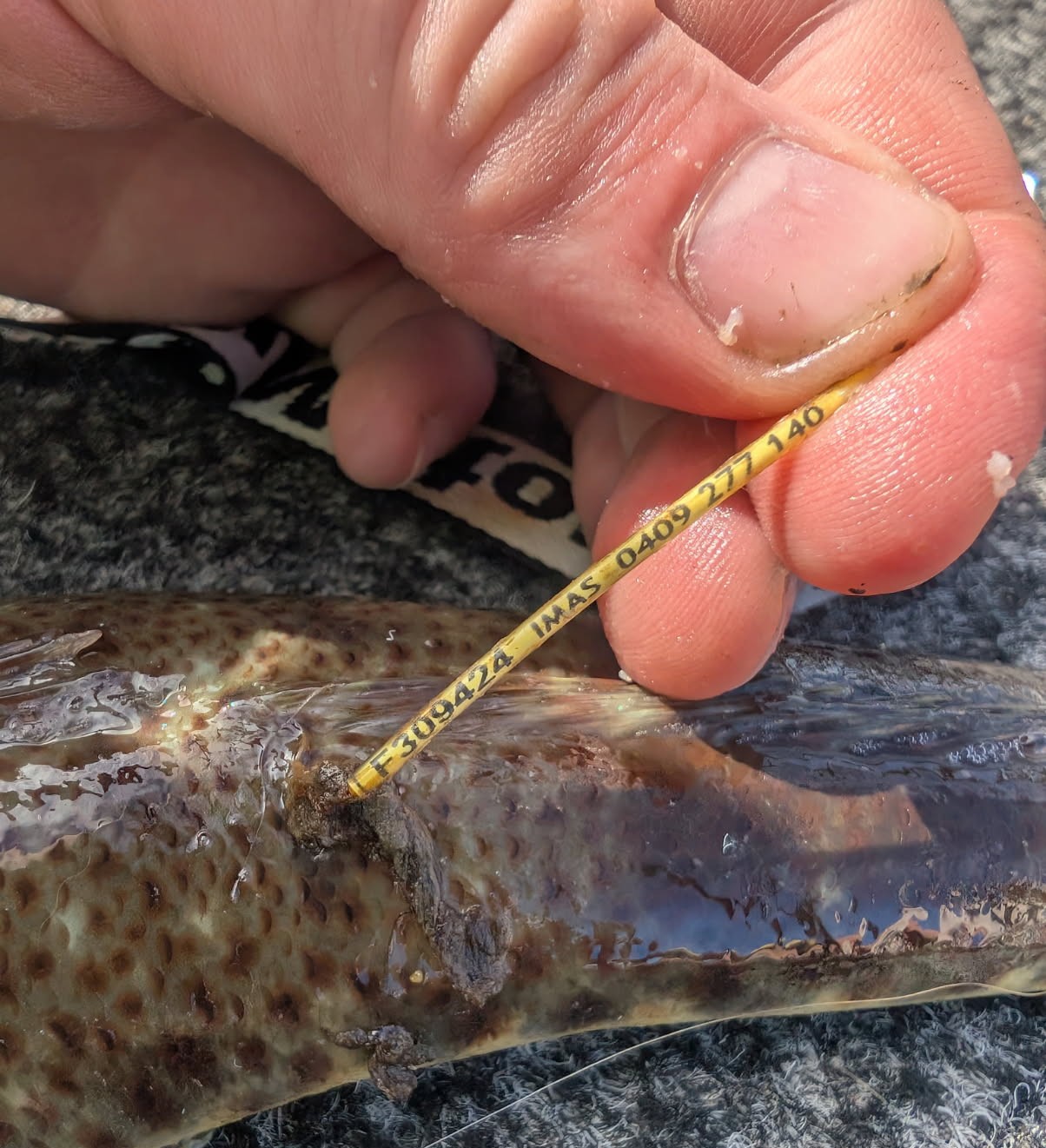
- The unique identification number on the tag (e.g. F315602)
 Date
Date- Location (a GPS point is great!)
- Fish length (to the nearest millimetre)
- Photo of the tag and fish
- Your details (name, phone number, email address)
You can report this information to:
- Mobile: 0409 277 140
- Email: fish.tag@utas.edu.au
If the fish is under or oversize, it must be returned to the water. If the fish is legal, dispatch humanely and when filleting, take a photo of the gonads and send it to the mobile number or email so we can determine if the fish is a male or female.
Tassie Fish Frame program
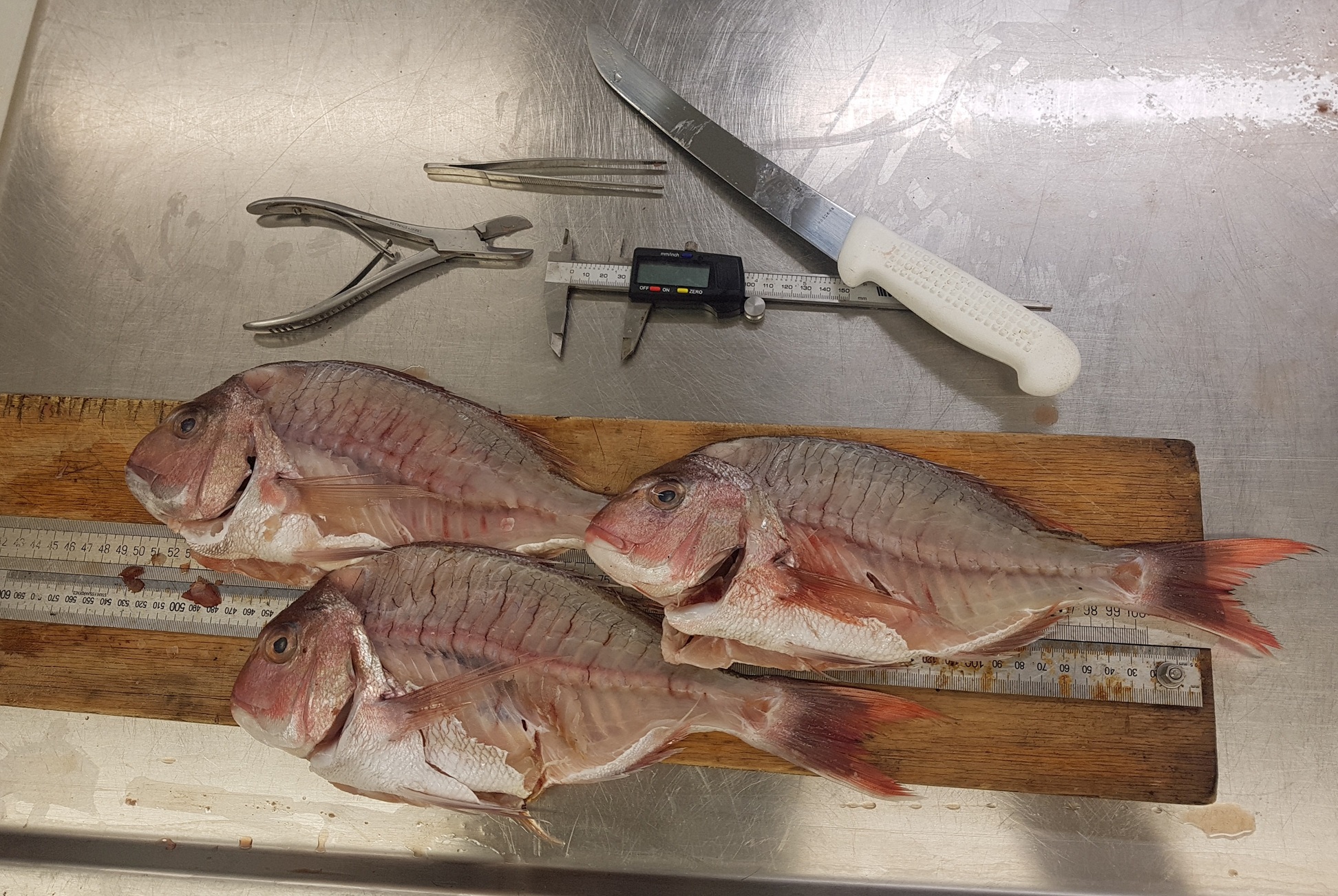 Recreational fishers have the opportunity to contribute to scientific research by donating fish frames to IMAS. These frames play a vital role in enhancing our understanding of various fish species.
IMAS researchers use the frames to assess the age, length, sex, maturity and breeding condition of the fish if the organs are intact.
The program is currently focusing on:
- Sand flathead
- Striped trumpeter
- Snapper
- Yellowtail kingfish
- King George whiting.
Fishers interested in participating can freeze their frames, note the date and location of capture, and drop them off at participating tackle stores around Tasmania:
- Spot-On - The Fishing Connection (Hobart)
- Fisherman’s Shed (Kingston)
- Franklin Marine (Franklin)
- Oldham's Industries (Taranna)
- Freycinet Visitor Centre (Coles Bay)
- Slipway, Salvage and Marine (St Helens)
- Tackleworld (Burnie)
- Seamaster (Devonport)