

In the Centre for Ecology and Biodiversity, we investigate the processes that regulate the structure, function and resilience of marine ecosystems. Our research examines how energy, nutrients and elements move through marine environments, and how these flows influence biodiversity, food webs and ecosystem dynamics.
We study a broad range of ecosystem processes, including trophic interactions, carbon and nutrient cycling, population dynamics, recruitment, growth and mortality of key species, and the effects of environmental change on marine systems. This work spans both the water column and the seafloor, recognising the connections between physical, chemical and biological processes.
Our researchers use field observations, laboratory experiments, statistical and dynamic modelling, and advanced quantitative approaches to understand how marine ecosystems function and respond to change.
The Applied Marine Biogeochemistry Group investigates the chemical and biological processes that regulate marine ecosystems and influence their response to environmental change.
The group’s research focuses on how carbon, nutrients and other elements move through the ocean, and how these processes shape ecosystem function, productivity and resilience. This work spans coastal, temperate, polar and open-ocean environments, and contributes to understanding the role of marine systems in climate regulation.
A key area of research includes marine carbon dioxide removal, including ocean alkalinity enhancement, with a focus on assessing potential benefits, risks and ecological implications. This work helps inform responsible decision-making around emerging climate mitigation approaches.
Through field observations, laboratory experiments, biogeochemical measurements and modelling, the Applied Marine Biogeochemistry Group provides critical knowledge to support sustainable ocean management, climate change mitigation and the protection of marine ecosystems.
Through this research, we aim to improve understanding of the processes that sustain marine life and inform the conservation, restoration and sustainable management of marine ecosystems.
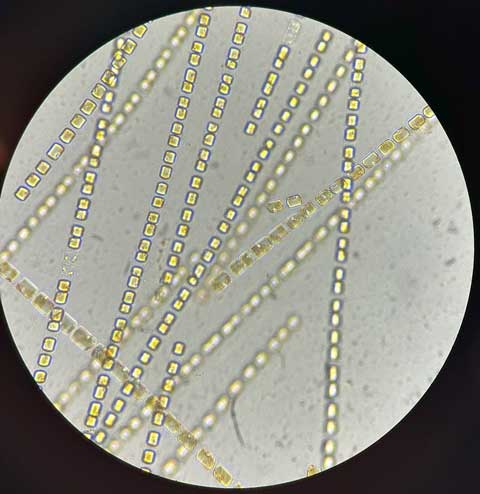
Marine biogeochemical processes regulate how carbon, nutrients and energy move through the ocean, shaping ecosystem productivity, climate feedbacks and the health of marine environments.
Our research investigates how these processes operate across coastal, temperate, polar and open-ocean systems, and how they are being altered by climate change and other human pressures. This includes work led by Lennart Bach on marine carbon dioxide removal and ocean alkalinity enhancement, and Philip Boyd’s research on ocean biogeochemistry, plankton ecology and the role of the Southern Ocean in the global carbon cycle.
Using field observations, laboratory experiments, biogeochemical measurements, modelling and emerging ocean technologies, we examine how marine ecosystems respond to environmental change and assess the potential benefits and risks of climate mitigation approaches.
This research provides critical knowledge to support sustainable ocean management, responsible climate intervention, and a deeper understanding of the ocean’s role in regulating the Earth system.
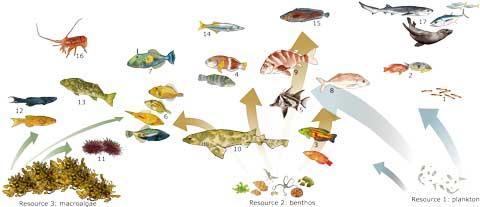
Sustainable use of marine resources requires a strong understanding of how ecosystems function, how species respond to environmental change, and how human activities interact with marine biodiversity.
Our research supports ecosystem-based approaches to fisheries, conservation and marine management by combining ecological theory, long-term data, food-web modelling, population dynamics and advanced quantitative methods. This includes work led by Julia Blanchard on ecosystem modelling and sustainable fisheries, and Asta Audzijonyte on fish ecology, life-history change, and the impacts of climate change and fishing on marine species.
By integrating biological, environmental and human-use data, we aim to improve understanding of marine ecosystem change and support decision-making that balances biodiversity conservation with the sustainable use of ocean resources.
This research provides the knowledge and tools needed to inform fisheries management, marine policy, conservation planning and the long-term resilience of marine ecosystems.