

Banner image credit: Rick Stuart-Smith
Marine ecosystems support an extraordinary diversity of species, habitats and ecological processes. In the Centre for Ecology and Biodiversity, we study the patterns, drivers and dynamics of marine biodiversity across temperate, subantarctic and Antarctic regions, with a particular focus on how these systems are responding to climate change and human activities.
Our research spans the full breadth of marine life, from plankton, sea-ice communities and zooplankton to fish, seabirds, marine mammals, intertidal species and seafloor ecosystems. We investigate biodiversity, species composition, distribution, life histories, habitat use and the ecological interactions that sustain marine ecosystems.
To understand these complex systems, we use a range of advanced approaches, including field surveys, animal tracking, remote sensing, spatial analysis, ecosystem modelling and molecular ecology. This research provides critical knowledge to support conservation, sustainable management and evidence-based decision-making.
Reef Life Survey and Reef Life Explorer are internationally recognised initiatives that improve understanding of reef biodiversity, ecosystem condition and environmental change across the world’s temperate and tropical reefs.
Reef Life Survey is a global citizen-science program that trains experienced recreational divers to collect high-quality, standardised data on reef species and habitats. These surveys provide critical long-term information on the distribution, abundance and condition of reef biodiversity, supporting research, conservation planning and marine management.
Reef Life Explorer builds on this work by making Reef Life Survey data accessible through an interactive digital platform. It allows users to explore reef health, biodiversity patterns and change over time across thousands of surveyed reef sites worldwide.
Together, these projects demonstrate the value of combining rigorous science, community participation and accessible data platforms to improve understanding of reef ecosystems and support evidence-based decisions for their protection and sustainable management.
Through our work, we aim to improve understanding of marine biodiversity and contribute to the long-term health, resilience and protection of marine ecosystems.

Southern Australia’s temperate coastal ecosystems support rich and distinctive biodiversity, from intertidal shores and seagrass meadows to rocky reefs dominated by macroalgae, invertebrates and diverse fish communities.
Our research focuses on the ecology, conservation and restoration of these ecosystems, with particular attention to species, habitats and communities under pressure. This includes research on giant kelp forests led by Scott Ling, reef ecosystems led by Rick Stuart-Smith, threatened sea stars led by Beth Strain, and handfish conservation and recovery led by Jemina Stuart-Smith. Joel Williams’ research complements this work through a focus on temperate reef fish ecology, biodiversity monitoring, spatial modelling and the design of effective marine monitoring programs to support conservation and management.
Seaweeds are a major focus of our temperate coastal research. Habitat-forming seaweeds, including kelps and other macroalgae, play a critical role in supporting biodiversity, productivity and ecosystem resilience. Research led by Jeff Wright and Wouter Visch examines seaweed ecology, cultivation, restoration and sustainable use, contributing to improved understanding and management of these important coastal ecosystems.
Through field surveys, ecological monitoring, spatial mapping, experimental research, restoration science and applied aquaculture approaches, we aim to improve understanding of temperate coastal ecosystems and support actions that enhance their resilience, recovery and long-term protection.
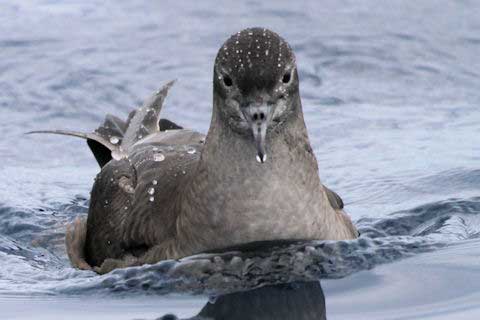
Our research on seabirds and marine mammals examines how these highly mobile species respond to climate change, pollution, emerging diseases and shifting ocean conditions.
Across Tasmanian, Southern Ocean and global systems, we investigate movement, migration, habitat use, population health and ecosystem change using field surveys, satellite tracking, bioacoustics, genomic tools and advanced quantitative approaches. This includes work led by Sophie Bestley in quantitative analyses and Jane Younger in genomic and molecular approaches.
By understanding how seabirds and marine mammals respond to environmental change, our research supports conservation planning, ecosystem assessment and evidence-based management at local, national and international scales.
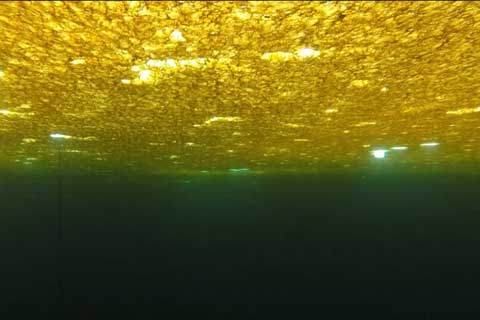
Ice-associated communities, including viruses, bacteria, microalgae and zooplankton, form the foundation of Antarctic marine food webs and support species from krill and fish to higher predators.
Our research investigates how these communities function and respond to rapid environmental change in polar regions. Using marine technologies such as remote sensing, underwater imaging, autonomous platforms, ocean sensors and advanced modelling, we study sea-ice ecosystems across scales from microbial processes to broader ecosystem dynamics.
This work includes expertise in marine remote sensing and seafloor mapping led by Vanessa Lucieer, polar technology and under-ice observation systems led by Emiliano Cimoli, and Antarctic ecological research led by Fraser Kennedy.
By improving understanding of ice-associated communities, our research helps assess the health, sensitivity and resilience of Antarctic marine ecosystems in a changing climate.
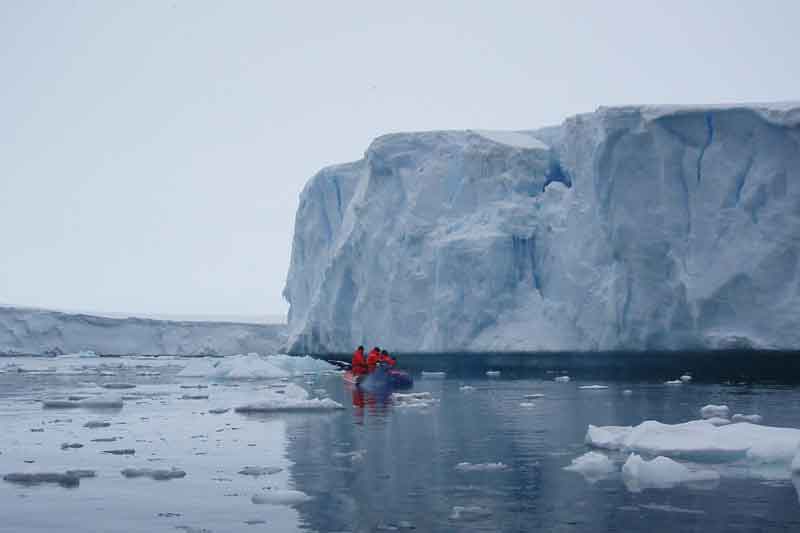
Antarctic marine ecosystems are shaped by interactions between sea ice, ocean conditions, microscopic life, pelagic species and seafloor communities. Our research investigates how these connected systems function, how they have changed through time, and how they are responding to a rapidly changing climate.
This includes research led by Linda Armbrecht using sedimentary ancient DNA to reconstruct past Antarctic marine ecosystems and understand long-term ecological change. It also connects with work by Jan Jansen and Nicole Hill on Antarctic seafloor biodiversity, habitat structure and ecosystem patterns.
Using marine technologies such as remote sensing, seafloor mapping, underwater imagery, autonomous platforms, molecular tools and advanced modelling, we generate new knowledge about Antarctic biodiversity from the surface ocean to the seafloor.
This research provides critical insight into the sensitivity, resilience and future trajectory of polar marine ecosystems, supporting conservation, monitoring and evidence-based management in the Southern Ocean.