Our special publications, listed below, are the culmination of major research efforts of authors from CODES and the School of Earth Sciences. Several other publications by CODES associates are also available.
To purchase any of the publications, please fill out the order form (PDF 204KB), or contact:
Caroline Mordaunt
ARC Centre of Excellence in Ore Deposits, University of Tasmania
Private Bag 126, Hobart Tasmania 7001
Ph:+61 3 6226 1773 (Tues & Thurs am)
Fax:+61 3 6226 7662
Email: publications@codes.utas.edu.au
The Hope Factor
(Published 2011)
This self-published book by geologist Tony Hope is the result of three years of effort based on his wide experience spanning fifty years. It includes a diverse range of mineral exploration stories that encompass people and events that led to the development of mines in Australia, PNG and the Philippines. The hardcover book is beautifully presented and contains numerous photos, maps and drawings, and has historical input from those involved with each story including the actual discoverers of Bougainville, Ok Tedi and Lihir deposits, for example. It is intended for a wide-ranging audience including engineers, miners, historians and those with an interest in how deposits are discovered. It will also appeal to anybody interested in the science of geology as applied to mineral discoveries and to students in both secondary and tertiary education stages.
"It is a great contribution towards better understanding the importance to Australia of the minerals industry and its people. May it be widely read." – Sir Arvi Parbo
536 pages | Author: Tony Hope
Copies available at $AUD70.00 each (plus postage, packing and GST)
To purchase copies of The Hope Factor, please email the author direct: arhope@ozemail.com.au
Geophysical signatures of copper-gold porphyry and epithermal gold deposits, and implications for exploration
(Published Jun 2011)
This latest CODES publication by experienced geophysicist Terence Hoschke outlines and discusses the geophysical data from a number of porphyry and epithermal deposits from the Pacific rim, including Batu Hijau, Elang, Grasberg, Alumbrera, Martabe, Yanacocha, Pajingo and Waihi. It is a must-buy for geoscientists involved in porphyry or epithermal exploration.
46 pages, full colour | Author: Terence Hoschke
Copies available at $AUD35.00 each (plus postage, packing and GST).
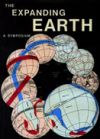
The Expanding Earth - A Symposium
(Published 1981)
The Expanding Earth Papers from a 1981 symposium, convened by S. Warren Carey, the foundation Professor of Geology at the University of Tasmania.
For all those interested in tectonics and the evolution of concepts related to continental drift, plate tectonics and earth expansion. This a valuable collection of papers that provides an alternative to current ideas on subduction on a static earth.
423 pages | Editor: S. Warren Carey
Copies available at $AUD35.00 each (plus postage, packing and GST).
Created from Chaos - a geological trail of 100 sites in Tasmania
(Published May 2010)
“Created from Chaos” is definitive book interpreting (in understandable terminology) 101 Tasmanian geological sites and places… as old as 1300 million year rocks on King Island to the most recent landslides in Launceston. Using basic explanations and definitions, photographic images of Chaos sites, rocks, structures, Permian and Tertiary fossils, the author shows how to acknowledge this ‘special place’… the island of Tasmania.
304 pages, full colour| Author: Peter Manchester
Copies available at $AUD60.00 each (plus postage, packing and GST)
From the Ground Up: The story of CODES first 20 years
(Published November 2009)
Published to celebrate the CODES 20-year milestone, this volume showcases some of the contributions CODES has made to corporate mineral exploration programs. It highlights achievements in fundamental geoscience research, shows the impact that this research has had on the minerals industry and provides an excellent historical summary of CODES activities and people since its inception. 150 pages, full colour.
Copies available at $AUD50.00 each(plus postage, packing and GST)
Ore Geology Reviews: Special Issue on Mineral Deposits of South China
(Published April 2007)
This special issue focuses on the variety of mineral resources in the South China region located north of Myanmar, Lao PDR, and Vietnam, and includes Yunnan, Sichuan, Guizhou, Hunan, Guangdong, Jiangxi, Hubei, Fujian, Anhui, Zhejiang, Jiangsu, Tibet, part of Shandong Province, and the Guangxi District.
China is the driving force and powerhouse of a currently booming global metals industry and now attracts more foreign direct investment than any other country. The Special Issue includes papers on a diverse range of Chinese ore deposits and districts, including Palaeozoic VHMS deposits, skarn gold deposits, sediment-hosted gold deposits, porphyry Cu-Au, polymetallic Fe-Cu-Au deposits and sediment-hosted Zn-Pb-Ag deposits.
This timely publication is recommended to geo-scientists with an interest in the future of ore genesis and exploration in South China.
383 pages, including 29 in colour | Edited: Khin Zaw, Stephen Peters, Nigel Cook and Zengqian Hou
Copies available at $AUD70.00 each (see order form for specials, plus postage, packing and GST)
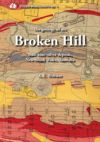
The Geology of the Broken Hill Pb-Zn-Ag Deposit, NSW, Australia
The first of a new series on world-class ore deposits, published by CODES ARC Centre of Excellence in Ore Deposits.
- Author: A. (Tony) E. Webster
- 290 pages
- 79 colour figures featured in the book and in PDF format on the accompanying CD
Copies available at $AUD120.00 each (plus postage, packing and GST). See order form for specials.
Altered Volcanic Rocks-- a guide to description and interpretation
A follow-up to the highly successful "Volcanic Textures"
Altered volcanic rocks is designed to be a practical guide for systematically describing and interpreting altered volcanic rocks, and determining their significance in terms of mineral deposit prospectivity. It discusses the processes and products of the common alteration styles in submarine volcanic settings, including diagenetic alteration, burial metamorphism, hydrothermal alteration and mineralisation, and intrusion-related. It takes a multi-disciplinary approach combining alteration mineralogy, textures and intensity with lithogeochemistry to constrain the characteristics of different alteration styles. To emphasize the ore deposit context, the book includes a major chapter that uses innovative illustrated data sheets to describe the main alteration facies or zones associated with a variety of volcanic-hosted massive sulfide (VHMS) deposits. The final chapter describes and presents examples of how altered rocks and their characteristics may be applied to exploration for volcanic-hosted deposits.
The book contains 127 figures and 66 full-page alteration data sheets, which include 274 colour photographs that illustrate the textural and mineralogical characteristics of different alteration intensities, facies and styles.
Authors: Cathryn Gifkins, Walter Herrmann and Ross Large
Copies available at $AUD135.00 each (plus postage, packing and GST). Ssee order form for specials.
24ct Au Workshop
CODES Special Publication 5
This volume contains proceedings of the 24 Carat Gold Workshop, which was held in Hobart, Tasmania, on 14–16 June 2004. The workshop consisted of 13 one-hour keynote presentations from selected industry and academic specialists who, where possible, have addressed the following issues:- Characteristics of a hydrothermal gold deposit type
- Anatomy of a giant gold deposit discovery
Seven of the papers contained within this volume summarise the characteristics and origins of gold deposits: lode gold (Robert), porphyry copper-gold (Cooke), low and intermediate sulfidation epithermal gold (Gemmell), volcanic-hosted massive sulfide gold (Hannington), high sulfidation epithermal gold (Hedenquist), gold skarns (Meinert) and Carlin-type gold (Cline).
There is also one overview paper on the structural architecture of porphyry and epithermal deposits (Tosdal). Five papers deal with the anatomy of giant ore deposit discoveries, and characteristics of those deposits (Tarkwa/Damang – Tunks; Oyu Tolgoi – Ivanhoe Mines; Kelian – Davies; La Ronde – Gosselin; Pueblo Viejo – Kesler). This volume also contains papers summarizing the characteristics of four deposits discussed in the exploration forums: Cadia Quarry (Wilson), Teresa and Victoria (Garcia), Golden Grove (Pring) and Martabe (Levet).
Edited: David R. Cooke, Cari Deyell and June Pongratz
Copies available at $AUD75.00 each (plus postage, packing and GST)
Giant Ore Deposits: Characteristics, genesis and exploration
CODES Special Publication 4
This volume is the product of a 3-day giant ore deposit workshop held in Hobart, Tasmania, on 17–19 June 2002. Eight of the papers contained within this volume summarise the characteristics of selected types of giant ore deposits: porphyry copper (Camus), iron-oxide copper-gold (Haynes, Davidson), sediment-hosted zinc-lead (Large et al.), Carlin-type gold (Thompson), magmatic nickel-copper (Naldrett), lateritic nickel (Elias) and Witwatersrand gold (Frimmel and Minter). Four papers deal with the anatomy of giant ore deposit discoveries: Collahuasi (Moore and Masterman); Red Dog (Jennings and King); Goldstrike (Bettles); Witwatersrand - Fox). Brief exploration proforma (summaries of the characteristics of specific deposit types) are also provided for porphyry Cu-Au, Fe-oxide Cu-Au, Sediment-hosted Pb-Zn and Carlin-type Au deposits. The new scientific contributions and exploration case histories contained within this volume will help geologists in their quests for new giant ore deposits, and in understanding the origins of the deposits that have already been discovered. 269 pages.
Edited: David Cooke and June Pongratz
Copies available at $AUD90.00 each (plus postage, packing and GST).
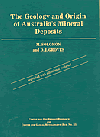
The Geology and Origin of Australia's Mineral Deposits
This 2000 edition is a reprint of the 1994 edition, together with a supplementary chapter outlining recent progress in understanding the processes involved in the genesis of Australia's major mineral deposits. Particular attention has been paid to the sediment-hosted, stratiform lead-zinc and volcanic-hosted massive sulphide deposits, but the review also includes discussions of Archaean ocean composition, orogenic lode gold deposits, Proterozoic Broken Hill-type and Cu and Au ores, and banded iron formations and their related iron ores. 1002 pages, hardbound.
Authors: M. Solmon and D. I. Groves
Copies available at a special price of $AUD99.00 each (plus postage, packing and GST). Usual price $AUD150.00.
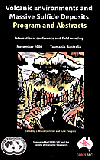
Volcanic Environments and Massive Sulfide Deposits
Program and Extracts
International conference and field meeting
November 2000, Tasmania, Australia
CODES Special Publication 3
This conference, attended by over 130 international participants, focused on current issues into volcanic-hosted massive sulfide (VHMS) deposits and the physical volcanology of their host successions. Particular emphasis was placed on parallels between modern, active seafloor hydrothermal systems and their ancient analogs. This volume contains the extended abstracts, which are innovative and report new and significant data and results, of all oral and posters presented at the conference. Anyone interested in the tectonic setting, geology and genesis of VHMS deposits should purchase a copy.
View list of abstracts (PDF 44KB)
Edited by: J. Bruce Gemmell and June Pongratz
Copies available at $AUD45.00 each (plus postage, packing and GST).
Volcanic Textures: a guide to the interpretation of textures in volcanic rocks
Volcanic Textures provides a practical guide to the description and interpretation of important textures in lavas, syn-volcanic intrusions and a wide variety of volcaniclastic deposits. Many examples come from the Cambrian Mount Read Volcanics, the submarine volcanic host sequence to several world-class polymetallic massive sulfide ore deposits in western Tasmania. These are compared with younger analogues and contrasting subaerial sequences in the USA, Japan, New Zealand, Italy, Central America and South America.
The book contains 46 thematic plates comprising 330 colour photographs, each accompanied by a description and, where appropriate, an interpretation. The plates are complemented by text that reviews relevant genetic processes and facies relationships. Part 1 gives an introduction to terminology, field identification techniques and classification. Part 2 describes selected textures, components and structures in volcanic deposits. Part 3 focuses on lavas, shallow intrusions and related autoclastic deposits. Part 4 covers pyroclastic and other volcaniclastic deposits with emphasis on transport and depositional processes. Part 5 outlines the textual effects of hydrothermal alteration, especially in the vicinity of massive sulfide ore deposits, using examples from the Mount Read Volcanics.
Volcanic Textures is designed for use by exploration geologists, graduate students and other earth scientists with an interest in physical volcanology, especially those engaged in mapping and interpreting volcanic sequences.
Authors: J.McPhie, M. Doyle and R. Allen
Copies available at $AUD95.00 each (plus postage, packing and GST).
New Developments in Broken Hill Type Deposits
CODES Special Publication 1
Contributing authors
- S.G. Walters: An overview of Broken Hill type deposits
- B.H.J. Stevens: Regional geology of the Broken Hill and Euriowie Blocks
- R.H. Vernon: Structural evidence of parent rocks in high-grade metamorphic areas - especially Broken Hill
- W.P. Laing: Nappe interpretation, palaeo-geography and metallogenic synthesis of the Broken Hill-Olary Block
- W.P. Laing: Volcanic related origin of the Broken Hill Pb-Zn-Ag deposit, Australia
- W.P. Laing: The Diamantina orogen linking the Willyama and Cloncurry terranes, eastern Australia
- K. Ehlers et al.: New constraints on Broken Hill geology and mineralisation
- G. R. Carr and S.-S. Sun: Lead isotope models applied to Broken Hill style terrains - Syngenetic vs epigenetic metallogenesis
- I.R. Plimer: The Olary Block, South Australia - an insight into mineralisation in the adjacent Broken Hill Block
- A.E. Webster: A detailed description of the Broken Hill deposit - lessons from the ore fabrics
- R. Large et al.: The chemistry of BHT ore formation - one of the keys to understanding the differences between SEDEX and BHT deposits
- R.L. Allen: Identification of volcanic textures, felsic caldera volcanoes and synvolcanic ore genesis in Bergslagen, "Broken Hill-like", mining district, Sweden
- P.J. Williams et al.: Significance of late orogenic metasomatism in the Broken Hill-type deposits of the Cloncurry district, NW Queensland
- S.B. Bodon: Genetic implications of the paragenesis and rare-earth element geochemistry at the Cannington Ag-Pb-Zn deposit, Mt Isa Inlier, northwest Queensland
- I.L. Willis: Exploration for Broken Hill-type Pb-Zn-Ag deposits
- R.J.W. Turner et al.: Sullivan stratiform lead-zinc deposit, British Columbia, Canada: rift setting, associated district-scale hydro-thermal field, and comparison to BHT deposits
Edited by: J. Pongratz and G.J. Davidson
Copies available at $AUD25.00 each (plus postage, packing and GST).
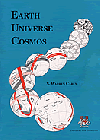
Earth Universe Cosmos
Earth, Universe, Cosmos is a major work by one of the world's great tectonicians.
Each chapter makes departures from conventional theory. The origin of Banded Iron Formations is explained for the first time. A major revision of tectonics is necessary following Carey's explanation of orogenesis as non-compressed and vertical, driven by gravity.
Currently, American geologists attribute some meteorites to Mars, whereas their real source was the Mesozoic disruption of the asteroidal planet. Of course lead isotope ages of meteorites and of Moon rocks gives ages of four billion years, which is the age of formation of the asteroidal planet, not its disruption.
Carey explains how the major features of the earth can be explained by a high rate of earth expansion. He concludes with a tour de force discussion of cosmology. This book is a "must read" for all cosmologists and earth and planetary scientists.
Author: S. Warren Carey
Copies available at $AUD45.00 each (plus postage, packing and GST).
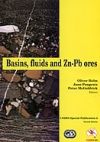
Basins, fluids and Zn-Pb ores
CODES Special Publication 2
Proceedings of an international conference held at CODES, University of Tasmania, in July 1998.
Featuring
- New research developments on Northern Australian and Canadian SEDEX deposits
- The latest o Irish-style deposits
- Basin fluid chemistry and hydrological modelling
- Papers by Hanor, Garven, Hitzman, Goodfellow, McGoldrick, Large, Wallace, Rawlings, Cooke 'n' Bull
Edited by Oliver Holm, June Pongratz, Peter McGoldrick
Copies available at $AUD40.00 each (plus postage, packing and GST).
The Origin of Rocks and Mineral Deposits
The Origin of Rocks and Mineral Deposits: is the first comprehensive application of modern colloid science to define the properties and behaviour of the ancient high-energy sedimentary particles from which crustal rocks and mineral deposits were formed.
This classic pioneering work, compiled by world leaders in surface chemistry and the earth sciences over many years, is based on the current physical chemistry of small particle systems and the interactions between charged sediment particles and ions in the pore fluids surrounding them. It has been found that existing problematic observations relating to ore deposits and the formation of rocks are simply resolved by using the principles more recently developed in colloid science.
Progress of these extensive interdisciplinary research programs has been recorded in 89 papers and reports. The principles of sediment particle interactions and surface chemistry apply universally but this cross-referenced e-book selects and illustrates 259 separate problematic observations to provide conclusive evidence of the properties of ancient sediment components and the ore forming processes. The systematic photographic records of actual structures and textures as they occur preserved in rock outcrops, drill cores, and polished rock surfaces are therefore unusual in number, scope, and global extent. Geophysical data, seismic reflection profiles and a number of microscope and SEM images have also been used.
Recognition of source rocks and understanding the ore forming processes have been shown to improve exploration success rates and to achieve over 300% better cost effectiveness in a comparison of 13 company's results over 15 years. Exploration managers can identify source rocks and assess the likelihood of associated economic mineral deposits.
Detailed explanations of the physical chemistry, particle interactions and rheology are appended in a comprehensive glossary.
Principal Technical Advisers and experimental confirmation
- Professor T.W. Healy, Particulate Fluids Processing Centre, The University of Melbourne.
- Professor A.E. Alexander, Department of Physical Chemistry, The University of Sydney.
- Professor S.W. Carey, Department of Geology, The University of Tasmania.
- Professor T.F.W. Barth, The University of Oslo, President, 23rd International Geological Congress.
- Dr. Ralph K. Iler, Cornell University and E.I. DuPont de Nemours & Co, Wilmington, Delaware.
- Professor R.L. Stanton, Department of Geology & Geophysics, University of New England, Armidale, NSW. (Independent complimentary research that established the precursor principle by direct measurement with a microprobe analyzer.)
- Particulate Fluids Processing Centre, The University of Melbourne. (Independent research that confirmed DLVO theory by measurement of interparticle forces with an atomic force microscope.)
- John Elliston, First honours graduate, Geology Department, University of Tasmania (before establishment of CODES).
Copies available at $AUD75.00 each (plus postage, packing and GST). See order form for student concession.