
takara milaythina lutruwita nika paywuta
...walked this country forever
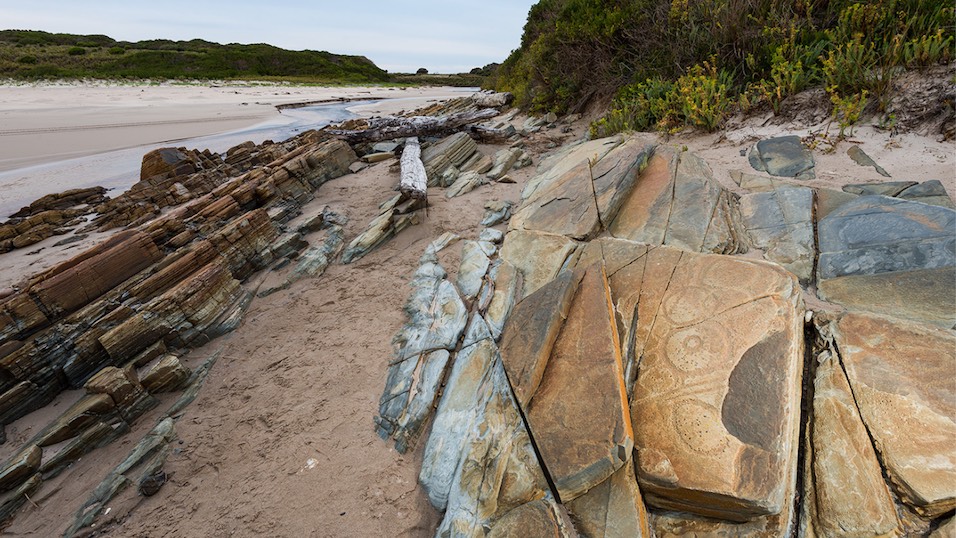
Survival of Aboriginal cultural practices
Maintaining, developing and sharing cultural practices plays a big part in teaching others about our culture.
Aboriginal people live a healthier lifestyle when supported and encouraged to continue developing their cultural journey in everyday life. By doing this we show respect to our history, ancestors and Country.
Many cultural practices were interrupted by invasion and colonisation. Traditional practices such as mutton birding, shell stringing, hunting and using traditional healing methods were maintained by the Aboriginal men and women from the islands of Cape Barren and Flinders. Today, more of our traditional cultural practices are being revived, such as basket weaving, canoe building and language.
Image: Jamie Everett and Brendan ‘Buck’ Brown on the banks of the Derwent River with the ningher canoe they built for Dark Mofo, 2014, Jillian Mundy
Courtesy of Jillian Mundy
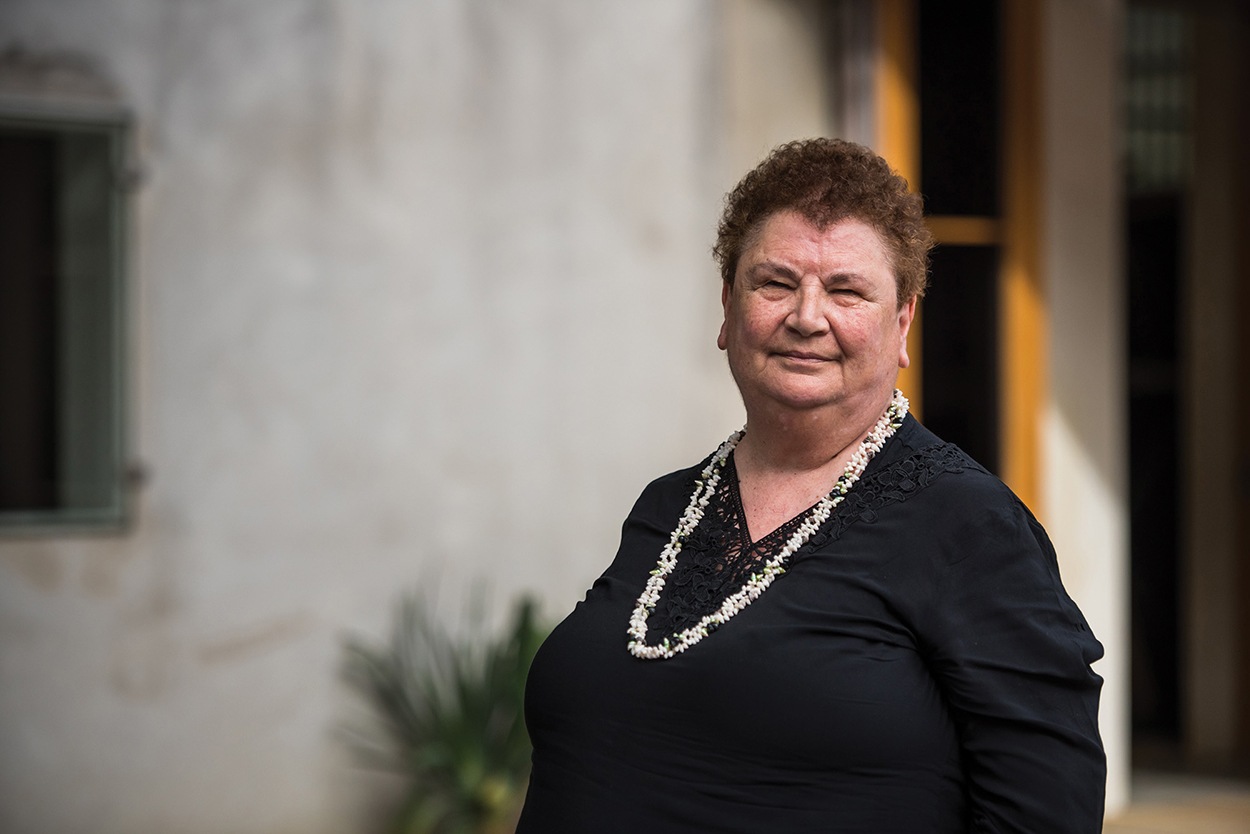
Shell necklace making
Tasmanian Aborigines have been making shells necklaces for thousands of years. One such necklace was found within a cremation site dating back some two thousand years, containing pierced shells.
The knowledge and skills of shell necklace making has been passed down through generations of women from the Furneaux Islands who sold or exchanged them for food, clothing and other essential items.
For Aboriginal women today, shell necklace making is the most significant cultural tradition. It gives them the opportunity to get together, share stories and pass their knowledge to the next generation of makers and continues to affirm their culture.
Images: Stills from Women of the Island series ‘Lola Greeno, Elder of Shells’, 2019, Emily Dimozantos Courtesy of Women of the Island
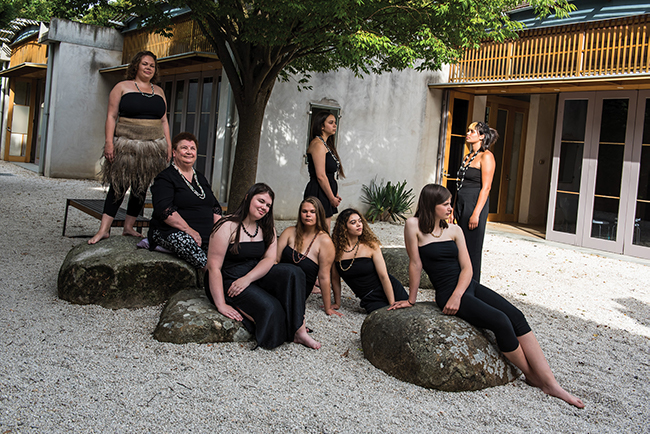
Fire and land management
Traditional baskets had many uses. They were used in daily life to carry stone tools and ochre, collecting and storing plant foods; larger open-weaved baskets were used by women when diving for seafood.
Basket weaving is an important Tasmanian Aboriginal cultural practice and the baskets were highly prized for their practical every-day use.
Recently, Aboriginal women have re-established ownership of their traditional fibre practices. The methods of collecting, preparing and weaving native fibres has been revived, with contemporary weavers experimenting and introducing new mediums into the mix, including a wider variety of grasses, shells, wool and feathers — ensuring that this cultural practice continues to evolve.
Images: Stills from Women of the Island series ‘Lola Greeno, Elder of Shells’, 2019, Emily Dimozantos
Courtesy of Women of the Island
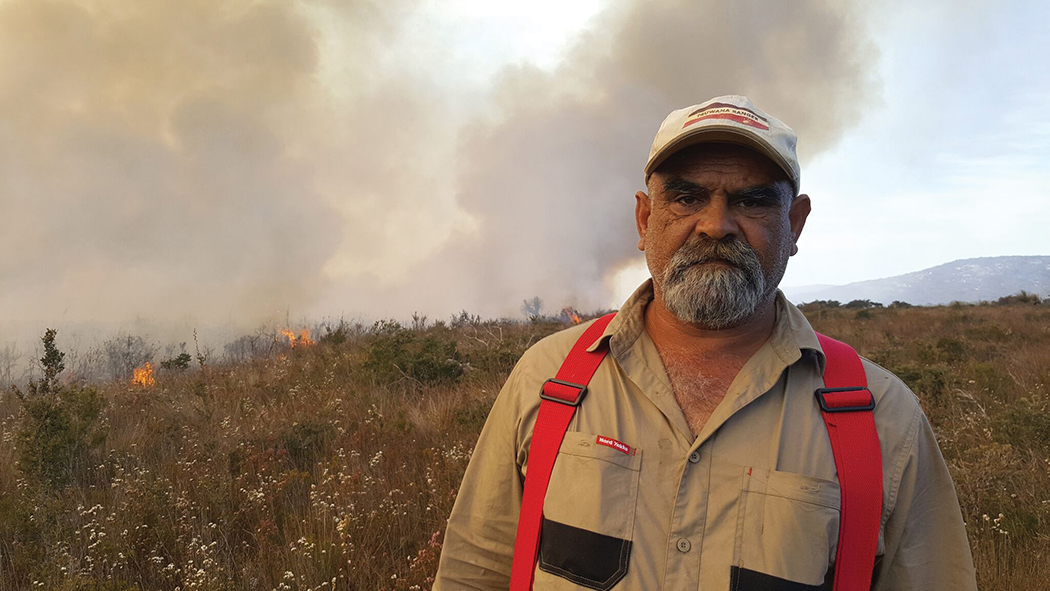
Fire and land management
We are bringing traditional burning back to our land.
Instead of letting the hot fires go through, we’ve got to try to heal our land with cool burns. — Terry Maynard, Truwana Ranger
Our land management practices connect us with Country, culture and people. Working together with government, researchers and other groups, we undertake large-scale weed control and we monitor and protect our wetlands.
The benefits are not just environmental. The connections to Country and culture have flow-on effects for health and wellbeing.
Image: Truwana Ranger Terry Maynard, 2017, Natalie Whiting
Courtesy of the Australian Broadcasting Corporation
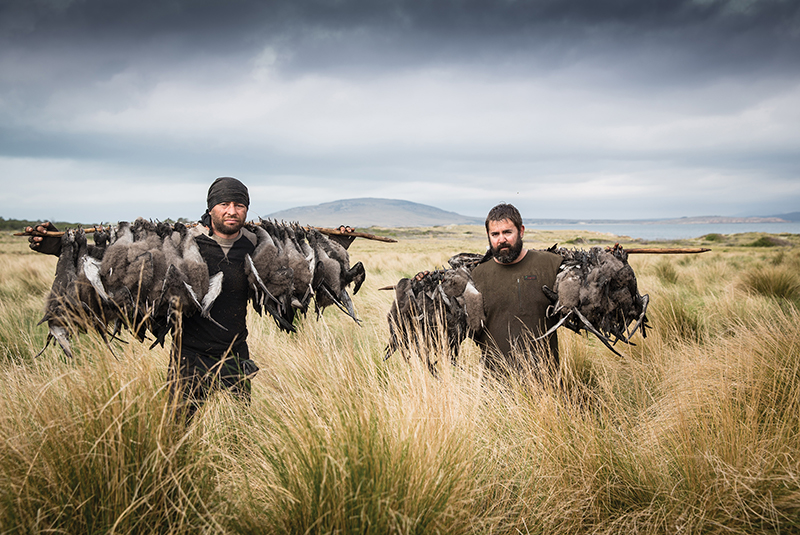
Mutton birding
Our ancestors and people today continue to hunt and eat traditional foods, such as wallaby, kangaroo and yolla (mutton bird).
Yolla are a highly nutritious source of iron, vitamin A and Omega 3 fatty acids. Both the birds and their habitat are cared for and respected. We monitor their numbers and the conditions of their environment.
Through teaching and learning, our traditional practices live on through our cultural lifestyle, diet and social gatherings on Country. They help us live a healthy, culturally purposeful life. These traditional foods connect us forever to Country, practices and people.
Image: Aaron Everett and Adam Thompson, mutton birding, Big Dog Island, 2017, Jillian Mundy
Courtesy of Jillian Mundy
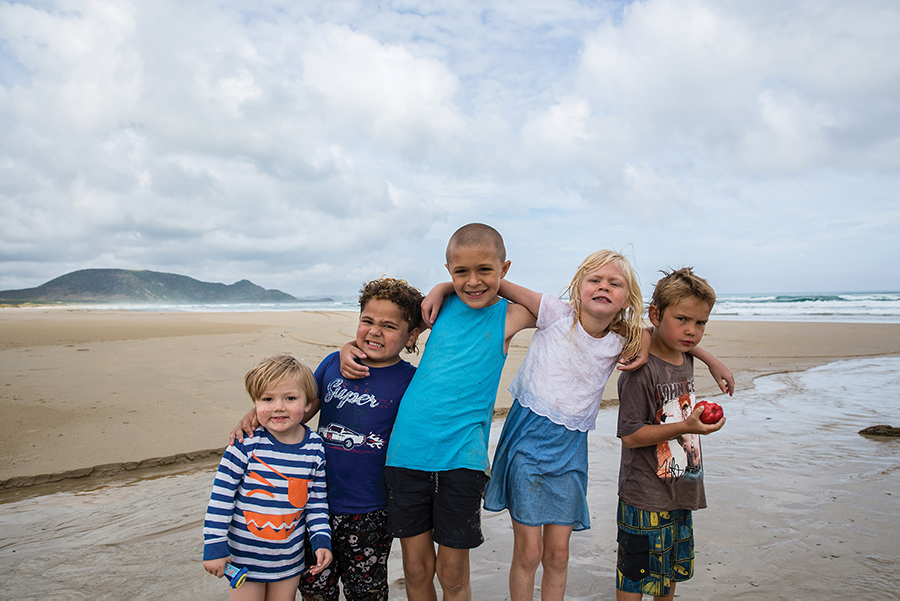
Our children, our future
It is important to raise our children with culture, to teach them about who they are and where they came from.
For our children the Aboriginal Children’s Centre provides a culturally safe and respectful environment for our next generation of leaders.
They learn about their history and country, ancestors, language and cultural practices to stand proud and be healthy, safe and focused on the future.
A good education helps keep culture strong and enables future generations to share stories about their community and culture.
Image: Anton and Hyhelim Jackson, Locke and Melody Wright-Brown, Jkobi Hughes,
Preminaghana Beach, 2017, Jillian Mundy
Courtesy of Jillian Mundy
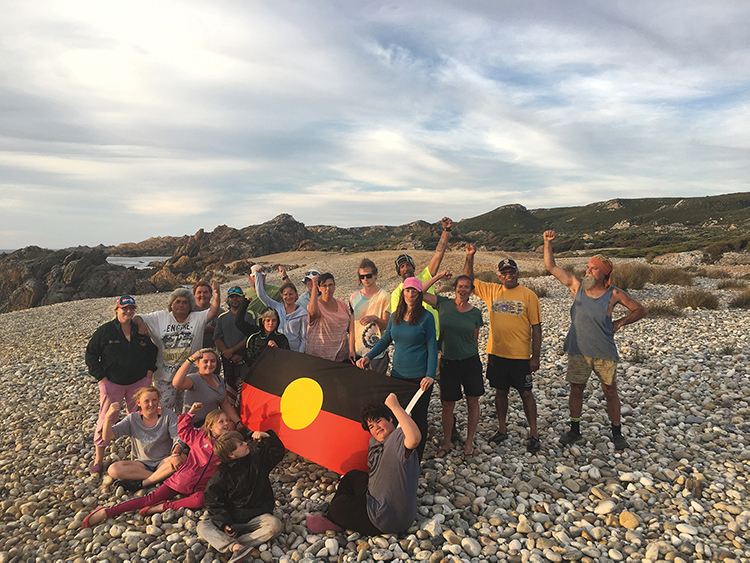
rrala-milaythina-ti
Strong on Country
The rrala milaythina-ti ‘Strong on Country’ project encourages Aboriginal community members to access places on Country where they feel strong connections to — or want to make that connection with Country.
As a community, we grow stronger by learning about our Country, ancestors and culture. Through learning, we gain a greater sense of pride and respect for our old people who managed and shaped the land for thousands of years.
Today, Country continues to be central to identity. Resources are widely used for cultural pursuits, for community and family through celebrations and ceremonies, hunting, fishing and gathering. palawa culture is alive, strong and flourishing.
Today, Country continues to be central to identity. Resources are widely used for cultural pursuits, for community and family through celebrations and ceremonies, hunting, fishing and gathering. palawa culture is alive, strong and flourishing.
Image: rrala milaythina-ti ‘Strong on Country’, 2018, Sharnie Read Courtesy of Sharnie Read
