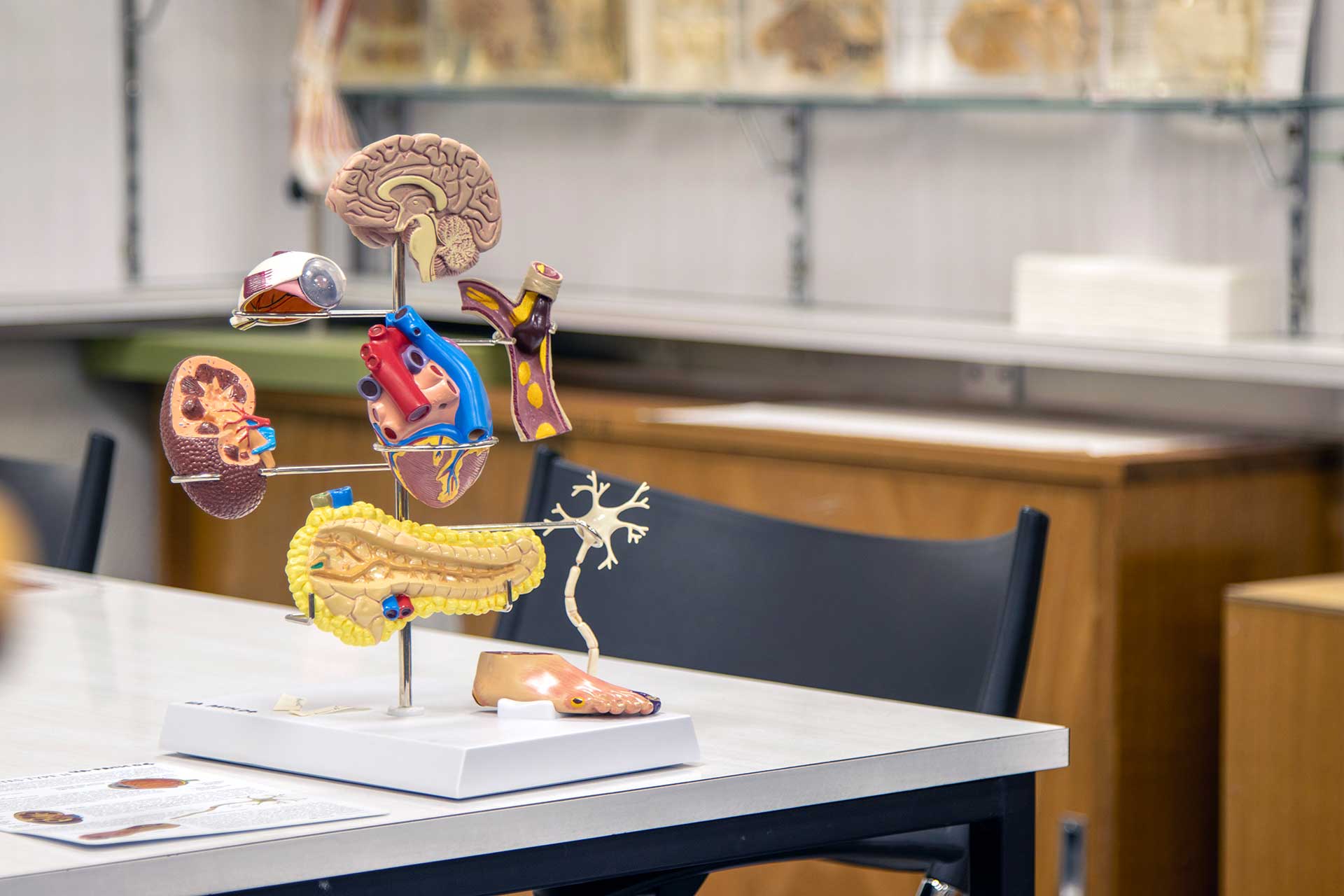
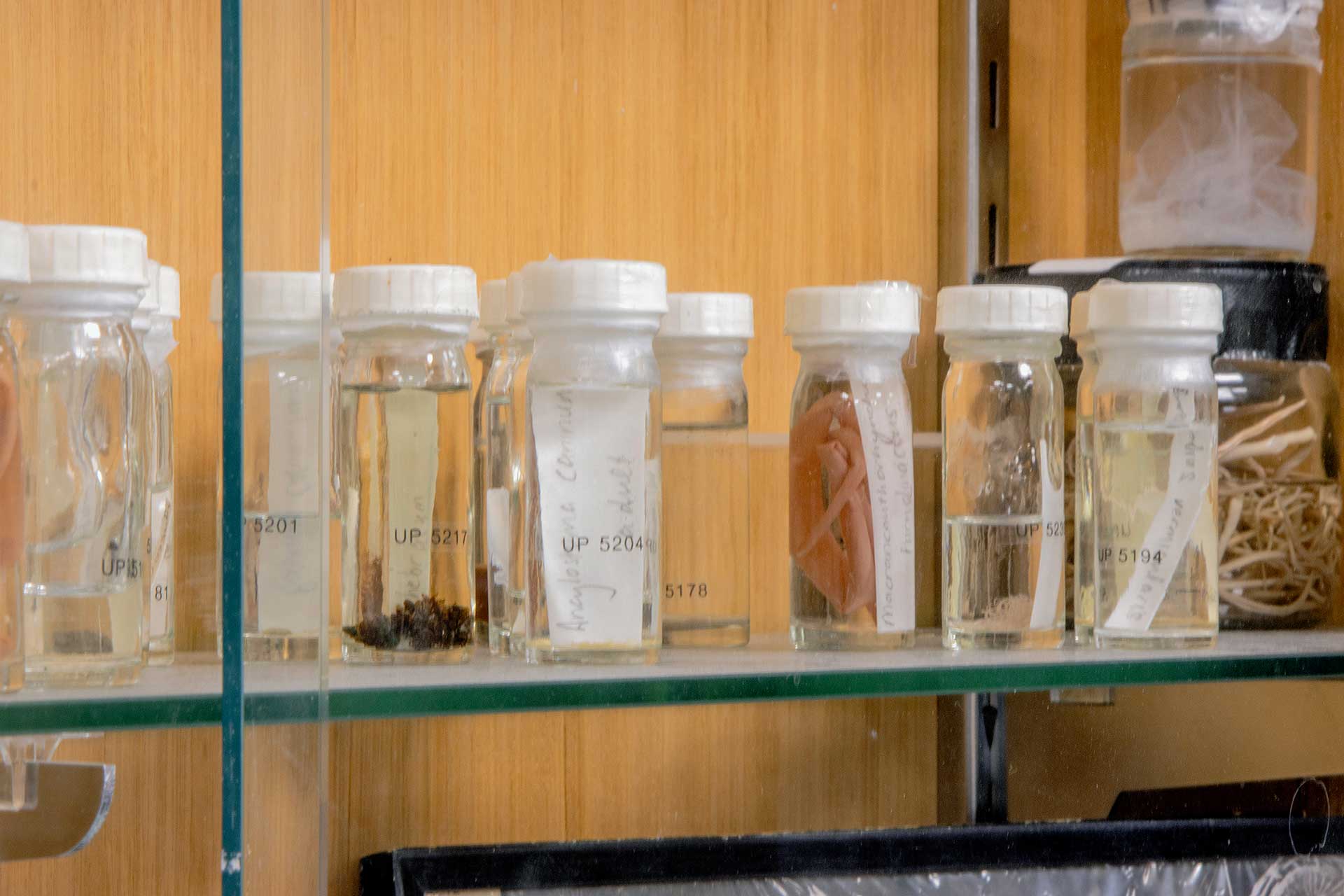
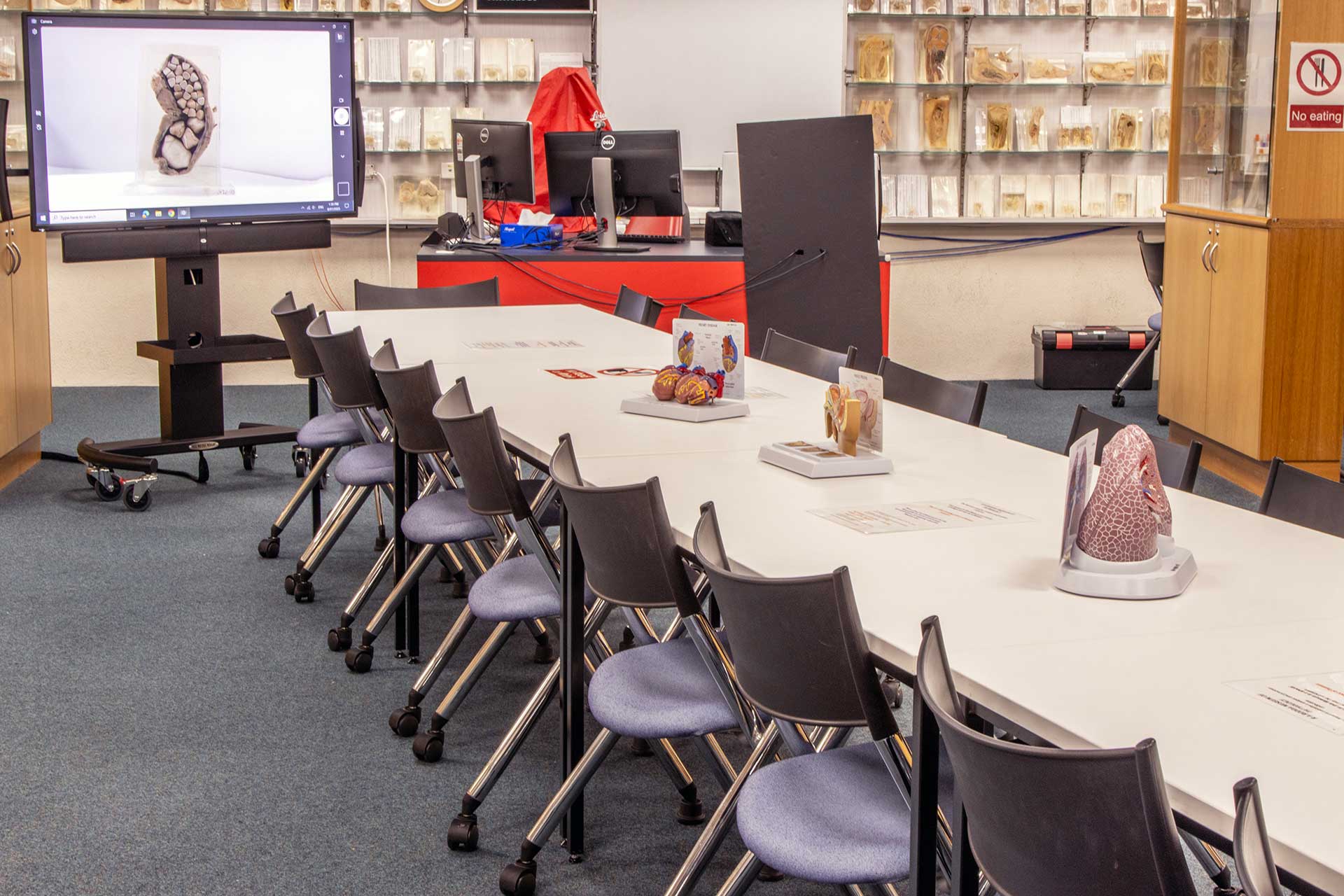
Established in 1966, the museum has approximately 2300 examples of diseased organs and tissues and in 2009 was assessed as a collection of State significance. The museum’s primary function is a resource for the teaching of University of Tasmania health students about disease, its cause and effect.
It was established by Professor Roland Arnold Rodda MD, who was tasked with creating a comprehensive pathology curriculum for the first medical student intake in 1965.
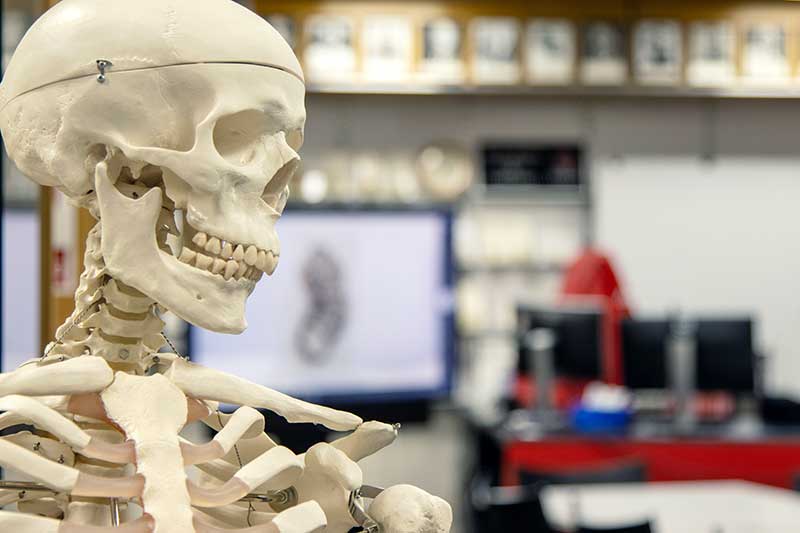
What is a pathology museum?
Pathology is the study of disease. The knowledge of disease allows students to recognise and diagnose disease as future doctors.
One of the best ways to teach about disease is by seeing it and hearing the stories of those affected by the disease.
Education
The RA Rodda Museum of Pathology contains approximately 2300 perspex boxes displaying disease processes and pathology in organs and tissues suspended in fluid that assists in their display and preservation.
Around 1200 cases are displayed in the RA Rodda Museum of Pathology with a card describing the clinical details (if known) and a discussion of the pathology displayed.
The medical students first learn about disease processes such as tissue injury, inflammation and neoplasia and then about how these processes affect tissues and organs in each system such as bone, joint, respiratory, cardiovascular, renal, reproductive, endocrine and neurological.
The RA Rodda Museum of Pathology was established in 1966 by Professor Roland Arnold Rodda MD, CHB, FRCPath, FRCP (1917-1993) who came to Tasmania from the University of Otago in New Zealand in December 1965.
He was the foundation Professor of Pathology of the University of Tasmania until his retirement in 1982 and the Dean of the Faculty of Medicine from 1967-1969.
In 1970 he became Director of Anatomical Pathology of the Royal Hobart Hospital. Professor Rodda had a diagnostic and research interest of neuropathology and was often consulted on cases involving pathology affecting the brain.
Professor Rodda came to Tasmania with Mr Brian McPherson, a 19 year old cabinet maker from Otago who meticulously made the perspex boxes which display diseased organs and tissues and kept the records of most of the cases in the museum today.
Mr McPherson was the inaugural curator of the RA Rodda Museum of Pathology until his retirement in 1991.
In 1970 the collection moved from the University’s Sandy Bay Campus to its current location at the Clinical School of Medicine in 43 Collins Street, Hobart.
In most cases, although consent for hospital autopsies and surgical removal of tissue was obtained, no specific consent for the retention and use of tissues was obtained. When it became apparent to the public in the 1990s that across Australia and internationally, tissues and organs were being retained by the pathologists at autopsies without the knowledge or consent of the next of kin, there was outrage.
This led to the discussion about the management of retained organs and tissues at autopsy around the world.
In Australia, this led to the Human Ethics Committee advice on Organs retained at autopsy, Ethical and Practical Issues prepared for the Federal Minister for Health, Dr Michael Wooldridge, and the National Guide for Autopsy Practice 2001 to be developed.
In response to the recommendations, advertisements were placed in major newspapers around Australia detailing how any concerned relatives could contact the institutions that held these cases. The RA Rodda Museum of Pathology was a part of this process.
In subsequent years, an audit of cases was completed and any enquiries addressed. The invitation to enquire is still applicable today. About a third of these cases were obtained from autopsies, both coronial and hospital and two-thirds from tissues surgically removed for the management of disease.
During the audit, it was recognised there were a small number of tissues and organs retained in Tasmanian Coronial autopsies.
Details of these were notified to and requested by the Coronial Division in 2016 and were the subject of the Coronial Project 2025.
These Coronial Cases are no longer in the RA Rodda Museum of Pathology collection.
The museum is located in Hobart and is part of the University’s Tasmanian School of Medicine. It is governed by an advisory committee.
The museum is a resource for teaching and is not open to the public.