

Kanalaritja (shell necklace) is a Palawa story, nurtured within community and spanning generations. Traditionally a female practice, extended family gathers together to create memories, stories and wearable treasures.
Shell stringing has a long history revealed through family stories, colonial exploits, and archaeological records. During the 20th century, shell stringing was maintained by a group of families on the Furneaux Islands, notably Cape Barren Island.
This entwined history demonstrates a story of strength, resilience and continuation. Even through periods of trauma and upheaval, shell stringing remains a thread linking community to culture, a gift to be cherished.

Family and the next generation
Knowledge about shell stringing is passed down through and across Palawa families. It is the responsibility of senior shell stringers to pass on knowledge about collecting, cleaning and stringing to younger women. The younger shell stringers are then responsible for maintaining a sustainable practice that is guided by cultural protocols.
"I’m just so thankful that I have the ability to pass it on to my daughter now and that continues in our family line for generations... It’s something that I really treasure."
– Fiona Green
Cultural practitioners
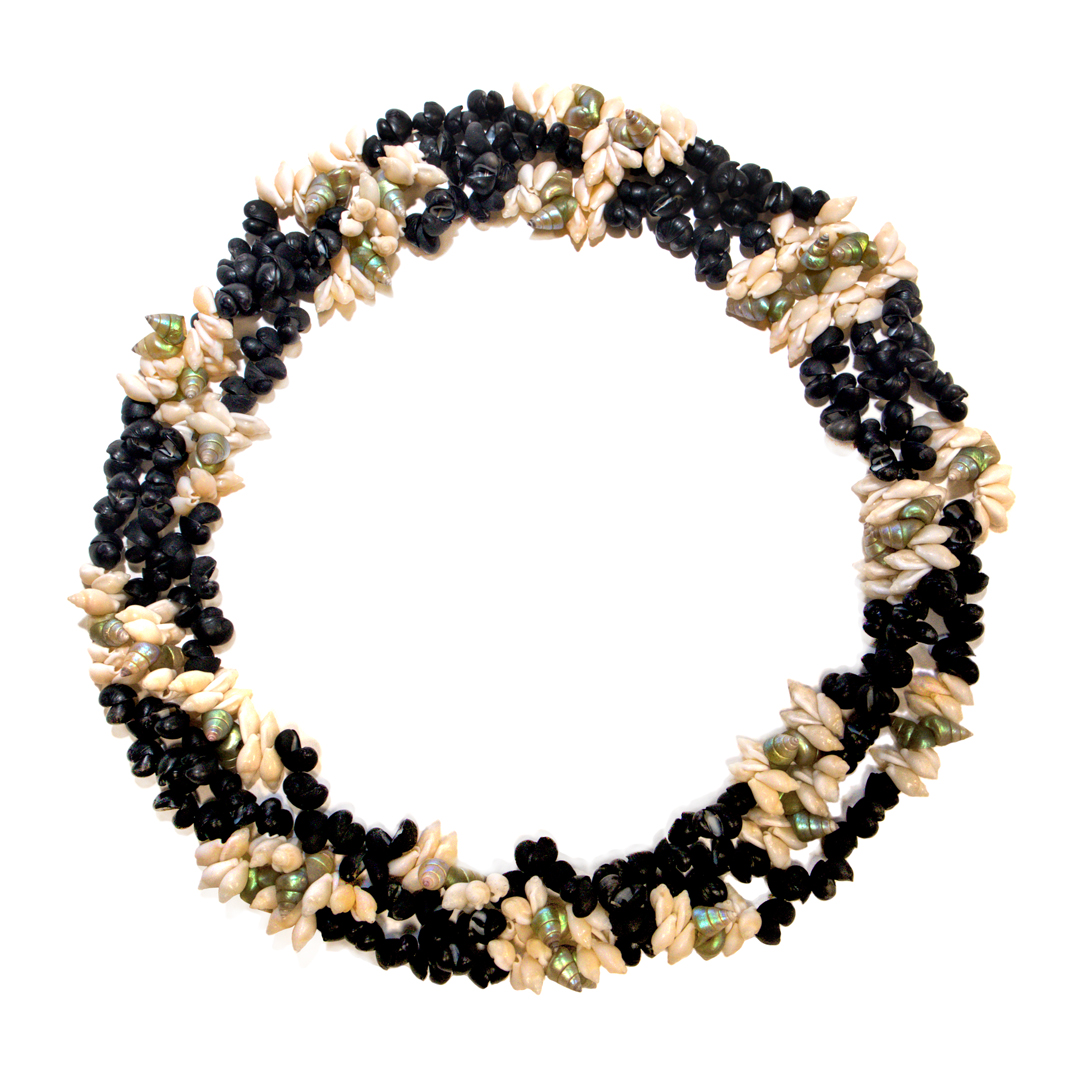
Aunty Lola Greeno
Born 1946, Truwana/Cape Barren Island
Necklace 2026
black crow, penguin, maireener shells
Commissioned with donated funds. UTAS.A.2026.10
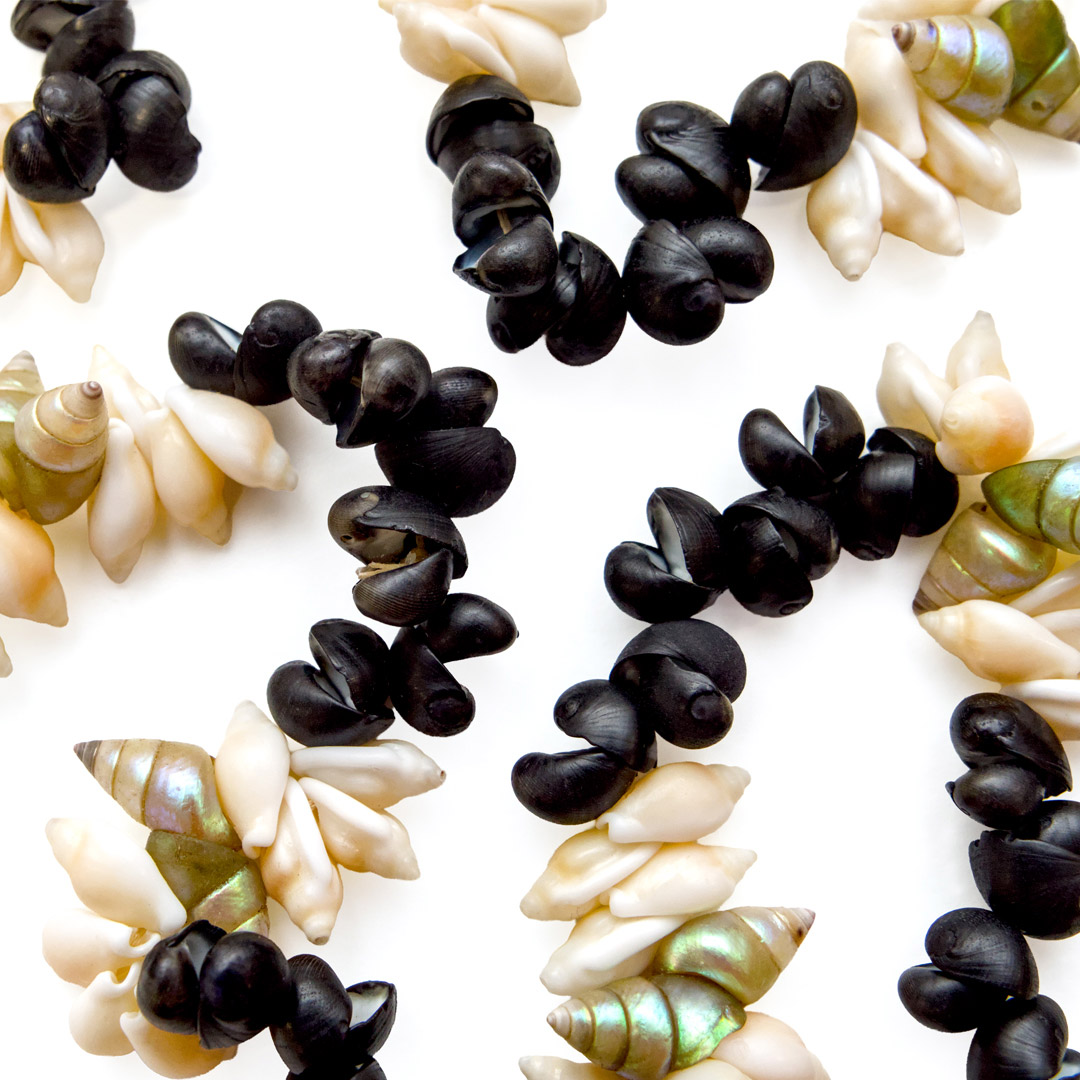
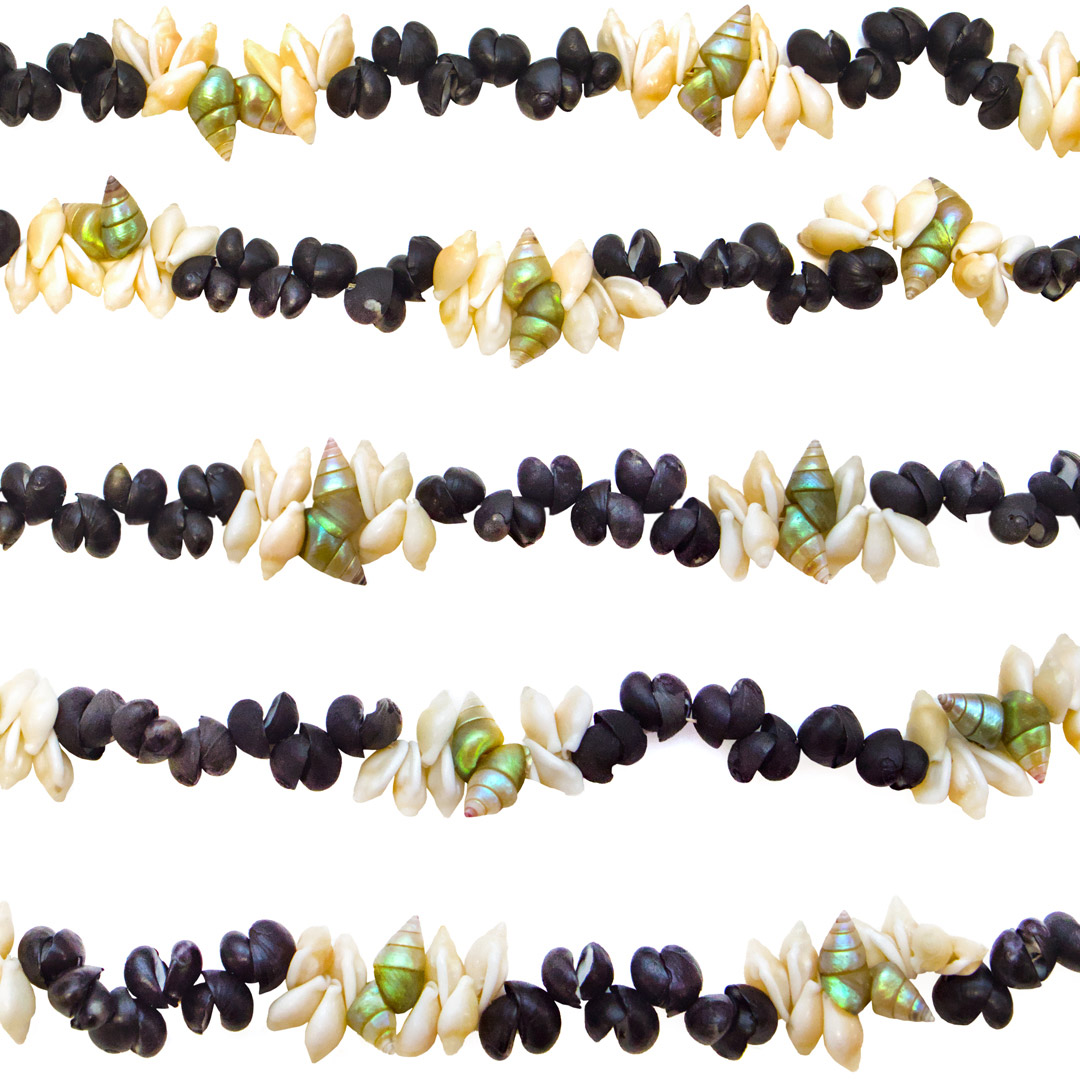
"We should definitely abide by the protocols handed down by our families, the traditional shell makers, our Elders, makers from Cape Barren Island families."
– Aunty Lola Greeno
My mother, my inspiration to shell stringing Valeria Amelia
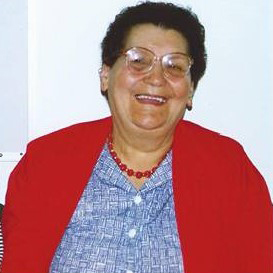
From a young age, Mum and I explored the beach near Prickly Bottom, accompanied by elderly women from the Corner on Cape Barren Island. Some Elders lived at Long Beach, while others came from the road to the airport. My inspiration to string shells came from my mother, Valerie Amelia Burgess, who lived at the Corner. This beach walk was my first experience of shell gathering. I listened to the Elders' teachings and learned to identify good shells from unsuitable ones. Mum and the Elders were prominent makers on Cape Barren, and their necklaces are now in several public collections, including the Bowman collection at the Furneaux Museum on Flinders Island and the Tasmanian Museum and Art Gallery in Hobart, Tasmania. I later discussed necklace-making with Mum, and we crafted a few pieces together. Some of these were exhibited at Redback Gallery in Queensland and acquired by the National Gallery of Australia in Canberra, marking our starting point in the late 1980s.
Today, my mother's and my shell necklaces have been collected by most Australian museums and art galleries across the country, as well as by many private collections overseas. My primary interest today is to follow the research study being conducted on marine shells around the Furneaux Islands. The results show a marine disease affecting seabeds and the breeding, quality, and quantity of more than one species of shell. The Tasmanian Aboriginal people are involved in conversations with qualified scientists.
Title: Luna Palawa
I chose the necklace in this display because I consider the maireener shells to represent all our shell-stringing ancestors. The maireener shell is the traditional shell used by early makers. It is a very strong shell and the most time-consuming to gather and process. It involves collecting a few each day during the spring tide, when the tide is at its lowest for a few days. The shells are then rinsed and cleaned to remove the skin or outer coating, either by natural means or with a chemical solution. The shells are then soaked in cold water overnight, dried on newspaper the following day, then pierced, ready to be sized and threaded into a necklace.
Note: maireener is my spelling for Marina Shell.
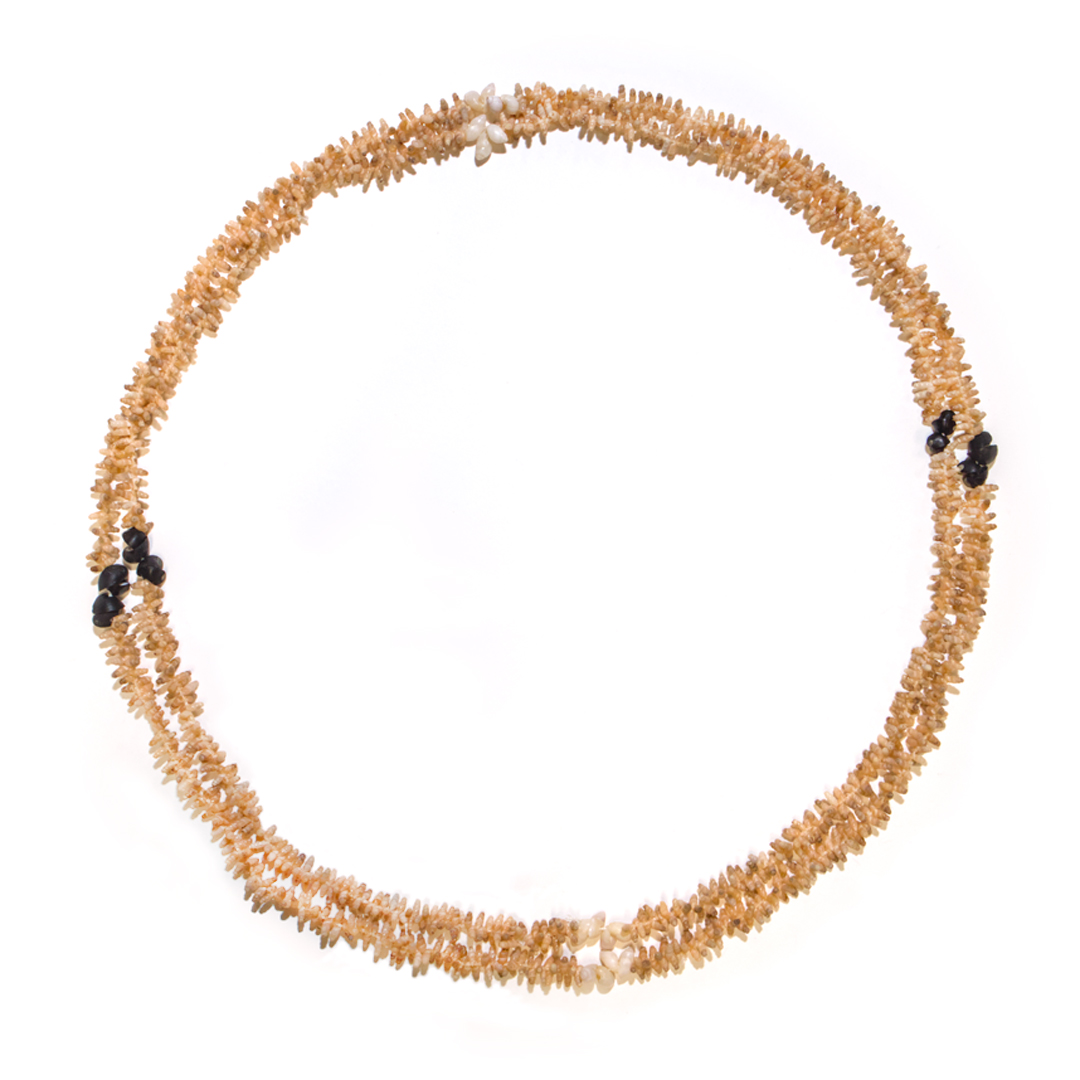
Bianca Templar
Born 1994, Launceston
Necklace 2026
black crow, toothie, rye/rice, maireener shells
Commissioned with donated funds. UTAS.A.2026.9
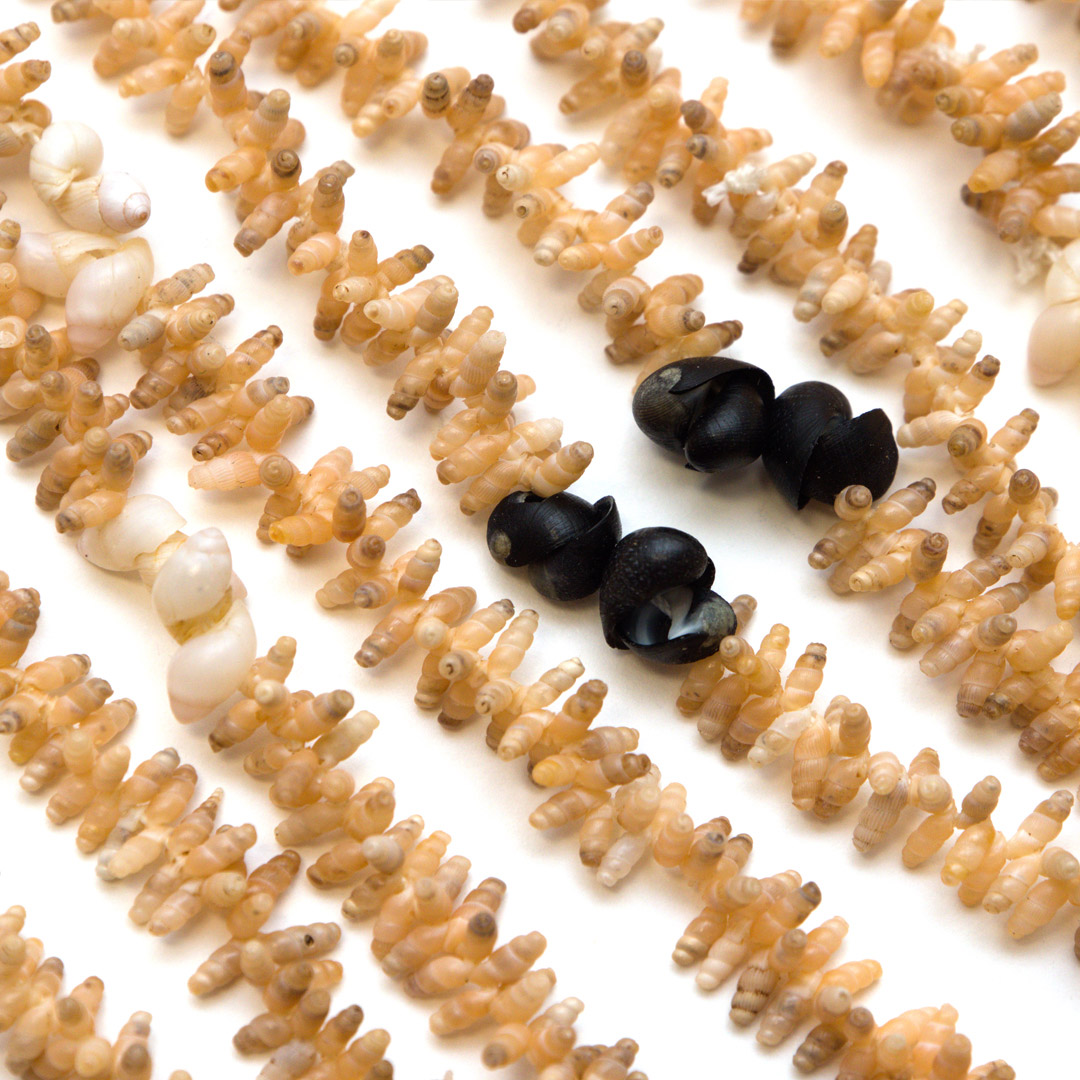
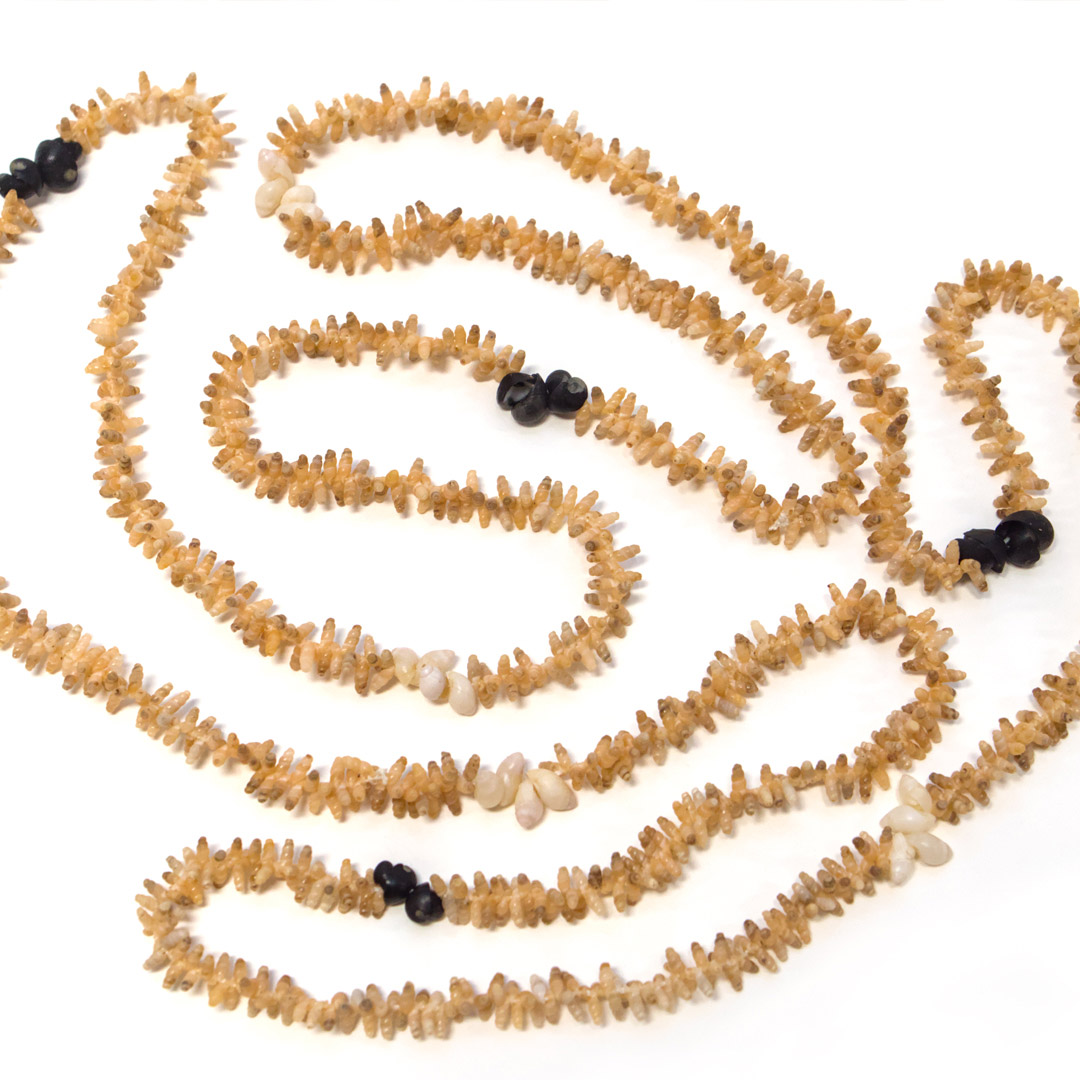
"The main thing that nan taught me was to ensure that I am collecting in a way that is sustainable and respectful to Country."
– Bianca Templar
Story
Growing up was difficult, not only because of my disability but because of the circumstances I was raised in. Having nan take care of us during a time of uncertainty bonded us too her. But having her teach me shell stringing, a craft held dear to her heart, allowed me to feel bonded to my Ancestors and I hope will make my child and future grandchildren feel a sense of connection to nanny Gloria.
Before nan passed away, she gave me all her shells. I've kept them and put them away to use to teach Katina stringing or any other family members. For this project I used nans shells and strung the necklace in her style with my touch of adding the additional shells, two for her, two for me.
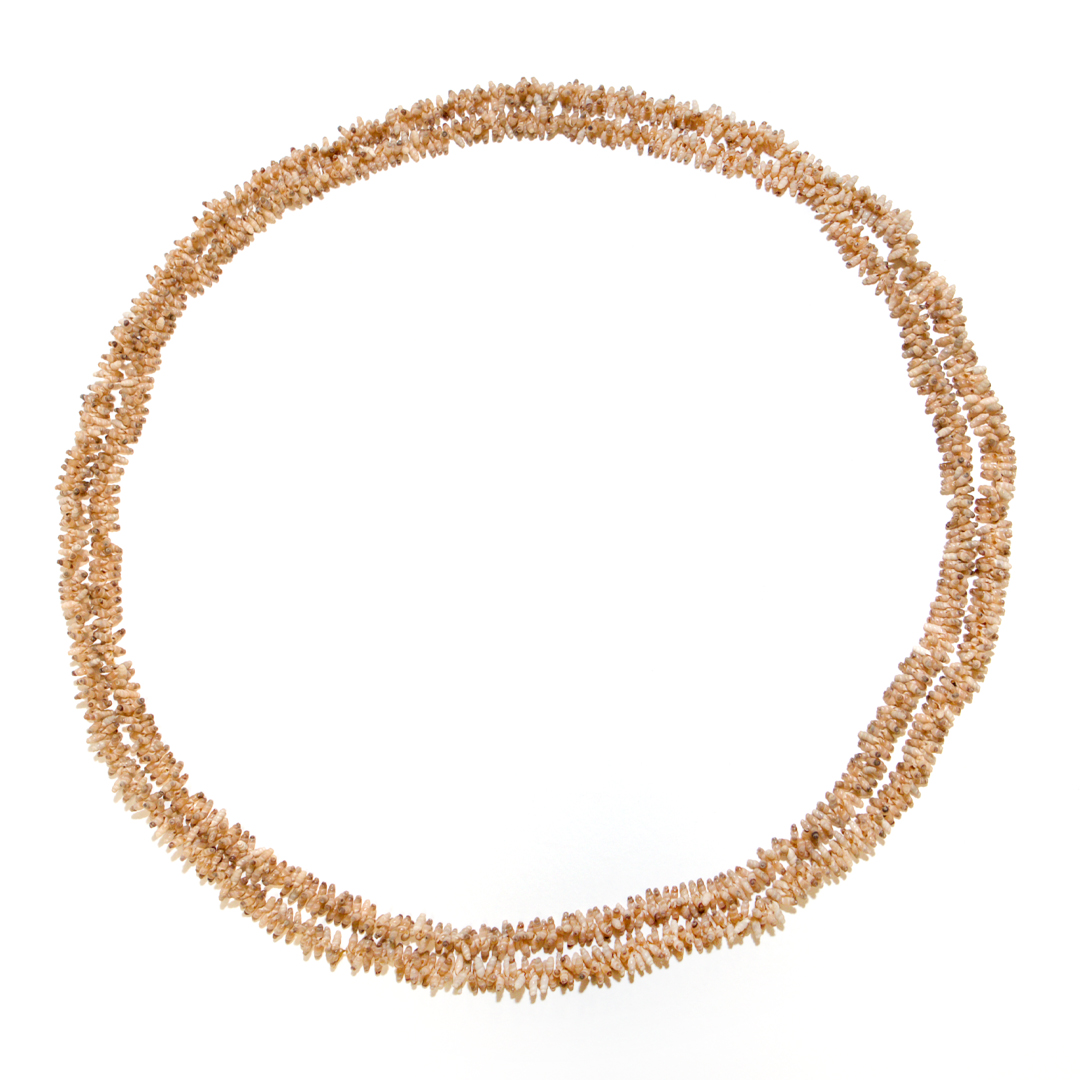
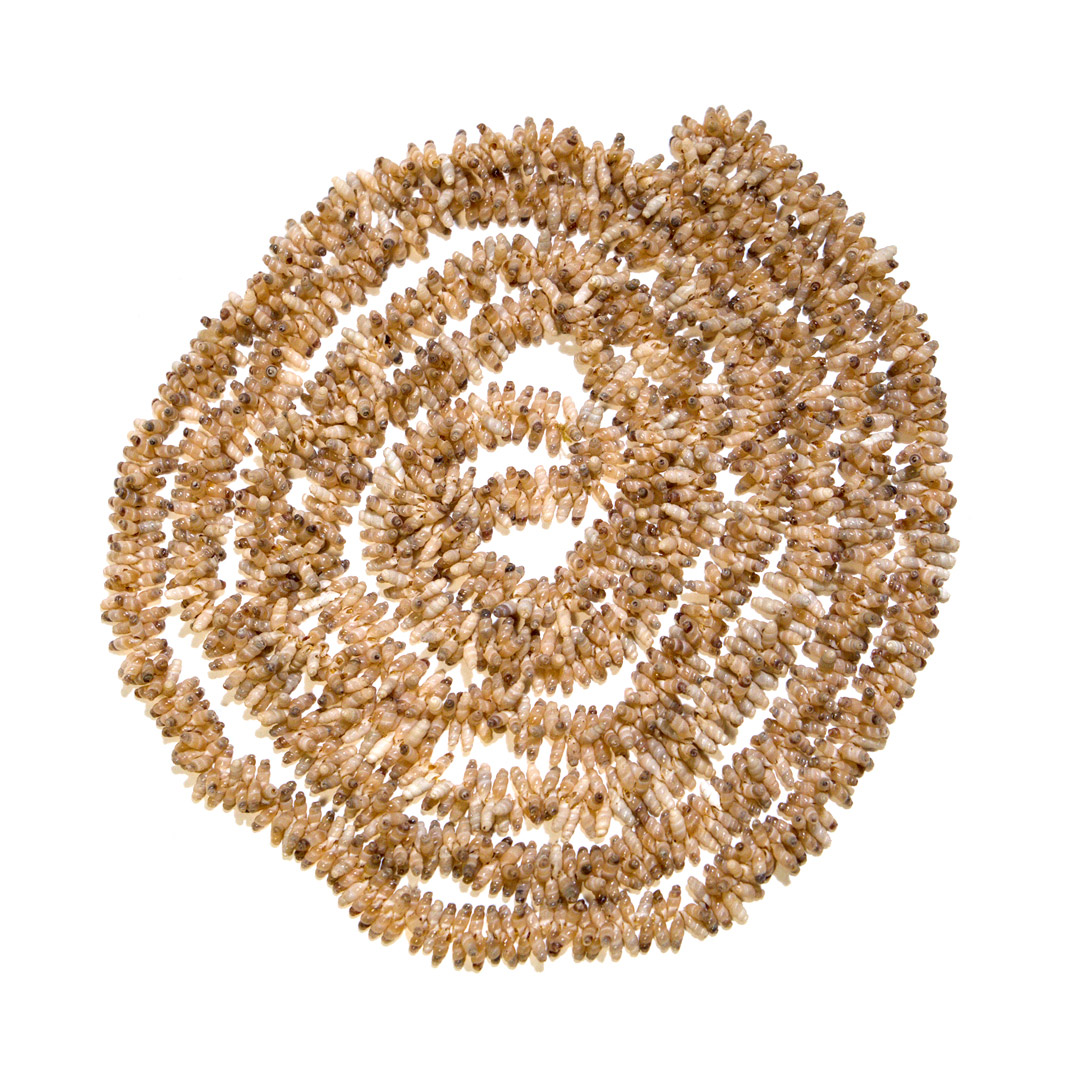
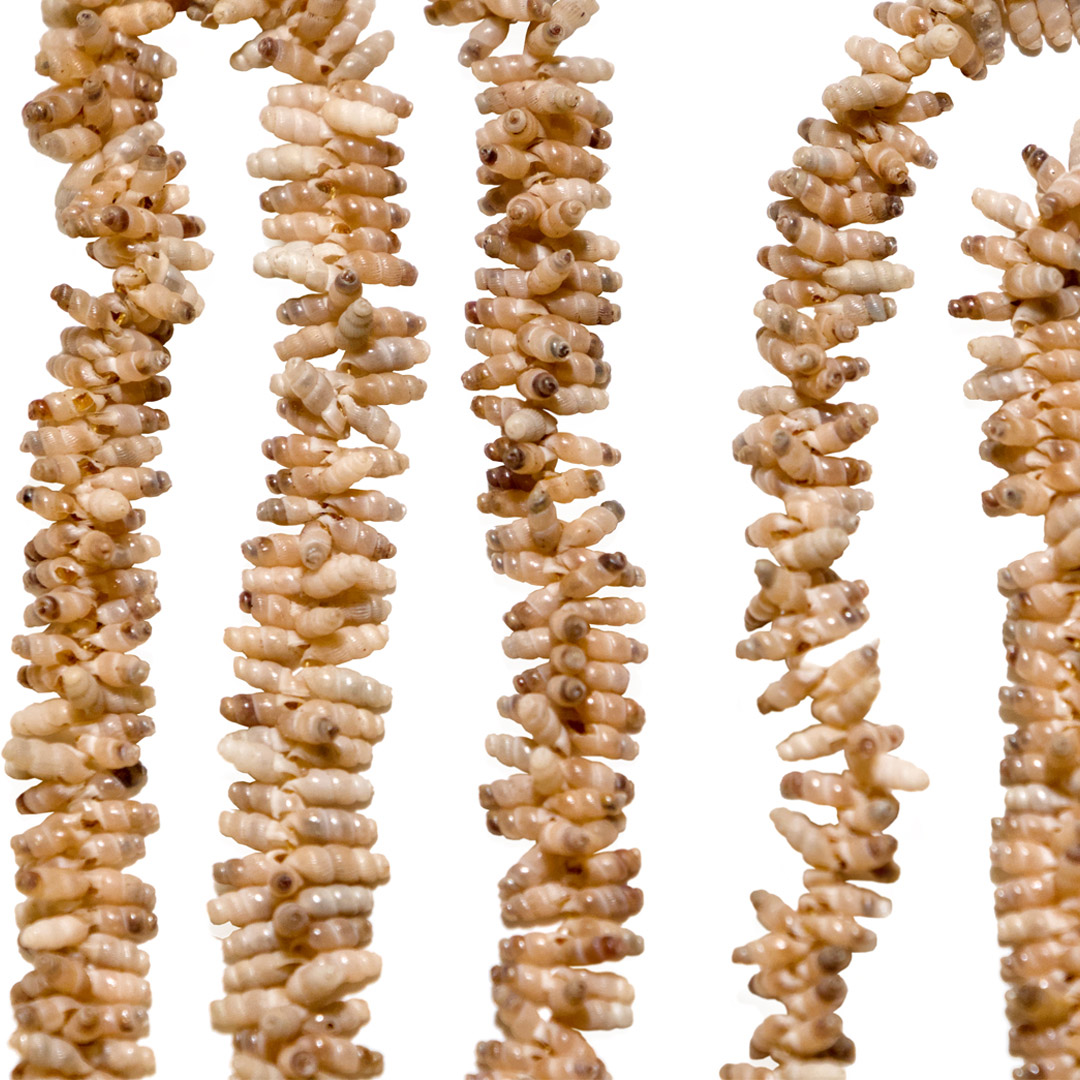
Takira Simon-Brown
Born 1983, Nipaluna/Hobart
Necklace 2026
rye/rice shells
Commissioned with donated funds. UTAS.A.2026.19
Story
I started shelling when I was just four years old. I lived on Cape Barren Island as a youngen spending time at Prickly Bottom sifting through the sand and seaweed for the best shells for my grandmother, Joan Brown, and my mother, June Brown.
I am naturally inclined to music like my grandfather Devony Brown, who was a member of the Brown’s Boys Grass Blues Band and played the Ukulele. My father played guitar and so I watched and spent many years learning the art of playing multiple musical instruments.
My father was a printer and my mother an artist in petroglyphs. Through school I was educated in Music, Art, Drama and Woodwork.
I moved into art commission work and have designed many artistic creations over the last decadeincluding workware for the Royal Hobart Hospital, sports clubs, businesses and public art murals for locals to walk past in Hobart, on Patrick Street, Argyle Street and Evans Street Carpark where the Stadium is going. I have also completed other projects including artwork for the Deadloch TV Series, catwalk runways, and Reconciliation Action Plans.
After my mother passed away in October2025, I went back to Cape Barren Island to spend time with my family. I collected the last shells my mother gathered and created the necklace you see on display here today.
This necklace is special and means alot to me, as my mother’s spirit lies in the shells she strung to make this necklace, threading my own spirit into the weavings of the necklace so that my mother and I are part of the necklace together spiritually.
Protocols and Indigenous Cultural and Intellectual Property (ICIP)
Cultural protocols guide behaviours and practices to ensure shell stringing is correctly passed from generation to generation. These protocols are vital in maintaining the continuity, sustainability and cultural integrity of shell stringing.
ICIP rights protect the cultural knowledges and practices that are shared outside the Palawa community. When cultural protocols and ICIP are understood, we can work together to ensure the continuation of kanalaritja.
"Listening to your Elders and respecting Elders and learning the Aboriginal way of doing things is really, really important."
– Fiona Green
Cultural practitioners
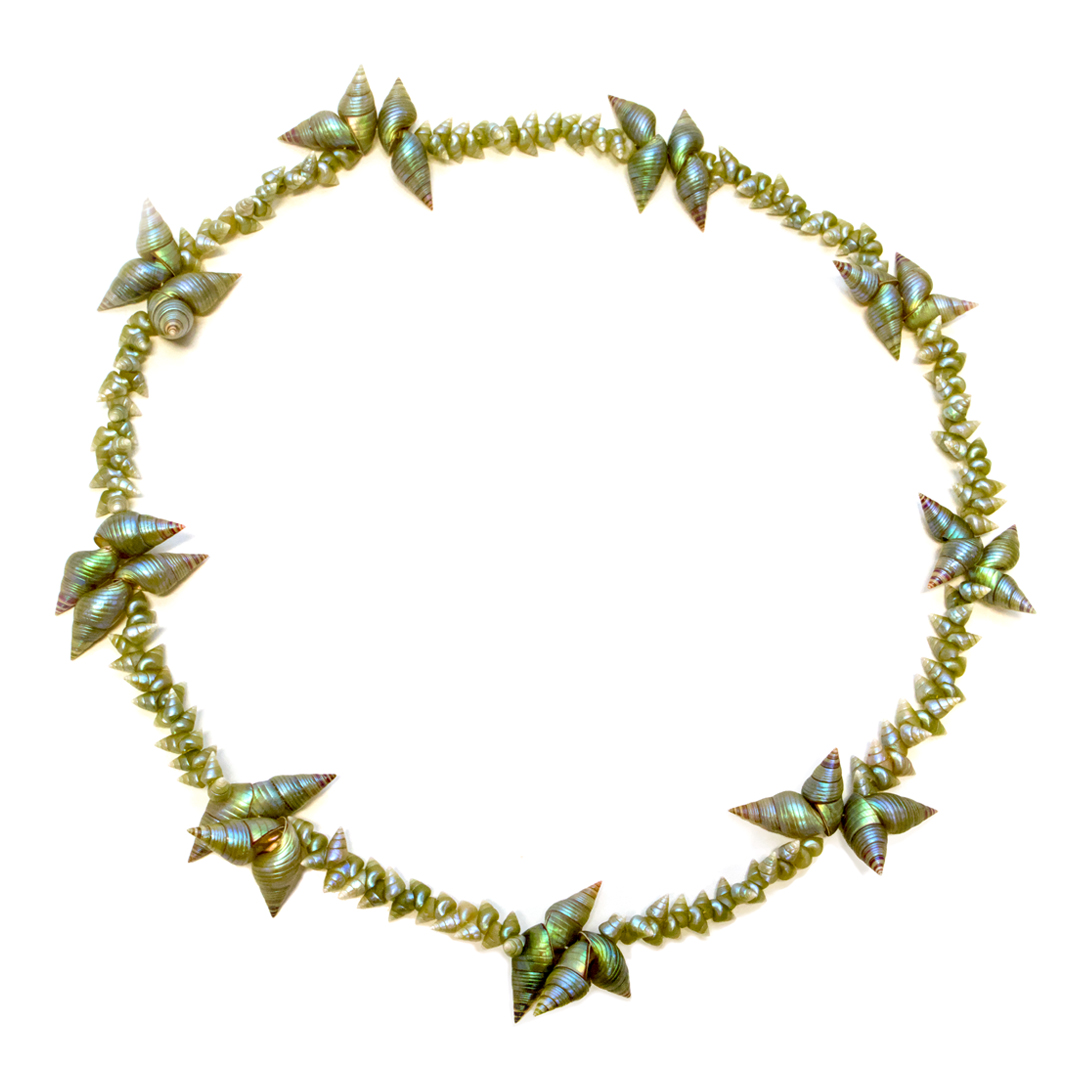
Fiona Green
Born 1981, Limilinaturi/Devonport
Necklace 2026
king maireener, maireener shells
Commissioned with donated funds. UTAS.A.2026.16
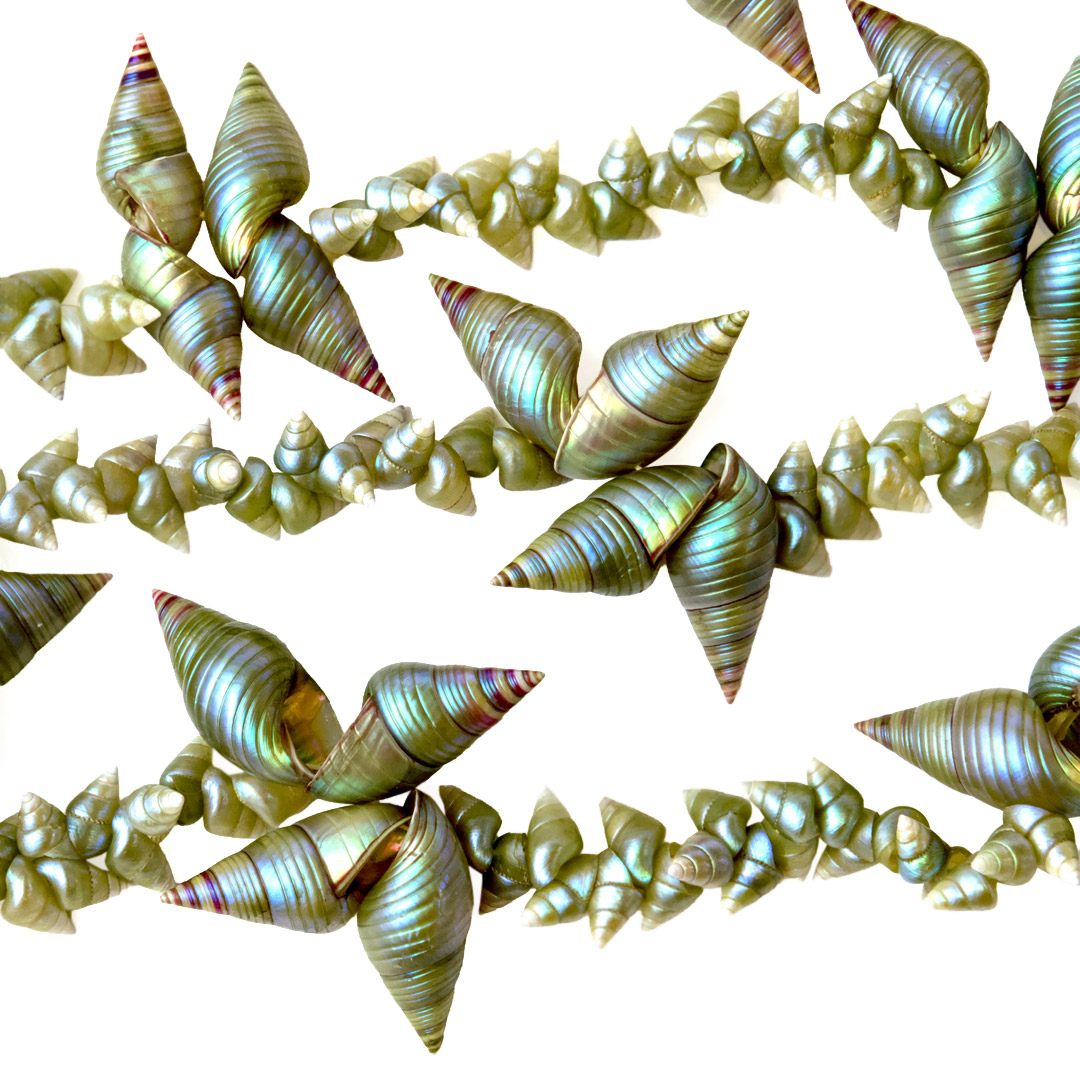
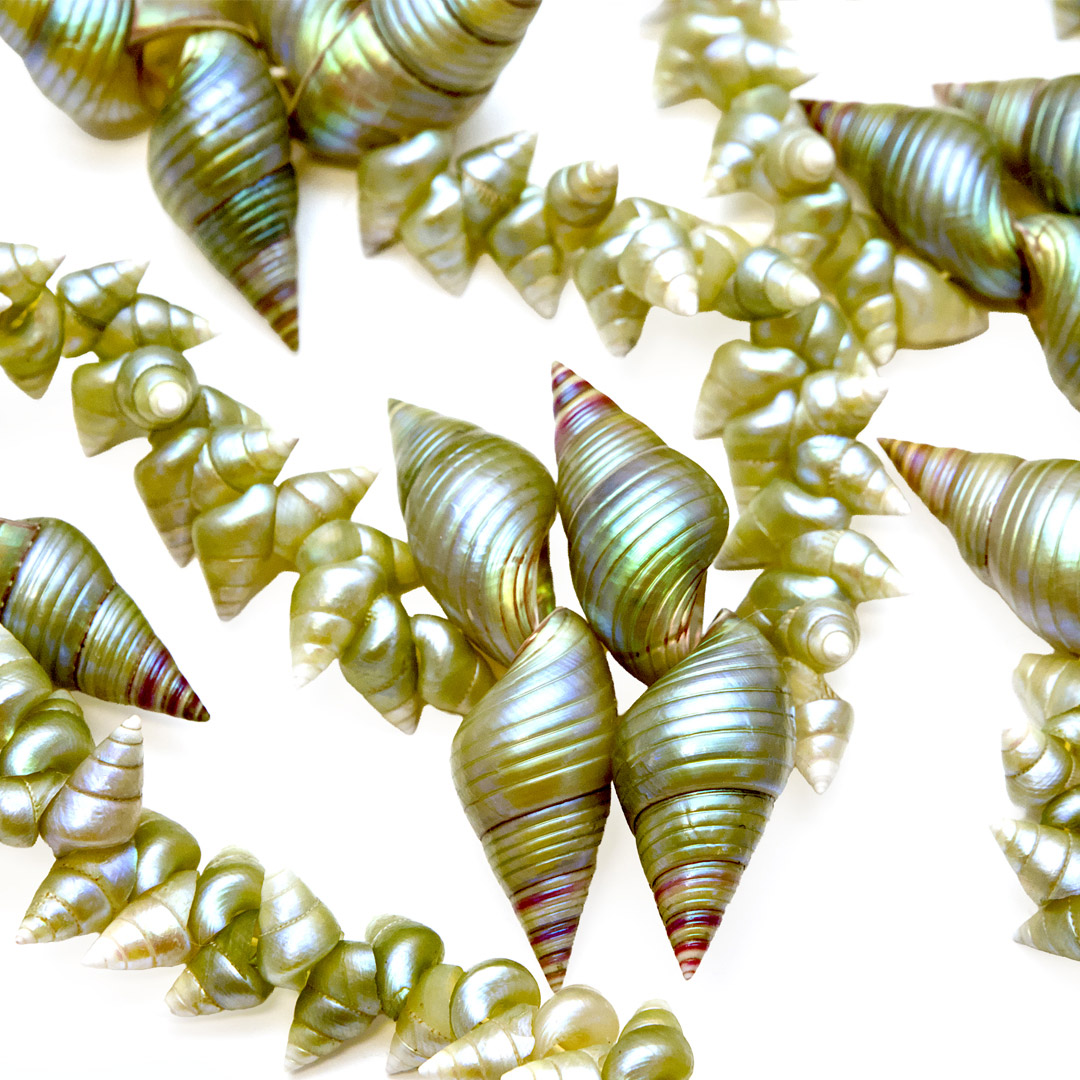
"There is a time and a place, that the Elders see in you, that you are ready to learn kanalaritja. You might not be ready to learn in your twenties. It might be something that will come to you when you age."
– Fiona Green
Necklace – A story of connection
This necklace tells a story of Sea Country, connection, and cultural continuity. At its centre are four King Maireener shell clusters representing the Palawa Creation Story. Surrounding them are nine clusters, symbolising the nine nations of lutruwita (Tasmania). The Maireener shells form the connections between these nations, reflecting the relationships that have existed across Sea Country for countless generations.
The shells represent more than adornment; they carry stories, knowledge, and memory. Just as the ocean connects the shores of lutruwita, the Maireener shells connect people, places, and stories. This necklace acknowledges Sea Country as a source of life and learning, and honours the importance of storytelling in maintaining cultural identity, strengthening community connections, and carrying knowledge forward for future generations.
My Journey into Kanalaritja
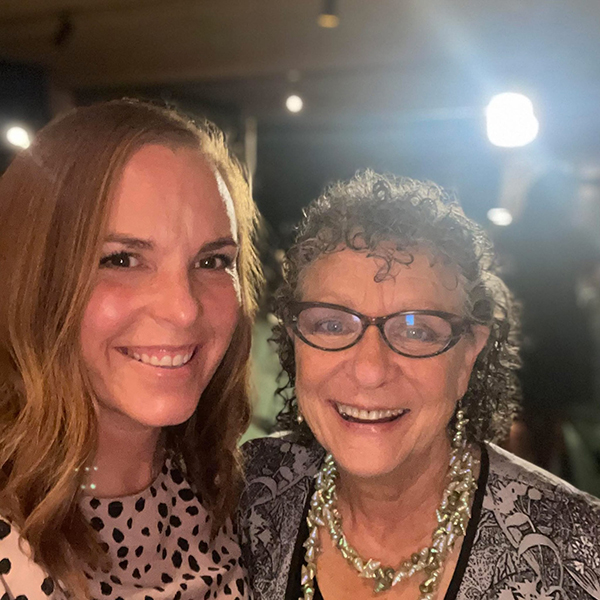
Kanalaritja, the cultural practice of stringing maireener shells, is much more than an art form. For me, it is a journey of connection – to Country, to family, to Ancestors, and to the living continuation of Palawa culture. Through kanalaritja, I have come to understand the deep responsibilities that accompany cultural practice and the importance of ensuring that this tradition remains strong for future generations.
My journey began through learning from Elders and family, maikatenna Vicki Green, who generously shared her knowledge, skills, and cultural teachings. Watching the careful process of collecting, sorting, cleaning, and stringing maireener shells taught me that kanalaritja is not only about creating beautiful shell necklaces but also about maintaining relationships with the environment that provides these precious shells. Every step carries cultural meaning and reflects thousands of years of connection between Palawa people and the coastal Country of lutruwita.
As I spent more time collecting maireeners along our shorelines, I developed a greater appreciation of the delicate balance that allows these shells to thrive. The beaches where maireeners are found are living cultural landscapes that require care and respect. Collecting shells is not simply about taking from Country; it is about understanding when to gather, what to leave behind, and how to ensure the environment can continue to sustain future generations. This knowledge has been passed down through generations and remains essential to the continuation of our cultural practices.
Sustainability sits at the heart of kanalaritja. Today, environmental pressures such as coastal erosion, changing weather patterns, pollution, and increasing human activity can affect the habitats where maireeners live. These challenges remind us that the future of shell stringing depends on the health of our coastal ecosystems. As cultural practitioners, we have a responsibility to be mindful collectors, taking only what is needed and respecting the natural cycles that support the shells and the broader environment.
The collection of maireeners is also an act of cultural stewardship. When we care for these shell populations, we are protecting not only a natural resource but also an important cultural inheritance. Each shell necklace carries stories of resilience, identity, and survival. They represent the enduring strength of Palawa women who have maintained these practices despite the impacts of colonisation and attempts to disrupt cultural traditions. By continuing to collect and string maireeners in sustainable ways, we honour those women and the knowledge they carried forward.
For me, kanalaritja has become a way of strengthening cultural identity and contributing to the intergenerational transfer of knowledge. Sharing these skills with younger generations helps ensure they understand not only the techniques involved in shell stringing but also the responsibilities that come with cultural practice. It is important that our children and grandchildren have the opportunity to walk the beaches, learn from Elders, collect maireeners respectfully, and continue the stories embedded within every shell necklace.
Looking to the future, I believe the sustainability of maireener collection must remain a priority. This requires cultural education, environmental care, and ongoing advocacy for the protection of coastal habitats. It also requires recognition that traditional ecological knowledge plays an important role in caring for Country and maintaining biodiversity. By bringing together cultural knowledge and environmental stewardship, we can help ensure that maireener shells continue to be available for generations to come.
My journey into kanalaritja continues to teach me that cultural practice and environmental responsibility are inseparable. Every shell collected, every necklace created, and every story shared contributes to the continuation of an ancient tradition. Through respectful and sustainable collection practices, we can honour our Ancestors, care for Country, and ensure that the art of kanalaritja remains a living expression of Palawa culture for generations yet to come.
Born 1960, Flinders Island
Necklace 2026
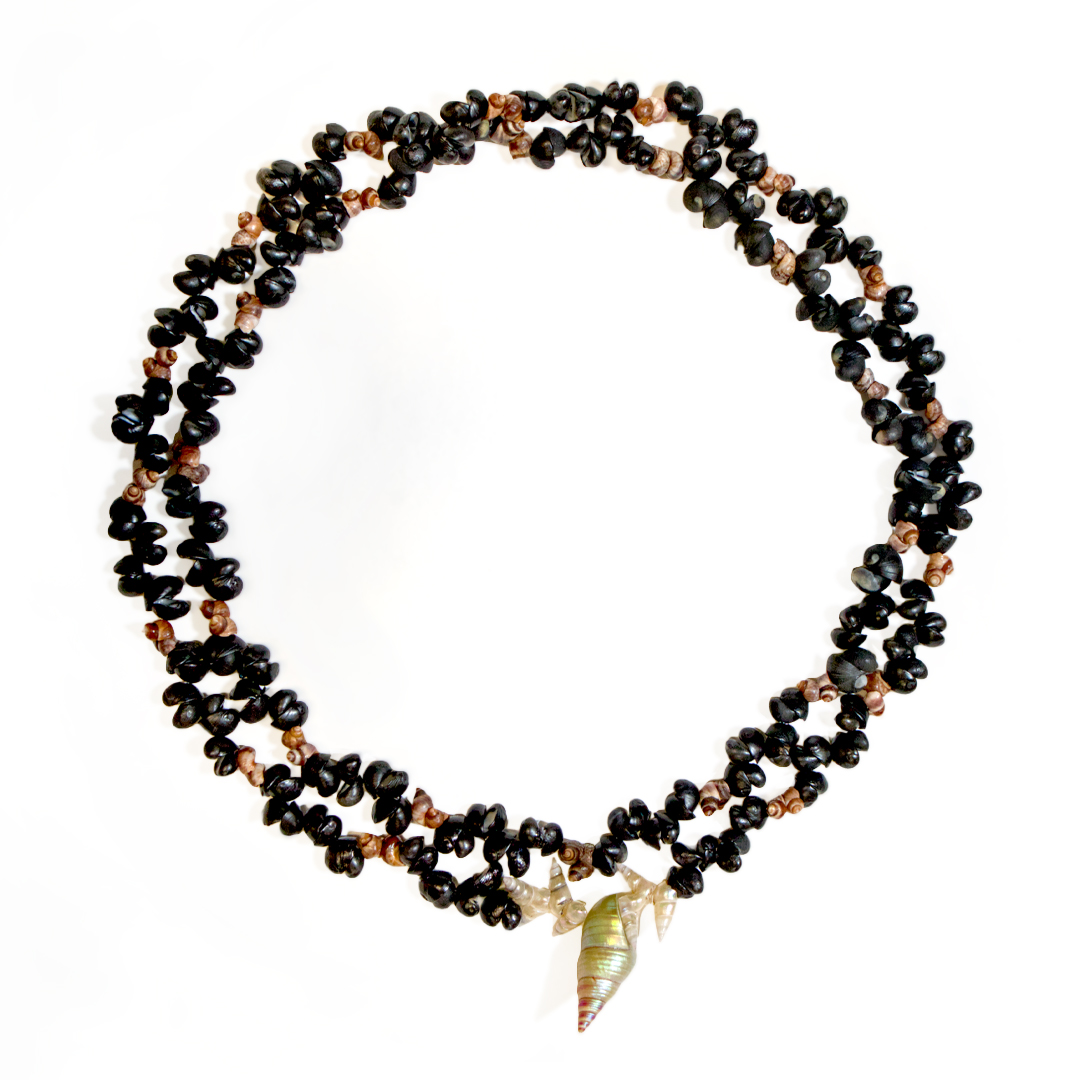
maireener, black crow
Commissioned with donated funds. UTAS.A.2026.20
Charlyse Greeno
Born 2001, Naarm/Melbourne
Necklace 2026
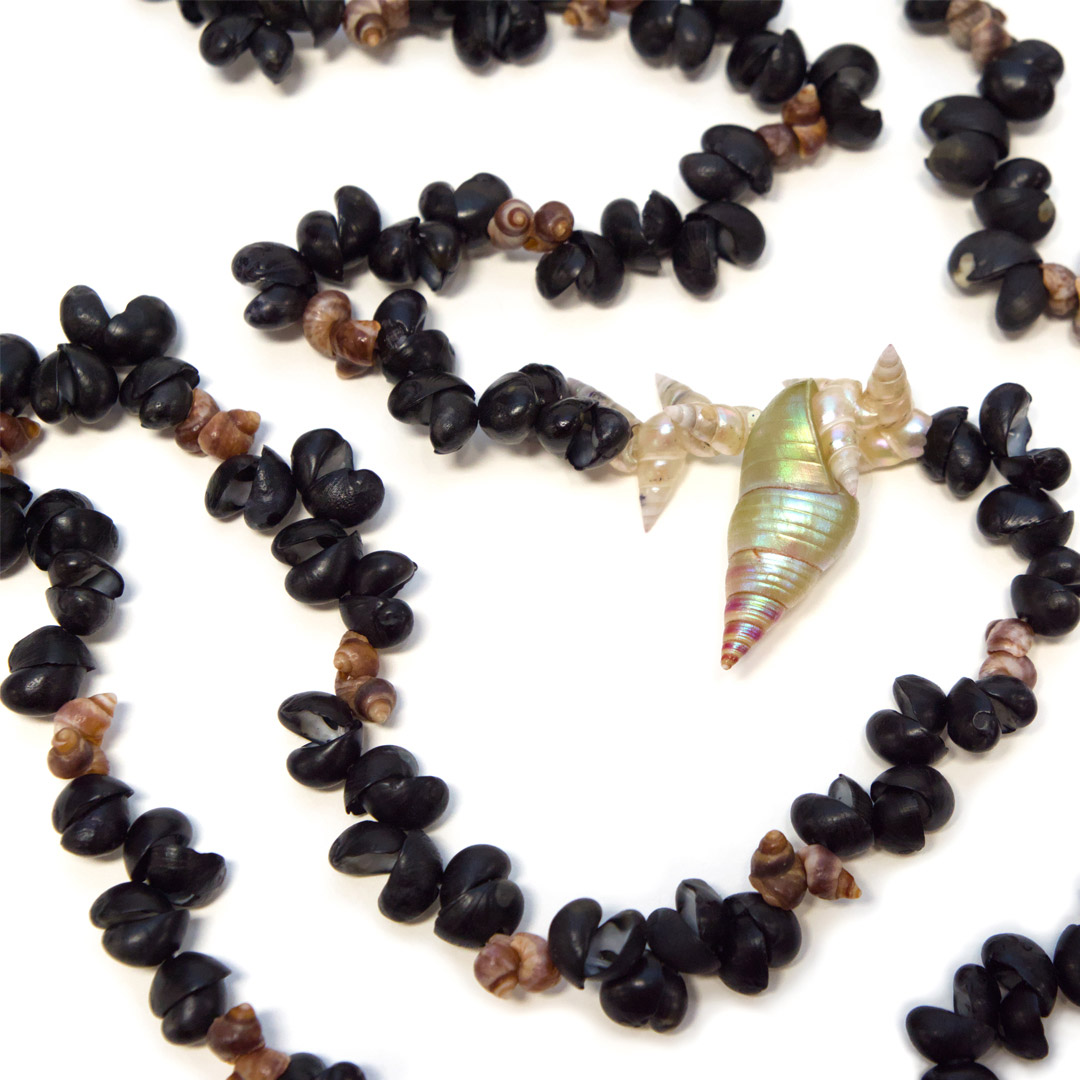
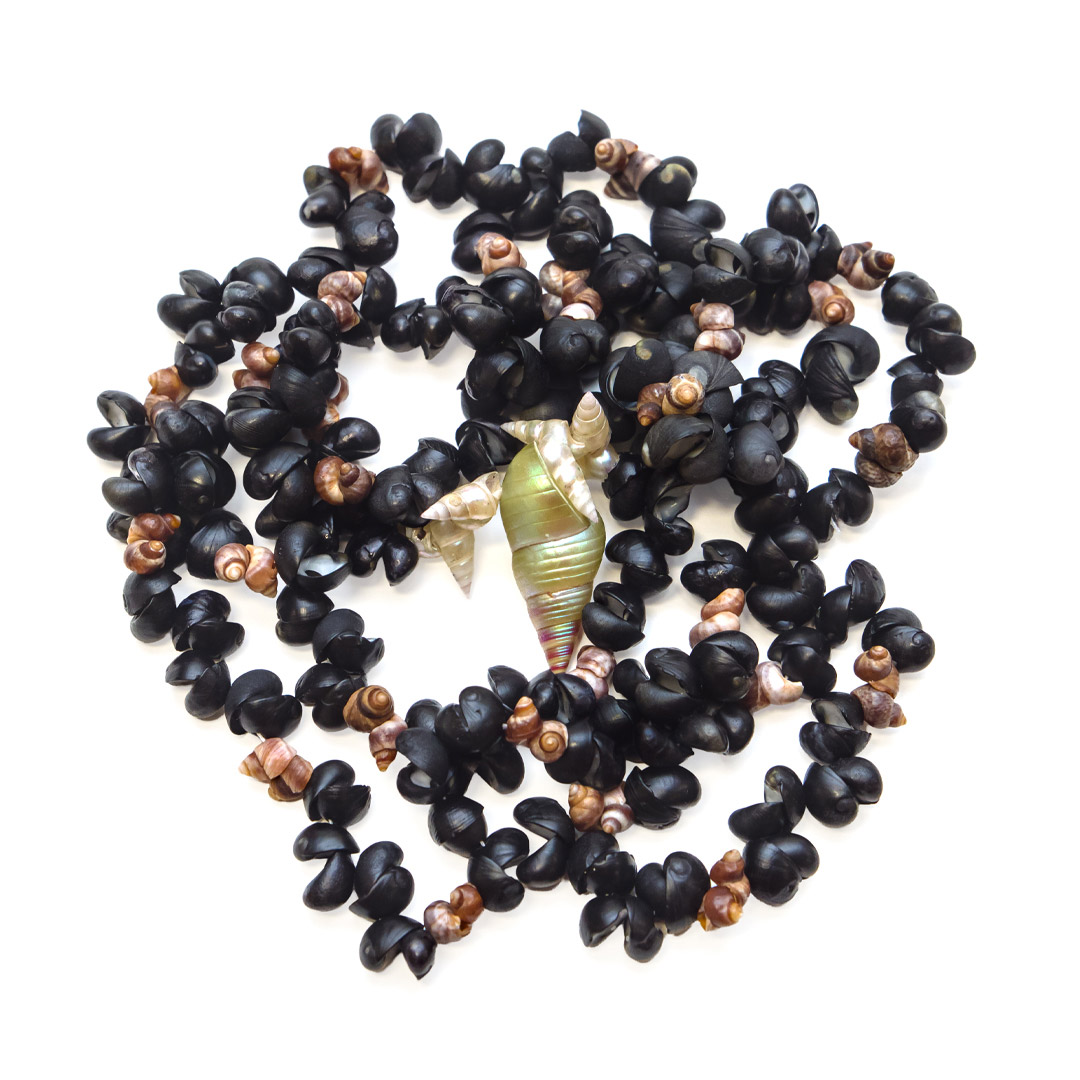
black crow, brown gull, maireener, silver banded kelp shells
Commissioned with donated funds. UTAS.A.2026.12
Story
The title of the necklace is ‘Knowledge passed through the stars’. The reasoning behind it is that the pattern is based on my Night Sky pattern, adding in the king maireener shell and rearranging the pattern. I wanted to show that the central focus is on the king maireener with the silver kelp banded shells around them and then branching out to the black crow and brown gull shells. The idea behind the pattern is to show the years of knowledge passed down through the generations, and how it soon fell to me to continue passing it on to future generations.
As for stringers and family members, my Nan and Aunt are my two mentors or the people I mostly learned shell stringing from. I don’t have that further back history like my Nan or Aunt have but I try to learn as much as I can from the pair.
Cultural continuity and contemporary innovation
Although shell stringing is a traditional cultural practice, it is also dynamic and fluid, integrating new materials into a contemporary practice. Palawa Ancestors would string large shells on twined fibre and kangaroo sinew. Today, stringing also includes a wider variety of shell types, different forms of thread, and contemporary jewellery materials.
"Because you are representing your people with putting these necklaces out there, they need to be perfect."
– Ashlee Murray
Cultural practitioners
Aunty Jeanette James
Born 1952, Launceston
Necklace 2026
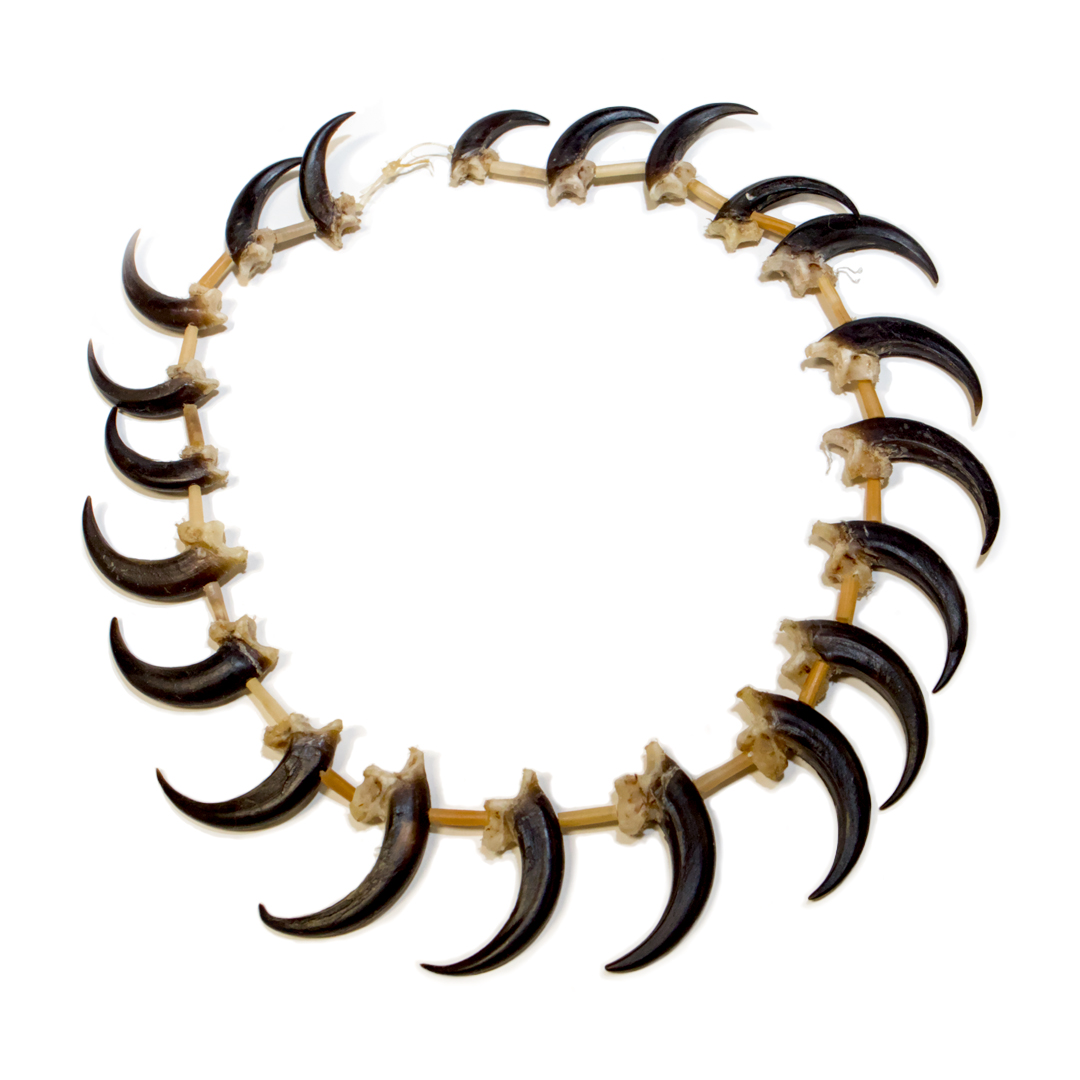
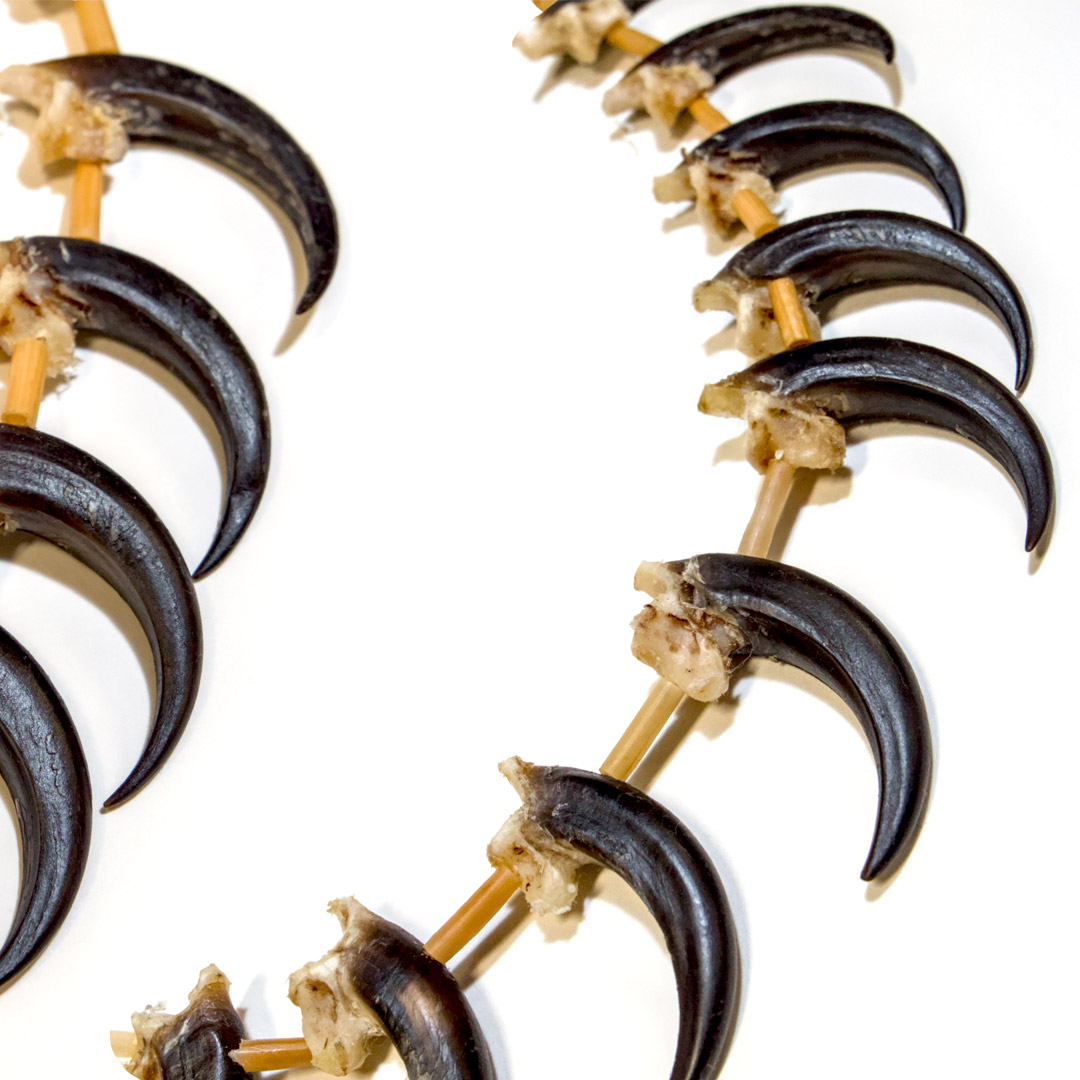
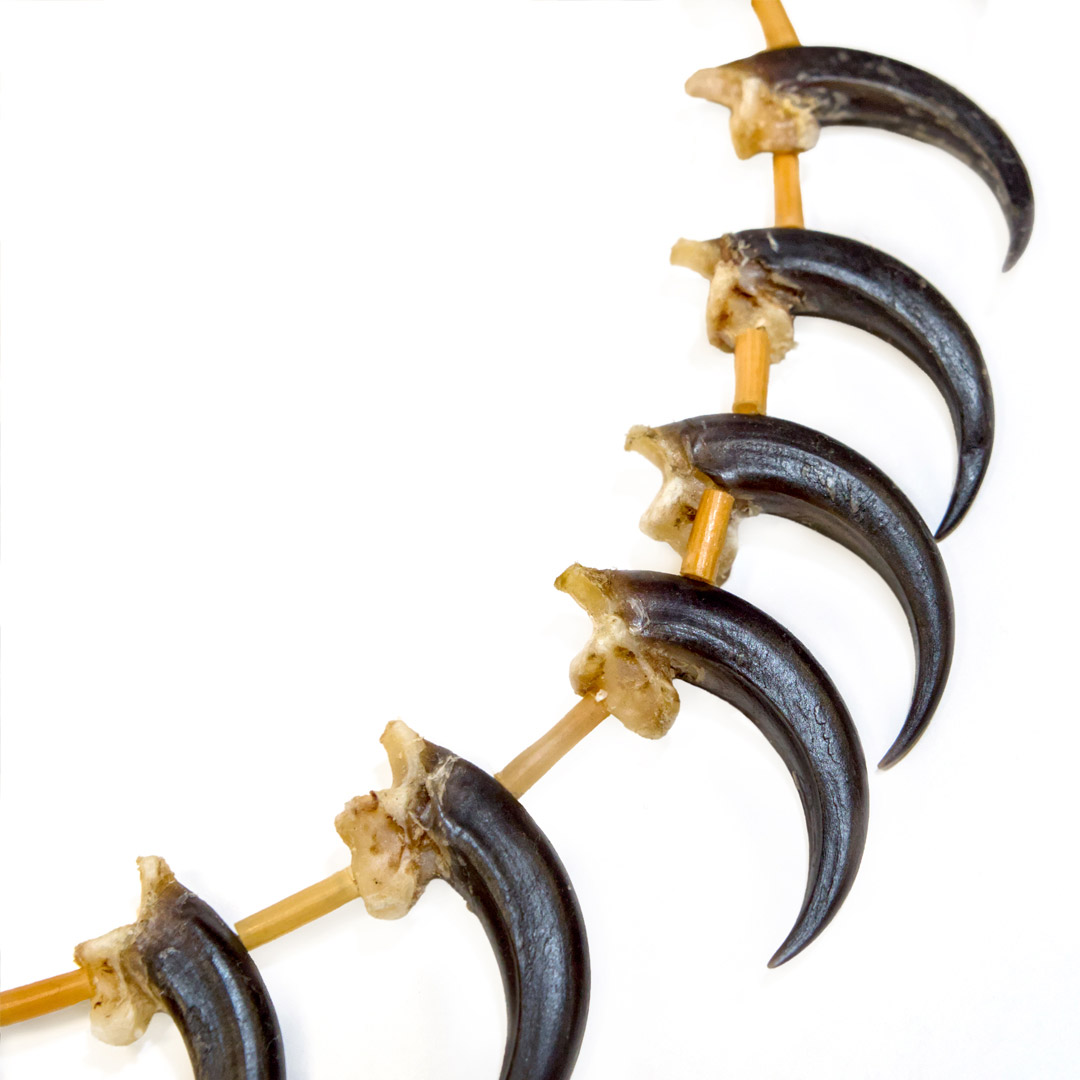
eagle claws, kangaroo sinew, echidna quill spaces
Commissioned with donated funds. UTAS.A.2026.14
Story
The eagle claws to make this necklace were provided to the artist by the Tasmanian Museum and Art Gallery who in partnership with Tas Networks have been responsible for the project.
”Investigating the causes of death in birds of prey"
The Artist has a special permit to use provided eagle claws in her artwork.
My shell stringing mentors:
- Corrie Fullard ne Mansell (mother)
- Dulcie Greeno ne Mansell (aunt)
- Kate and Silas Mansell (grandparents)
- Jessie Holt (great grandmother)
Born 1964, Flinders Island
Necklace 2026
maireener shells
Commissioned with donated funds. UTAS.A.2026.17
Biography
I am a saltwater woman (muka luna) from the Trawlwoolway nation, Northeast Tasmania. A senior cultural practitioner, knowledge keeper, artist/designer and Elder of our community.
My work is inspired by Country and life growing up on an island in the Tayaritja (Bass Strait islands). This was the very island my ancestors were subjected to enforced displacement from their homelands. Our people were forbidden to practice their cultural ways. Despite this our ancestors did continue the practice of shell stringing and were used in trade for goods/supplies.
Life growing up on an island has instilled a deep respect for Sea Country with livelihoods depending on the tide, seasons, moon, wind, just as the original custodians of this land did. As a young child I would gather cuttlefish, kelp, shells, driftwood, treasures washed up from the sea and topaz washed down from the mountains. This childhood pastime grew into a way of life for me.
The influences of our cultural upbringing inspire me to create my pieces. Today when I gather traditional materials to create my work, I am honouring my Aunties, our Ancestors and people, culture and customs by continuing the thriving, living ancient practices. My connection and love of my island home and ancestral lands resonate in the pieces I create both contemporary and traditional. Although I have moved away from traditional shell stringing unless it is for my people only.
I would like to acknowledge my Aunties who influenced and encouraged me to continue this practice.
My first memory of seeing a shell necklace was on a visit to Truwana (Cape Barren Island) made by shell stringer Aunty Joan Brown when I was a teenager the shells were what we call ricey’s these same size as grains of rice this fascinated me that she could thread these tiny little shells onto a string to become an amazing necklace it always stuck with me.
I moved off the island at seventeen years old and returned with my family in the 1990s. This was when I completely emersed myself back into practising my culture. Auntie B, Bernice Condie, my mother’s sister who is a well-known and respected Aboriginal Tasmanian shell stinger was the main influence. When it came to shell stinging her work is second to none, impeccable. When Aunty B passed my mother, Gwen Wheatley, filled in any gaps and shared her knowledge. Although she does not consider herself a shell stringer, she holds this knowledge as she had worked alongside Aunty B and helped gather and clean the shells. My mother’s younger sister Aunty Vicki Matson Green is also a shell stinger, well known in community for her beautiful work.
Learning from my Aunties the traditional ways of shell stinging, weaving with river reed and rikawa (kelp water carriers). They are expressive of my long relationship with these cultural materials, gathered and made on Country.
I am continuing the intergenerational transference of knowledge with my daughter Nindarra Wheatley, my niece Jazmin who is now learning the practice, cousin Tracey Turnbull, Teresa Green and just recently a small group of girls from the Aboriginal Junior Rangers Program.
Kanalaritja: The Story of this Shell necklace
This necklace was made in honour of my aunties and Ancestors who have continued to practice this craft with care and cultural significance. The shells used to make this necklace have been collected from the same beach where generations of my Ancestors, including my aunties and mum, have gathered shells over many years. This beach is known for its shells that possess a golden or bronze hue, making them unique and highly valued within our family and community.
However, these particular shells are becoming increasingly difficult to find, which adds to their importance and makes each necklace even more special. I do not consider myself as a traditional shell stringer as I don’t make my pieces in a traditional manner. I am contemporary Aboriginal artist using our traditional resources in my creations. I honour of my peoples culture and practices and acknowledge their resilience and continuation of this significant cultural practice.
Cultural Continuity and Environmental Challenges
The continuation of our unique cultural customs is only possible through active practice and the passing down of traditions, just as our Ancestors have done for us. It is essential to ensure that we continue to observe our protocols. As shell stringers and knowledge holders, we have a responsibility to teach and engage with the younger generations. This responsibility extends not only to our daughters and nieces but to all our young girls, ensuring the survival of these traditions into the future.
Kanalaritja means shell necklace and to me stands as a symbol of the enduring resilience shown by Tasmania's First Nations people.
Throughout the periods of invasion and colonisation in Tasmania, our people faced strict prohibitions against the practice of their culture. In spite of these challenging circumstances, two significant customs — mutton birding and shell stringing — have managed to survive. The ongoing practice of these traditions is a powerful testament to the strength and determination of the community.
Current Concerns and Environmental Threats
Today, new obstacles threaten the continuation of these cultural customs. There is growing concern regarding the potential loss of the shells and birds that are at the heart of these practices, with noticeable declines in both their numbers and the health of their habitats. Ensuring the survival of these traditions now depends on sustained research, careful monitoring, and a deep commitment to caring for both land and sea.
Urgent Environmental Issues
Among the most urgent issues impacting cultural practice are climate change and ocean pollution. In the Furneaux Group, the increasing appearance of black-coated shells highlights the significant effects of these environmental threats, underscoring the urgent need for action to protect these vital natural resources.
Community-Led Solutions and Protocols
Aboriginal community-led solutions, in consultation with stakeholders such as the Department of Natural Resources and Environment, CSIRO, marine biologists, and the Marine Conservation Program, are essential in addressing these issues.
The most valuable contribution our next generation of stringers is to ensure that they abide by our protocols. This commitment is crucial to maintaining the integrity and resilience of our cultural practices. Along with caring for Sea Country.
Teachings from Elders
There was not a single key teaching from my Elders; rather, it was a combination of several lessons. However, one message was consistent among all my teachers: shell stringing is women’s business. Only women are to practise shell stringing; men are not to participate in this tradition.
Another important lesson was to not be greedy and reframe from overfishing in gathering areas. This was instilled in me from childhood. I was taught to always leave more than I take, ensuring the sustainability of resources and this is a practice that I stand by treading gently whilst gathering never take too many shells and leaving as little impact on the seabed as possible.
Lillian Wheatley
Shell stringer from Tayaritja (Bass Strait Islands)
Jazmin Wheatley
Born 2002, Flinders Island
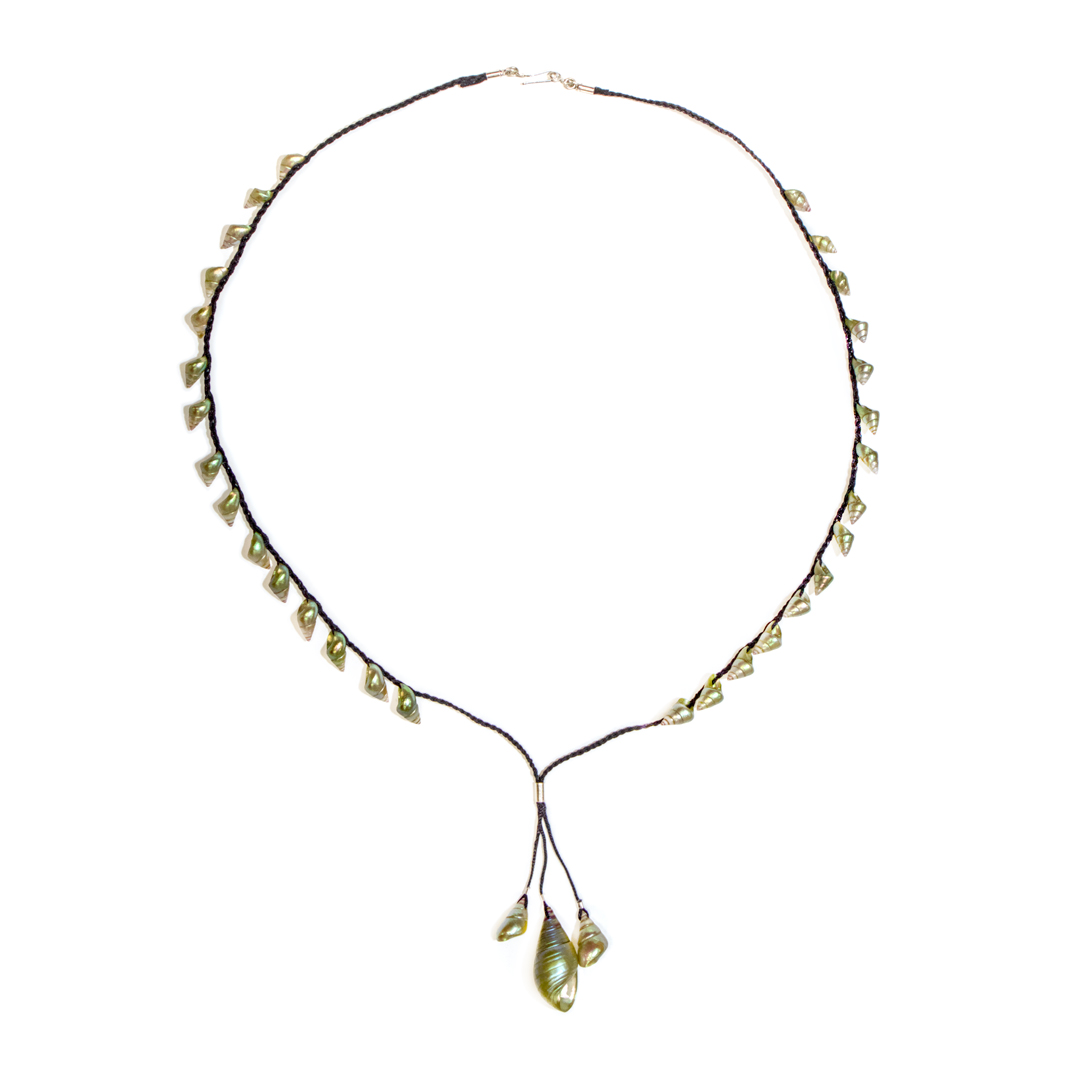
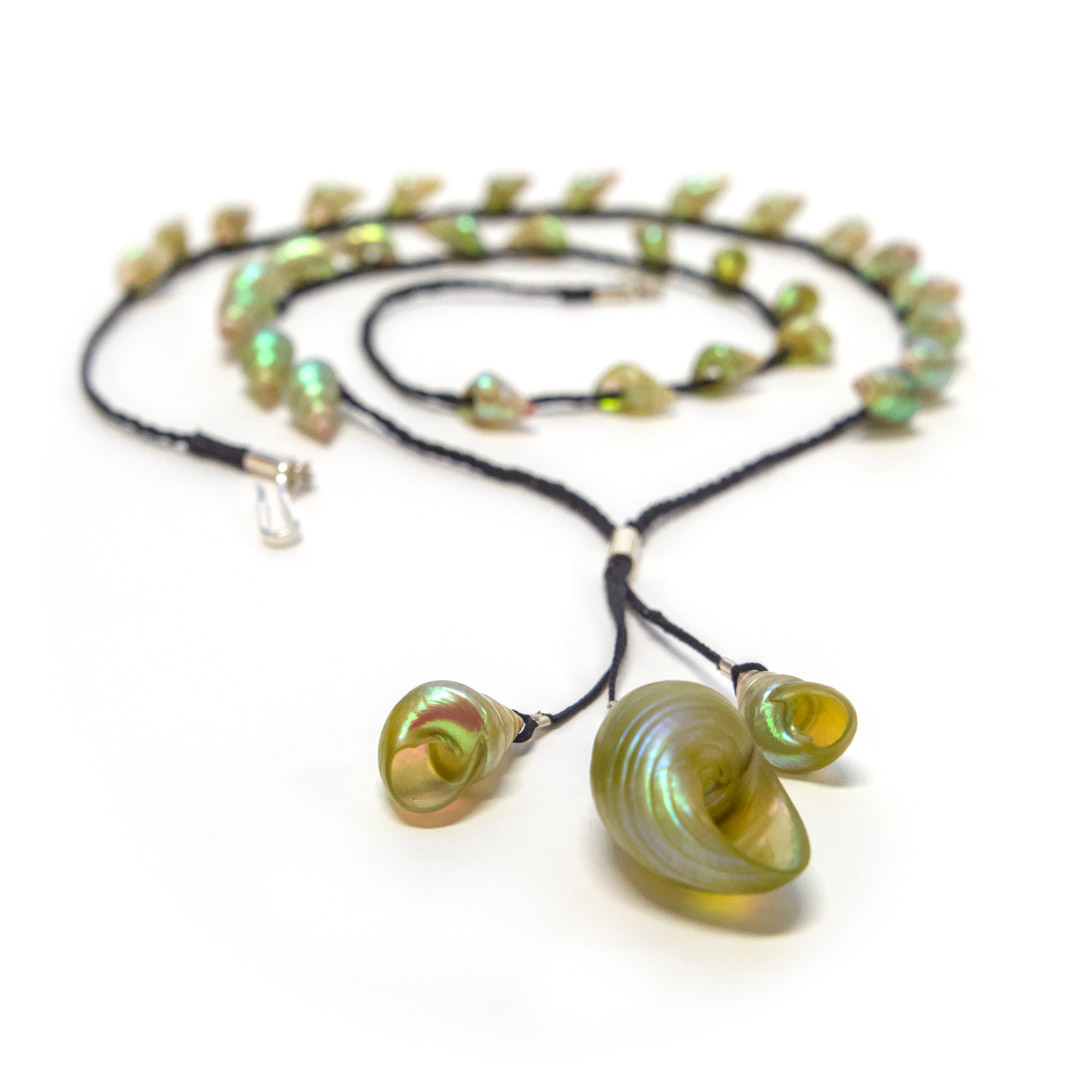
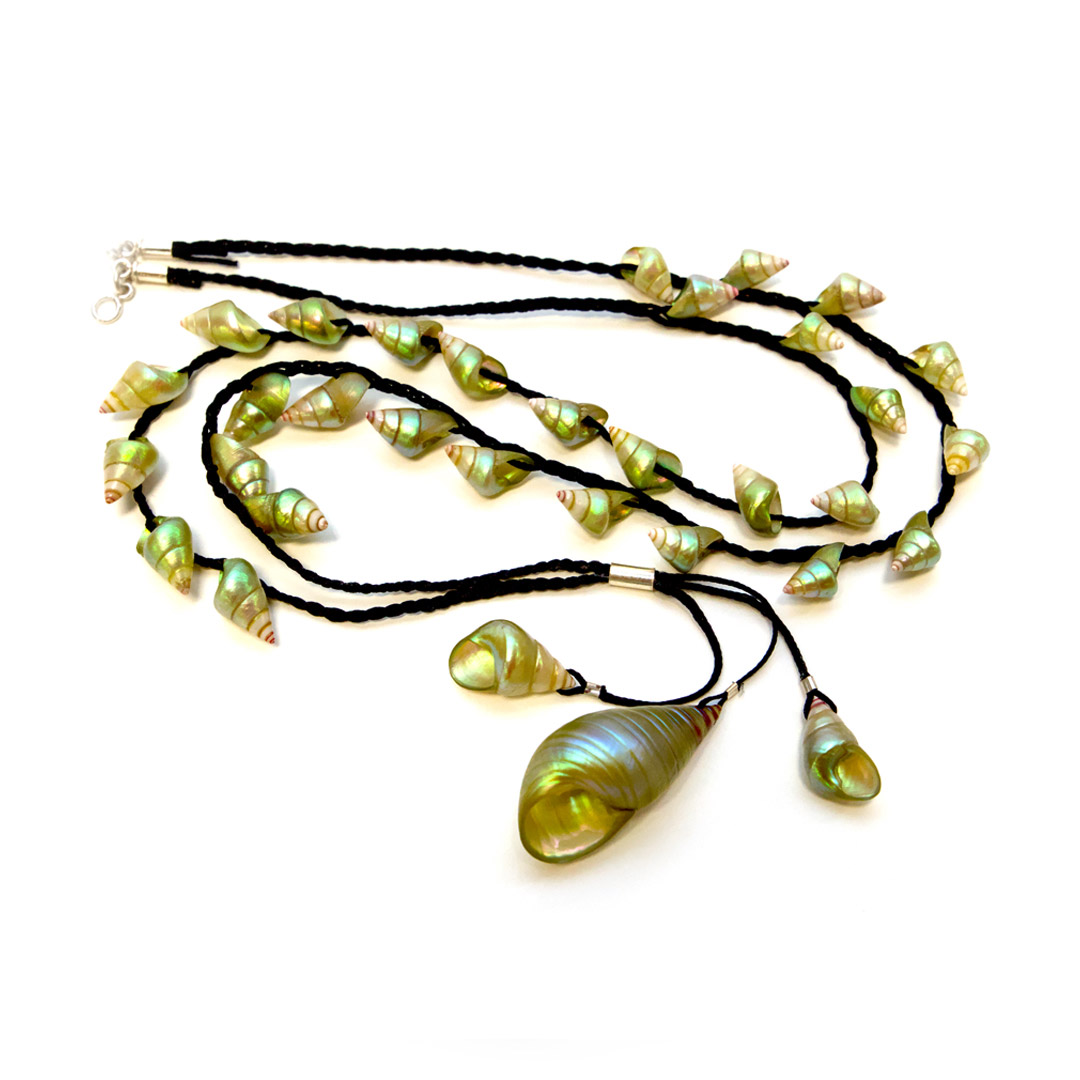
Necklace 2026
maireener shells
Commissioned with donated funds. UTAS.A.2026.18
Sustainability
It is essential to care for Sea Country, starting with shell stringers’ self-awareness and flowing out. Understanding shell cycles, habitats and the implications of harvesting are cultural responsibilities. Shell stringers develop this knowledge so they can tread lightly within collection areas.
Environmental issues such as pollution and climate change are impacting Sea Country. Kelp and shell species are being affected by disease, resulting in loss of shell populations. Research is vital for understanding environmental and cultural impacts to Sea Country. It is essential to have a holistic approach, where cultural and scientific knowledges are equally valued.
"A big thing that Aunty Jeanette drummed into me was sustainability. Leaving the environment in the same way in which you found it. I tread lightly within the environment. I’m always looking where I’m going to put my feet."
– Ashlee Murray
Cultural practitioners
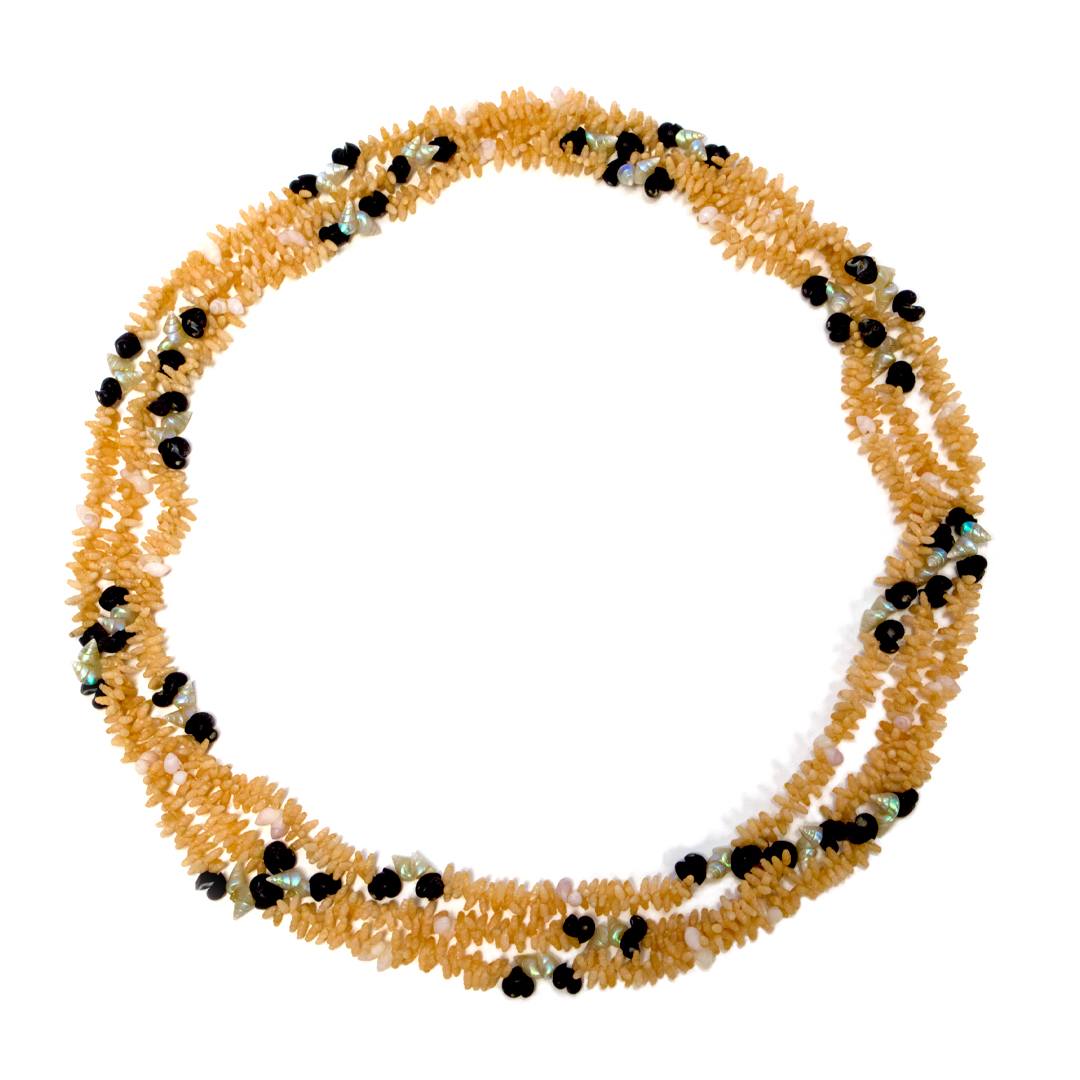
Vanessa Greeno
Born 1970, Flinders Island
Necklace 2026
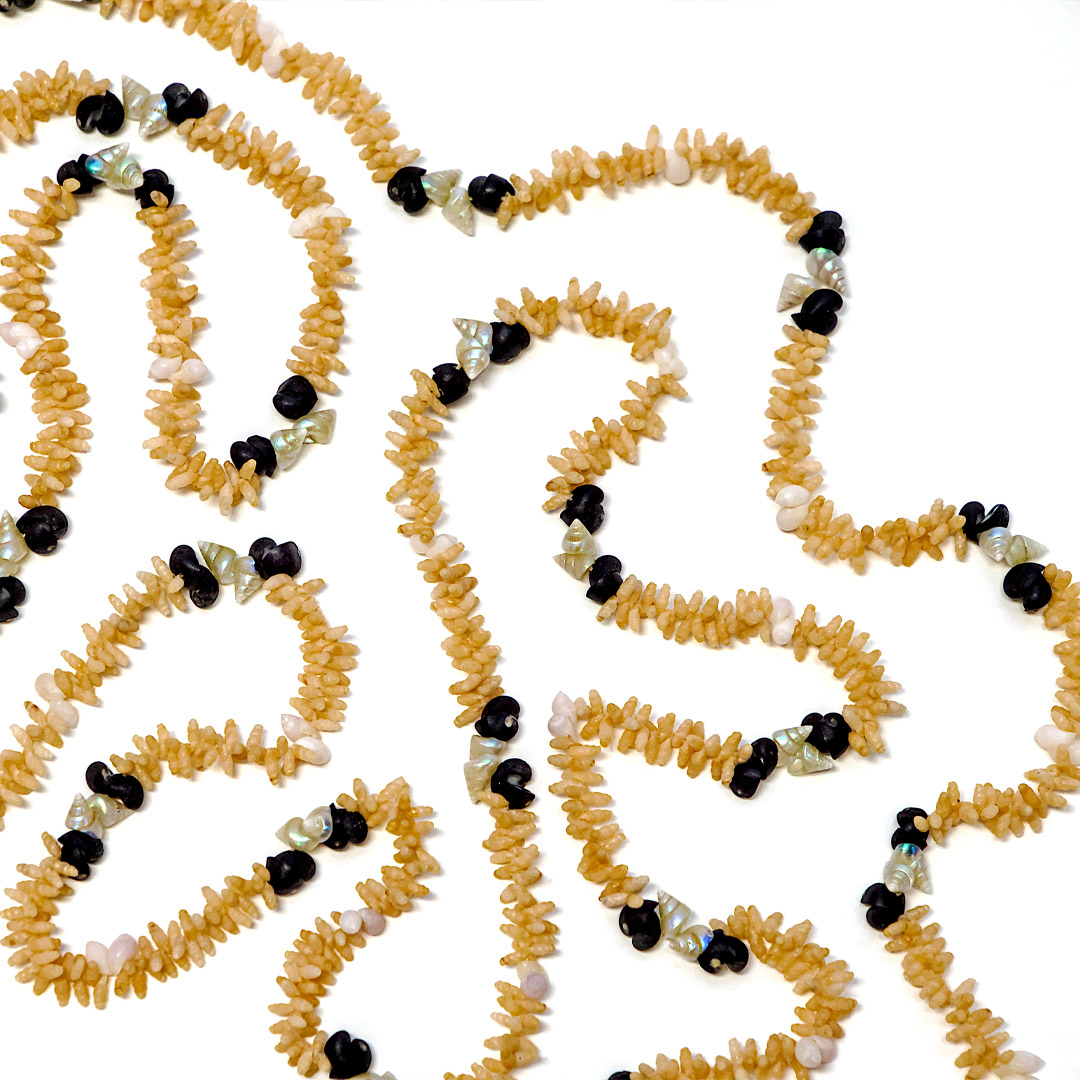
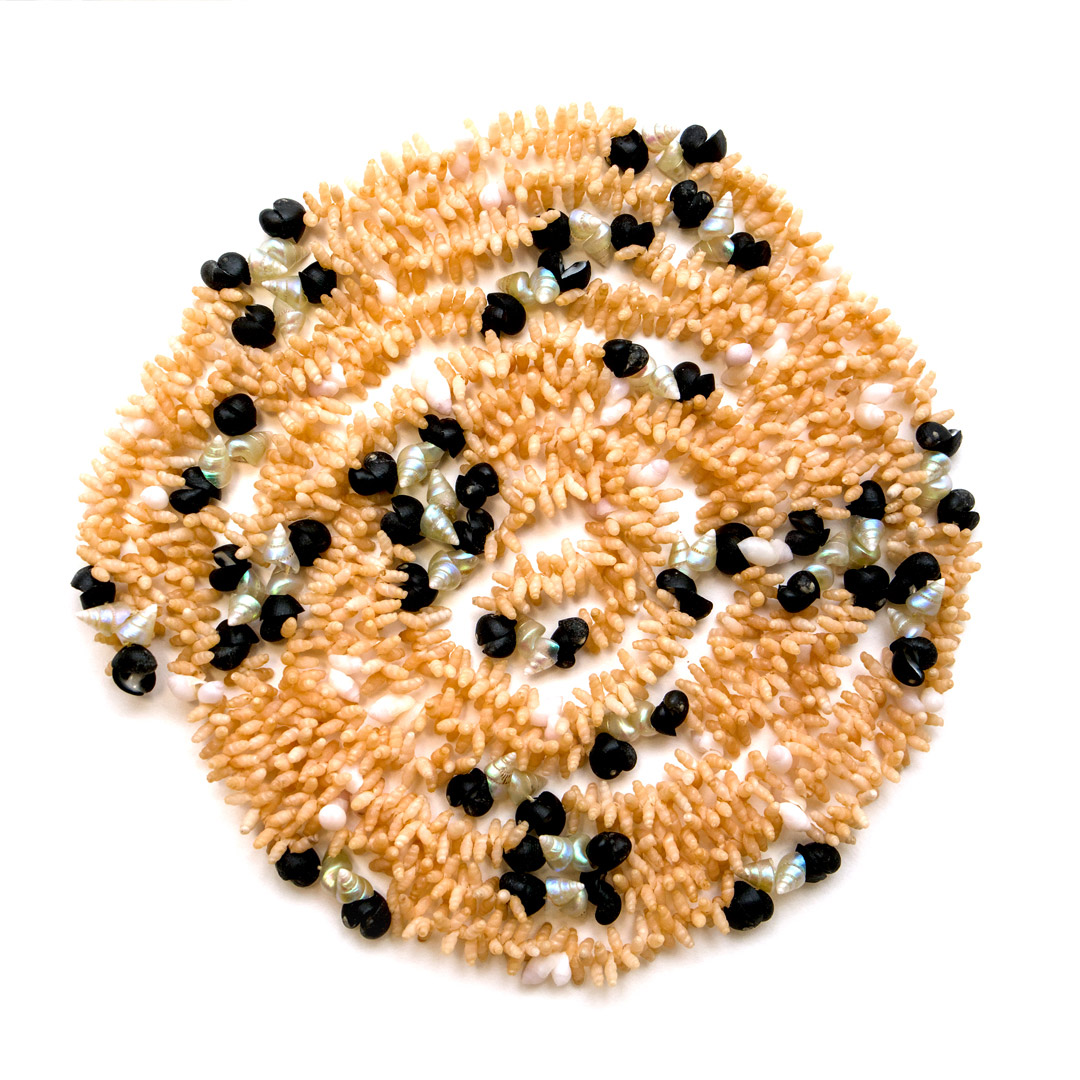
black crow, toothie, rye/rice, maireener shells
Commissioned with donated funds. UTAS.A.2026.11
"We have started investigating different aspects of the shell beds, kelp, sea grass... there is a disease... We’ve also started talking to UTAS and IMAS... Aboriginal organisations... As well as the community, to get them involved. Looking at trying to get the community together to talk about what we can do."
– Vanessa Greeno
Story
My journey in kanalaritja (Palawa shell necklace making) has been deeply shaped by the women in my family, especially my grandmother, Dulcie Greeno. I feel incredibly blessed to have learned this beautiful cultural practice through both of my grandmothers, each carrying their own knowledge, stories, and ways of teaching. Dulcie inspired me not only through her skill and patience, but through the quiet strength and care she brought to every necklace she created. Watching her work taught me that kanalaritja is far more than art – it is connection to Sea Country, family, ancestry, and the generations of Palawa women who came before us.
Through my grandmother’s guidance, I learned the importance of respecting the shells, understanding the time and effort involved in gathering and preparing them, and valuing the cultural knowledge that is carried within every necklace. Her influence continues to inspire me in my own journey today. I am proud to continue this practice alongside my mother, Lola Greeno, who will share the story of her own mother, Valerie MacSween, and the role she played in passing this tradition through our family. Together, these women have shaped not only my understanding of kanalaritja, but also my identity, pride, and responsibility as a Palawa woman continuing this important cultural practice.
The necklace I have created reflects my own love and appreciation for our beautiful maireener shells, along with black crows, and pink toothies, all carefully strung together with the very delicate rice (or rye) shells. Each shell carries its own beauty and significance, and together they represent both the connection to Sea Country and the continuation of our cultural practice through kanalaritja.
My grandmother, Dulcie Greeno, was well known for incorporating alternating patterns within her necklaces, creating pieces that were both distinctive and deeply connected to her own artistic style. This is something that has greatly inspired me and is a feature I have also embraced within some of my own creations. By carrying forward elements of Nan Greeno’s style while adding my own personal touch, I feel I am continuing a family tradition that honours the generations of Palawa women before me, while also expressing my own journey and connection to our kanalaritja cultural practice.
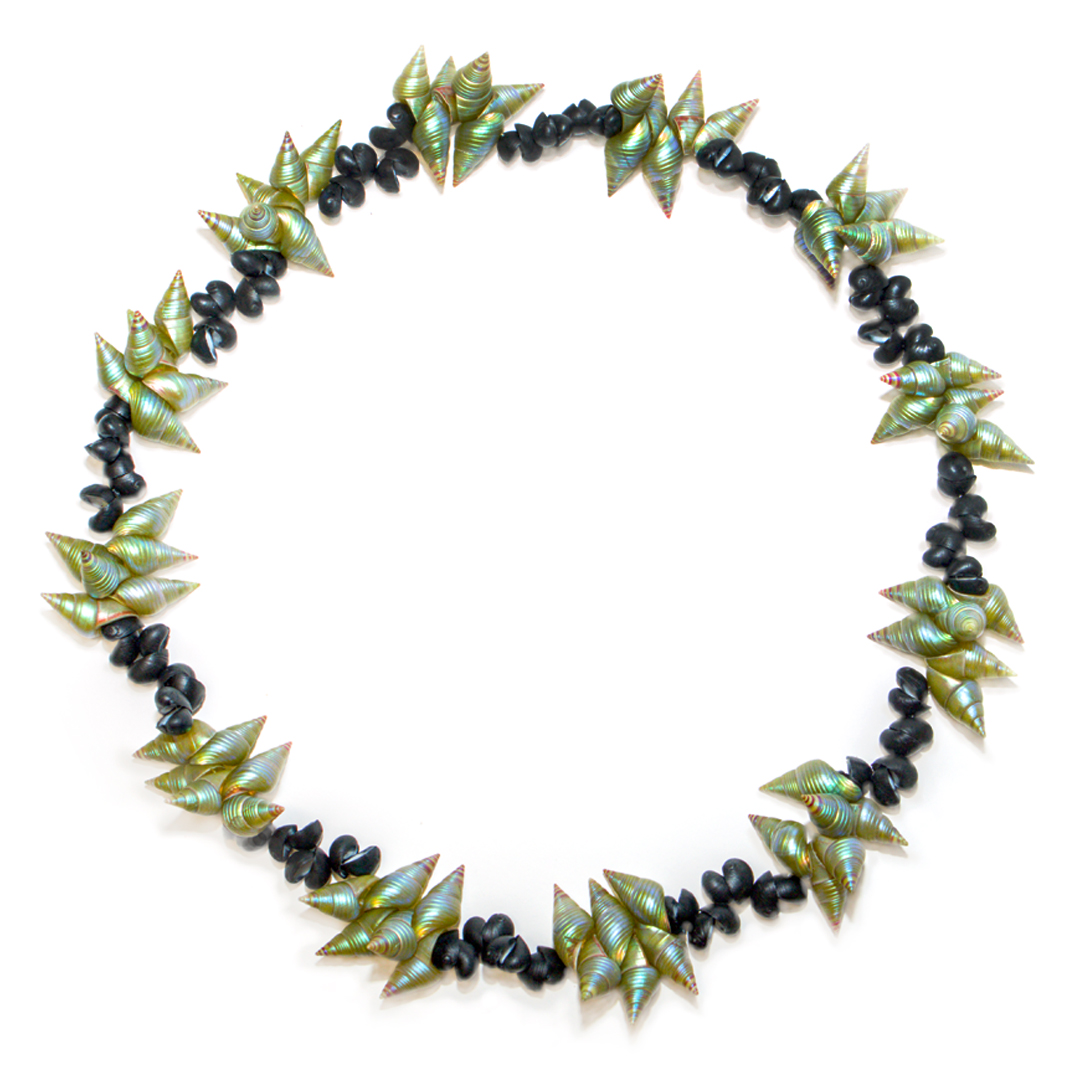
Ashlee Murray
Born 1987, Pataway/Burnie
Necklace 2026
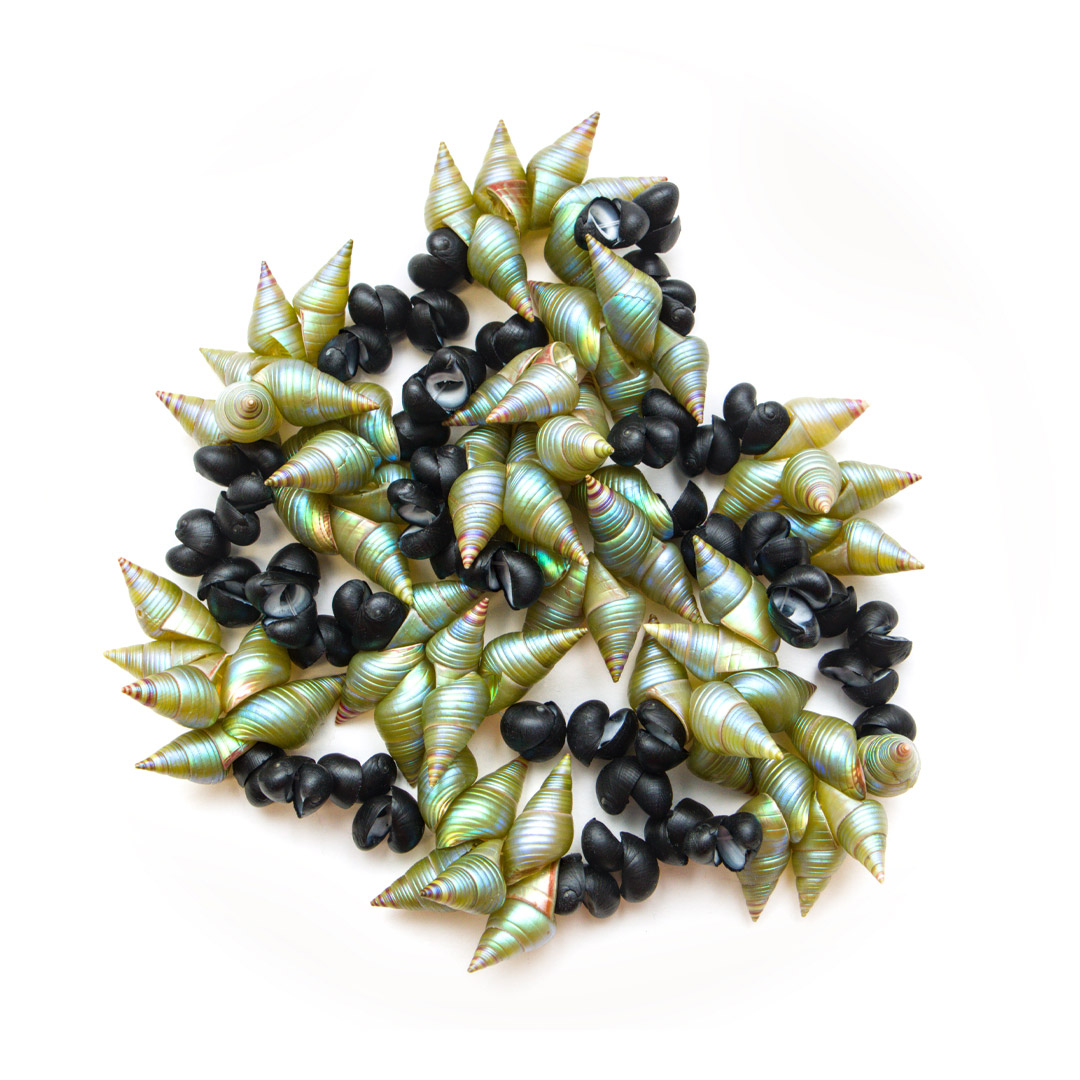
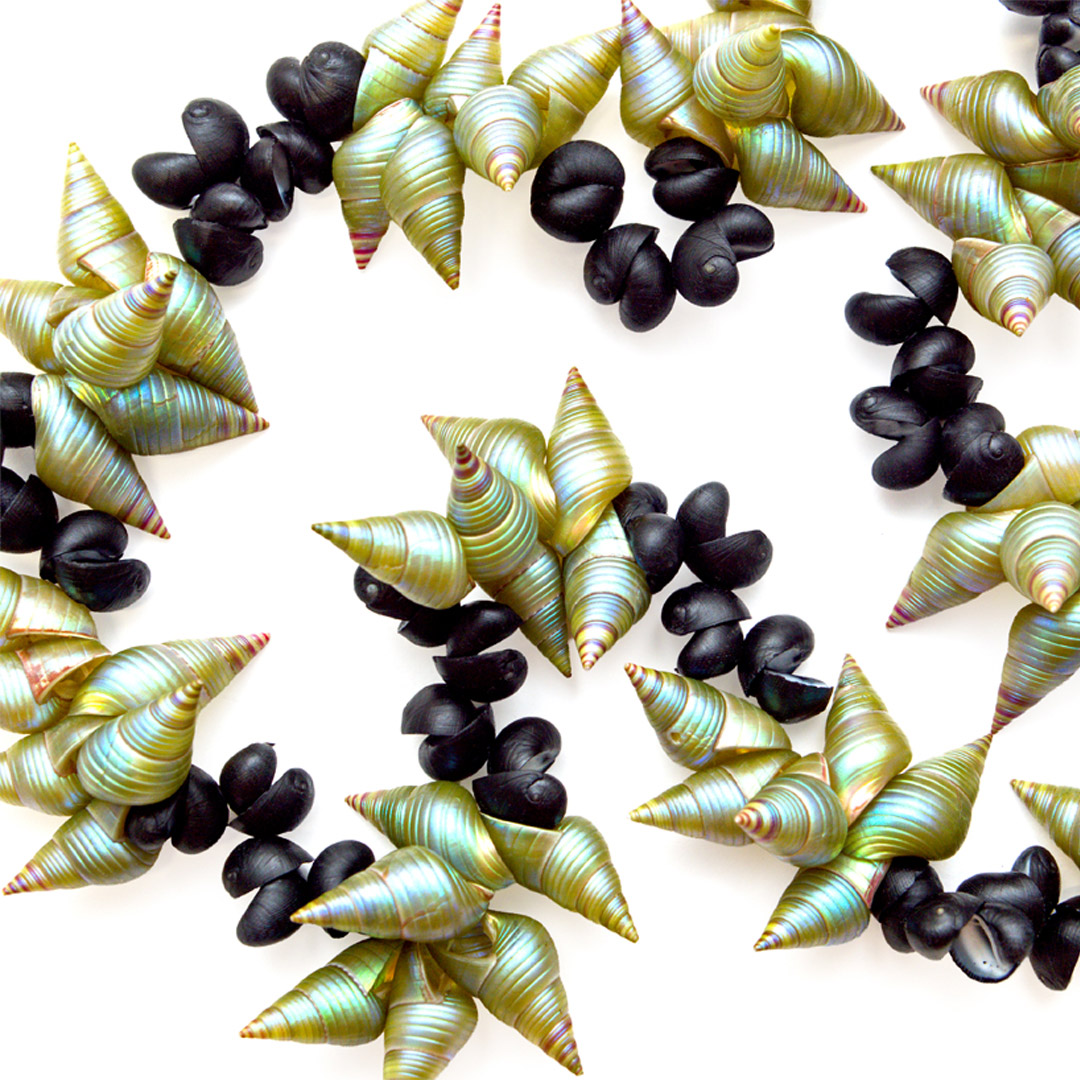
black crow, king maireener shells
Commissioned with donated funds. UTAS.A.2026.15
"To just to be part of something bigger. This practise that’s been going on for thousands of years... It’s really special."
– Ashlee Murray
Story
The necklace is my favourite combination - black crows and maireeners (in this case king maireeners). I learned about this combination from Aunty Jeanette and Aunty Corrie. I loved how the black made all the colours of the maireeners stand out and have used this combination a lot ever since.
Both the black crows and king maireeners are collected by me on the northwest coast. Black crows are common and easy to collect but king maireeners are much less common and require the perfect conditions for harvest.
Collecting shells is my favourite part of the shell stringing process. I enjoy being out on the beaches or in the ocean, continuing a practice that spans thousands of years. I often think about our Ancestors when I’m out there, wondering about the conversations they had while they were parting the seaweeds. I think about all the women I’ve been collecting with and the memories made when we come together to gather our cultural jewels.
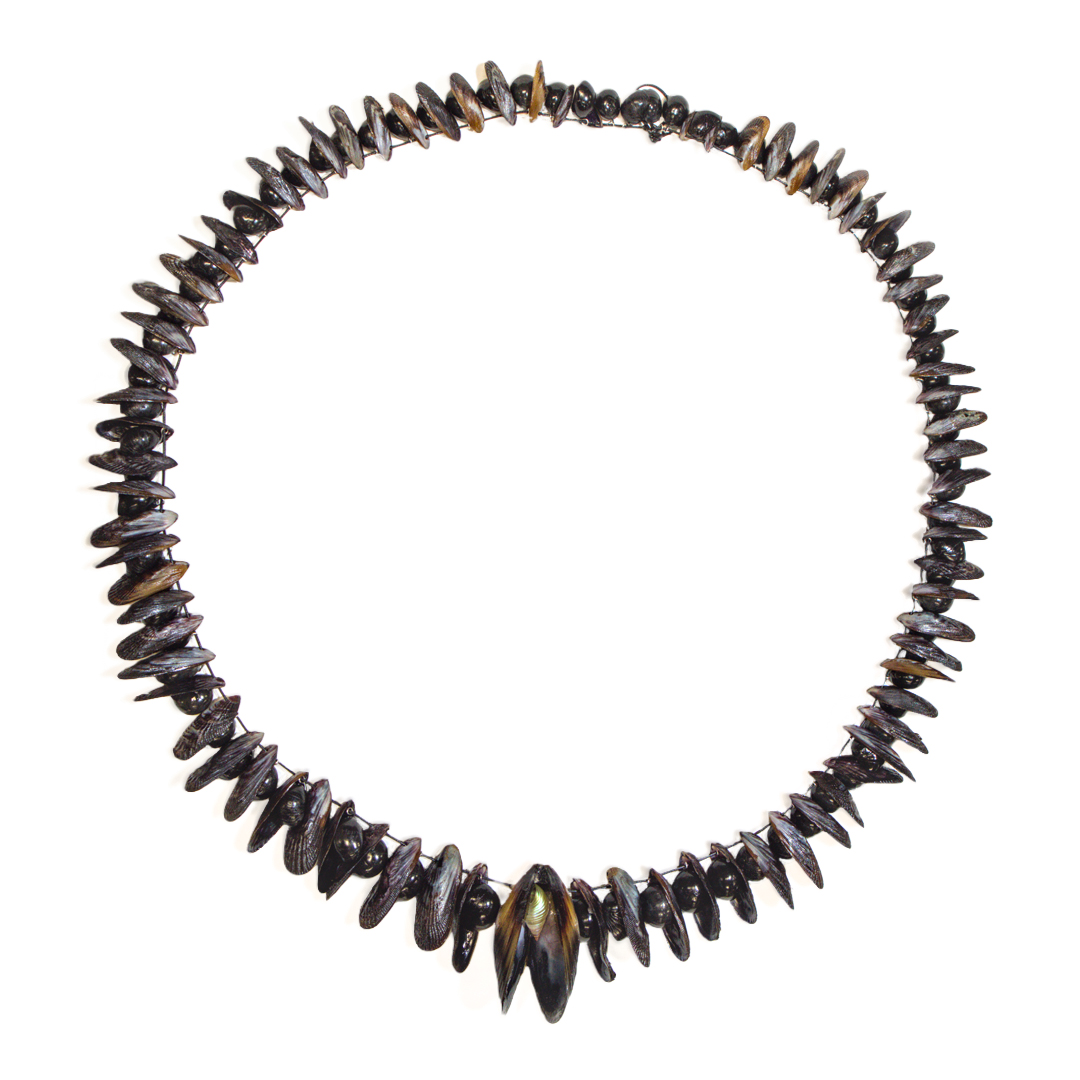
Sheryden Greeno
Born 2005, Naarm/Melbourne
Necklace 2026
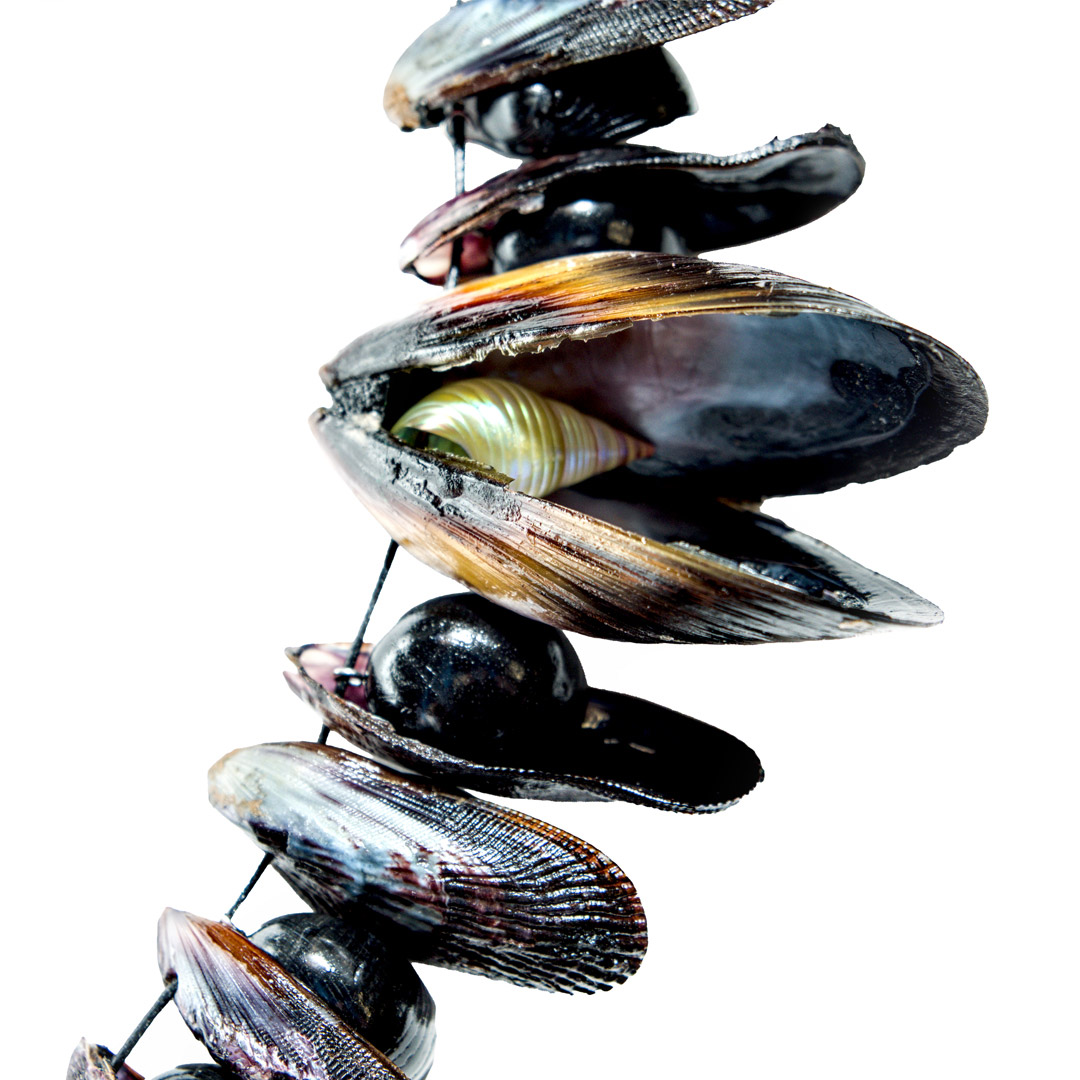
black crow, mussel shells
Commissioned with donated funds. UTAS.A.2026.13
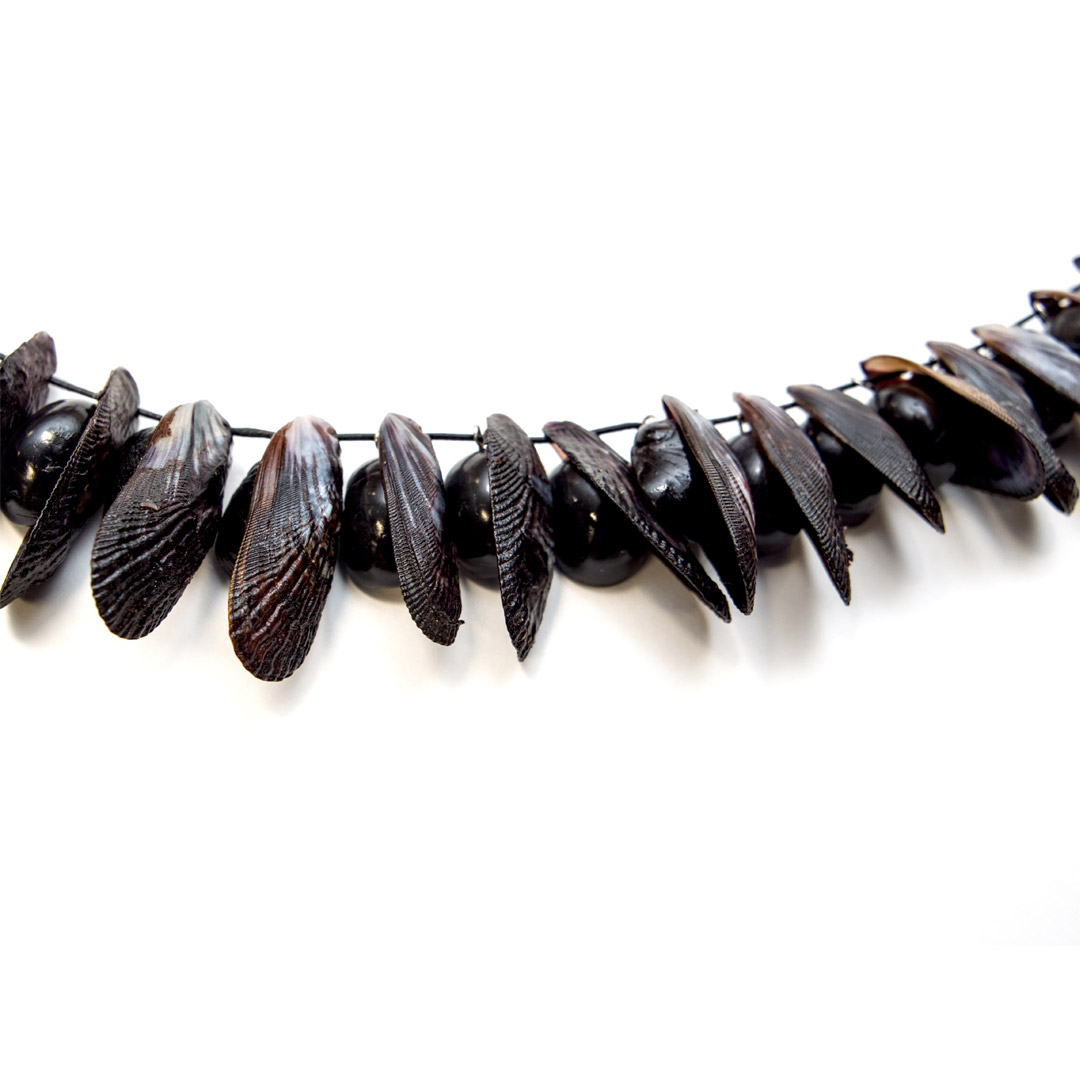
Story
‘Even with the grief we go through, there is always something that makes us happy on the inside’.
Grief is both a feeling and a pathway, one that no one experiences in the same way. No matter how much time passes, it remains one of the most difficult paths we can take. Yet with grief lies the smoother pathway, healing. It shows us to embrace change; cherish the memories we carry and discover how love can continue to shape us long after someone is gone.
This necklace is dedicated to my grandfather, an Elder whose kindness, resilience and unwavering optimism had a positive impact on my life, even after his passing. He taught me that no matter how dark the sky may seem, there is always a ray of sunlight that will guide you. Through everything he faced, even with the months of bedridden and hospitalised nights. He laid in the bed and never once stopped believing there was light at the end of the tunnel. When I look at him and see a smile on his face, it would tell me, ‘you can always find a positive in everything’.
When I began designing this necklace, I found myself asking: What does grief look like? What shape does it take when someone is wearing it? How can a piece of jewellery capture all the above?
Those questions helped with countless sketches, ideas, and moments of trial and error. With the help of my Aunty Vanessa, I created a final piece that represented grief in myself. With subtle hints about my grandfather, hopefully I made the necklace that represented it in the best way possible. If you see him flying past, make sure to say hello, as he is always watching to make sure, you're okay.
Image credit: Kelly-Marie Lewis