

Bachelor of Behavioural Science 2018
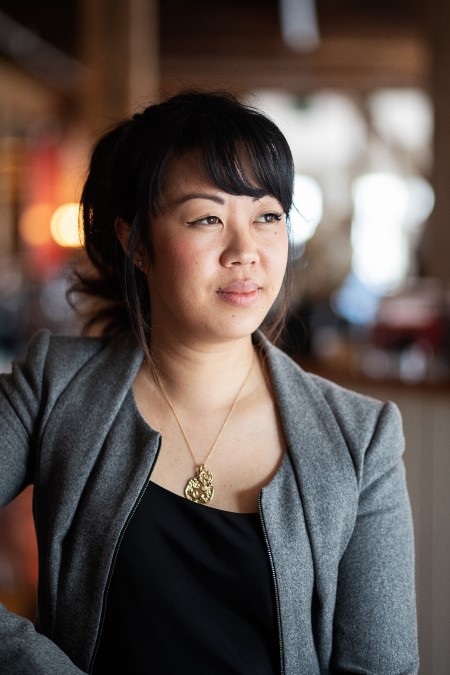
Restaurateur, Business Owner
How would you summarise your career highlights to date?
‘I became a business owner when I was 21 and have won numerous state and national awards for our restaurants, which include Black Cow Bistro, Stillwater Restaurant, and Stillwater Providore & Gallery, now a Boutique Hotel.
During my studies at the University of Tasmania, I won a national award – Young Restaurateur of the Year (2015), was a finalist in the 2016 Young Tasmanian Australian of the Year Awards for the work I do in schools and the community, and sat on three not-for-profit (NFP) boards.
After graduating, I was awarded the Tasmanian Tourism Minister’s Young Achiever of the Year Award, just before COVID hit. I chair a government advisory committee, sit on two NFPs, have been contracted to run really cool and exciting events in our State, co-host a local food and travel show on Channel Ten, and launched my business From Experience, specialising in mental health and wellbeing in the workplace.
Can you tell us about From Experience and what you hoped to achieve when you set up the business?
‘The mental health world can be really daunting. My experience studying while running my own businesses has given me unique insight into the world of psychology, and I guess the confidence to try to initiate change.
The hospitality industry is known for not being the most constructive and positive of workplaces, but we can improve that. I really wanted to share my knowledge and experience with other owners, operators and leaders, and assure them that spending time in this area is incredibly valuable not only to them as the business owner, but to their team’s health and wellbeing, to productivity and their business’s bottom line.
We can retain and attract great people to our industry if we arm ourselves with a bit more psychoeducation, and make the information out there more practical and applicable to the workplace.
My BHAG (big hairy audacious goal) is to have a model program in Australia that assists employers to be part of the prevention and early intervention that is so needed to improve the mental wellbeing of our people, in particular our young people.
We largely employ 16–25-year-olds, which research shows is the most common age of onset for a mental illness. Imagine if the majority of employers could assist in identifying if and when someone needs a little nudge in the right direction to the amazing professional help and supports out there.’
Can you tell us about what led to you choosing to study Behavioural Science at the University of Tasmania and how it has informed From Experience and your work in restaurants?
‘I found myself in a difficult scenario with a really great casual employee, whose behaviour and performance had changed from A++ to being vague, distracted and unreliable. We began to notice this person was suffering from an eating disorder. I could have done what most “hospo” employers would have done – cut the casual out of the roster, but I didn’t want to do that. I wanted to understand what was going on and help if I could.
I eventually had a conversation with this person, just broadly, and asked if there was anything I could do to help. Fortunately, the conversation went well and they went and got help and were able to get back on track with their high-level performance at work. They stayed with us for a considerable time after that and went on to become a medical doctor.
This buoyed me and interested me. I wanted to know more about how the mind works, so I enrolled at UTAS and began studying in 2012.’
Your website motto, ‘Making Space for Mental Health in the Workplace’, is powerful and suggests this is often overlooked. What difference has From Experience made to the businesses you work with and to their employees?
‘This business is just in its infancy with around 10 clients at the moment. It’s early days but I’ve seen some really positive outcomes from our workshops and conversations with the different teams having more conversations about mental health in their workplaces. Many employers are also taking responsibility for their own mental health and wellbeing, which is in turn having a positive impact on the working environment.
The training is giving employers the time and mental space to think about how mental health and illness impacts their staff. It is also giving them the confidence to have, what can be, really tricky conversations by reminding them that most of the time people just want to be heard and guided towards support.’
What do you enjoy about your current work?
‘I’m loving the relief I see on people’s faces when we get to talk about this sort of stuff. It’s breaking down barriers, stigma, beliefs and challenging people’s ideas about what mental health and illness mean in the workplace.
I almost feel like I can see the weight taken off their shoulders when we discuss all the different resources out there and simple programs to upskill with, such as Lifeline’s programs and the Mental Health First Aid course as good starters. I also just really love that I’m able to help in a space that I’m hugely passionate about and hope that by sharing my knowledge and experiences coupled with research and education I’m helping to improve someone else’s life out there and thus our community and society in general.’
What advice would you give to your younger self?
‘Not everyone will like you, and that’s ok. Trust your gut instincts. Every. Single. Time.’
Do you have further future goals regarding this business that you would like to comment on?
‘I’d love to bring more people into this area to work with me, to share their experiences and knowledge and to help others. I’m just one type of personality with one set of experiences. To have a range of people who can connect with others on different levels would be amazing one day.’
Have the COVID-19 restrictions made you change how you work?
In my restaurants and accommodation, yes! Lots of little things, which all seem normal now to be honest as we’ve been doing them for so long. My work with boards and committees have become more flexible thanks to technology, which is a positive as a working mum. Not having to travel all over the state too often is helpful.’