

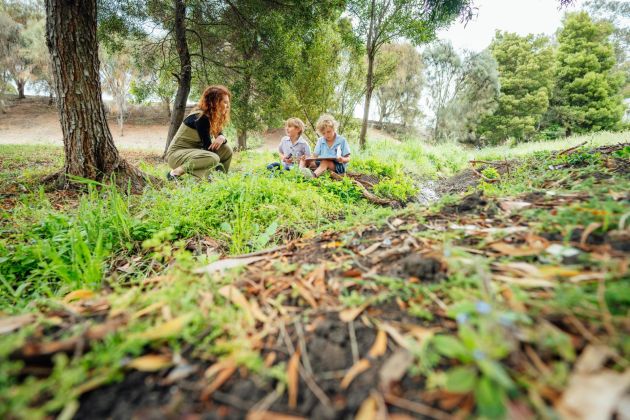

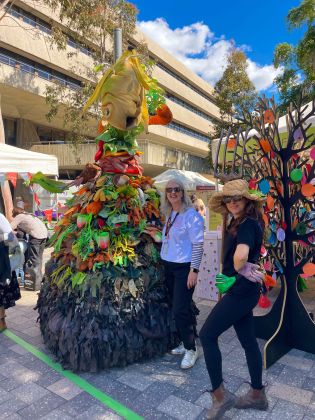
The University of Tasmania’s UTAS Landcare Society is not only healing the land, it is also improving the lives of the students involved in its activities.
Living in Tasmania means never being far from nature – island life tends to make us deeply connected to our wild places, on land and sea.
And this love of the natural environment is reflected in the attitudes of our students, who also tend to care deeply about the land we walk on.
The UTAS Landcare Society began as a group of eager students who were inspired to get more involved with community Landcare following the 2019 Tasmanian Community Landcare Conference.
Since then – through working with University of Tasmania , Landcare Tasmania, and Landcare groups across the state – UTAS Landcare has connected nearly a thousand students with Landcare activities across the state.
UTAS Landcare was named as a finalist in the Student Engagement category of the 2022 Green Gown Awards Australasia.
The Society primarily focuses on community environmental restoration projects, ranging from removing weeds from urban parks to restoring pine plantations back to native forests and restoring degraded wetlands.
UTAS Landcare secretary and University of Tasmania student Ellen-Rose Sorensen said UTAS Landcare was a group of students who were passionate about conserving and restoring the land.
“We really want to provide opportunities for every young person, every student, who is interested in getting involved in practical, hands-on land-management skills,” she said.
“I think, with the complexities of climate change, people can sometimes feel really disempowered.”
UTAS Landcare connects students with volunteer land management and restoration opportunities across Tasmania, to create resilience in our landscapes and in our communities, and to provide opportunities for students to get involved in hands-on, on-ground environmental restoration work across the state.
Since the project began in 2019 the Society has hosted over fifty events, supported more than 30 individual Landcare groups, worked with three local councils, co-hosted community engagement events with five other university societies, worked on eight different agricultural properties, and have engaged a total of 968 University of Tasmania students across all their activities.
In those three years, the Society has also planted more than 3000 trees and contributed around $157,000 worth of labour.
Find out more about our sustainability initiatives

30 Landcare groups
Since the project began in 2019 the Society has hosted over fifty events, supported more than 30 individual Landcare groups.

968 students
The program has engaged a total of 968 University of Tasmania students across all their activities.

3,000+ trees
In three years, the Society has also planted more than 3000 trees and contributed around $157,000 worth of labour.
Student volunteer Mathilde Sif Eiby joined UTAS Landcare out of a love for restoring nature.
“The people were great fun and I learned a lot about native plants as well,” she said.
“Coming and talking to the people in UTAS Landcare, it’s reaffirming that other people have the same worries, we can get together and talk about it. Everyone is coming together and caring about nature.”
UTAS Landcare demonstrates how the TUSA club and society format, which is a feature across all University of Tasmania campuses, can be a fantastic model to create change and have an impact that extends outside of the university campus, while still fostering community connection among students.
University students often experience poorer mental and physical health than other sectors of the population. In contrast, people who volunteer with Landcare have been found to have improved physical and mental wellbeing and reduced healthcare costs, meaning a project like this can heal people at the same time as it heals the environment.
“University of Tasmania students, in general, have a really big care for the environment,” Ellen-Rose said.
“We live in a beautiful and natural state where the environment is all around you, and I think that passion is really strong within UTAS students, so I have no doubt that UTAS Landcare will keep going long into the future.”