

Forget fleeting job titles, Professor Andrew MacLeod (BA-LLB 1993) measures his success by the simplest of measures: have I done more good than harm?
Although he resists the idea of a conventional career, by his own standard, Andrew has succeeded in making a meaningful difference in humanitarian aid, law, academia, philanthropy and business.
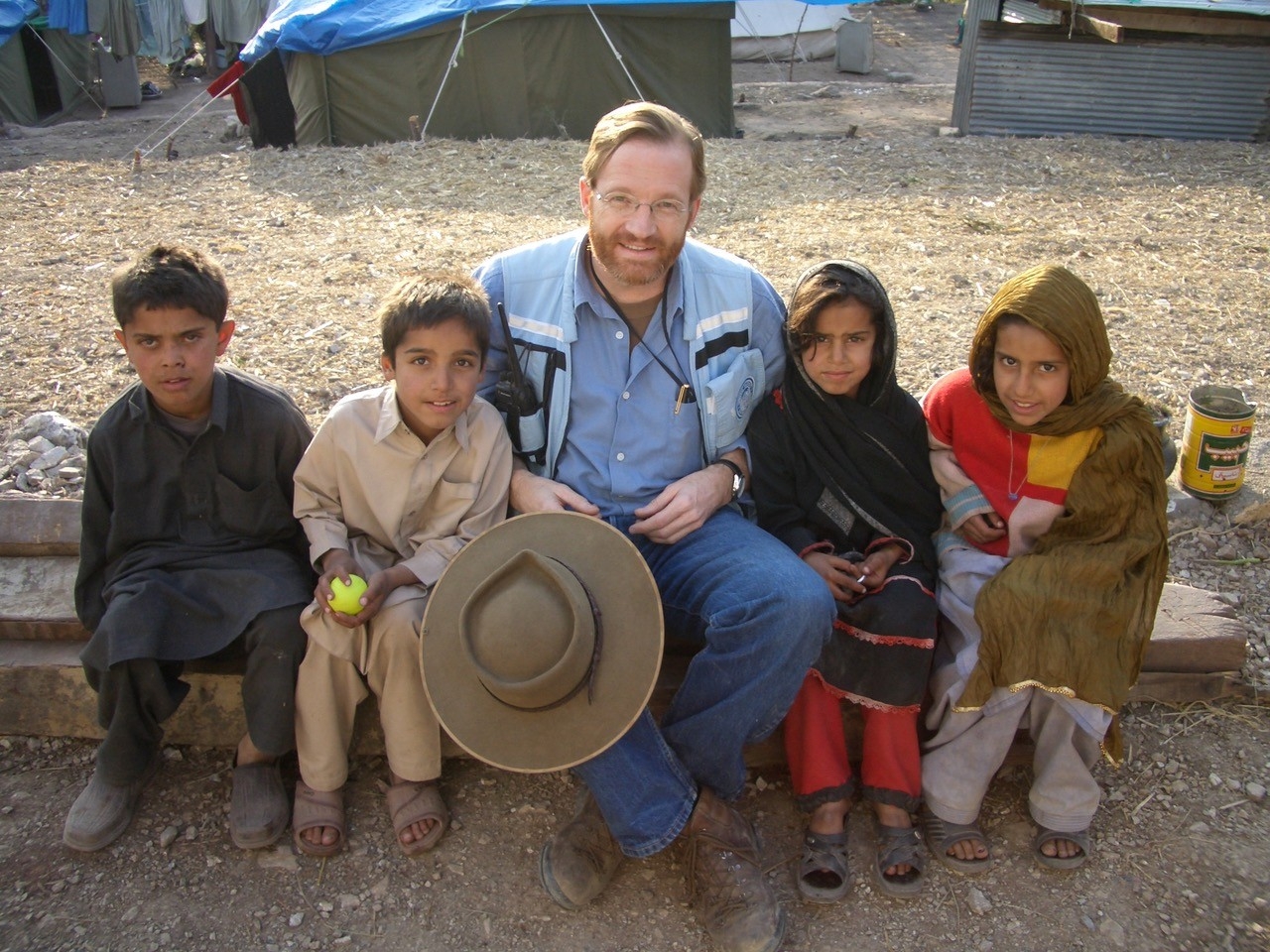
He has overseen the delivery of aid to millions of people after the 2005 Pakistan earthquake through the United Nations and has spent many years working with the Red Cross in war-torn regions.
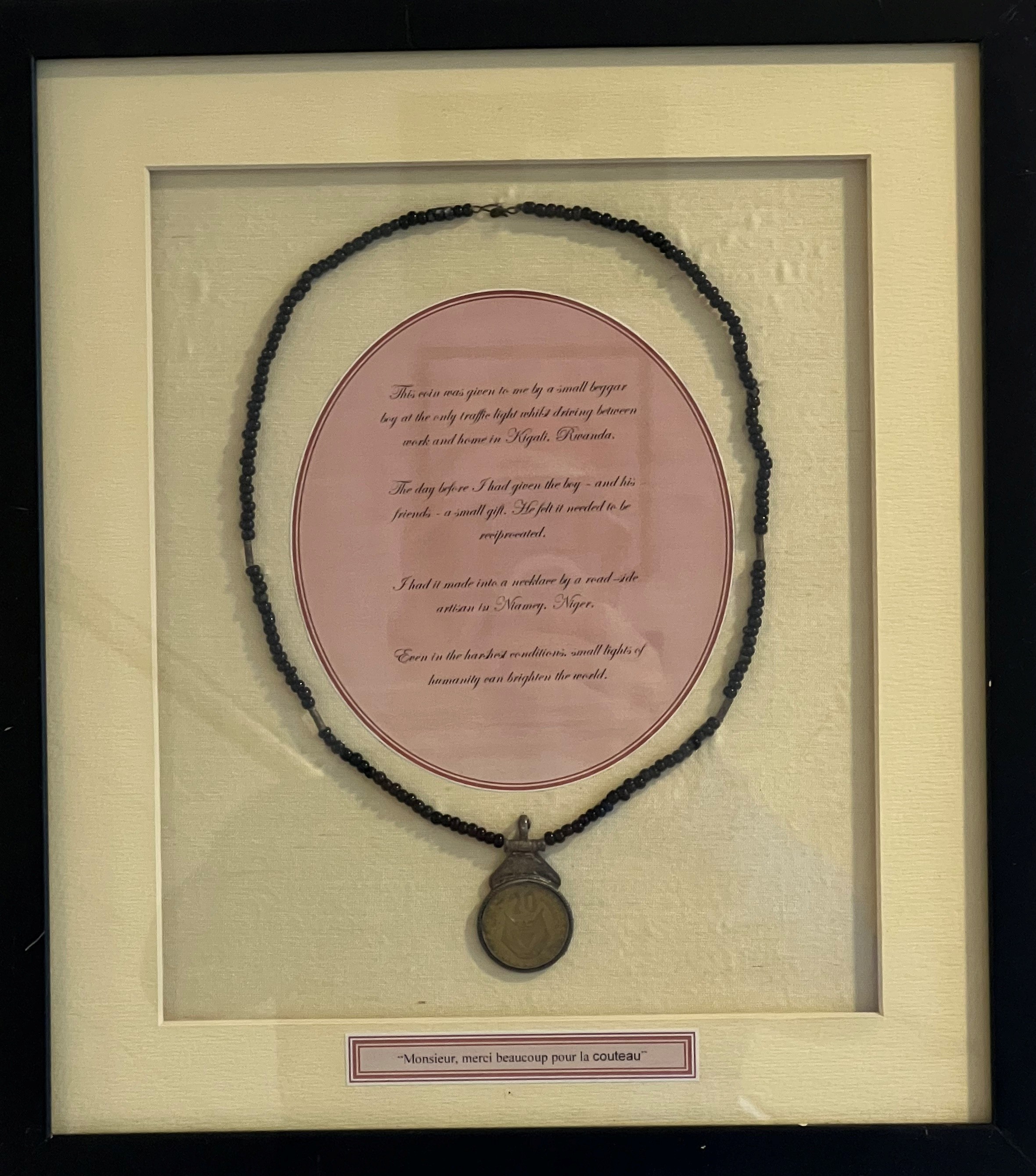
When asked what moments stand out, he points to a coin on the wall of his Melbourne home.
It was from a child in Rwanda.
Andrew was handing out gifts to the children begging at the traffic lights.
The next day, one of the boys returned to give him a Rwandan franc.
“Here is a child with no opportunity for anything but he still felt a moral obligation to give back,” Andrew said.
“Imagine if he had the same opportunities in life we have?”
The coin is a reminder of gratitude and responsibility; lessons first learnt at the University of Tasmania during a law lecture with the then Federal Minister for Justice Reverend Professor Michael Tate (AO).
“He told us having a law degree doesn’t grant you a happy life and a wealthy existence,” Andrew recalls.
“It imposes on you an obligation to use your skills to the betterment of other people.”
Andrew said it helped shape his ‘day before you die’ philosophy.
“You ask yourself: if I die tomorrow, how would I measure my life?” Andrew said.
“For me, it is: have I done more good than harm? Once you’ve figured that out, that’s how you need to live your life every day.” Professor Andrew MacLeod
He also recognises that the greatest good you can do is to inspire others to achieve their best.
Andrew offers two powerful examples.
He was working in the former Yugoslavia, and, in his own time, he set up an Australian-style surf rescue program, training the national swim team to be the first to take part.
At a reunion dinner years later, he discovered the participants had become lawyers, politicians and professional lifeguards “because of him”.
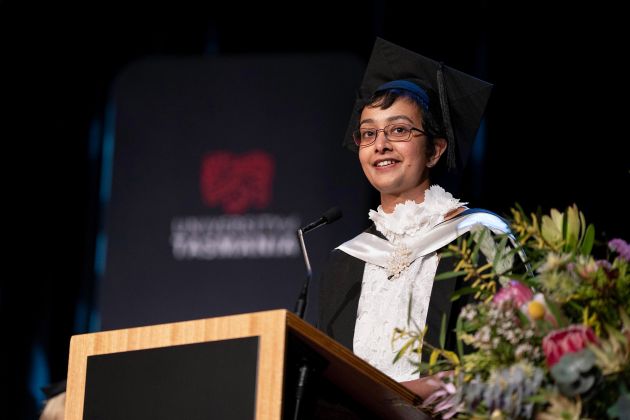
Andrew recalls another proud moment, watching Maxine graduate.
Maxine is one of the children from the Philippines who is receiving an education after the charity he cofounded used DNA technology to find her father and convince him to pay child support.
Hear their Cries locates the fathers of children born because of sex tourism and exploitation, often enabling them to seek support and citizenship rights.
Raised in Melbourne by his mother, Andrew had a turbulent start to his own academic life.
He was bullied, repeated Year 11 and failed his first attempt at university.
In his early 20s, before his mother died from brain cancer, she urged him to go back to university.
Andrew describes leaving Melbourne to study in Hobart as one of his best decisions.
It had the same opportunities as larger cities, but the smaller size meant he could squeeze more out of each day.
Andrew was an Army reservist, president of the Student Sports Council and the Swimming and Water Polo Club, Vice President of the Student Union, a bouncer at the Sandy Bay bar and managed the Student Union housing scheme.
“University is not just about getting a degree,” he said.
“It’s about discovering who you are, what you value, and how you can make a difference.”
He urges the next generation to focus on what they want to be, not just what they want to do.
And, above all, to recognise the privilege of education and use it to uplift other people.
Written by Lucie van den Berg for Alumni Magazine Issue 56, 2025.
Connect with our alumni community to discover more.
Top right: Professor Andrew MacLeod in Pakistan | Photo: Supplied