

From the fjords of Norway to the reefs of Bali, Andrew Sullivan’s PhD is taking him around the world as he investigates how nations are developing policy for a sustainable ocean.
His research is part of an investigation into how countries are managing their ocean spaces – research to help inform future ocean governance.
“Managing the ocean is a complex task because there's so many different aspects to it,” said Andrew, who is a PhD candidate at the University of Tasmania’s Institute for Marine and Antarctic Studies (IMAS) and the Centre for Marine Socioecology (CMS).
“In early 2023, I attended the 5th Symposium on the Effects of Climate Change on the World’s Ocean in Bergen in Norway. That provided a great opportunity to see where the science was at and what was happening in the international space around climate change and ocean science.

“It was there that I learned more about the High-Level Panel for a Sustainable Ocean Economy which is also known as the Ocean Panel,” Andrew said.
“It started out with the Heads of State of 12 countries, which has now grown to 18 member countries, who voluntarily got together to say we want to be more ambitious when it comes to ocean management, and we want to encourage other countries to do the same and help effect change.”
Andrew’s research focuses on understanding the origin of the Ocean Panel, how it was established and importantly how different countries are implementing the commitments.
“The key commitment Ocean Panel members have made is to develop sustainable ocean plans which is a plan to manage 100% of waters within their national jurisdiction,” he said.
“My research will examine how different countries are implementing their commitment around sustainable ocean plans. What does that look like? What are their governance structures? How do they involve the different ministers and different agencies that are responsible for ocean management? What has changed because of their membership of the Ocean Panel?
“There's some good lessons that hopefully will come out of the research about what works well and what doesn't, or at least what might be worth trying.”
With over 25 years’ experience working in fisheries for government and industry, Andrew has seen firsthand what good and not-so-good ocean governance looks like.
“I previously worked across a variety of State and Commonwealth-managed fisheries. My observations and experience are that there isn't a very holistic approach to how the ocean is managed. It's very sector specific, with little consideration of how one industry might impact another," he said.
“Ocean policy isn't just about managing resources. It’s about people’s lives and livelihoods. In many parts of the world, we’re talking about coastal communities that rely on the ocean for their livelihoods, and in some cases, for subsistence."
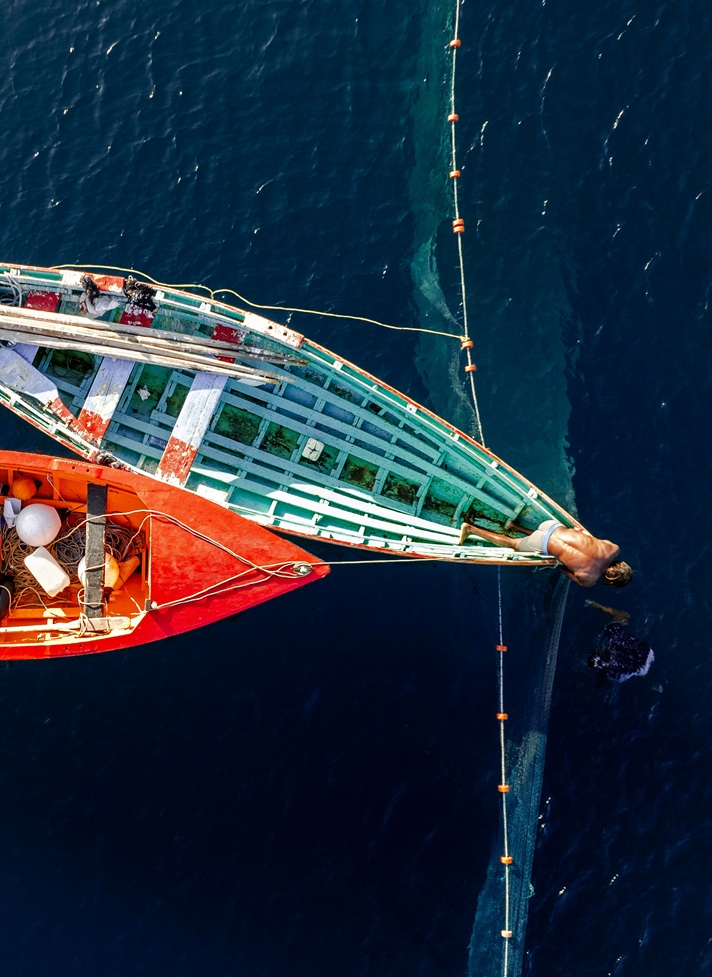
“It’s crucial to understand how to develop and implement good policies in ways that genuinely recognise the needs, well-being, and social importance of these communities.”
Despite the challenges and slow movement of policy implementation across the world, Andrew is optimistic about the future of ocean governance.
“There’s a really positive sense of what the world is trying to do,” he said. “If countries can learn and share what works, there’s a real opportunity for change.”
This research is funded by the Australian Research Council (ARC), Fisheries Research and Development Corporation (FRDC) on behalf of the Australian Government and the University of Tasmania's Centre for Marine Socioecology (CMS).
Cover image: Amanda Cotton | Ocean Image Bank