

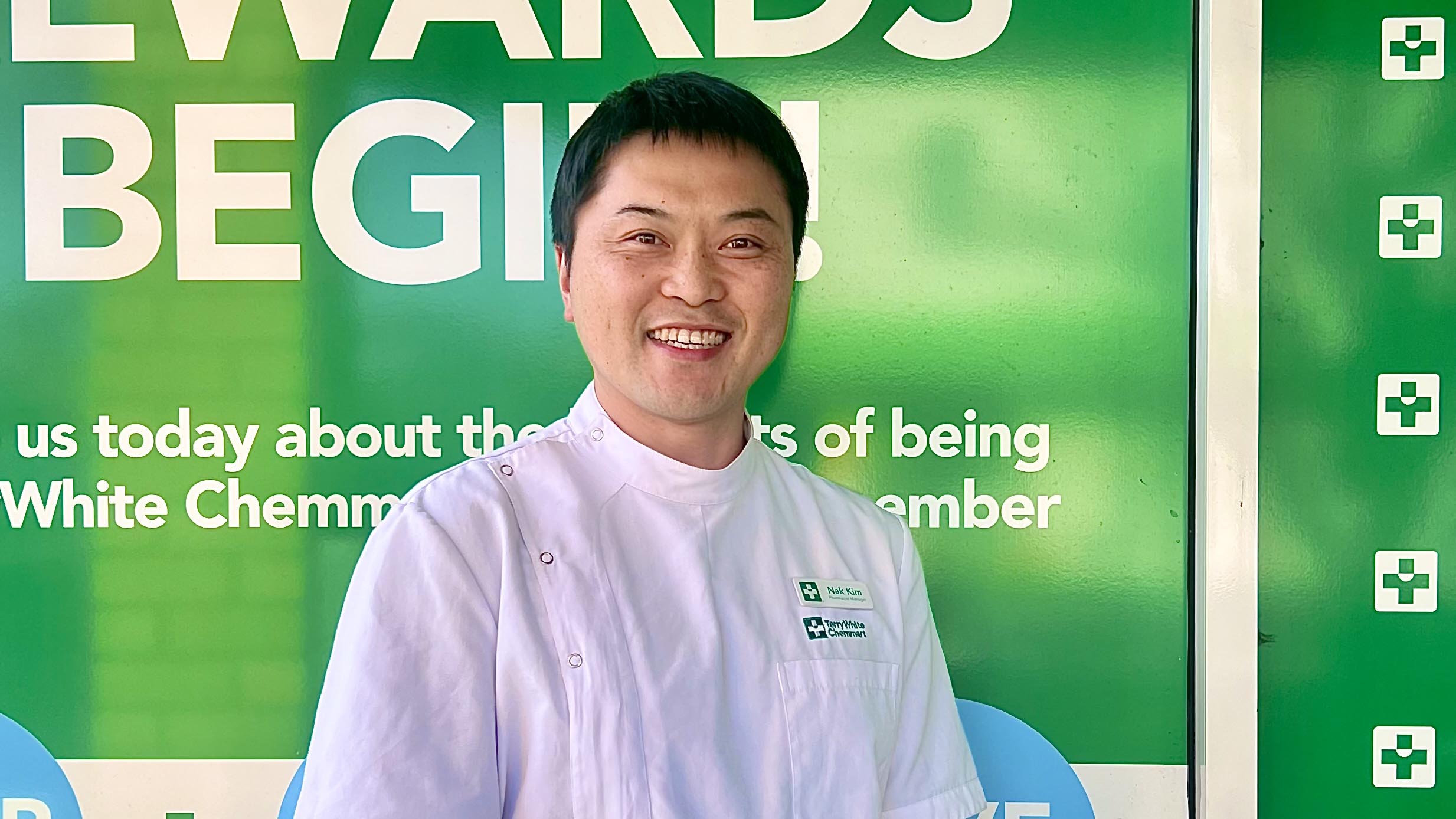
Kim Nak Kyun first came to Australia as a backpacker in 2005 and by 2013 he was a qualified pharmacist, walking straight into a job when he graduated.
Today he is a pharmacist manager at TerryWhite Chemmart in West Hobart and he achieved all of this without having even studied science in high school.
But he does give Tasmania a lot of the credit.
Originally from South Korea, Nak came to Australia to take a break from the intensity of city life in Seoul. When he reached Tasmania, he fell in love with it immediately.
"It is such a nice and beautiful place, I fell in love with the scenery instantly, the nature is incredible, it’s beautiful, there’s no other word for it."
“Also the people. The community here is lovely, they really do care for each other. Everything just worked together and it was the right place for me.”
It was enough to inspire him to enrol at the University of Tasmania and study a degree here, the Bachelor of Pharmacy’s near-100% employment rate making it an attractive choice.
He hadn’t studied science during high school, and he needed to work on his English as well.
But he contacted the University and enrolled in the Foundation Studies Program, a bridging course for international students who want to study an undergraduate course but don’t yet meet the academic requirements and/or have the English language skills for tertiary study.
Not only did it hone his English, it got him up to speed with the year 12-equivalent science qualification he needed for the Bachelor of Pharmacy. And Nak even surprised himself.
“I thought I was going to struggle but my progression in myself was pretty quick!”
Nak thoroughly enjoyed the entire course, but the final two years of the four-year degree were the most rewarding.
“Third year is when you start doing work placements and I loved it,” he said. “The actual working pharmacists came to our tutorials, guided us in how to communicate with patients, introduced new communication skills, it was fantastic.
“I learned so many things I could apply in the workplace the following day, and it was fantastic.”
Those placements also helped Nak to realise he wanted to work in a community pharmacy, rather than a hospital or clinical setting.
I love engaging with people. I had some experience in a hospital as well but I prefer to work with patients in the community, acknowledge them by name, try to have a good relationship with them, be involved with the community and try to make a change there.
These placements also make it easier for pharmacy students to find jobs after graduation. In 2022, 100% of the University’s pharmacy graduates gained full-time employment within four months of graduating.
University of Tasmania graduates also enjoy the highest median starting salary of any undergraduate pharmacy degree in Australia. And it is common for students to start working in local pharmacies while still completing their studies, further preparing them for employment once they graduate.
“Once you graduate, there’s no barriers,” Nak said. “Getting a job is pretty easy - there’s a massive shortage of pharmacists everywhere in Australia.”
These days, Nak is the one receiving the resumes and application letters from a new generation of pharmacy students looking for work after graduation and he says his decision to remain living and working in Tasmania was an easy one.
“The lifestyle difference is the biggest factor for me. South Korea is busy, very busy, you’re bonded to your workplace, and it’s a very competitive society.
“Your work-life balance is sometimes not what you wish for. But in Australia, it may be easier to have your own life as well as your work than elsewhere.
“It’s true with study as well. That’s so important, to have your own quality time for hobbies, families, friends, to recharge and be ready to give your best performance.”