

Neve Clippingdale’s excitement for the natural world is infectious. As a child, Neve saw a jellyfish at the Melbourne Aquarium and developed a fascination for marine life. Now, after graduating from a Bachelor of Marine and Antarctic Science at The University of Tasmania, she is doing her honours, first stop Antarctica. Neve is studying Antarctic microscopic plants and spent ten weeks in March-April aboard Australia’s icebreaker, the RSV Nuyina, exploring the Denman Glacier off East Antarctica. She is one of the youngest scientists aboard the vessel on its maiden scientific voyage.
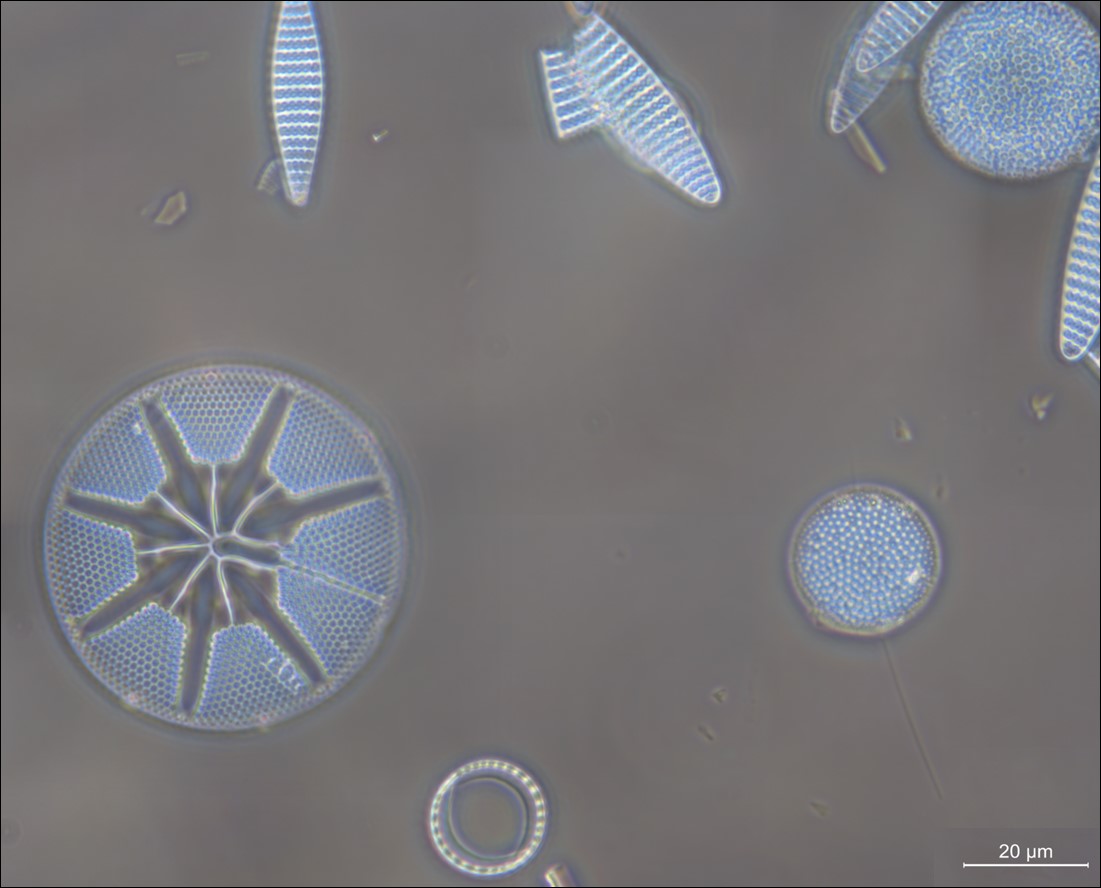
Neve says that understanding more about paleoceanography, with a focus on Antarctic diatoms, aligns with her passion for ocean processes, geology and climate science. Diatoms are a key type of phytoplankton at the base of the marine food web, and play a crucial role in maintaining marine ecosystem balance a well as carbon cycling, of relevance to climate change.
Originally from Westbury in northern Tasmania, Neve was assisted through her undergraduate degree by a George Alexander Foundation Scholarship. She now has a Don Gaffney Scholarship for her honours year and has her heart set on a PhD.
We asked Neve some questions while she was aboard the RSVNuyina:
Have you always been interested in marine and Antarctic science? When/where did the interest start?
I have definitely always been interested in marine science, but not necessarily always Antarctic science. I think my love of all things marine actually started when I visited the Melbourne Aquarium when I was two years old and fell in love with the jellyfish. My parents had to keep taking me back to see them, and ever since then I have wanted to learn more about what is in the water. In primary school I learned that one way to study the animals and plants in the ocean was to become a marine biologist, and I think my heart has been set on it ever since.
My love for Antarctic science came much later when I saw the RV Investigator outside the Institute for Marine and Antarctic Studies (IMAS) in Year 10 when I visited the University of Tasmania for an open day. I had never considered Antarctic science as a pathway until then, and having now been on two voyages (one being to Antarctica!) I just know 18-year-old Neve would have been so glad she made the choice to study marine and Antarctic science at UTAS.
What is it like to be aboard Australia’s new icebreaker, the RSV Nuyina, at the start of your honours year? Can you describe life aboard and what you are studying there?
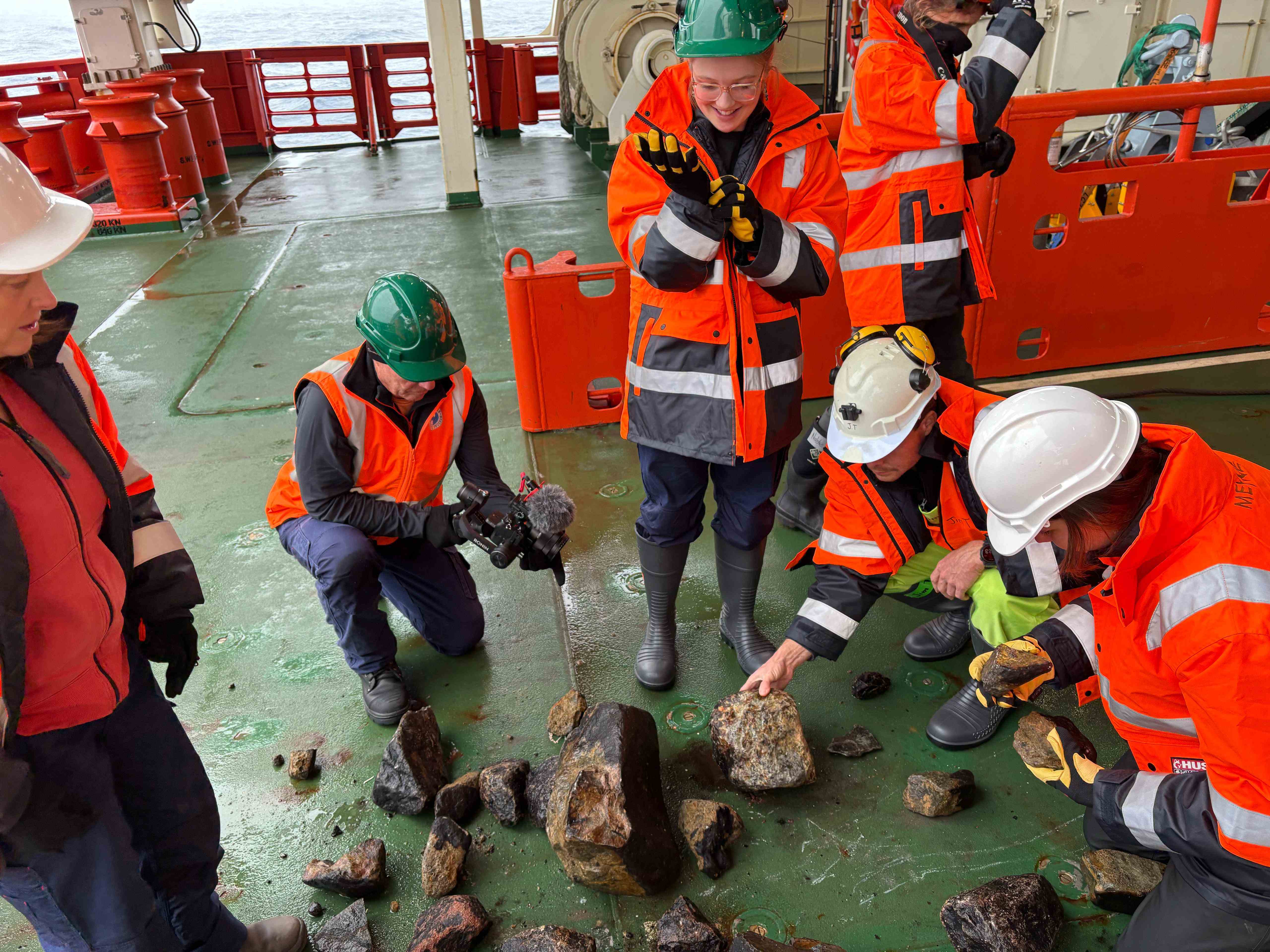
To be on the first official science voyage of the RSV Nuyina is such an incredible opportunity! Every day is so exciting, and I feel like I have learned so much in such a short period of time. I have been able to work with rock dredges, CTDs (which measure conductivity, temperature and depth), Kasten and multi-cores, geochemistry, and have even learned a bit about hydroacoustics, in addition to collecting data for my own honours project. As one of the youngest people on board for this voyage it was a bit daunting at first because most people here are far more experienced than me, but everyone is so enthusiastic and open to sharing what they are doing. I quickly felt comfortable learning how to live and work on a ship.
This voyage is spending most of its time near the Shackleton Ice Shelf and the Denman Glacier, which is one of the fastest melting areas in East Antarctica with the potential for over a metre of sea-level rise. This is worrying for scientists, because we don't yet know why this area of Antarctica is being so affected. The data we are collecting in this area will hopefully be used to answer this question.
Another project underway on the RSV Nuyina involves deep-sea camera tows. I have watched the live feed from the camera nearly every tow, and it is by far one of the most amazing things I have ever seen!
Your honours involves marine fossils. Why is this an important and interesting field to be focused on?
My honours project is specifically on a Southern Ocean diatom species called Fragilariopsis kerguelensis, which is a type of phytoplankton. I am looking at how the shape of this diatom could be used as a proxy for sea surface temperature. It is such a cool project, and I cannot wait to start properly looking at my data back at IMAS. In addition to collecting diatom samples while underway, I have also been collecting nutrient samples to determine if the availability of key nutrients (e.g. nitrogen and phosphorus) – which is influenced by ocean processes – impacts the shape of this diatom species more than temperature itself. This is important because it could influence how useful these diatoms are as a proxy for predicting sea surface temperature in the Southern Ocean.
You have received two different scholarships during your studies – the George Alexander Scholarship (GAF) and, now in your honours year, the Don Gaffney Honours & Masters Scholarship. How have these scholarships assisted you?
I have been extremely fortunate to receive both the George Alexander and Don Gaffney Scholarships. They have made my time at university so much easier. They have taken the pressure off me financially and have also allowed me to take part in some incredible opportunities such as learning how to scuba dive, going on the RV Investigator last year and now the RSV Nuyina this year to Antarctica! They have also given me access to academic mentorship and networking opportunities. The George Alexander Foundation Scholarship also allowed me to live at Jane Franklin Hall for the duration of my undergraduate degree, which allowed me to make some incredible friends who I know I will have for life. I really feel my time at Jane Franklin Hall has put me in a very strong position for entering further study, and none of that would have been possible without the GAF Scholarship, for which I will be forever grateful.
What have been some of the highlights of your study (and this trip) so far, and what are you proudest of?
I have so many highlights from my time at university so far. I think the top ones would definitely be my voyage on the RV Investigator, presenting a poster in the Australian Antarctic Research Conference (AARC) as an undergraduate, being awarded the IMAS Third Year Undergraduate Ecology and Biodiversity Prize for receiving the top result in the Marine Biology Major, earning a place on the UTAS Roll of Excellence, and of course having a place on this incredible voyage to Antarctica. I have had an incredible time at university so far and cannot wait to see what the future has in store for the remainder of my studies.
Narrowing down favourites from this magical voyage is an impossible task, but some of the top contenders would definitely have to be seeing my first ice berg, finding my diatom species for the first time on a slide, seeing orcas (so cool!), penguins, seals and sea birds, and having the opportunity to meet and work with some of the most incredibly talented people I think I have ever met. There is no better feeling than having people who understand and share your excitement. Everyone is so interested in their fields, and it has been wonderful being able to learn about such a beautiful part of the world with such incredible people. I am going to be so sad when the voyage is over.
Is there anything else you would like to add?
I think the only thing I would like to add is you never know where you are going to be days, months or even years into the future. You have to be open to trying new things, getting out of your comfort zone and allowing yourself to be passionate. Passion gets you so far, and if you pair it with determination and perseverance, you are basically unstoppable. Find what you love, work hard, be open to change, and you just never know what you might get to do!
Written by Katherine Johnson for Alumni Magazine Issue 56, 2025.
Connect with our alumni community to discover more.
Top right: Neve Clippingdale | Photo: AAD/Pete Harmsen