




Shuqi’s journey through law and business in Tasmania reveals how hands-on advocacy, close-knit legal networks, and the natural charm of Hobart can shape a fulfilling and unexpected career path.
Shuqi Yu, is graduating at the end of 2025, a 5-year double degree of Law and Business majoring in marketing, including an Honours year in Law and the Graduate Diploma in Legal Practice (GDLP), through the Centre for Legal Studies in Hobart.
Shuqi believes law opens doors in every field. Whether it’s business, accounting, or everyday matters like tax and healthcare, legal knowledge is a powerful tool.
“The first two years were hard. I kept wondering what I was doing. But you get into a rhythm. Don’t stress about marks. I didn’t get anything above a credit early on, but I worked my way up and got into Honours. Just stay in it.”
Growing up with parents that owned a business, drew Shuqi to the double degree. He could help his parents with marketing and, commercial law sounded a good fit too. However, doing his honours year, Shuqi ended up doing his paper on criminal law.
Shuqi came into the Graduate Diploma of Legal Practice still with an eye on commercial law. However, it was the criminal law units that held his interest. Prior to doing the course, he had no interest in being involved with a court room and laughingly retells that he was one of the few people who ticked “I don’t want anything to do with court work”.
What is so beneficial about the GDLP course in Tasmania was that it allowed for Shuqi to explore different areas. With their close contacts in the Tasmanian industry, GDLP organised trips to Launceston and Devonport for students to meet practising lawyers. One chat with a police prosecutor changed everything.
That moment of connection was pivotal. Without the practical exposure offered by the GDLP, Shuqi might have followed a path he thought was right, rather than discovering what truly excited him. The course gave him the space to test his interests, meet professionals face-to-face, and receive guidance that shaped his career.
The boutique size of the course in Hobart meant Shuqi could speak directly with the course director about his placement preferences. There were no barriers. He was placed with police prosecution and found himself thriving. Court appearances, once daunting, became energising. His peers encouraged him, and feedback from instructors and magistrates affirmed his strengths. Advocacy, once feared, became a source of confidence.
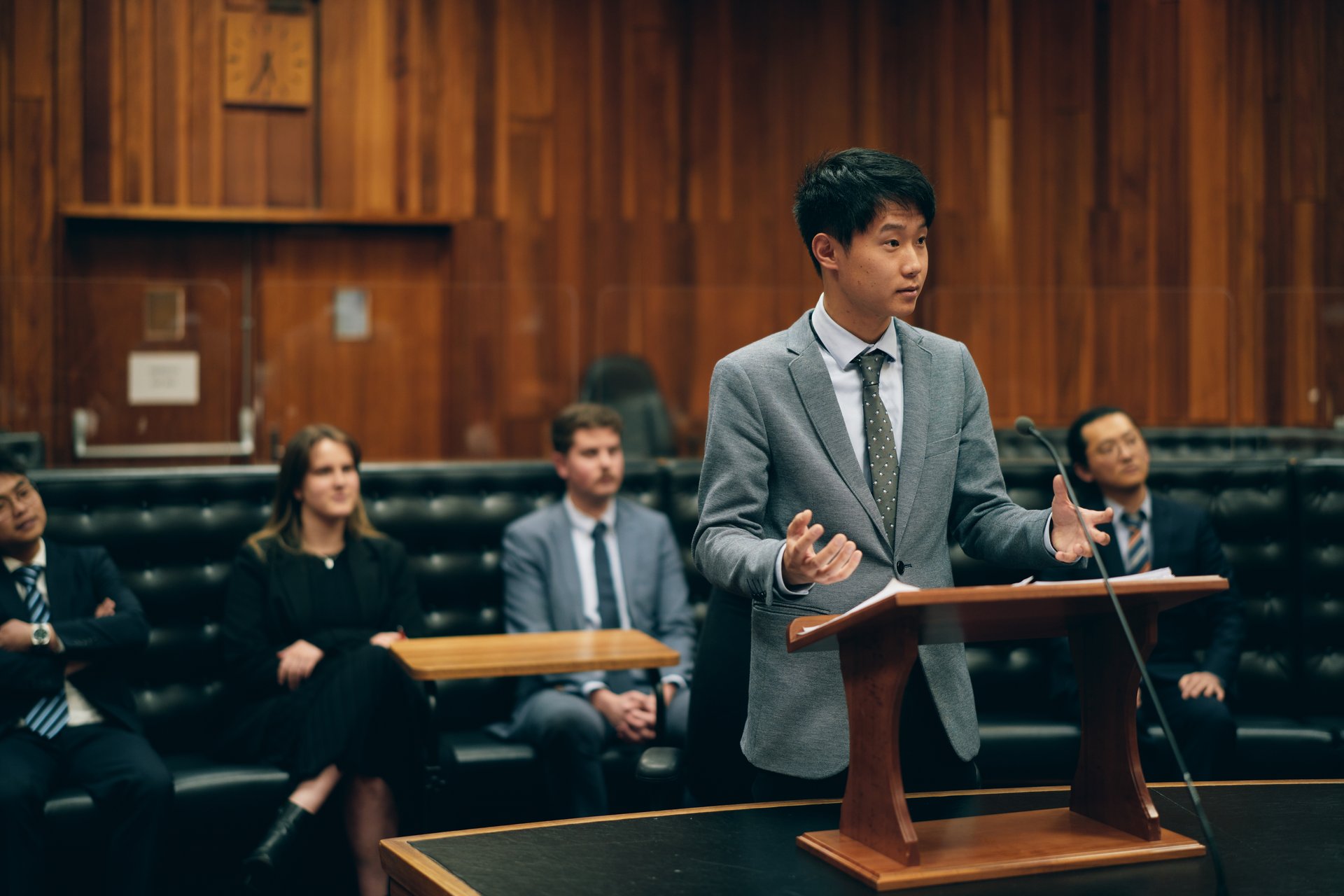
For Shuqi’s whole life he never really knew what he wanted to do and had done all sorts of things, like motoring journalism, chess coaching, but never really a career in mind. Having the opportunity to do placements, talk to lawyers, talk to the course director allowed for Shuqi to start shaping what his career would look like. “Now I know what I want to do”
Shuqi’s placement extended beyond the initial period and led to two job offers, one in Hobart and one in Launceston. Despite family ties in Hobart, he chose the permanent role in Launceston.
The hands-on approach made all the difference. Before placement, court assignments felt abstract. After placement, everything clicked.
“I know exactly what every sheet of paper means, because they are teaching you what happens in real life,”
The three weeks in the field were invaluable, allowing him to consolidate the theory from his law degree and apply it with confidence.
Now working as a prosecutor with Tasmanian Police in Launceston, Shuqi is driven by a desire to help the community. He was struck by how fair police prosecution is towards offenders and wants to ensure the process remains just for everyone involved.
Studying in Tasmania has offered more than just academic growth. Shuqi, an amateur photographer, loves exploring the island’s natural beauty. “Every weekend I go and find something new,” he said. “It never gets boring.” Hobart, with its access to hidden waterfalls and scenic drives, has been the perfect base.
Completing the GDLP is essential to practise law, and the Tasmanian Legal Practice Course (TLPC) stands out nationally. Unlike many online programs, Hobart’s TLPC is delivered face-to-face, offering real courtroom experience before actual magistrates and judges. Shuqi noted that graduates are often recruited to Sydney and Melbourne, thanks to the course’s reputation for producing practice-ready lawyers. He said TLPC is the most well-known legal practice course in Australia.
“TLPC is the only course in the country that provides real experience in a court room, to appear before a real magistrate or the supreme court. You get that very real immersion into law, which sets you up very nicely”.
There is also the social aspect of learning with your peers in real life. When filing our paperwork into court, Susie and Emma from TLPC do a great job of stepping you through how to do it. Which is not something you can get with an online course.
Shuqi says the law degree opened up a lot of opportunities in every field. If you want to do business, law is important, if you want to do accounting, law is important, even day-to-day things, like tax or healthcare, it’s important to understand the law. It’s a huge advantage to any business having a graduate with knowledge of the law. Choosing law, keeps the doors open he said.
For Shuqi, the TLPC didn’t just teach him law, it helped him discover his calling.
“I would not have known this was what I wanted to do if I hadn’t done the course.”
Shuqi completed a bachelor’s degree in Business and Laws (Honours) First Class Honours in Law, and the Graduate Diploma in Legal Practice.
Find out more about the Graduate Diploma in Legal Practice