



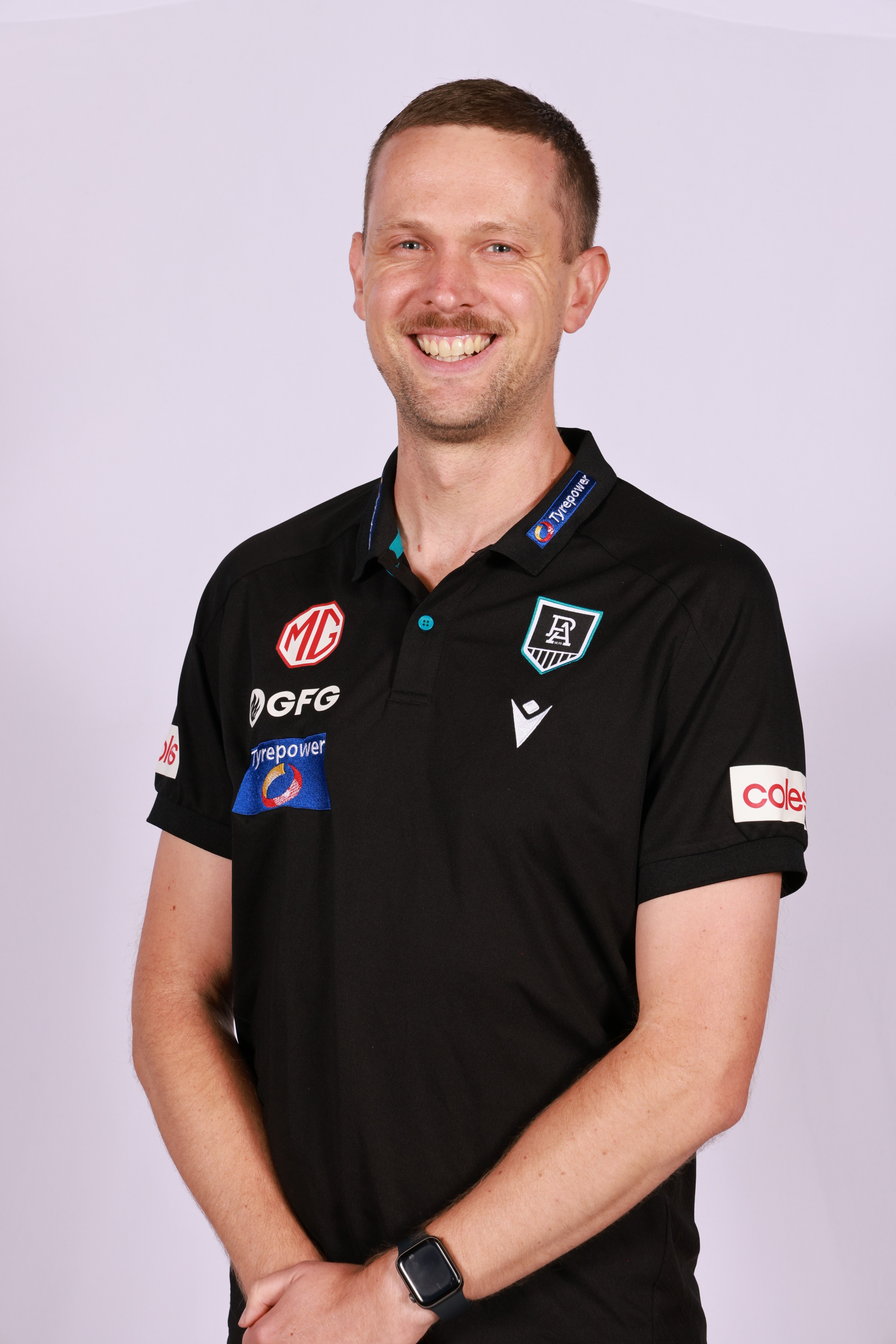
For the past 10 years, Rob was the Coach Development Manager at Port Adelaide Football Club. His path has been anything but conventional. Rob’s study path shows how a psychology degree can open doors far beyond traditional roles, especially when paired with following your interests.
Rob Mason completed a double degree in Arts and Psychology. Within his Arts degree, he enrolled in a combined Art and Music program so he could continue playing music while studying psychology.
As a Tasmanian high school student, Rob chose the University of Tasmania because it allowed him to study alongside close friends. The courses matched his interests, making the decision easy.
His career goals evolved over time. A comment from his high school principal stuck with him: “The job you’ll eventually have hasn’t been invented yet.” That turned out to be true for coach development.
While studying, Rob’s lecturers and supervisors helped him discover an interest in sport and performance psychology. Sport was a consistent theme throughout his studies, but it wasn’t until his PhD that he realised working full-time in professional sport was possible.
During Rob’s Honours year he studied motor control with Professor Jeff Summers and Dr Mark Hinder. He couldn’t have asked for better in terms of their ability to help Rob understand the scientific method and experimental design. Rob’s very first psychology tutor was Dr Kimberley Norris, he said she was so good at distilling complex topics into approachable and engaging lessons that the class nominated her for a teaching award.
After Honours, Rob completed a Master of Teaching in Melbourne with plans to become a secondary school teacher. At the same time, he was coaching a local basketball team. He later pursued a PhD in sport coaching, focusing on how coaches use teaching strategies with athletes. During this research, the Port Adelaide Football Club (PAFC) contacted his supervisor.
Rob travelled to Adelaide to share his findings, and the relationship with PAFC grew. This led to valuable experience inside a professional organisation, while also completing his degree and publishing research.
His background in educational psychology helped him understand how people learn and how to optimise teaching. In elite sport, where tiny margins matter, this knowledge is a competitive advantage.
“My psychology background, especially in evaluating evidence and practising scientifically, has shaped my career,” Rob says. “I was lucky to be in the right place at the right time and made the most of it.”
Skills from clinical psychology have also been useful, such as asking good questions, listening with intent and reflecting. Psychology gave Rob a strong foundation in statistical literacy, which he uses daily in a field that relies heavily on data.
Rob recommends reaching out to professionals in your area of interest. He contacted an Olympic sport psychologist and learned that 80 percent of the role was clinical. That conversation helped shape his next steps. Speaking to people already in the field gave him a clearer picture than assumptions ever could. He encourages students to connect with professionals doing the job they aspire to and learn what the day-to-day work is really like.
Rob has now worked in the Australian Football League (AFL) for ten years. Coming from a non-AFL background sets him apart, though it hasn’t been without challenges. Some coaches value playing experience over other qualities, so Rob has worked hard to build rapport and trust.
He says the coach development workforce is growing quickly in Australia and has already expanded overseas, especially in the UK. Still, few people hold roles like his in elite teams, with most working at junior or development levels. Rob believes this will change, and more people from diverse backgrounds will enter football over the next 10 to 20 years.
When Rob was at PAFC as the Coach Development Manager he worked with football coaches to improve their coaching. This included observing training, match days and player education sessions. Providing feedback to help coaches refine their approach.
“There aren’t really any typical days in an AFL club,” Rob says. “Each week brings a new opponent and new challenges, which makes the work rewarding.”
Rob says psychology prepares students for traditional roles like clinical practice, but it’s also a launchpad into many fields where people are the focus. He encourages students to follow their passion, no matter how niche, and to build connections early.
“I’d encourage anyone considering Psychological Science to keep an open mind about the careers it can lead to,” Rob says. “My academic path was more like a meandering river than a straight line.”
Find out more about studying Psychological Sciences or a double degree.