


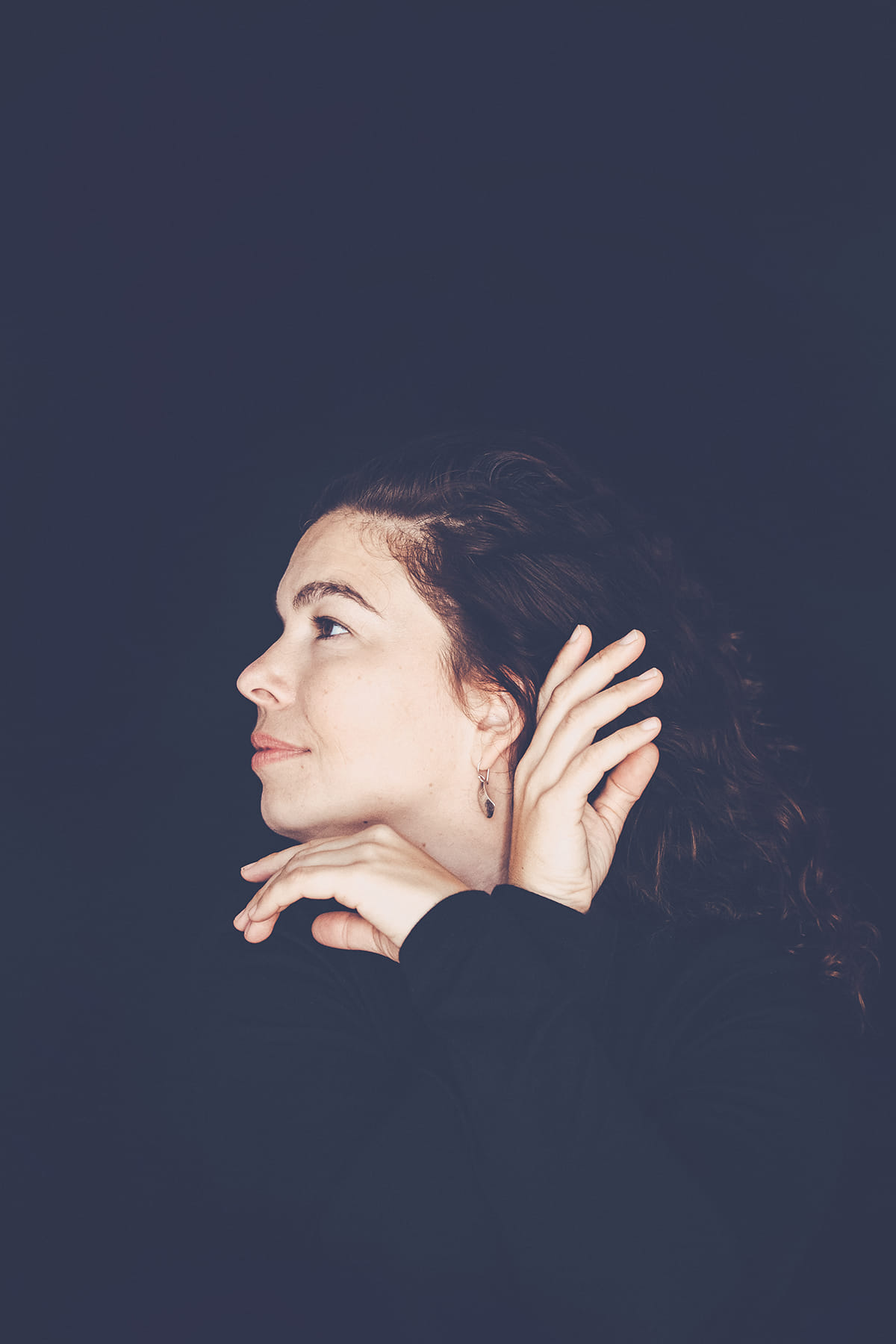
Susannah Coleman-Brown completed her first degree—a Bachelor of Music Performance—almost twenty years ago. Now a singer-songwriter, the idea of returning to a learning environment for an Honours year was exciting. The Bachelor of Fine Arts (Honours) offered Susannah the chance to “test the water,” refine a research idea, and discover whether she still enjoyed academia after so much time away.
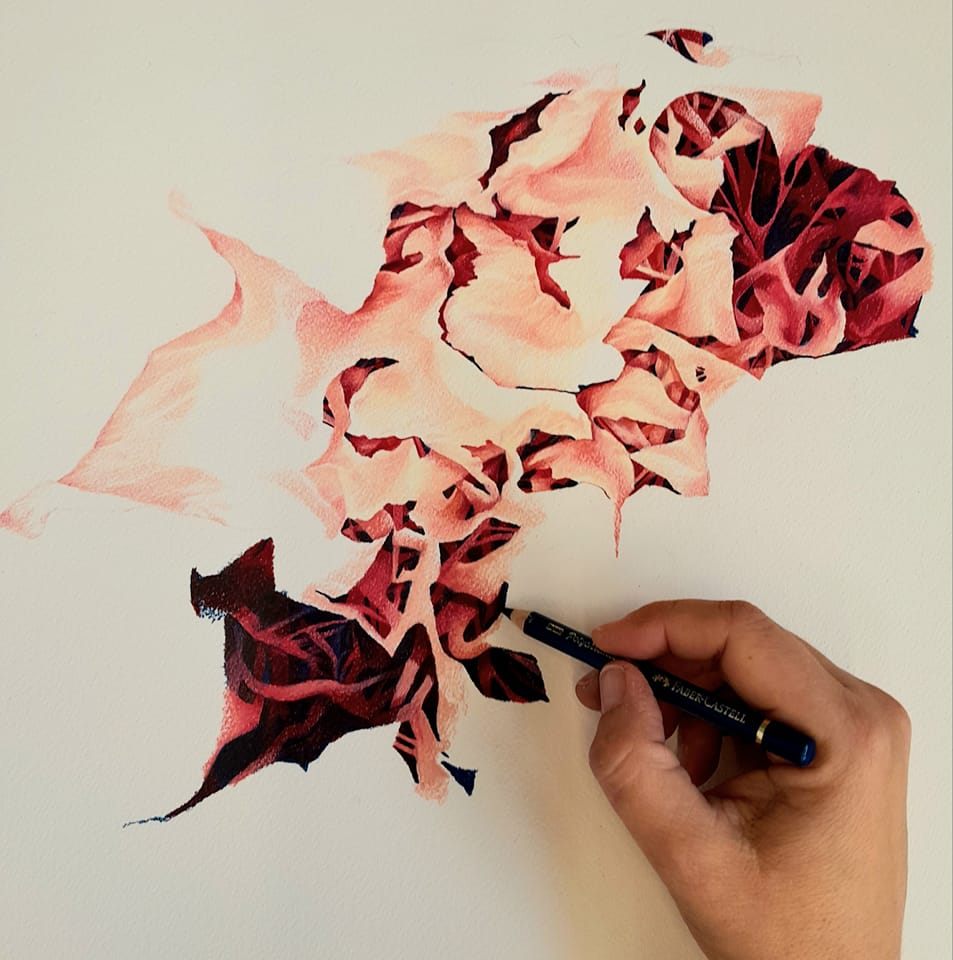
Despite not coming from a Fine Arts undergraduate pathway, Susannah found it encouraging to share her portfolio with university staff and receive support to apply. Over several years, she had been developing her drawing practice and had reached a point where she wanted to push it further, connecting her visual work with her long-term music practice.
“The Honours year felt like the perfect opportunity to explore that intersection properly through a research project.”
For Susannah, Honours was an excellent way to concentrate her practice. She had been working alone on her drawings, and gaining input from her supervisor, peers, and literature to build a project was the support she had been eager to receive. Honours allowed her to acquire skills in academic research through months of structured work, thinking, and testing. It pushed her to dive into abstraction and produce work with a unique perspective. With studio spaces only ten minutes from home, choosing the University of Tasmania was an easy decision.
Studying Honours Thesis A and Honours Thesis B proved invaluable. These foundational units, devoted to writing and thinking, were presented clearly and guided her throughout the process. One of the most significant aspects of Honours for Susannah was the supervision experience.
“Being paired with an experienced supervisor really means the world when you feel like you are embarking on something new.”
Lecturers were attentive, responsive, and encouraging, taking her through the specifics of becoming a researcher. Although she felt like a beginner, Susannah felt exceptionally well supported.
As an Honours graduate, Susannah was offered opportunities to exhibit in spaces such as s.p.a.c.e Gallery, Scotch Oakburn College, and Madeleine Gordon Gallery. This led to participation in numerous group shows and selling her work.
“This direct link to the local industry has been exceptionally helpful.”
Building on that success, Susannah will travel to the USA in 2027 to work with Tony and Grammy Award-winning producer Todd Sickafoose to record her new jazz album in Oregon. Honours sparked something in her to push the boundaries of vocal improvisation. Her drawings have become part of the way she makes music—and vice versa.
“If I hadn’t studied Honours, I would have struggled to focus on my practice and give it priority. I have children, paid work—it’s a full life!”
Susannah also noted that having university qualifications helps when applying for funding, providing a widely recognised way to present yourself to the industry.
One emotional memory stands out, submitting her exegesis and dancing around the kitchen with her kids, so sleep-deprived, but proud of reaching the end of the course.
Her advice for anyone considering Honours? It’s not linear. Leave expectations at the door and keep making work. Honours gave air to her ideas and the push she needed to share them with peers and experts. Stay open to different perspectives, keep reading, maintain accurate records, and be a sponge.
“This is a once-in-a-lifetime opportunity to really dive into an idea for a year. Do it!”
Susannah was a recipient of the Madeline Gordon Gallery Art Award (2023) and the Scotch Oakburn College/UTAS Graduate Art Award (2023). She has been a finalist in the Waterhouse Natural Science Art Prize (2020), TIDAL 2.1 (2021), Waverley Art Prize (2020), Fisher’s Ghost Art Prize (2020) and Ravenswood Women’s Art Prize (2020).