

The remarkable rescue of Lithuanian rafter Valdas Bieliauskas, whose leg was trapped between rocks on Tasmania’s Franklin River in November 2024, made international news, and for good reason.
Against the odds, a team of remarkable rescuers and medical staff, many of them University of Tasmania alumni, successfully saved Valdas’s life. They achieved this despite the patient enduring close to 24 hours trapped in rapids, a necessary amputation and hypothermic cardiac arrest.
From the paramedics, police and doctors who were winched into the river by helicopter, to those coordinating the rescue, and the medical specialists at the Royal Hobart Hospital – this was an incident requiring a high-level of skill, seamless handovers, and a close-knit crew.
Among the rescue team was alumnus Senior Constable Callum Herbert, who coordinated the initial rescue response and assisted at the forward command post set up at Lake St Clair. Callum was quickly in touch with fellow alumni Senior Constable Tim Donovan and Flight Paramedic Mitch Parkinson.
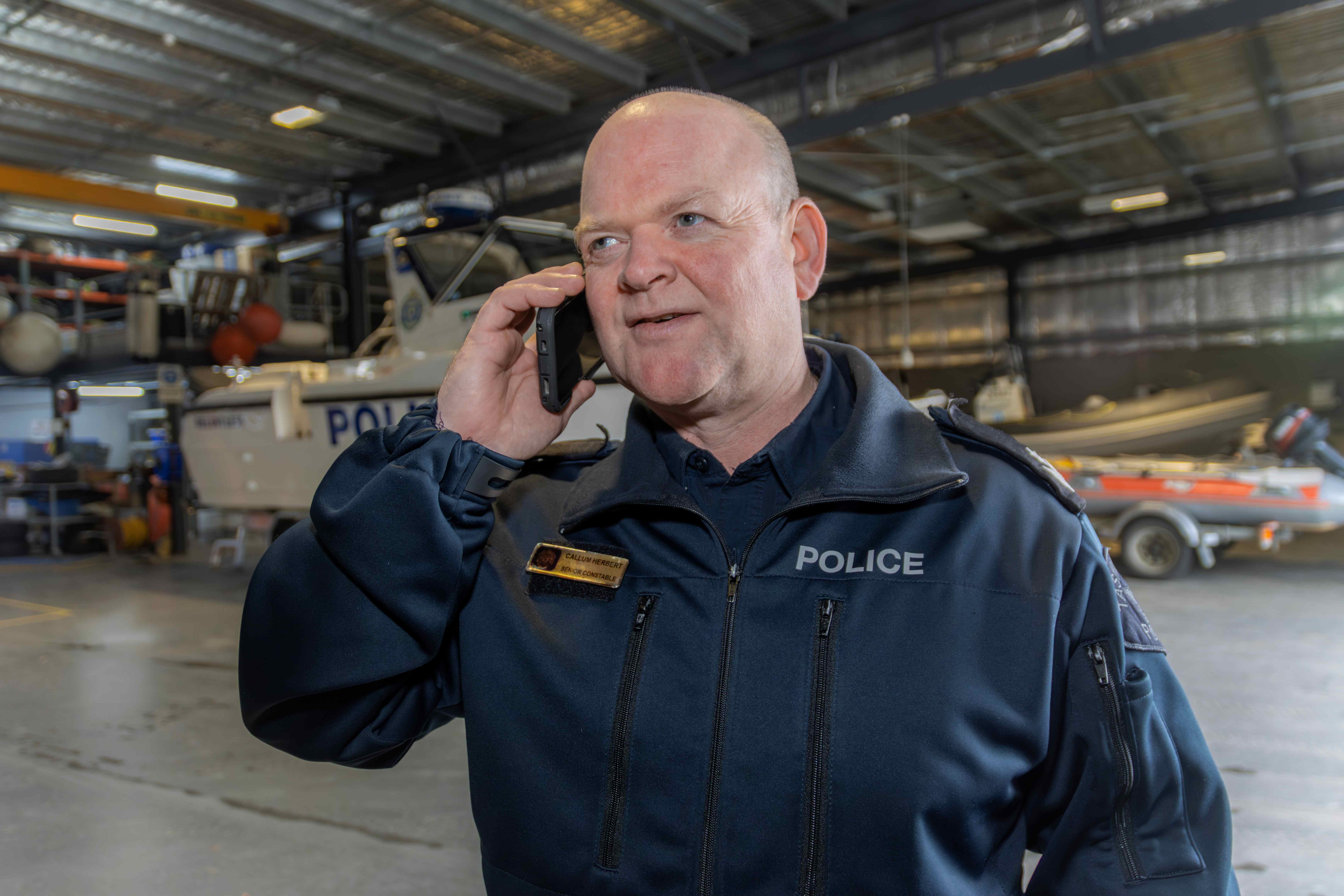
“Tasmania has a very small rescue community and we’re lucky that we all know each other, so when an incident like this happens, you aren’t just calling names on a page; you are calling people you know – you know their skill set and trust them.” Callum Herbert
Given the remote location, communications were a challenge but a helicopter was successfully dispatched with Tim and Mitch on board.
Tim has been helicopter crew for ten years, in the police department for 25 years and with search and rescue for 18 years.
“We were the first winched down to the scene to assess the situation,” Tim said, adding that they had to see if they could free Valdas with the resources they had. But Valdas’s leg was wedged firmly and more assistance was needed.
“I’ve done some difficult and complicated jobs over the years, but not someone trapped who couldn’t be freed,” he said.
“There was the potential for a lot to go wrong. There was the difficulty of performing procedures in very isolated and difficult conditions. The sloping rock slabs were slippery like ice – it was a treacherous spot. Then there is the downwash of the helicopter in a narrow canyon.
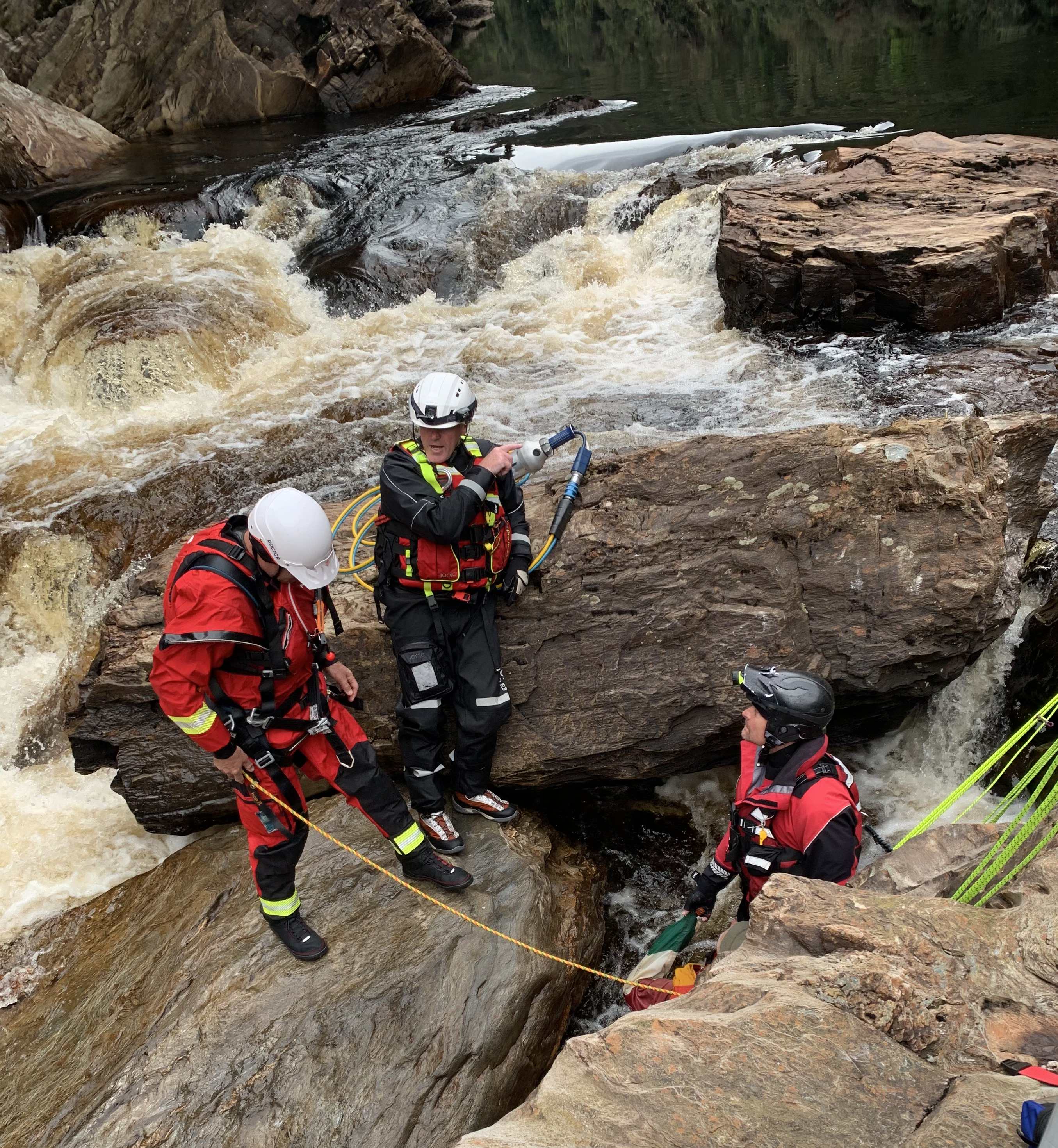
“It can be a high risk, stressful job so you have to be familiar with each other and to know your capabilities so everyone is on the same page. It’s a close knit heli-crew.’
For Mitch, it was the most challenging case he had been part of. “Valdas is an exceptionally strong and resilient man and he maintained that throughout the night,” he said. “Our efforts were to keep him warm, to keep him fed and hydrated, and throughout the rescue attempts, ensure we managed his pain.”
Fellow alumnus and Flight Paramedic Adam Marmion arrived on the scene the following morning. Fortunately, it had been one of the warmest nights of the year.
Once it was clear that Valdas could not be freed without amputating his leg, other dangers, including cardiac arrest, loomed, as well as the challenge of transferring him into the helicopter and on to hospital.
Adam, who studied both paramedicine and nursing, said, “It wasn’t about any one individual – it was about everyone being able to fit in and get things done and keep processes moving.
“The teamwork was a standout for me. Tassie can hold its head up high in terms of the skills we have for this sort of remote rescue. They’re world-class.”
Adam says the team weren’t just medically skilled, but skilled in terms of working on a helicopter, and in a remote part of Tasmania.
“Valdas couldn’t have asked for a more skilled swift water crew,” he said.
“Dr Jo Kippax, who teaches at the University, is himself an experienced white-water rafter, and I’ve worked as a rafting guide and paddled recreationally on the river, so I was very familiar with it, too.”
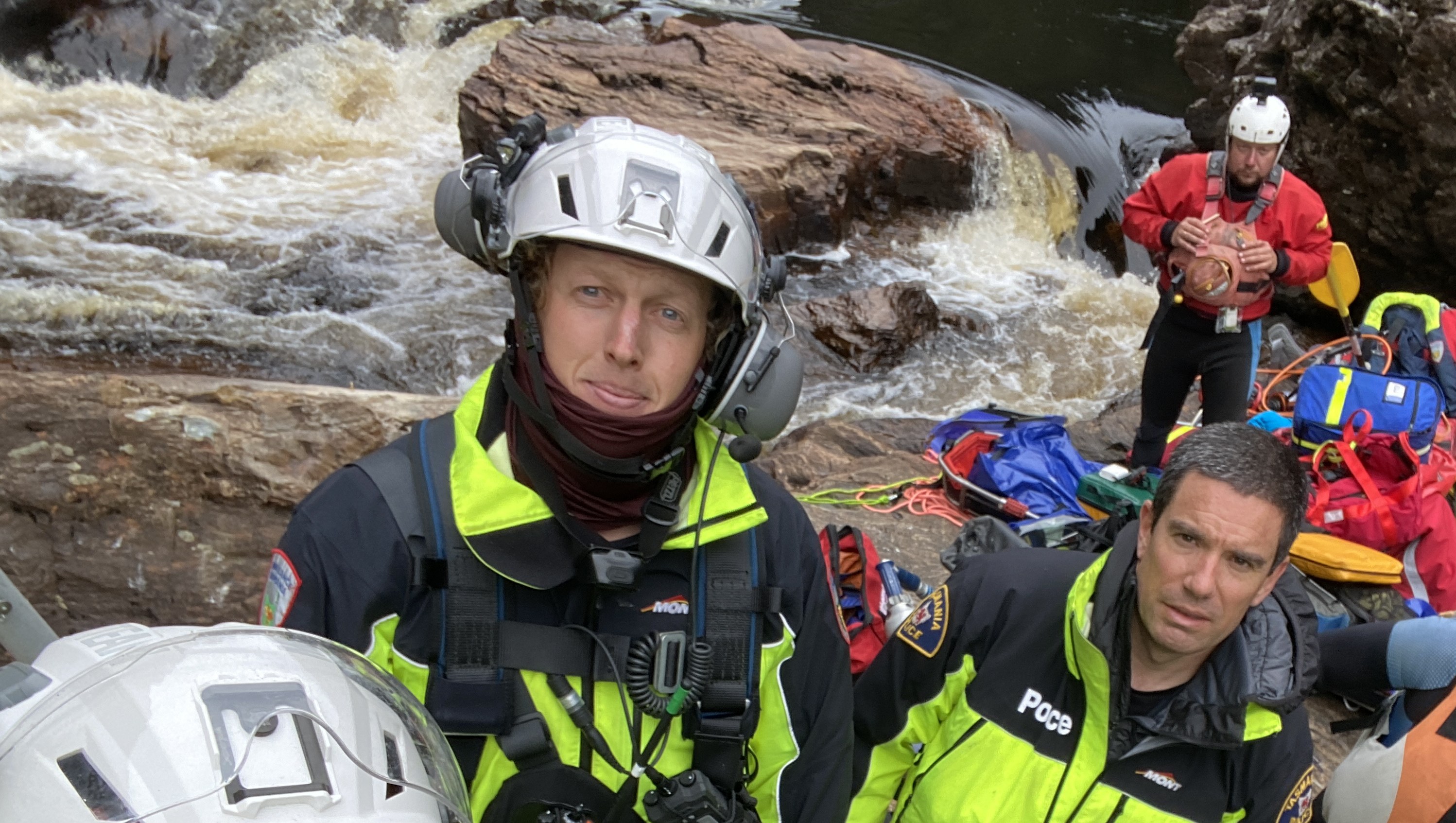
As feared, Valdas did suffer a hypothermic cardiac arrest before being winched into the helicopter on a mechanical heart machine. A message was relayed to the hospital that he would then need to be immediately transferred onto an ECMO (Extracorporeal Membrane Oxygenation) machine, which provides temporary heart and lung bypass until the patient’s heart can be restarted.
This is when Intensive Care Specialist Dr David Bertoni and ICU Nurse Unit Manager Ellen Burke became involved.
“My role was multi-faceted because of the complexity of the case,” Ellen said.
“I had a call that the patient was in hypothermic cardiac arrest. Dr David Bertoni was called and activated the ICU ECMO team to attend, with three doctors and two nurses working together to put Valdas on ECMO during the resuscitation. It was great communication skills and great team work for that to all happen so efficiently.” Ellen Burke
Valdas remained on the machine for five days and throughout that time Ellen provided updates to his family via a Lithuanian translator, but there remained uncertainty about whether Valdas would survive or recover well, particularly in terms of brain function.
“Given the language barrier, the complexity of this case was not all clinical,” she said, noting that there were only two registered Lithuanian interpreters in Australia, and these interpreters were only accessible via video.
Ellen and her team arranged for a local Lithuanian community member to sit with Valdas and hold his hand, providing reassurance and translation when he emerged from his coma.
“The importance of human presence and touch with the critically ill patient was really brought to life,” she said. “I hadn’t seen a case like this before; it was 100 per cent extraordinary.
“I always wanted to be a nurse, my grandmother was a nurse. I’ve gone on to do a graduate diploma in critical care, increasing my knowledge, and am now the nurse unit manager in ICU.”
Dr David Bertoni said that for him the takeaway was seeing the extraordinary collaboration of people he works with day to day. “It’s really inspiring,” he said.
“All these people bringing their individual skills to give Valdas the best possibility of surviving – to see that all come together, both pre-hospital and then in hospital, that will stay with me from this case.”
Written by Katherine Johnson for Alumni Magazine Issue 56, 2025.
Connect with our alumni community to discover more.
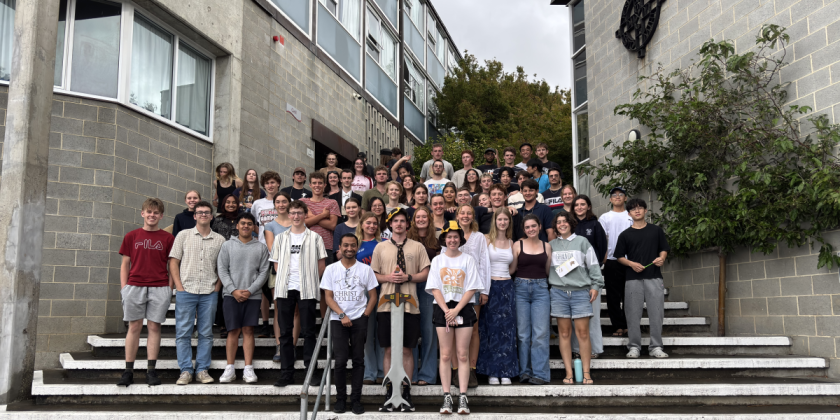
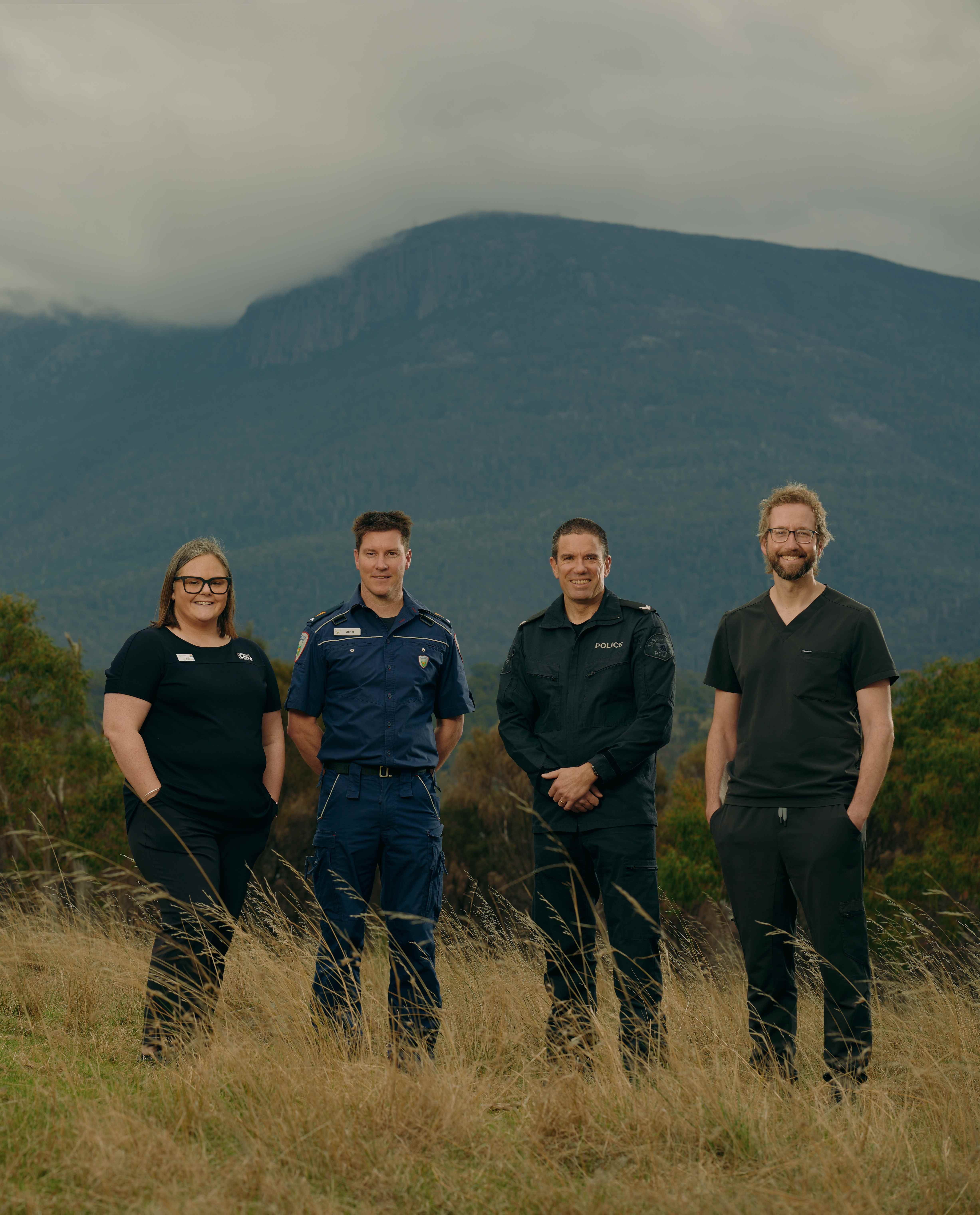
Top right: Ellen Burke, Adam Marmion, Tim Donovan, Dr David Bertoni | Photo: Oi Studios