



Photo: The Kids Research Institute Australia
When Professor Asha Bowen OAM arrived at the University of Tasmania as part of the inaugural National Undergraduate Scholarship program, she never imagined her geography degree would become the foundation for revolutionising Indigenous child health across Australia.
Now a renowned paediatric infectious diseases specialist and Order of Australia Medal recipient, Asha's unconventional path from studying landscapes to healing lives demonstrates the power of interdisciplinary thinking in addressing complex health challenges.
Asha's journey began in Sydney, where the prestigious scholarship drew her to Tasmania's geography and environmental studies program. Living at Jane Franklin Hall, she immersed herself in field work across Tasmania's diverse terrain.
"We used the landscape incredibly to learn," Asha recalls. "Whether it was economics, spatial mapping, or climate studies, we were always outdoors, really engaging with the environment."
Her double major in geography and environmental studies, complemented by minors in politics, women's studies, and history, provided an unconventional but invaluable foundation.
The geography of health became a particular fascination, introducing her to how landscape, infrastructure and social determinants influence disease patterns and spread.
This geographical lens proved transformative when Asha later entered medical school at the University of Sydney. While her peers possessed biomedical language she initially lacked, her arts background brought something equally valuable: a questioning, analytical mindset that challenged conventional approaches.
"Most of medical school is didactic learning – these are the facts, learn them," she said. "But I came with a very questioning, curious mind, always asking why decisions are made and how to make better, more informed ones."
After completing her paediatric infectious diseases training, Asha moved to Darwin's Royal Darwin Hospital for her final year, with plans to work on paediatric HIV in Africa next.
What began as a six-month microbiology placement became a life-changing commitment to addressing health inequities in her own country.
Her PhD research on skin infections in Aboriginal children led to a startling discovery.
Through a systematic review of global literature spanning 50 years, she found that Aboriginal children in remote Australia had the highest burden of skin sores anywhere in the world – affecting one in two children at any given time, up to five times higher than populations with similar levels of disadvantage in Africa, Asia or South America.
"You can't really report that and do nothing. There's no way you could sit on that piece of data and just say it's someone else's problem." Professor Asha Bowen
This discovery sparked the groundbreaking SToP Trial (See, Treat, Prevent), conducted across remote communities in Western Australia's Kimberley region.
What began as Asha's biomedical approach – treating infections to prevent transmission – evolved through genuine partnership with Aboriginal community-controlled health organisations.
"The community said, 'We don't want this to continue, we want to prevent it,'" she said. "So, prevention became integral to our approach."
Despite COVID-19 disruptions that paused data collection for nine months, the trial achieved remarkable results, reducing skin infection rates from four in 10 children to two in 10 – a 50 per cent reduction that represents hundreds of children avoiding painful infections and serious complications.
Asha's influence also extends far beyond individual trials. She developed Australia's first National Healthy Skin Guidelines, launched by former Minister for Indigenous Affairs Ken Wyatt in 2018 and updated in 2023.
Her 2024 Order of Australia Medal recognition was "completely unexpected”, but reflects the profound impact of combining geographic thinking with medical expertise. By understanding health through the lens of place, environment, and community, she has transformed not just how we treat skin infections, but how we conduct respectful, community-led health research.
"We've still got a long way to go," Asha acknowledges, "but I think we've made some pretty big progress and elevated the importance of skin health across Australia."
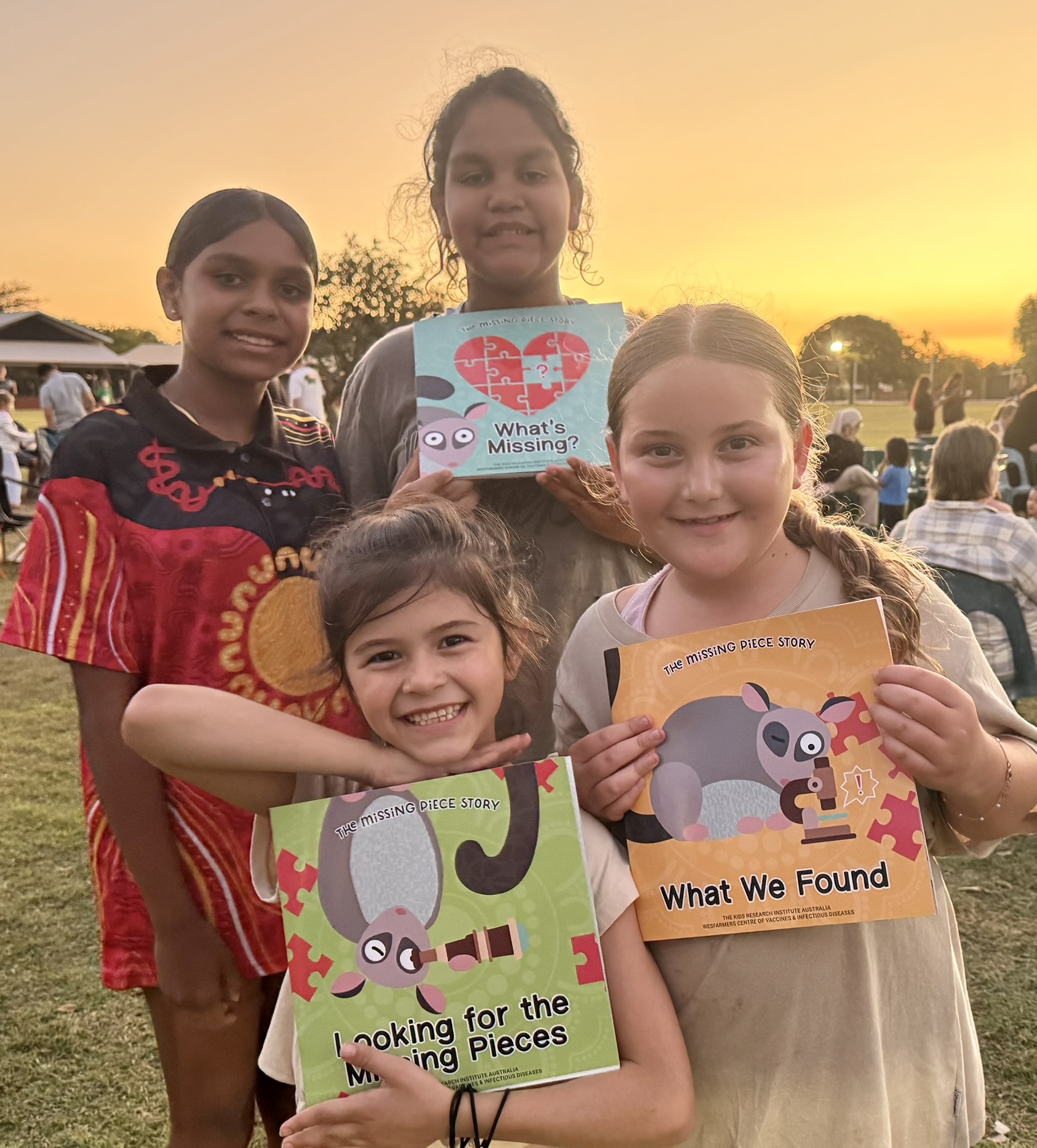
Written by Anna Osborne for Alumni Magazine Issue 56, 2025.
Connect with our alumni community to discover more.
Top of page: Professor Asha Bowen is transforming skin health across Australia | Photo: The Kids
Research Institute Australia