

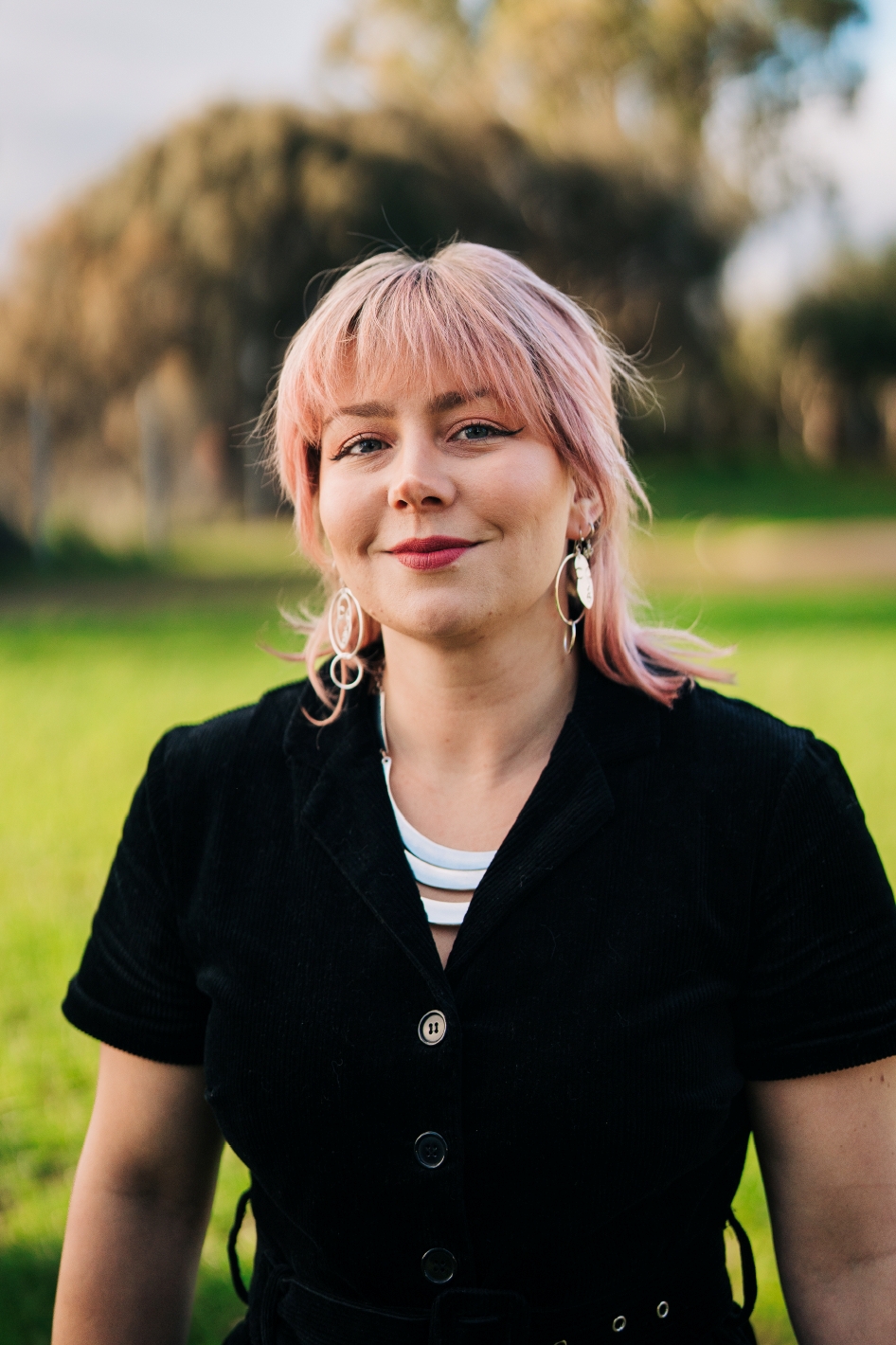
Sarah Standen is the Sole Legal Counsel for Tasmanian-based international success story Procreate, a globally popular digital illustration app created by Savage Interactive.
Sarah recently gave an inspiring occasional address at the University of Tasmania’s Arts & Society graduation ceremony in Hobart, where she spoke about using your own educational experience to empower others and to work towards a more just and compassionate world.
She encouraged graduands to become changemakers, and left them with the message that, “Wherever you go next and whatever you do, use what you’ve learned to lift others up. Don’t gatekeep. Demystify, engage. Advocate for those who haven’t been heard, create opportunities for those who’ve been overlooked, and help shape systems that are as diverse and dynamic as the people they serve.”
“Education doesn’t end when you walk across this stage – it becomes the way you live, lead, and see the world.”
Sarah also recorded a video for The Island Network about her late ADHD and autism diagnoses, and how this reshaped her self-understanding and empathy.
We are grateful to Sarah for answering some questions for this month’s Alumni and Friends enews.
Did you always want to be a lawyer?
I would love to say that I have always wanted to be a lawyer, that my path has always been clear to me and each step was carefully planned and executed. But the truth is that I kind of fell into law school because I had good grades but struggled with maths, and I still don’t know what I want to be when I grow up.
Throughout uni, I had many tentative and transient aspirations. I did a double degree, arts and law, and studied French and German because I’ve always liked learning languages and singing in German, and I thought I might be an international lawyer. Later on, I took all the justice electives because I thought I might be a criminal lawyer. I completed my honours thesis in charity law because I thought trusts were cool. I didn’t even know what intellectual property was when I was at uni and now I’m planning a PhD in IP.
I guess what I’m trying to show is that it doesn’t matter if you don’t have it all figured out, and you don’t have to stay on a path if it isn’t bringing you joy and a sense of purpose.
What was your own experience on graduating from University?
I left university in 2020 with a Bachelor of Laws with Honours and a Bachelor of Arts with First Class Honours in Law, and still very little in the way of a confident sense of direction.
I was, and still am, incredibly lucky to have the support of my family, but I had no connections in the legal profession. I’d worked multiple jobs whilst studying fulltime and wasn’t in a position to do unpaid clerkships or internships in order to make connections and see what areas of law actually interested me. So, I applied for every single graduate role that was advertised. After a number of rejections, I interviewed for a graduate role in property law, which wasn’t something I was passionate about, but at that point I figured that beggars can’t be choosers.
Having undertaken my honours thesis in charity law and worked at the Tax Office, I ended up rambling about trust law. The partners noted my enthusiasm and opened up a graduate role in the corporate and commercial team for me.
Can you tell us about your career so far?
I feel I’ve been lucky in my career journey, with pivotal moments often coming down to someone who was willing to give me a chance, from my first role as a graduate lawyer at Page Seager to my subsequent and current role at Procreate.
Despite being a very junior lawyer, I was lucky to have the opportunity to work closely with clients from early on and to be involved in a broad range of corporate and commercial matters. From there, I developed an interest in IP, cyber security, and privacy. From there, I went on to be offered the role of inaugural (and sole) in-house lawyer at Procreate.
In addition to paid work, volunteering continues to be an important and formative aspect of my role in the legal profession and the broader community. I have been lucky to work with a number of not-for-profits including the Association for Children with Disability and A Fairer World. This has been incredibly rewarding experience and, as most volunteers will tell you, you get back far more than you give.
What motivates you; what truly makes you get out of bed in the morning and want to make change?
If you’d asked me this question even just a couple of years ago and I’d answered honestly, I would have had to have said severe anxiety and an all-consuming fear of failure. I know that’s not a textbook answer, and certainly not a glamorous one, but I feel like I should be transparent about my journey because there’s still so much stigma around mental health and neurodivergence. I know I’m not the only one who’s felt this way, who’s grappled with identity, purpose, and wellbeing, and my past experiences provide important context for what motivates me today.
I’m in a much better place now than I was throughout my years of study and my initial time in the legal profession, thanks to the support of family, friends, and colleagues, and late diagnoses of ADHD, autism, generalised anxiety disorder, and complex post- traumatic stress disorder (CPTSD). Now I’ve had time to process and work on all of that, what truly motivates me is the hope of leaving the world a better place than I found it, by improving systems and experiences for following generations.
For me, progress means that those who walk their paths after us have greater support and joy in their lives than we did at that time, and success, for me, means being a part of that positive change. If something I do in my life improves the life of even one person, if I can be to someone the person I needed back then, it was all worth it, and I’ll call it a life well-lived.
How has your recent understanding of ADHD and autism assisted you in your profession?
I feel that getting to know my own brain better has given me a greater ability to treat myself and others with compassion and kindness, because it’s helped me understand that everyone truly is different in how they see and experience the world, and how they interact and communicate with those around them. A mantra I now carry with me is “approach with curiosity and assume good intent”, because you never know what is going on behind the scenes in a person’s mind or life. This is as important in professional relationships and negotiations as it is in the rest of life.
Although it’s so difficult to do, especially if you live with anxiety, perfectionism, or hyper-independence, I really think that seeking support, whether through more formal means such as diagnosis and treatment, or more organically by reaching out to those who have had similar experiences, is crucial for success and happiness.
No matter how old you are, or what stage of your life you're in, if you think there is something that could help you fulfil your objectives better or just be happier, or if you think you may need additional support at some point in the future, absolutely get onto it. There's no shame in it and it'll only empower you and help you go even further in your career and life more broadly. Don't wait until you're struggling.
And what is next for you?
I feel like I’m at an exciting and really special point in my life. My daughter is five months old and is just so beautiful, such a gift and a delight. It’s the most wonderful thing watching her experience the world for the first time. I’ve been back at work one day a week since the start of February, and I feel like I’ve returned with a renewed sense of purpose and ambition, hence the PhD I mentioned earlier.
I'm really interested in intellectual property law and the rights of creators. Part of that has developed through my role at Procreate and my interactions with artists in this capacity, which has been really joyous. It's such a fascinating and rapidly developing space, particularly as new technologies develop.
I’m planning to undertake a PhD project looking at the significant and long-recognised gap in Australian law in relation to indigenous cultural and intellectual property, with a focus on how new legislation could empower rights holders when it comes to IP infringement via the training and outputs of generative AI models.
As well as being a complex and technically fascinating topic, the gap in the law here is indicative of the legal, societal, and systemic injustice created by colonialism, and I feel a duty to use my education and skills to learn from and walk with First Nations people, with my family, to create more just and equitable laws and systems that recognise the validity and complexity of indigenous cultural and intellectual property, and empower the traditional owners of these lands.
Like I said earlier, I don’t know what I want to be when I grow up, but I do know that I want to keep learning and trying to make a difference.
You can hear more about Sarah’s experience as a lawyer in this video .
First published in Alumni and Friends eNews.
This article featured in the monthly eNews Alumni and Friends. If you are a member of the University of Tasmania community and would like to receive this publication, please provide or update your email address.
Image top right: Sarah Standen giving the occasional address at the University of Tasmania's Arts and Society graduation ceremony in Hobart, December 2025