

Cancer Council Tasmania strengthens support for local cancer research, with new scholarships and fellowships helping two University of Tasmania researchers advance work into glioblastoma (GBM), one of the most aggressive and hard-to-treat forms of brain cancer.
Cancer Council Tasmania Chief Executive Officer Alison Lai said the scholarships and fellowships were an important way to build research capability in the state while supporting work on cancers where better treatment options are urgently needed.
“Both Dr Emma Wilkinson’s and Shiona Kondo’s projects focus on glioblastoma, one of the most prevalent and aggressive types of brain cancer,” Ms Lai said.
“Supporting this research here in Tasmania is important not only for building local expertise, but for helping drive discoveries that could improve outcomes for people diagnosed with this devastating disease.”
Dr Emma Wilkinson, who completed her Bachelor of Biotechnology and Medical Research, Honours degree and PhD at the University of Tasmania, is using her fellowship to investigate a novel therapeutic approach for glioblastoma.
“My project aims to explore a novel therapeutic option for glioblastoma, which is characterised by rapid growth and invasiveness and is notoriously treatment resistant, leading to a poor prognosis,” Dr Wilkinson said.
“Current chemotherapeutic agents such as temozolomide are effective but insufficient to overcome the aggressive nature of glioblastoma, so new approaches that can sensitise tumour cells to existing treatments could help improve options for patients.
“This project will investigate whether antisense oligonucleotides can sensitise glioblastoma cell line models to existing chemotherapeutic treatments.
“I will investigate the ability of antisense oligonucleotides (ASO) to sensitise cell line models of GBM to existing chemotherapeutic treatments.”
Shiona Kondo completed her Bachelor of Medical Research with Honours at the University of Tasmania and has continued that work into her PhD, which began earlier this year. Her scholarship is supporting research into how glioblastoma develops at a fundamental biological level.
“My research aims to understand how glioblastoma arises at a fundamental biological level,” Ms Kondo said. “To develop effective treatments, we need to understand how brain cells become cancerous and resist therapies.”
Her work examines how brain cells regulate which genes are switched on or off, and how failures in those controls can drive brain cancer.
“All cells contain the same DNA, but what makes a brain cell different from a muscle cell is how that DNA is used,” she said. “Cancer can develop when genes are switched on or off inappropriately, allowing cells to grow uncontrollably and survive when they should not.”
Ms Kondo’s research focuses on a key DNA-regulating machinery that helps control gene activity and is disrupted in up to 25 per cent of all cancers, including glioblastoma.
“Understanding how this machinery normally keeps brain cells healthy, and how its failure drives glioblastoma, is a crucial step towards developing more effective treatments,” Ms Kondo said.
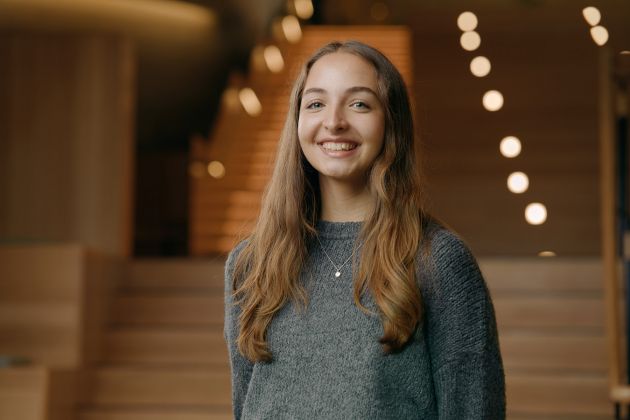
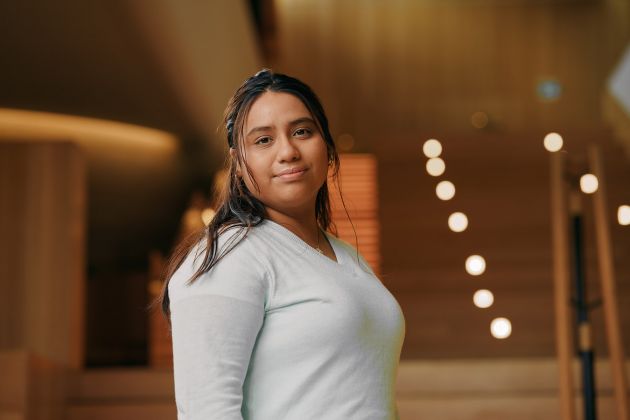
Caption: Cancer Council Tasmania Chief Executive Officer Alison Lai (centre) with researchers Shiona Kondo (left) and Dr Emma Wilkinson.