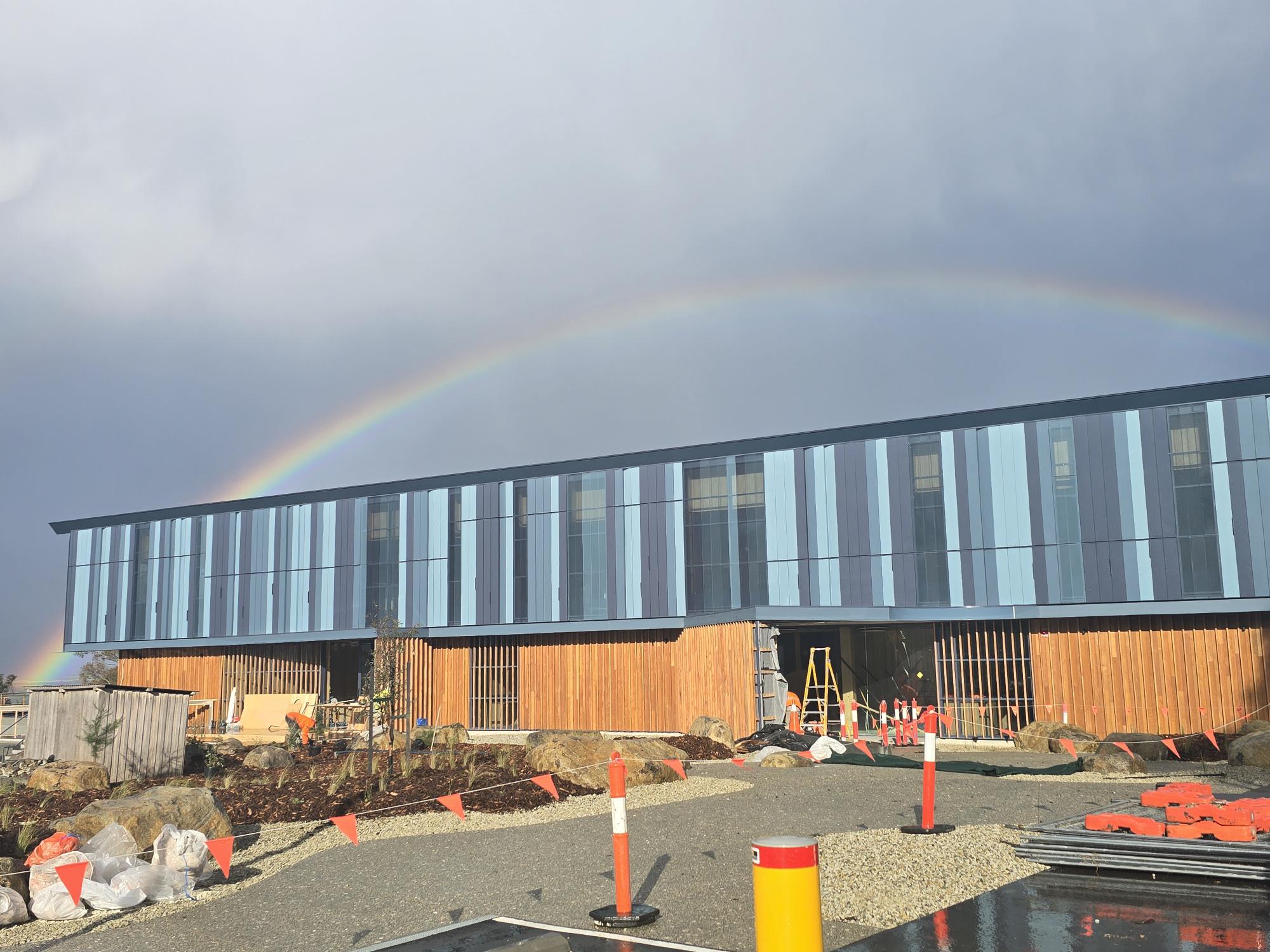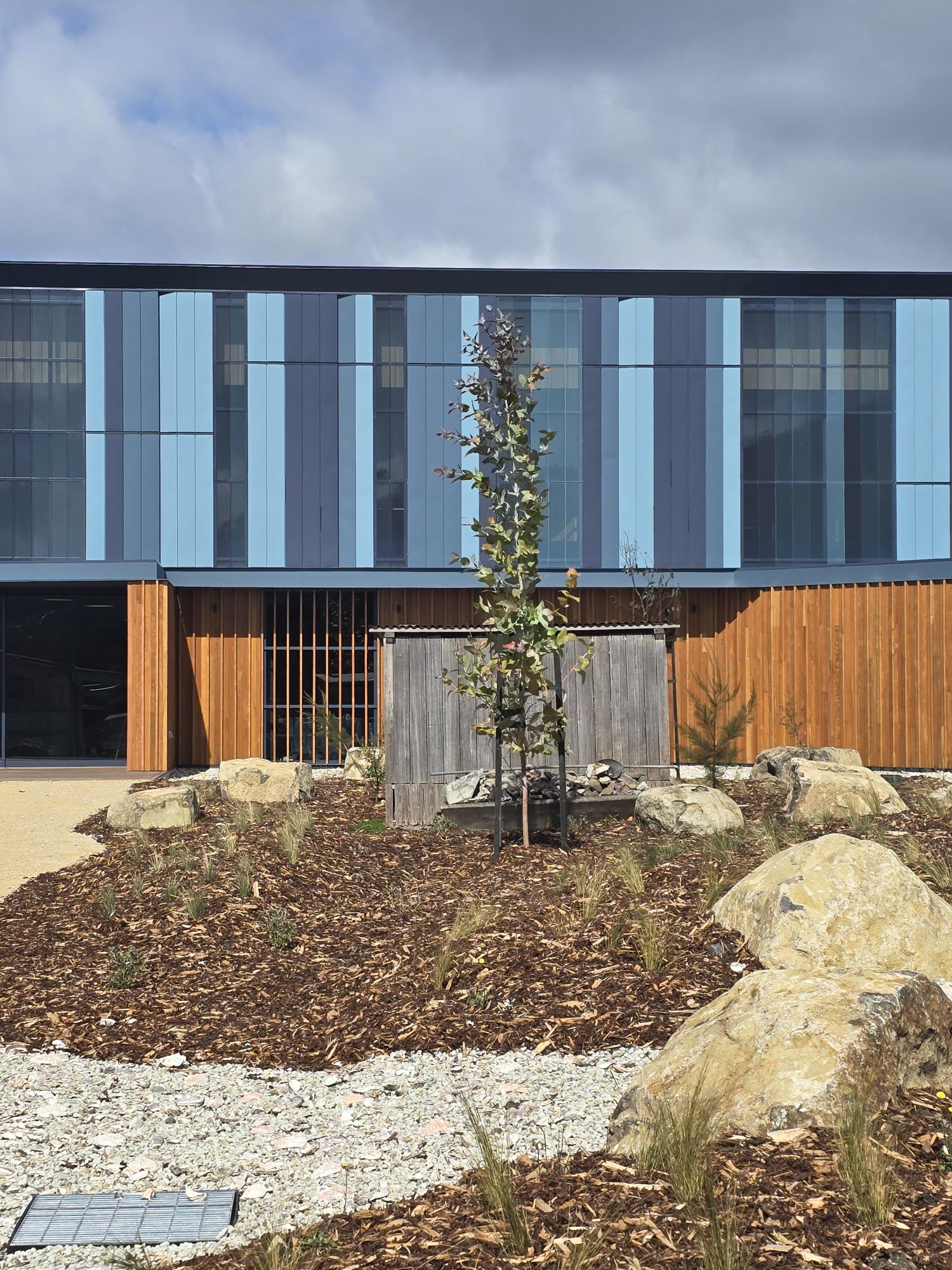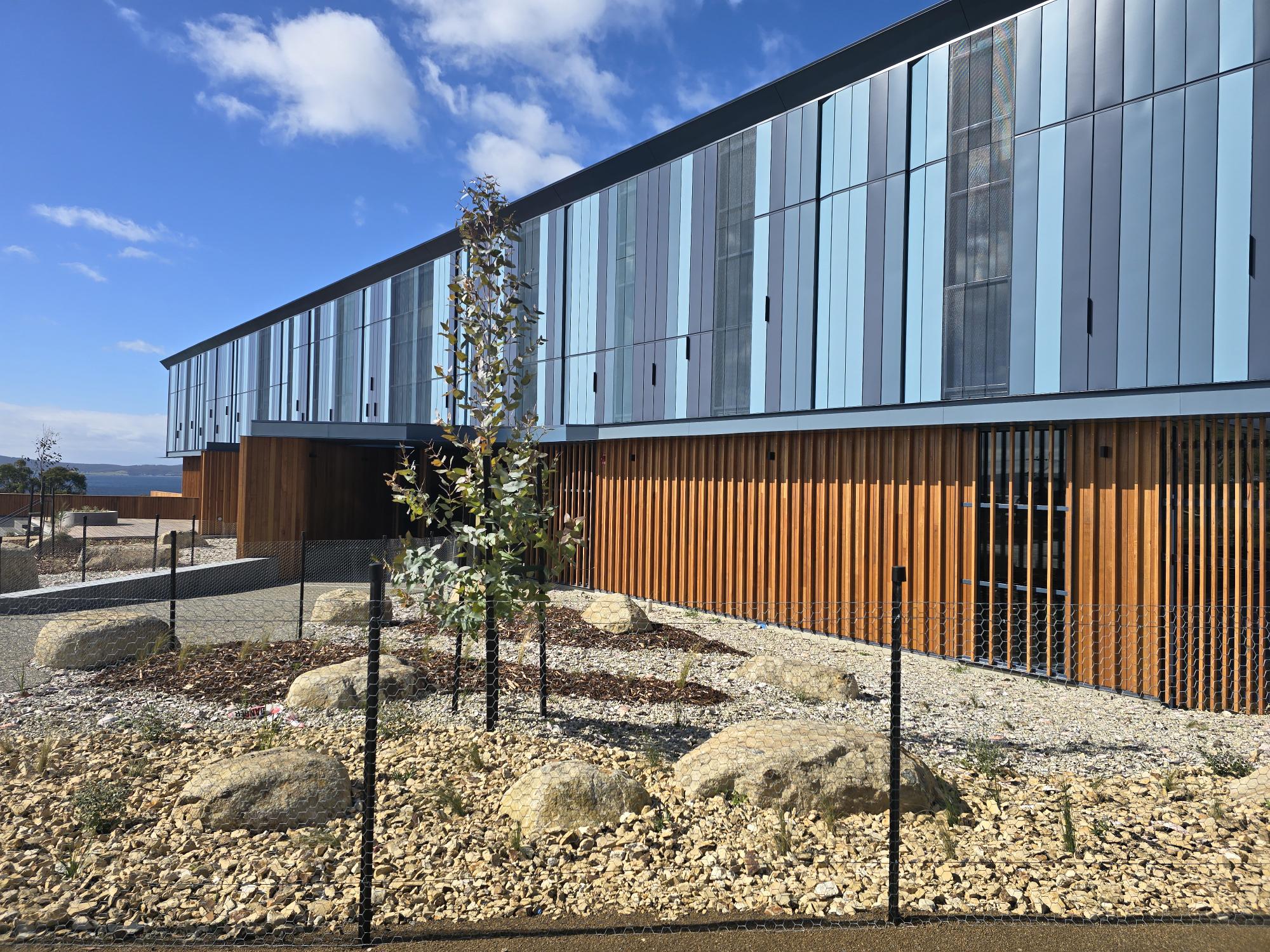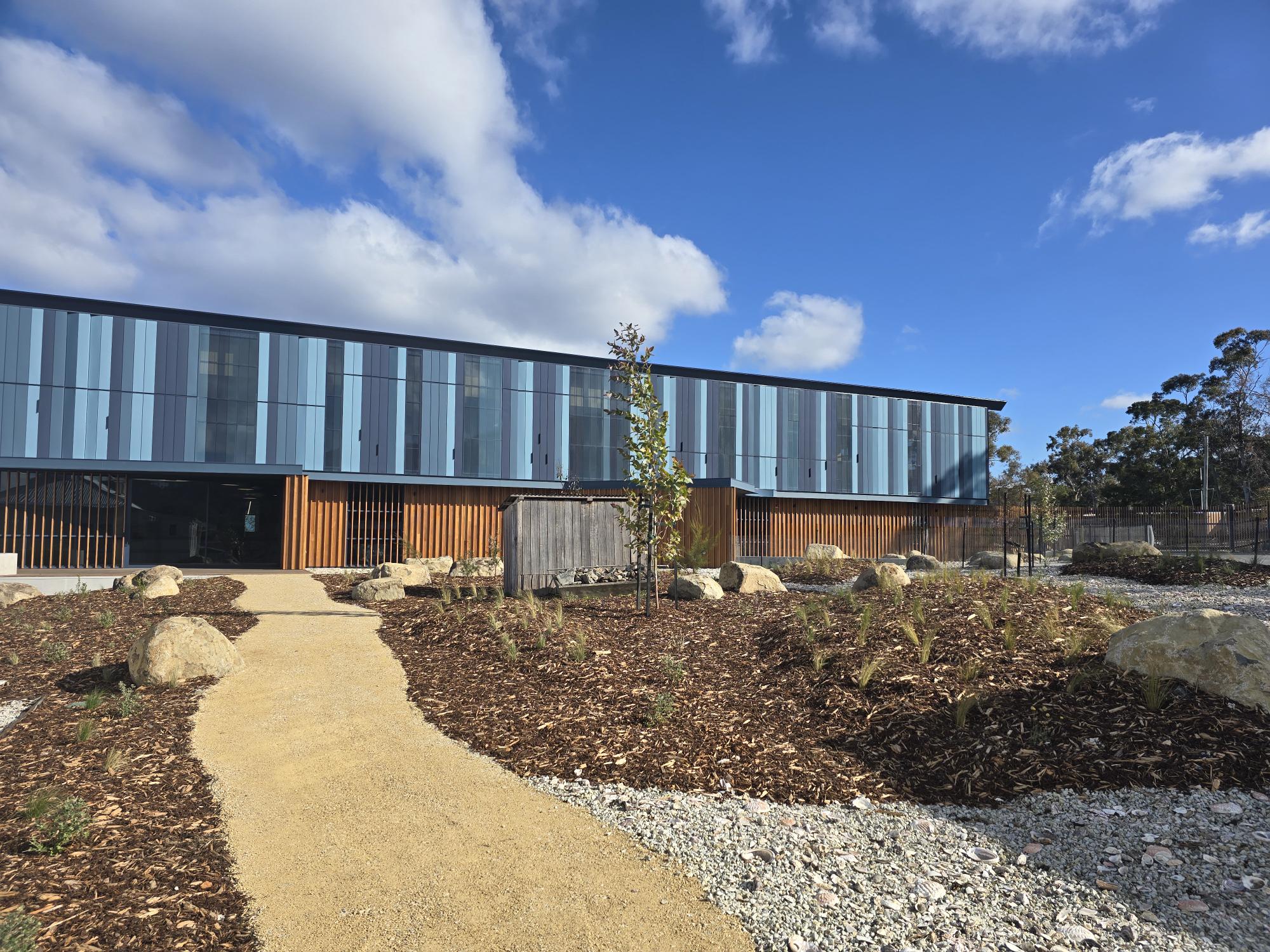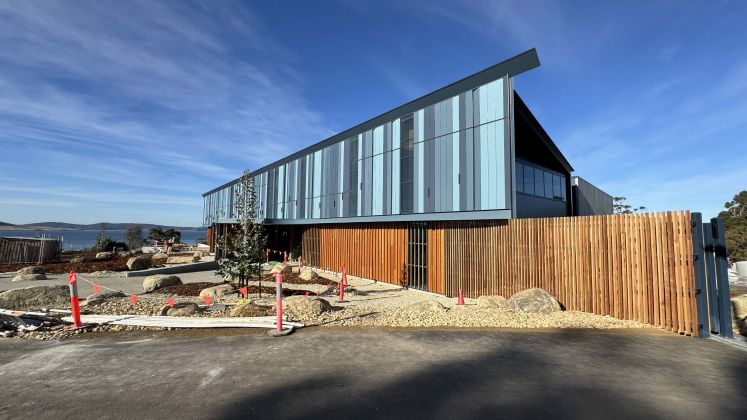


A new teaching and research building named The Ocean is taking shape at the Institute for Marine and Antarctic Studies (IMAS) Taroona campus, embedded within a renewed coastal landscape.
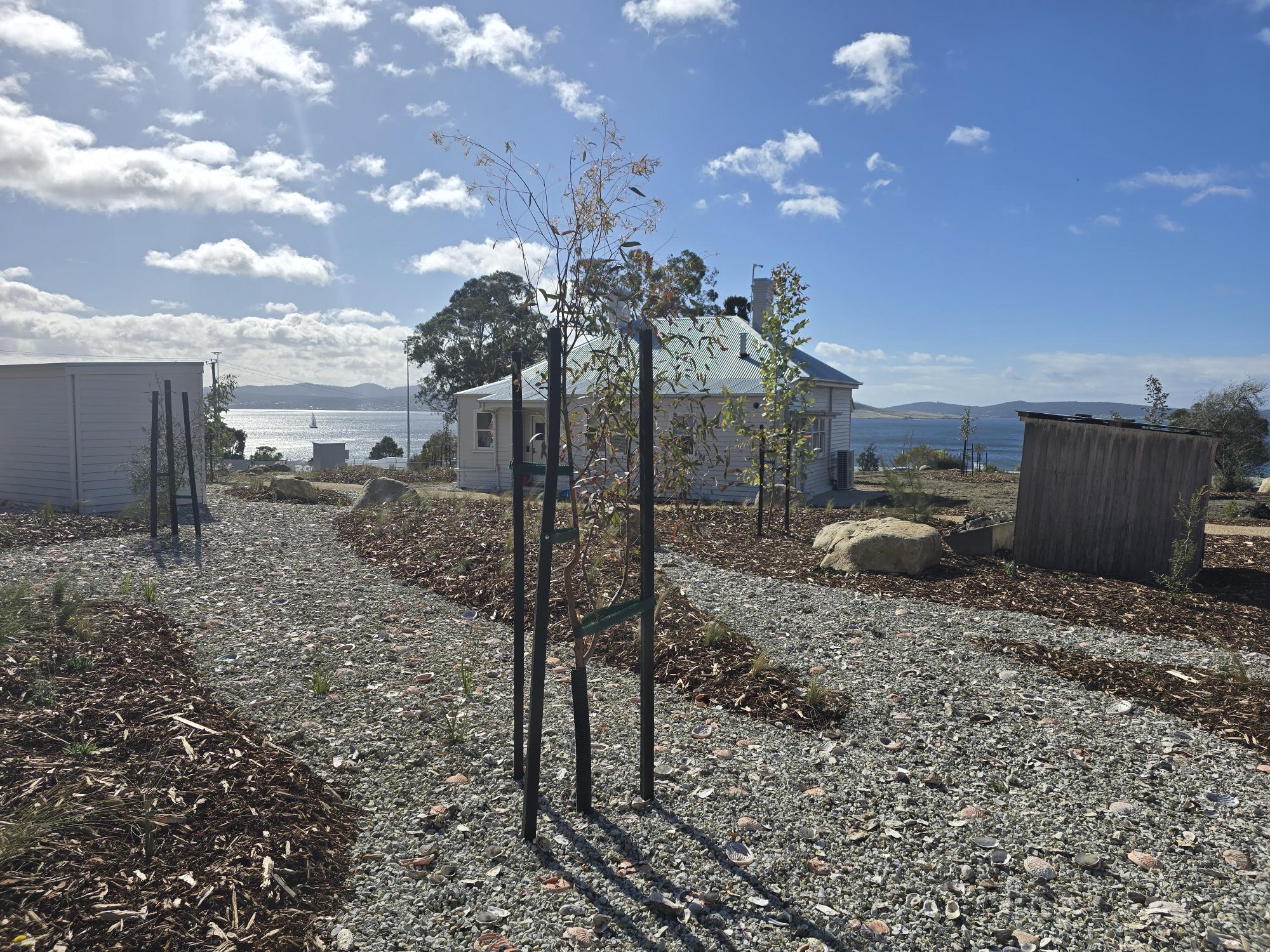
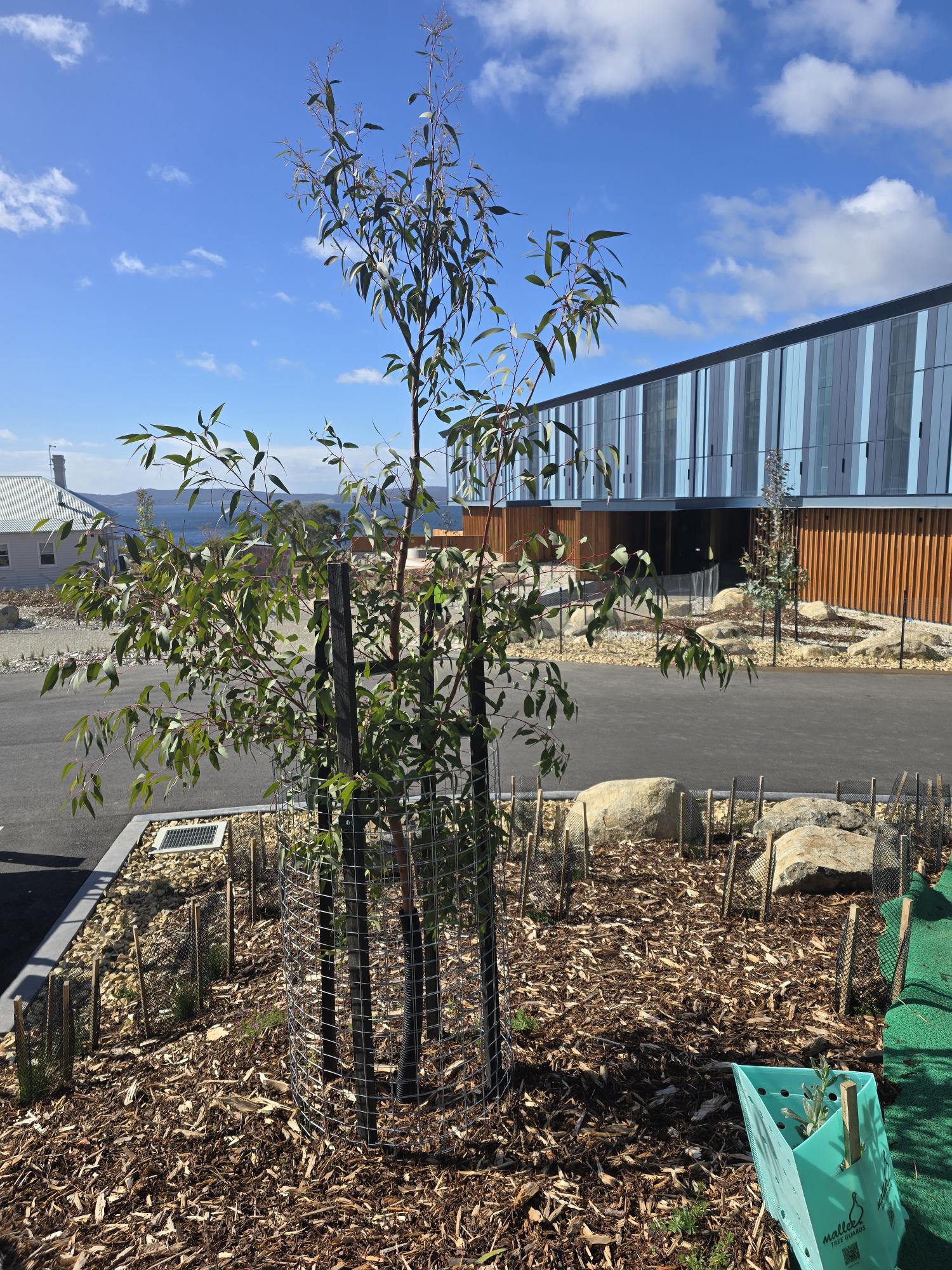
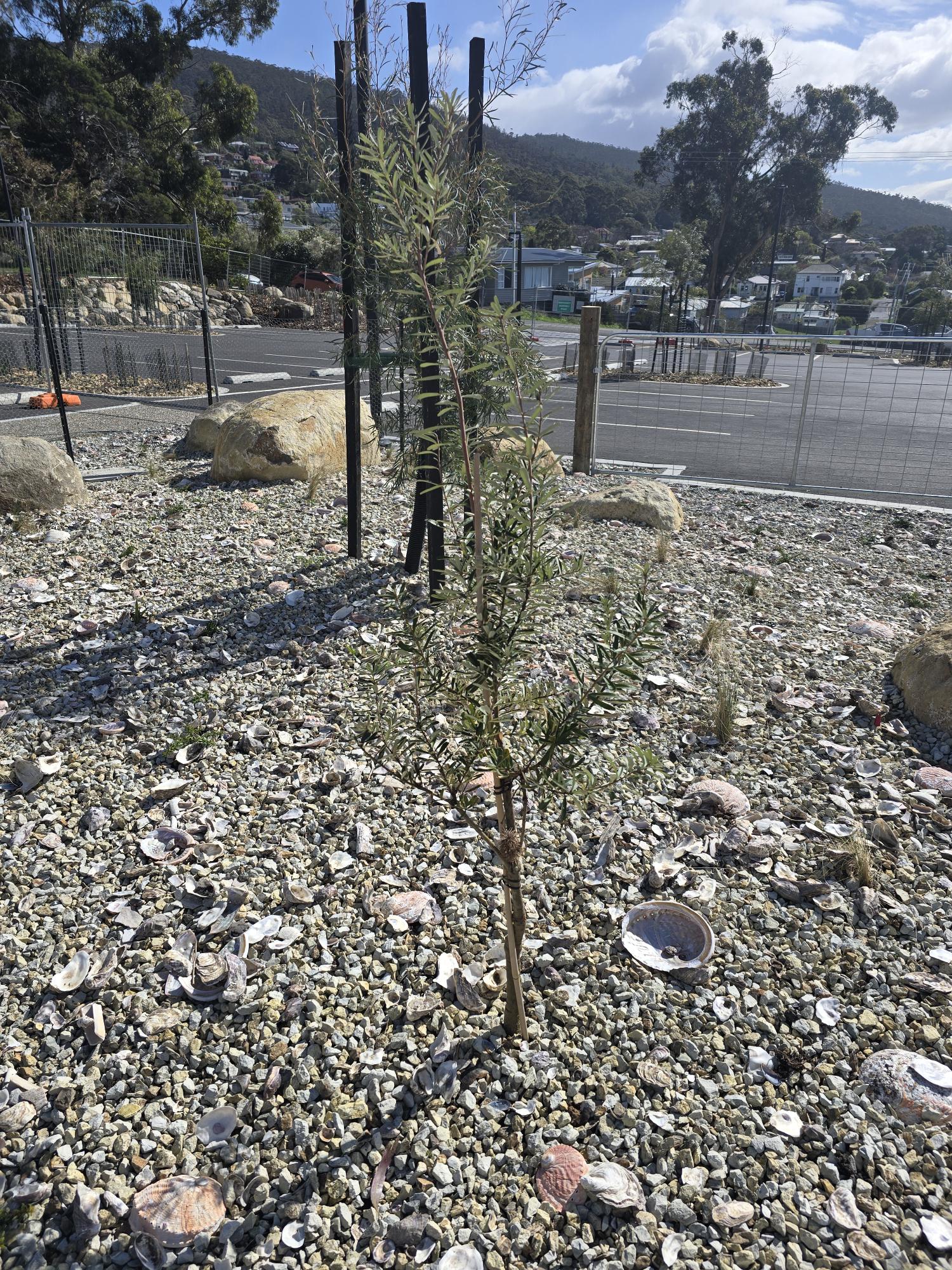
Native plants are helping regenerate the campus grounds, including a special batch of saplings germinated from the seeds of the site’s eucalypt trees (E. globulus, E. ovata, E. pulchella and E. viminalis).
“The idea came from advice we received from the Taroona Environment Network and Taroona Community Association during the early stages of the project,” Fisheries and Aquaculture Centre Head, Professor Sean Tracey said.
The saplings now taking root honour the legacy of trees that were removed to enable the much-needed upgrades to the site.
“An arborist extracted thousands of seeds, and some were germinated at the University’s School of Natural Sciences before being nurtured at Westland Nursery in preparation for planting,” University of Tasmania Project Manager Benjamin Greaves said.
While still young, the saplings are expected to establish quickly in the coastal setting and, over time, grow into mature canopy trees that strengthen the local habitat and reconnect the new landscape with the site’s original eucalypt character.
“Any surplus saplings will be donated to Kingborough Council to support future local landscaping efforts in the municipal area,” Mr Greaves said.
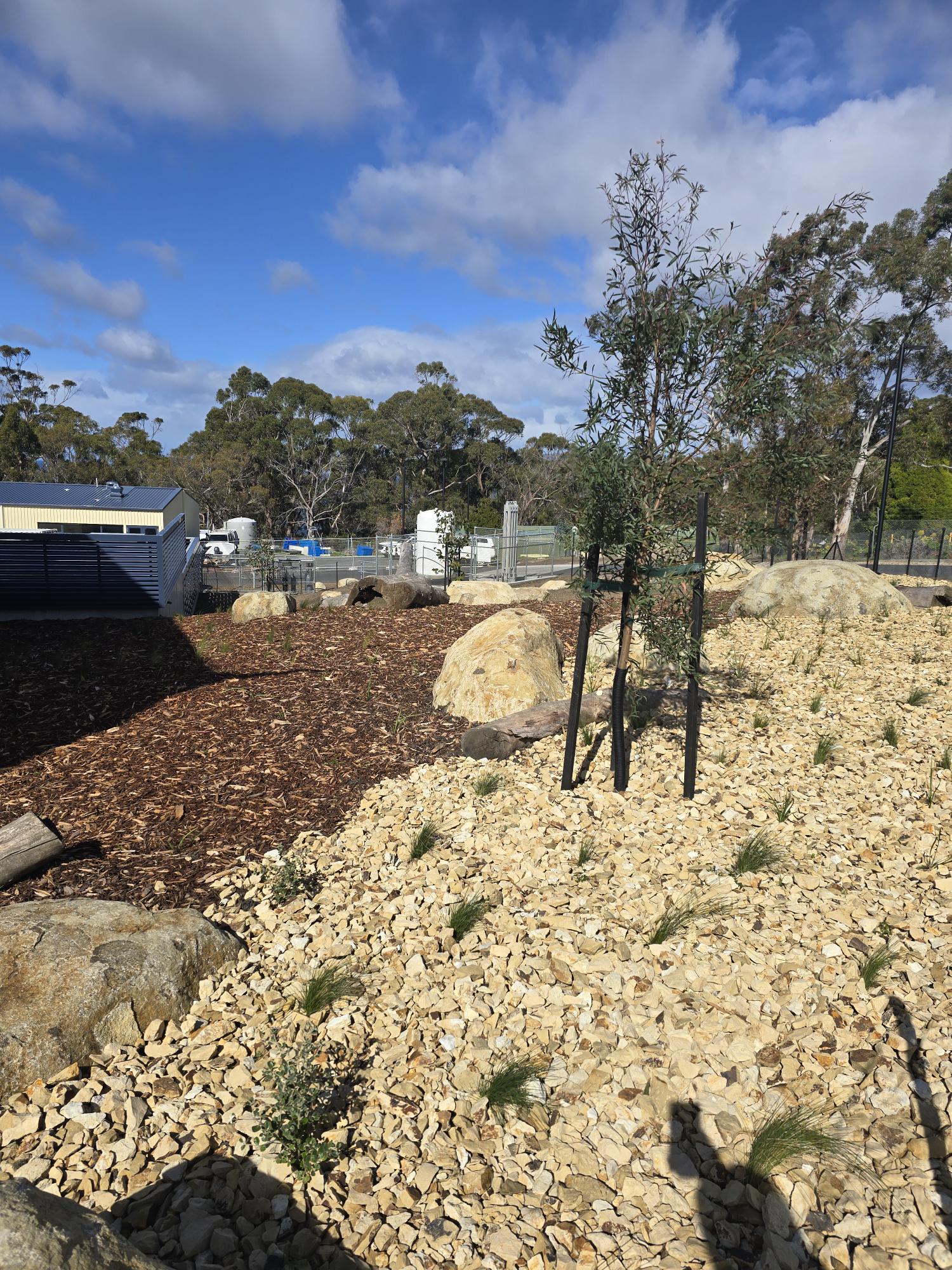
Timber from the removed trees has been retained and repurposed on site as local wildlife habitat.
The timber is expected to provide shelter for local fauna that use hollow logs and coarse woody debris, including insects, reptiles, small mammals and birds.
Logs, rocks and excess soil were also redistributed through the landscape as part of the site response, creating varied ground conditions and micro-habitats to further support biodiversity.
“The new teaching and learning building will host programs that help train and educate our future scientists and policy makers, alongside research in critical areas like sustainable protein production from the ocean, climate change, and species conservation,” Professor Tracey said.
The landscape revitalisation at IMAS Taroona has been shaped by the coastal environment and suggestions made by the local community in the early stages of planning, along with materials already available on site including trees, logs, rock, shells and soil.
Water retention measures have been integrated into the newly planted zones and weed removal has been underway.
As part of the IMAS Taroona transformation, more than two acres of the South‑Western headland reserve, formerly part of the campus land title, was returned to the community in August 2025.
The Ocean will open for student learning in Semester 1, 2027.