



For Tasmanian honours student Nic Shelverton, a year of long days on the water and in the lab has been rewarded with a prestigious accolade for excellence in research.
Nic was one of 19 honours students across the University of Tasmania who was awarded a University Medal, an award that recognises high-achieving students.
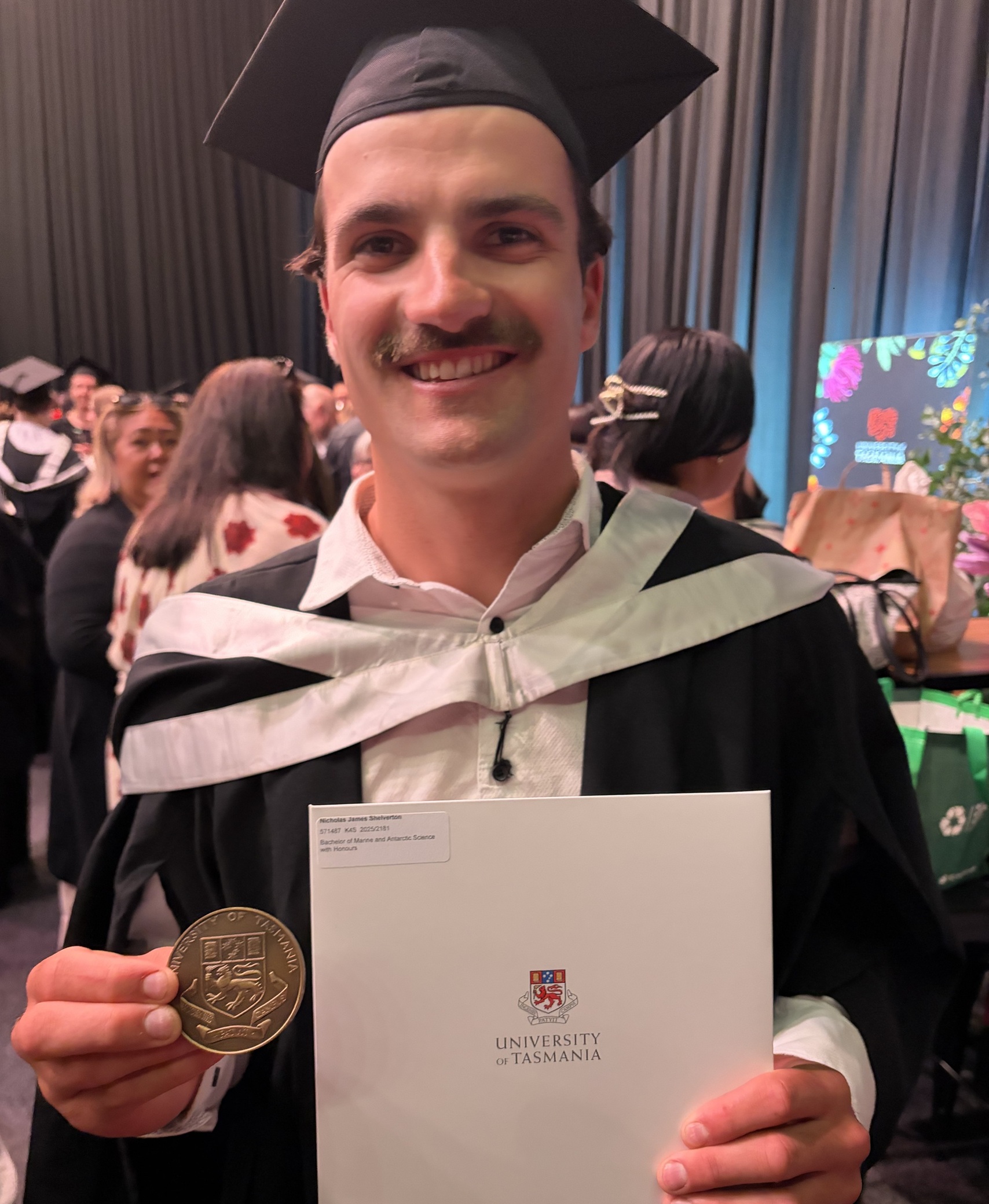
“It’s really humbling to get this recognition,” said Nic, who completed his honours at the Institute for Marine and Antarctic Studies (IMAS).
“There is a lot of sacrifice that goes into your honours year so it’s incredible to be honoured in a way that really reflects my effort.”
Nic’s research focused on the biological characteristics of ocean perch – a species with growing potential in Tasmania’s recreational fisheries.
“In Tasmania, we're lucky to have a host of valuable and unique marine species – not just as sports fish, but as table fish as well,” he said.
Over the last couple of decades some popular marine species have depleted both recreationally and commercially.
Ocean perch are one of the most caught species in offshore waters in Tasmania and are already prevalent in recreational fisheries in Tasmania, but at a low retention rate.
“There's a potential for ocean perch to turn into a really popular recreational fish species in the future. But in order to adequately manage these developing fisheries, we need a good understanding of their biology,” Nic said.
That’s where Nic’s honours research comes in. His work characterised the fundamental biological traits of ocean perch including age, growth and reproductive dynamics.
“We collected a heap of samples from the northeast and the southeast of the state and dissected them, removed their otoliths and gonads, and measured their length and weight,” he said.
“It gave us an understanding on these age structures and growth dynamics which has never been looked at before in Tasmanian waters, which could help inform fisheries management.”

Growing up in Tasmania, Nic has been a keen fisher since childhood and said ocean perch has an unfortunate reputation.
“It's a shame they’ve got this ‘ugly’ reputation because they are a really unique fish,” he said.
“They have a viviparous reproductive mode, which means they give birth to live offspring, with well-developed larvae released in a gelatinous mass. This is really fascinating and quite rare among fish species and is similar to sharks and rays who also birth live young.
“When females are caught during spring and early summer, you can often see this jelly-like ooze coming out with what looks like poppy seeds in it. These are the eye spots of the developed larvae, which is quite cool.”
Banner image: Nic Shelverton with
an Ocean perch. Credit: IMAS