

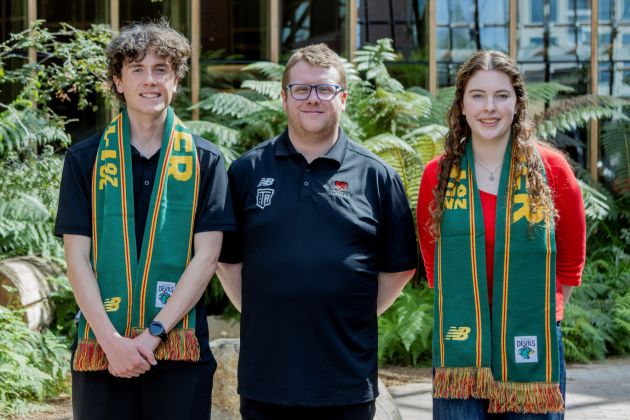


Growing up in the quiet coastal town of St Helens, Armon Castor never imagined that by the time he began his undergraduate degree, he would already have completed a University of Tasmania diploma.
Now based in Hobart and continuing his Bachelor of Information and Communication Technology (ICT), the 18-year-old’s journey is a powerful example of what becomes possible when regional aspiration, school belief and university support align.
“I didn’t imagine it at the scale I’ve done it,” Armon says.
“It’s been amazing.”
A pathway that began with belief
Armon’s university journey did not begin with an application form. It began with a conversation.
While enrolled in Grade 11 at Launceston Big Picture School, his advisor recognised both his intellectual curiosity and his appetite for a challenge. Together, they contacted the Peter Underwood Centre with a strong belief that early engagement with university study would benefit Armon - both his academic development and his personal growth.
“From early on, we could see Armon’s depth of curiosity and his willingness to lean into challenge,” says Rob Lewandowski, his advisor at Launceston Big Picture School.
“The High Achiever Program gave him the right level of stretch but, importantly, it allowed him to stay connected to school while building confidence in the university space.”
The University’s High Achiever Program commenced in 2001 as a supported early entry model, allowing capable senior secondary students to undertake university study while remaining connected to their school community.
Through the program, Armon began undertaking university units while still supported by his school mentor. What started as a one-year opportunity quickly evolved into two years of structured exploration.
“Having been introduced to Armon through Launceston Big Picture School, it was clear he was a modest and quiet learner,” says Jess Woodroffe, High Achiever Program Coordinator at the Peter Underwood Centre.
“He entered the program with courage and a lot of support from his school and I have been honoured to have supported his love of learning and to open up pathways to him.”
For students from regional Tasmania, distance can sometimes translate into hesitation. The High Achiever Program provided a bridge, enabling Armon to test himself academically while maintaining the relationships that had supported him through school.
Exploring possibility
Over the two years, Armon completed university units across a broad range of disciplines including IT, Artificial Intelligence, software and application development, physics, engineering and sustainability.
AI studies initially attracted him during a period of rapid expansion in the field, but it was hands-on development work that ultimately resonated most strongly.
“I enjoy building things,” he says. “Software development really stood out.”
Physics also became an unexpected turning point.
“I didn’t feel very competent at first,” he admits. “It was something I didn’t have a lot of knowledge in. But I ended up doing quite well, which surprised me.”
Engineering stretched him further. Despite strong assignment results, a final exam requirement meant he needed to sit a supplementary assessment to pass the unit.
Rather than discouraging him, the experience strengthened his resilience and reinforced that growth can often sit just beyond comfort.
Looking back at earlier projects, Armon recognises how much his capability has evolved.
“I’ve learned so much,” he says. “I’d approach things very differently now.”
Learning beyond the lecture theatre
Armon’s pathway has never been confined to coursework alone.
Alongside university units, he pursued industry internships and independent certifications. He undertook a technical internship involving microcontroller programming, work that initially felt overwhelming.
“I had barely worked with C (a programming language) before,” he says. “If I did that now, after my programming units, it would be very different.”
He also completed an externally supervised AI Fundamentals examination following an international developer conference, another example of his willingness to explore learning wherever it presents itself.
Most recently, he worked with an East Coast company to transform their website into an operational application for staff to log and manage work.
“What they want is more than a webpage,” he explains. “It’s a platform where they can manage their work.”
This combination of university study and real-world application has given Armon more than credit points. It has given him confidence.
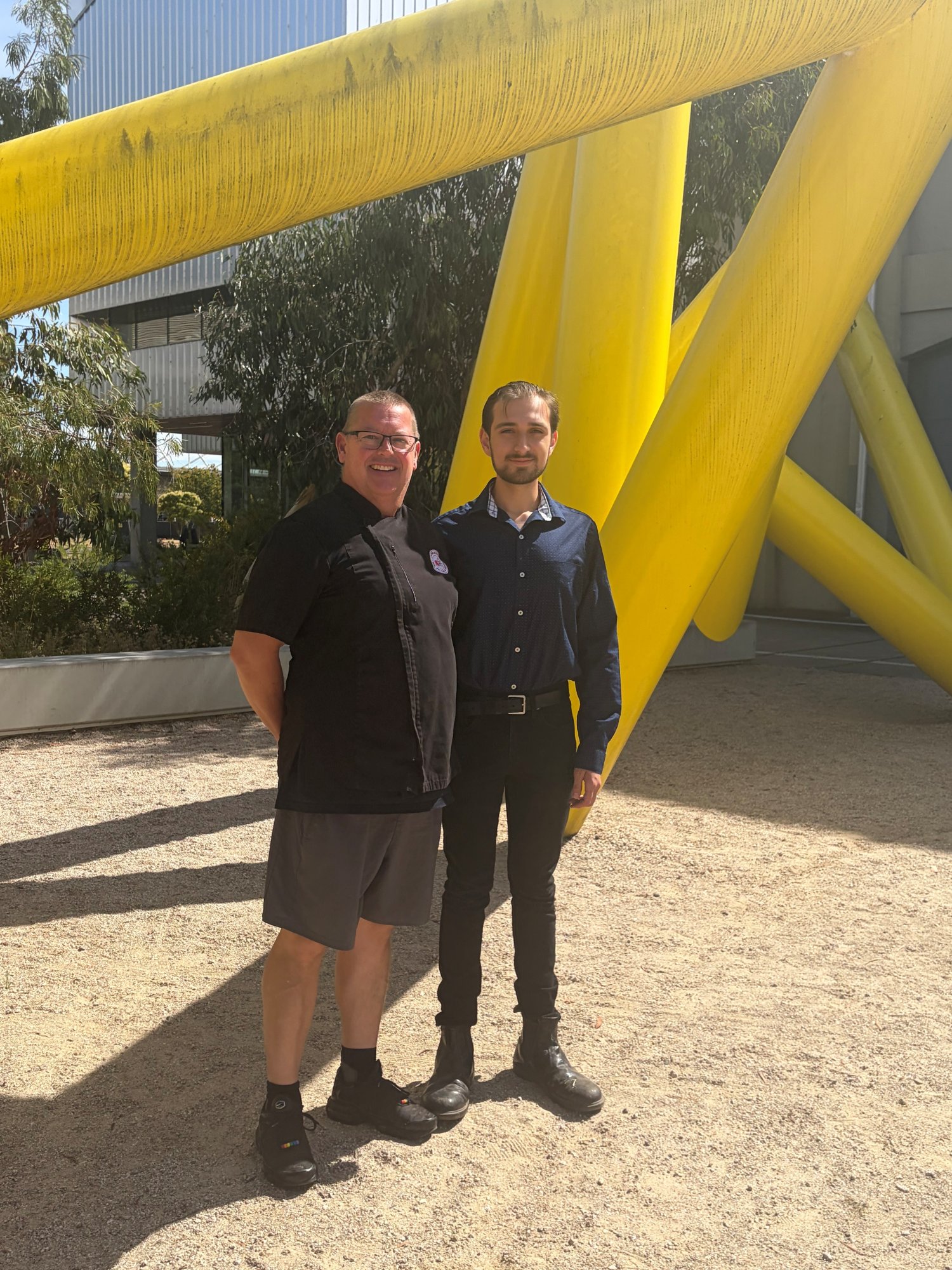
A moment of affirmation
One of the defining milestones in Armon’s journey came when he was awarded a Springboard Bursary. The Springboard to Higher Education Bursary is a donor-funded program administered by the University of Tasmania that supports Tasmanian students through senior secondary school and into tertiary study, providing both financial assistance and encouragement at a critical stage of transition.
“That was insane,” Armon recalls. “It was a bit of a ‘why me?’ moment. Rob talked me through it as I thought it was a mistake.”
The bursary represented more than financial support. It was a vote of confidence from a donor who saw potential in a regional Tasmanian student demonstrating humility, capability and momentum.
For Armon, who had been navigating travel, study and work from a small coastal town, the recognition was profound.
“It was very surprising,” he says. “But really amazing.”
A coordinated network of support
Finishing school with one of the top 100 ATARs in the state, Armon relocated from St Helens to Hobart to complete his ICT degree. The move represents not only academic progression but personal growth.
And he’s been struck by the breadth of help he’s received from across the University.
“I’ve been amazed at how many people within the university have supported me,” he says. “From academic unit heads to lecturers and others, there’s been so much support.”
His journey reflects a coordinated network of belief and backing: the early encouragement and ongoing support of Launceston Big Picture School, the structured pathway design of the Peter Underwood Centre, the investment of the Advancement team and the ongoing mentorship of the Sciences and Engineering academic units.
“It’s not just about acceleration,” Jess Woodroffe says. “It’s about supporting the transition at the right pace. When school, donors and academic areas work together, students do not just enter university. They thrive within it.”
A model with statewide impact
Armon’s story sits within a broader context. The High Achiever Program is now in its largest year, with more than 110 students from 24 schools across Tasmania enrolled, up from 35 students in 2018.
It combines academic extension with relational scaffolding, ensuring students are prepared intellectually and supported socially and emotionally through the transition.
For regional students especially, that continuity matters.
Armon’s pathway from St Helens to Launceston and now to Hobart demonstrates what becomes possible when aspiration is recognised early and backed deliberately.
Asked what has defined his journey so far, Armon smiles.
“I didn’t expect it to be this big,” he says.
His quiet understatement captures something powerful that is also symbolic of the University of Tasmania’s mission. When regional talent is identified, nurtured and supported collectively, possibility expands far beyond postcode.
Find out more about the High Achiever Program.