

The Costume Institute at New York’s Metropolitan Museum of Art sure does its homework.
When it came to putting together an exhibition on fashion and the body, curator Andrew Bolton didn’t miss the fact that some of the most cutting-edge research on the topic was being done in Tasmania by Dr Llewellyn Negrin.
It was not just any exhibition either.
Costume Art opened alongside the 2026 Met Gala, which helps to fund the Costume Institute and this year was co-chaired by Beyonce, Nicole Kidman, Venus Williams and Anna Wintour.
A host of other stars from the movies, TV, music and fashion were also on hand for one of New York’s biggest nights.
But the accompanying exhibition of 200 garments alongside 200 works of art used the ideas of Dr Negrin, who also wrote the introductory essay for the catalogue and assisted with curation.
“It started with an invitation from Andrew Bolton, who's the curator there, and he had read my publications,” she says.
“I'd written quite a bit on fashion as an embodied art form, and he said that his current exhibition was very influenced by the ideas in those essays.”
Dr Negrin is an Adjunct Senior Researcher in the School of Creative and Performing Arts. She’s written about fashion as art, but also about its relationship with different body types.
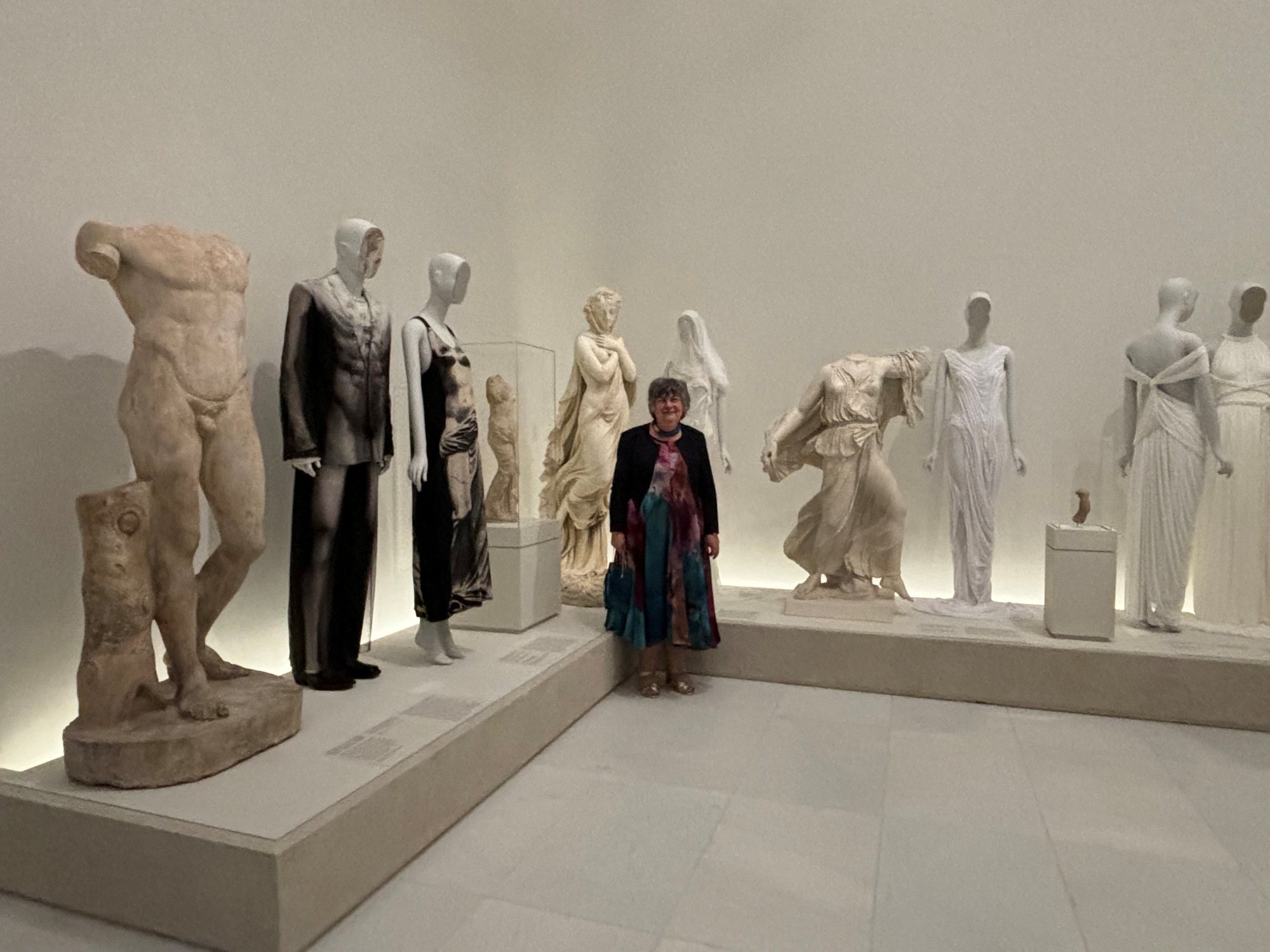
“The whole point of the exhibition is to foreground the body that wears the garments, but also to get the audience to look at art through that lens,” she says.
“So each of the pairings is one fashion garment and one work of art, and they reflect different body types like the classical body, the pregnant body and so on.
“Usually there's a sort of standardised mannequin that's made according to some kind of ideal proportions - they become almost invisible. The intention is you don't take notice of the body that's wearing the clothes, you focus on the clothes.
“But in this case, the mannequins are based on actual bodies that depart radically from your idealised mannequin. So, in that way, you can't help but notice the body that's wearing the clothing.”
The garments are drawn from the Costume Institute’s collection of 33,000 objects, representing fashion from the 15th century to the present.
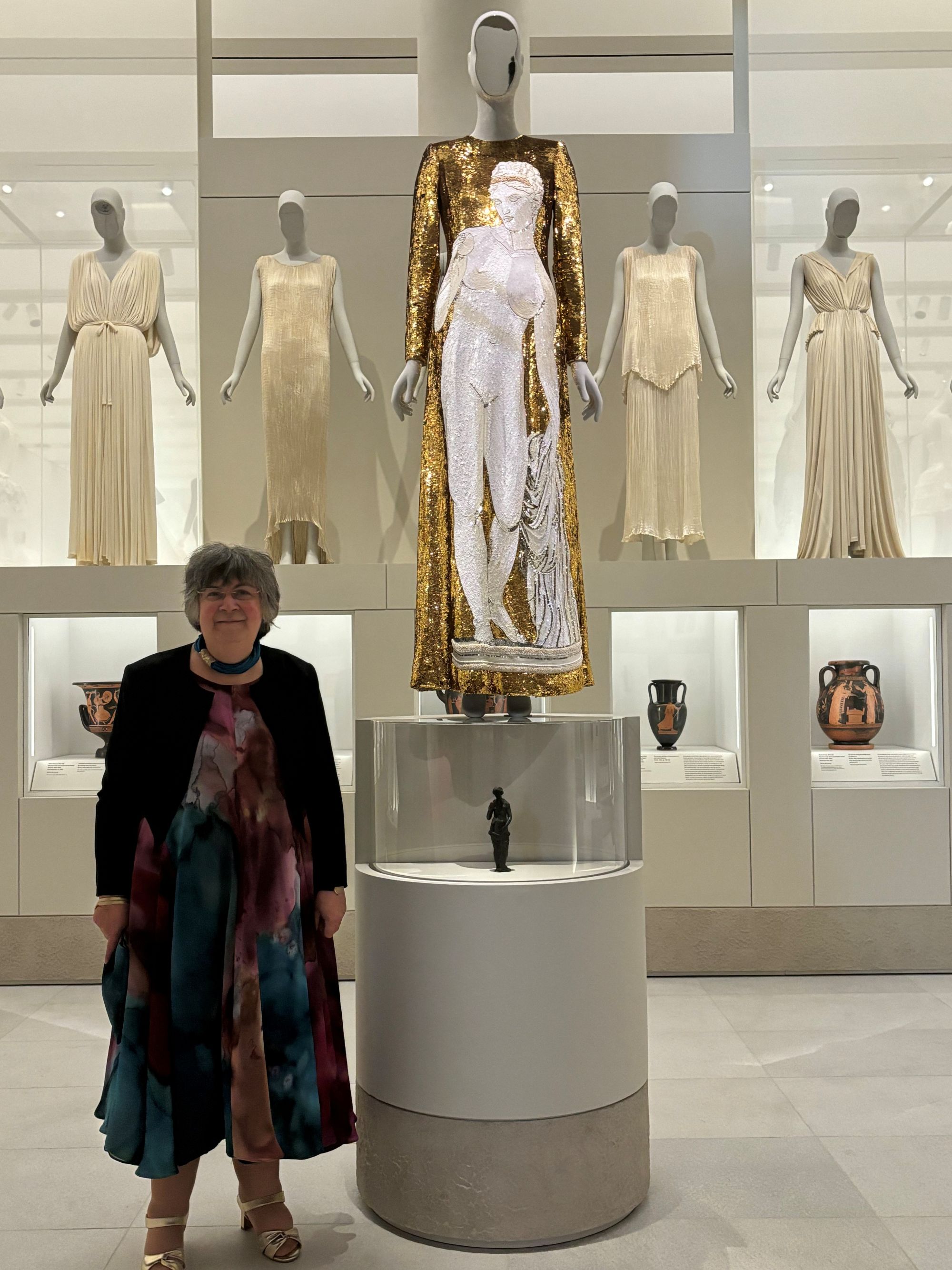
And, in the first exhibition in the Costume Institute’s new wing at The Met, they’re presented in innovative ways. Mannequins sit on six-foot pedestals with the accompanying artworks embedded below. This way viewers interpret the art with the costume fresh in their mind. The mannequins themselves have mirrors for faces.
“So when you're looking at these mannequins, you sort of position yourself as the person wearing the garment on display,” Dr Negrin says.
“That's the idea, to heighten that sense of connection between the viewer and the mannequin on display.”
The opening of Costume Art might not have had quite the glamour of the Met Gala but it featured addresses from noted tennis court fashionista Williams and legendary fashion editor Wintour.
Dr Negrin describes the co-opting of fashion by the art world as a double-edged sword.
“On the one hand, it's something very welcome that fashion is now considered as having equal status with the traditional art forms of painting and sculpture.
“But the downside is that, in the process, what's been lost is fashion's connection with the body and the fact that it's not just a visual art form, but it's something that's worn.
“I think it's that aspect that this exhibition is trying to capture.”
Read more about Costume Art. If art is your passion, learn more about studying Fine Arts at the University of Tasmania.