



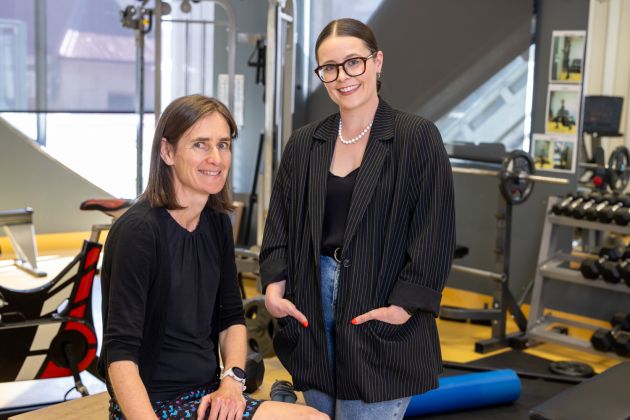
University of Tasmania neuroscientist Dr Lila Landowski has been recognised nationally with an Australian Museum Eureka Prize.
Dr Landowski, a Senior Lecturer in Biomedical Sciences, has received the Celestino Eureka Prize for Promoting Understanding of Science, one of Australia’s leading honours for excellence in science communication.
The award recognises her ability to translate complex neuroscience into clear, compelling and practical information for the public through TEDx talks, viral videos, media appearances and community engagement.
In the past year, Dr Landowski has appeared in hundreds of media stories, reaching more than 46 million people. Her work has helped people better understand the brain, challenged misinformation, and inspired audiences from diverse backgrounds to see themselves in science, technology, engineering and mathematics.
Dr Landowski is also a World Health Organisation Fides ambassador, contributing to efforts to combat health misinformation and strengthen public trust in evidence-based information. She graduated from the University of Tasmania with a Bachelor of Medical Research (Honours) in 2009 and was awarded a PhD in neuroscience in 2014.
Australian Museum Director and CEO Kim McKay AO said the 2026 Australian Museum Eureka Prize winners demonstrated how scientific excellence could turn bold ideas into practical benefits for all Australians.
“Outstanding science begins with curiosity, but its greatest impact is realised when investment in discovery improves lives. This year’s winners are tackling some of our greatest challenges: protecting our environment, advancing healthcare, informing public policy and inspiring the next generation of scientists,” Ms McKay said.
“World-changing discoveries do not happen overnight. They are built on years of dedication, collaboration and sustained investment. As we celebrate these remarkable Australians, we must also continue supporting the scientific capability that drives our prosperity, wellbeing and resilience as a nation.”
This year’s awards also highlighted the extraordinary contribution of women in Australian science, with 11 Eureka Prizes awarded to individual women or teams made up entirely or predominantly of women.
Image credit: Rory Dick