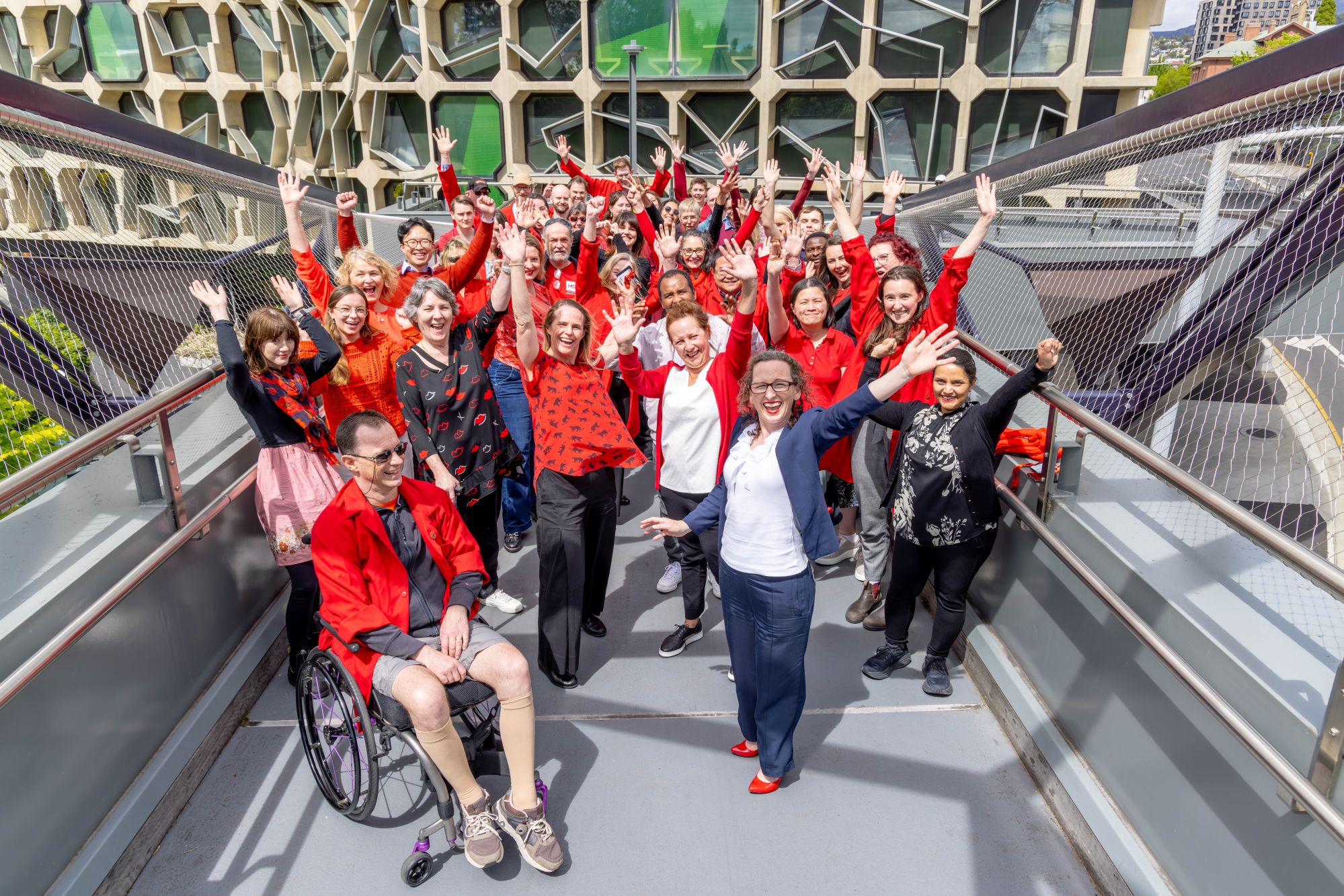


For the past decade, the MS Research Flagship at the Menzies Institute for Medical Research has brought together science and lived experience to tackle multiple sclerosis (MS). At its heart is a simple principle: “nothing about us without us.”
As the Flagship marks its 10‑year anniversary, it stands as a strong example of how collaboration with the MS community and research partners across Australia and internationally can accelerate discoveries and improve outcomes for the almost 38,000 Australians living with MS. This is particularly important in Tasmania, which has the highest prevalence in the country. And with the total cost of MS to society now exceeding $3 billion, the work of the Flagship is more critical than ever.
Professor Tracey Dickson, Director of the Menzies Institute for Medical Research at the University of Tasmania, said the milestone highlights the value of sustained investment and collaboration.
“The MS Research Flagship has shown the power of deep, collaborative partnerships. By working closely with people living with MS, we can ensure our research has real impact and reflects what matters most to the MS community,” Professor Dickson said.
Since 2016, our researchers, clinicians and people living with MS have worked side by side, not only to better understand the disease, but to shape research that reflects the needs of the MS community and delivers meaningful change.
A major milestone was a $10 million investment from the Australian Government’s Medical Research Future Fund (MRFF) in 2019. This funding fast‑tracked research into the causes and treatment of MS, including a world‑first stem cell biobank and national brain repair clinical trials. It has also supported the development of an MS education platform and tools to assess the real impact of treatments.
Research driven by lived experience
People living with MS are central to the Flagship’s work, helping ensure research reflects everyday needs and priorities.
Dr Anna Ritchie, Deputy Chair of the MS Research Flagship Consumer Advisory Committee and a person living with MS, said the Flagship’s work is helping create a more hopeful future for people living with MS.
“To me personally, progress in MS research means hope. Hope that MS will have as little impact on my life as possible, and on my children’s generation even less.
“I am excited that findings from the MS Family Study, which I have been actively involved in, are being translated directly into cell‑based research to better understand the causes of MS and identify new avenues for treatment. It is wonderful to know that this work is happening right here in Hobart,” said Dr Ritchie.
Sarah McGuire, who joined the Flagship's Consumer Advisory Committee in 2024, said she values contributing her personal and professional insights to help guide its work.
"It’s empowering to know my lived experience is helping shape the direction of research. What excites me most is the shift from focusing on suppressing inflammation to repairing and protecting the brain," said Ms McGuire.
A decade of discovery
Over the past 10 years, the Flagship has advanced research across the pipeline, from deepening understanding of the causes of MS through initiatives like the MS Family Study to testing new approaches to repair damage in the brain.
Research is also exploring potential drivers of the disease, including how Epstein–Barr virus infection may contribute to MS risk and progression.
Professor Bruce Taylor, neurologist and Academic Lead of the MS Research Flagship, said a key strength has been translating research into outcomes.
“A major achievement of the Flagship over the past 10 years has been our ability to take insights from the lab and bring them into clinical studies that can change outcomes for people with MS.
“From brain repair trials to new ways of understanding treatment impact, we are building a pipeline that connects discovery with real‑world benefit,” Professor Taylor said.
Deputy Academic Lead Professor Kaylene Young said advances in stem cell research are opening new possibilities for understanding and treating MS.
“Our work using stem cell technologies is giving us unprecedented insight into how MS develops and how we might better protect and repair the brain,” Professor Young said.
“These advances are helping move us closer to more effective treatments and improved long‑term outcomes.”
From Tasmania to the world
Beyond the laboratory, the MS Research Flagship is transforming how people understand and manage MS globally. Its free online courses have reached more than 73,000 participants across over 180 countries, improving health literacy, confidence and self‑management.
The Flagship also brings researchers and the MS community together through its Research with Connections symposium, with the fifth event held in late May this year.
In 2024, new funding from the Australian Government’s National Health and Medical Research Council (NHMRC) established the Multiple Sclerosis Centre of Research Excellence (MS‑CRE) at Menzies. Led by the Flagship and supported by national and international collaborators, the Centre aims to advance earlier detection, prevention and treatment of MS, with a bold vision to make MS a disease without disability.
As the MS Research Flagship enters its second decade, its focus remains on working in partnership with the MS community to conduct ground-breaking research to understand, prevent, treat and manage MS.
“Looking to the future, success means building on this progress and moving beyond understanding MS to preventing it wherever possible and ensuring people living with MS have the best possible treatments and quality of life,” Professor Dickson said.