

Overview (2027)

Key Information


Duration
Minimum 2 years, up to a maximum of 3 years.


Location
This course may not be available to international students. Please see the list of distance courses (i.e. online and taken outside Australia) that are offered to international students
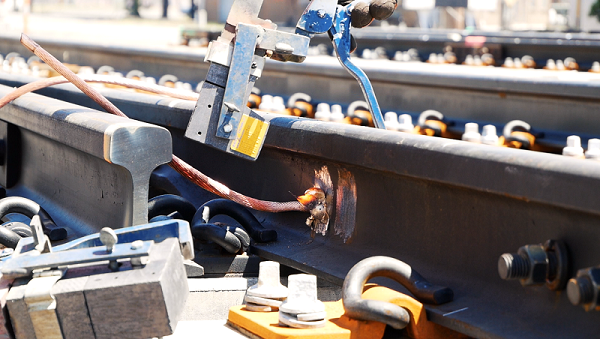
The Diploma of Engineering Infrastructure (Specialisation) prepares graduates intending to work in the management, design, construction and maintenance of track and associated infrastructure.
This degree will provide you with critical knowledge and skills not currently being addressed in the tertiary sector. You will learn from staff who are at the forefront of their discipline and industry experts with extensive rail experience in workshops, group work and discussion forums.
As a graduate, you will have knowledge of track engineering, legislation and regulation, to contribute effectively to designing, constructing, commissioning, monitoring, maintaining and managing a section of track. You will also have the skills to communicate and interact with stakeholders to ensure the track meets the operational performance standards of the railway business.
This course is delivered by the University of Tasmania in partnership with Engineering Education Australia and Transport for NSW.
- 1 Evaluate complex infrastructure engineering problems using technical expertise and STEM principles in a range of known or changing contexts.
- 2 Develop and design infrastructure engineering solutions that are practical, cost-effective, sustainable and adhere to legal and regulatory requirements for a range of industry contexts.
- 3 Apply ethical and professional conduct to technical operations that support the delivery of infrastructure projects, from planning and design to construction and management.
- 4 Work collaboratively and communicate effectively with diverse stakeholders, including clients, industry experts, and team members.
Students enrolled in the Diploma of Engineering Infrastructure (Rail) will be employed within the rail industry and will have extensive industry experience on entry. The units have embedded within aspects of industry practice.
You will be exposed to authentic and engaging learning experiences designed to develop your understanding of work and the workplace. You will be introduced to
- different methods of and approaches to practice,
- how issues such as values, ethics, empathy and leadership are reflected in the workplace and
- the role of reflection and deliberative thinking in developing workplace- based knowledge, skills, attitudes and aspirations.
You will develop personal responsibility for and autonomy in developing their e-portfolio. This will be reflected in educational plans. Learn through projects (local and international), data for decision making, fieldwork, case studies (local and international), action learning, design and creative thinking, simulated environments, and real-world problems; and complete assessment tasks such as presentations, proposals, reports, activities (quizzes/tests), plans.
The Management and Operations unit will have an applied focus and be based around industry engagement.
Career outcomes
Martin Murray, course lecturer
Enhance your career within the rail industry, providing insight and engineering expertise to rail projects.
This degree is designed to provide upskilling for professional engineers, engineering graduates and technically qualified staff interested in reskilling to pursue a role in track engineering.
Course structure
The Diploma of Engineering Infrastructure (Specialisation) requires the completion of 100 credit points comprising:
- 100 credit points of Core units.
Rail is the only specialisation that is available at the present time by way of part-time studies. It has eight core units which must be completed by all students.
Students admitted to the course in different study periods will be required to follow the enrolment pattern outlined in the course planner.
We have a team of Student Advisers available to help you structure your studies to meet your desired outcomes. For enrolment assistance, please contact us via U Connect today
Railways were invented in Britain over 200 years ago, and it is difficult to overstate the fundamental and critically important role they have played in the development of nations, the progress of wars, and the prosperity of peoples the world…
Credit Points: 12.5
| Location | Study period | Attendance options | Available to | ||
|---|---|---|---|---|---|
| Online | Semester 1 |  |  |  | |
- Key:
 On-campus
- Off-Campus
- International students
- Domestic students
View all details for JEE151 Fundamentals of Track Engineering
All track engineering activities and planning are undertaken with the purpose of ensuring a successful, profitable and safe railway business. A significant purpose of the management of the business is to ensure that the maintenance of rail infrastructure is appropriately…
Credit Points: 12.5
| Location | Study period | Attendance options | Available to | ||
|---|---|---|---|---|---|
| Online | Semester 2 | | | | |
- Key:
- On-campus
- Off-Campus
- International students
- Domestic students
Railway traffic does not simply travel from one place to another along the same single piece of track. In an urban network of rail lines, trains travel in all sorts of directions depending upon customer demand and availability of rollingstock.…
Credit Points: 12.5
| Location | Study period | Attendance options | Available to | ||
|---|---|---|---|---|---|
| Online | Semester 2 | | | | |
- Key:
- On-campus
- Off-Campus
- International students
- Domestic students
Trains run on tracks within the rail corridor, which is a defined strip of land for the exclusive purpose of the railway business. However, within that corridor there are many items and infrastructure not only to ensure that trains can…
Credit Points: 12.5
| Location | Study period | Attendance options | Available to | ||
|---|---|---|---|---|---|
| Online | Semester 1 | | | | |
- Key:
- On-campus
- Off-Campus
- International students
- Domestic students
In previous units you have learned about the components making up the structure of a track in the rail corridor, as well as learning about the broad range of other infrastructure within the corridor for which the civil engineer would…
Credit Points: 12.5
| Location | Study period | Attendance options | Available to | ||
|---|---|---|---|---|---|
| Online | Semester 1 | | | | |
- Key:
- On-campus
- Off-Campus
- International students
- Domestic students
In JEE151 Fundamentals of Track Engineering and in other units you learned about the various components from which track is constructed, some of the defects which can occur in those components, and something of the forces generated by a train…
Credit Points: 12.5
| Location | Study period | Attendance options | Available to | ||
|---|---|---|---|---|---|
| Online | Semester 2 | | | | |
- Key:
- On-campus
- Off-Campus
- International students
- Domestic students
View all details for JEE153 Track Defects and Track-Train Interactions
This unit has two compatible parts. The first part of the unit is focused on track maintenance and the second on applications of much of the course learning to incidents and case studies. Both parts of the unit require the…
Credit Points: 12.5
| Location | Study period | Attendance options | Available to | ||
|---|---|---|---|---|---|
| Online | Semester 2 | | | | |
- Key:
- On-campus
- Off-Campus
- International students
- Domestic students
View all details for JEE154 Track Maintenance and Applications
In JEE151 Fundamentals of Track Engineering you learned about the various components from which track is constructed. However, simply knowing about these components will not enable you to have any meaningful insight into the complex interactions between each of those…
Credit Points: 12.5
| Location | Study period | Attendance options | Available to | ||
|---|---|---|---|---|---|
| Online | Semester 1 | | | | |
- Key:
- On-campus
- Off-Campus
- International students
- Domestic students
Entry requirements
We encourage you to apply for the courses you most want to study. If you’re not eligible to enter your chosen course right now, the admissions team will work with you to find the best pathway option.
Enquire online for advice on the application process and the available pathways to study.
DOMESTIC APPLICANTSTo be admitted to this course you will require:
- At least three years experience and current employment in the rail industry; and
- A Certificate III or higher in engineering or a related field.
There are no provision for credit and recognition of prior learning
N/A
Detailed admissions information and advice for all undergraduate courses, including comprehensive, course-level student profiles, is available from UTAS Admissions.
Fees & scholarships
Domestic students
Commonwealth supported places (CSP) are available for this course. For eligible domestic students, this means your fees will be subsidised by the Australian Government. You’ll only need to pay the student contribution amount for each unit you study within the course.
Commonwealth Supported Place indicative annual fee: $9,536
How is this calculated?
This is an estimate. The calculation is based on the average part-time enrolment for this course in 2026. All figures are indicative only for 2027. Actual tuition fees will depend on specific unit enrolment, and are subject to annual increases each year. You can find the complete fee details for each unit of study on the individual unit pages. The units for this course are found in the course structure section of this page.
These figures do not include other costs such as the Student Services and Amenities Fee (SSAF). For further information, please visit Scholarships, fees and costs.
HECS-HELP loans
You may be able to defer payment of the student contribution amount by accessing a HECS-HELP loan from the Government. If eligible, you’ll only have to pay your tuition fees once you start earning above a specific amount.
Further information on student loans and a CSP eligibility checker can be found at Australian Government Study Assist.
Domestic scholarships
For information on general scholarships available at the University of Tasmania, please visit the scholarships website.


Share this page
How can we help?
Do you have any questions about choosing a course or applying? Get in touch.