

The University Council is required to act in all matters of the University in the way it considers will best advance the interests of the University.
It has the power to do all things necessary to fulfil its role as the University's governing authority.
It is advised by its committees, its working parties, and (in relation to academic matters) the Academic Senate.
Learn more about the constitution, functions and powers of the University Council.
University Council Review Report
An independent review of University Council was completed by BoardsGlobal in October 2024 with the review assessing the University’s compliance and alignment with specific standards of the Higher Education Standards Framework (HESF) (2021), the University of Tasmania Act (1992) and other external and internal supporting governance instruments, and the effectiveness of our governing bodies and corporate and academic governance processes.
BoardsGlobal presented the findings of the Review Report at University Council meeting in October 2024 where Council considered the recommendations and plan for actioning them.
For more information, refer to the final Review Report (PDF 968.3 KB).
Council stakeholder engagement
As the governing body of the University of Tasmania, University Council is committed to meaningful and authentic stakeholder and community engagement to inform its decision making. Council itself is a body constituted by a mix of members drawn from important stakeholder groups including academic and professional staff and students and external stakeholders from our local communities. These members bring vital stakeholder perspectives to Council, and we continue to strive for greater diversity of representation from our key stakeholder groups including first nations peoples, alumni, and regional representatives.
University Council stakeholders are diverse, with a range of interests, and University Council decisions can directly and indirectly impact our stakeholders. We want to invest time to know our stakeholders, their areas of interest, and gain knowledge and understanding of their diverse perspectives to ensure our governance structure is responsive to stakeholder perceptions and to inform Council decision making. This is in line with stakeholder expectations and is a commitment that Council has written into Ordinance reserving the power and function to ‘develop and foster links between the University and the wider Community.”
University Council engagement is separate from and independent of University Management and is utilised to assist Council to understand the impacts of current issues affecting stakeholders to help better inform decision making.
For more information please refer to the Stakeholder Engagement Framework (PDF 208.5 KB).
Council members and minutes
Call for Applications for a Student Member of University Council
Do you have a strong interest in leadership, governance and the future direction of the University of Tasmania?
Would you like to contribute at the highest level of university governance while bringing insight into the student experience and the opportunities and challenges facing students today?
About the Opportunity
In accordance with the University of Tasmania Act 1992, University Council is the governing body of the University of Tasmania. The University is seeking applications from eligible students for appointment as a student member of Council for a one-year term, commencing on 1 January 2027.
The student member is a full member of Council and is expected to contribute to Council's consideration of strategic, financial, risk, compliance and governance matters. While student members provide valuable perspectives informed by their experience as students, all Council members are required to act in the interests of the University as a whole.
Student members are expected to:
- exercise independent judgement
- act in good faith and with due care and diligence
- maintain confidentiality
- appropriately manage conflicts of interest
- prepare thoroughly for meetings through critical review of Council papers
- contribute constructively to discussion and decision-making.
Council generally meets six to eight times per year, with meetings held across Tasmania. Members may also be appointed to a Council committee and are expected to participate in strategic sessions and governance development activities. Council members are expected to review and understand agenda packs and papers which cover a range of topics including Strategy, Finance, Risk, Governance and Compliance. These packs can exceed 300 pages.
The current remuneration for the role is $16,133 per annum plus superannuation.
Selection Process
Applications close on 28 September 2026 and will be assessed by a Student Council Member Selection Panel.
Shortlisted candidates will be invited to attend an interview on 9 October 2026 and may be asked to discuss and elaborate on the experiences described in their written application.
Following shortlisting, and where more eligible candidates are shortlisted than there are vacancies available, a University-wide election may be conducted. In that event, enrolled students will be provided with information supplied by shortlisted candidates and invited to vote for their preferred candidate.
Eligibility
Applicants must:
- be currently an enrolled, onshore student of the University of Tasmania
- expect to maintain their enrolment for the duration of the appointment
- comply with the University's terms and conditions of enrolment.
Application Requirements
Applicants must submit:
- a current Curriculum Vitae (CV)
- responses to the two application questions.
Guidance for Applicants
The University is seeking applicants who can demonstrate a genuine interest in governance, sound judgement and a commitment to contributing to the University's long-term success.
When responding to the questions, please refer to specific experiences from your own study, work, volunteering, leadership or community involvement. Responses should focus on what you personally did, thought, learned and contributed.
The selection process will place particular emphasis on evidence of personal experience, reflection, judgement and governance potential. Applicants should ensure their responses are based on their own experiences and perspectives.
Generic, theoretical or purely aspirational responses will be assessed less favourably than responses grounded in lived experience and personal reflection.
Please submit your application via email to uni.council@utas.edu.au by 5pm, Monday 28 September 2026.
The application form including questions is available via this link.

Karina Groenewoud is the Director Governance and Compliance at the University of Tasmania providing leadership, advice and guidance on the University’s governance and decision-making frameworks and diverse managerial compliance function. In 2020 she led the transformation of the University’s outdated suite of governance instruments to a modern and effective framework; a project which was awarded the 2020 Vice-Chancellor’s Transformation Award and the national 2021 ATEM Best Practice Award for Excellence in Governance and Policy.
Karina has held various governance and general management roles at the University over the last 12 years and is an experienced company secretary. She previously worked in governance, general management and project roles in the Tasmanian public education and vocational education and training sectors after an early career as a research scientist at the CSIRO and the University of Tasmania.
- Term expires:
31 December 2026

Aidan completed his degree in biochemistry and microbiology at UTAS in the 1980s before completing a PhD in the philosophy of technology at Murdoch University in 1999 and joining UTAS’ School of Geography and Environmental Studies in 2003 as a social scientist concerned with political and cultural dimensions of the environment.
Aidan began university teaching in 1992 and his passion for this privilege has only grown since. His student-centred, problem-based and collaborative teaching has been recognised in two national Australian Office of Learning & Teaching Awards in 2015, six inter/national Green Gown Awards, and, at UTAS, by 18 letters of Commendation based on student feedback since 2017.
Aidan’s interdisciplinary research, reported in 90 peer-reviewed publications, has a wide span, including the ethics and politics of sustainability, human values in the urban forest, Australia’s suburban history, youth emotion and climate change, private protected area conservation, and decolonisation in settler colonial Australia. Aidan has supervised over 30 PhD candidates.
Aidan was elected to University Council by academic staff in December 2024. Aidan is delighted to participate in Council as an active teacher and researcher and invites UTAS colleagues to contact him at: AcademicStaff.CouncilMember@utas.edu.au.
- Term expires:
31 December 2026

Based in Devonport, Sheree Vertigan AM was appointed to Council in 2021 and as Deputy Chancellor in May of 2024.
Sheree was born in Tasmania, studied at the University of Tasmania (BA, Dip Ed, M ED), worked for the Tasmanian Department of Education in a variety of roles across the State including serving as Principal of Reece High School in Devonport, before leaving Reece High to take up the position of Executive Director and National President of the Australian Secondary Principals Association. Sheree maintains a strong connection to education through private consultancy and as Executive Secretary for the International Confederation of Principals.
In addition to her work in education, Sheree is actively involved in supporting and promoting the North- West region. She lobbied both the federal and state government to fund the development of the Devonport Country Club, and then project managed the development and the amalgamation of three sporting clubs to create the new entity. Sheree is currently a Director and Regional Economic Development Steering Group Chair for the Cradle Coast Authority, Committee Member for Regional Development Australia, and the Chair for the Live and Learn Steering group for the Devonport City Council.
There are three things that Sheree is truly passionate about after family: education and training, the North- West Region and Tasmania. In short, Sheree wants to use her experience and skills to create a better future and a sustainable future for our community.
- Term expires:
1 April 2027

Based in Launceston, Tara was appointed to Council in 2021.
Tara has a passion for Tasmania and has brought to fruition a number of acclaimed projects including ‘Blue Derby Pods Ride’ and ‘Change Overnight’.
Blue Derby Pods Ride is the first and only five-star mountain biking experience in Australia and has proudly been afforded a number of awards including 2023 Tasmanian Tourism Gold, 2021 Australian Tourism Gold, the 2018 Tasmanian Young Achiever of the Year for Tourism, and the 2017 Trailblazing Innovator of the Year Award. Never far from innovation in the Tourism space, Tara was excited to co-found Change Overnight in mid-2019 - a 31-bed hotel which gives back something tangible to the world with every night's stay.
With a strong background in the space of Brand and Marketing, Tara continually looks to ask the tough questions which few seem to be asking, and to challenge the status quo. Tara wholly embraces her creative and challenging nature, and will continue to advocate and innovate for a more sustainable world. Tara strongly believes that equality in opportunity, especially gender equality globally, is a clear pathway forward to realising this goal.
- Term expires:
1 April 2027

Sarah-Jayne Hall was appointed to University Council in 2022 and is also a Non-Executive Director of UTAS Properties.
Sarah-Jayne grew up on a farm near Deloraine and currently resides in Launceston, where she is a co-owner of a multi-award winning distillery. She has spent the bulk of her career in Melbourne and the United States, predominately in New York City. Sarah-Jayne is an experienced lawyer and executive, having practised corporate and finance law at large international law firms and also worked as a senior executive at a property investment and development group.
Sarah-Jayne is a graduate of the University of Tasmania with degrees in Arts and Law and is also a graduate of the Australian Institute of Company Directors.
- Term expires:
31 December 2027

With a professional advisory career spanning over 25 years, Alicia is an advisor to industry and government in the areas of strategy, risk, governance, stakeholder consultation, and special investigations.
Alicia grew up on the North West Coast of Tasmania and studied at the University of Tasmania. Building on a career which included time in both Melbourne and London, Alicia was appointed as a Partner to WLF Accounting & Advisory in 2013. With a background in financial audit, internal audit, and risk, Alicia has gone on to establish a large and varied client base consisting of government, large private businesses, and government enterprises and won the Tasmanian Telstra Businesswoman of the Year in 2016 in the Corporate and Private Category.
Alicia has a Bachelor of Commerce, is a Fellow of Chartered Accountants Australia and New Zealand, Associate member of the Institute of Internal Auditors and is Chair of the Audit and Risk Committee for World Vision Australia, a Board member of the Tasmanian Football Club, and an independent member of the Audit and Risk Committee of the Blue Economy Cooperative Research Centre.
Alicia was appointed to University Council in February of 2022 and as Deputy Chancellor in May 2024.
- Term expires:
31 December 2027

Peter Dawkins is an economist and educator, whose academic career has spanned teaching, research and administration in various universities in Australia, and before 1984 in the UK. He was Vice-Chancellor and President of Victoria University (2011-2020), the Ronald Henderson Professor and Director of the Melbourne Institute at the University of Melbourne (1996-2005), and Professor of Economics at Curtin University (1990-1995). He is now an Emeritus Professor of Economics at the Mitchell Institute for Education and Health Policy at Victoria University. He holds a B.Sc. (hons) and PhD from Loughborough University and a M.Sc. (Econ) from the University of London.
For six years (2005-2010) he was a senior public servant in Victoria, as Deputy Secretary of the Treasury and Secretary of Education. He has a passion for the power of education to transform lives and for evidence-based public policy.
At Victoria University, Peter led the implementation of the Block Model, an Australian first, university-wide innovation, in which students study one subject at a time, in smaller classes. He also led an engagement strategy with the community, industry and government in the West of Melbourne,. He has an ongoing commitment to his region as chair of the West of Melbourne Economic Development Alliance (WoMEDA).
He has published a number of books and many articles and has served on a range of government committees and reviews including the Prime Minister's, Science, Engineering and Innovation Council, and is currently co-leading a review for the Federal Minister for Education on industry-university partnerships in teaching and Learning,
In 2017 he became an Officer of the Order of Australia (AO). He is a Fellow of the Academy of Social Sciences, a Fellow of the Institute of Public Administration (Australia}, and an Honorary Fellow of the Australian Council of Educational Leaders. He is a board member of UniSuper and of UniSport Australia. Peter is married to Sue Sleep and has two grown up children, Emily and Mark. He has a passion for sport, especially cricket, but now plays golf and supports the Western Bulldogs in the AFL.
- Term expires:
31 March 2027
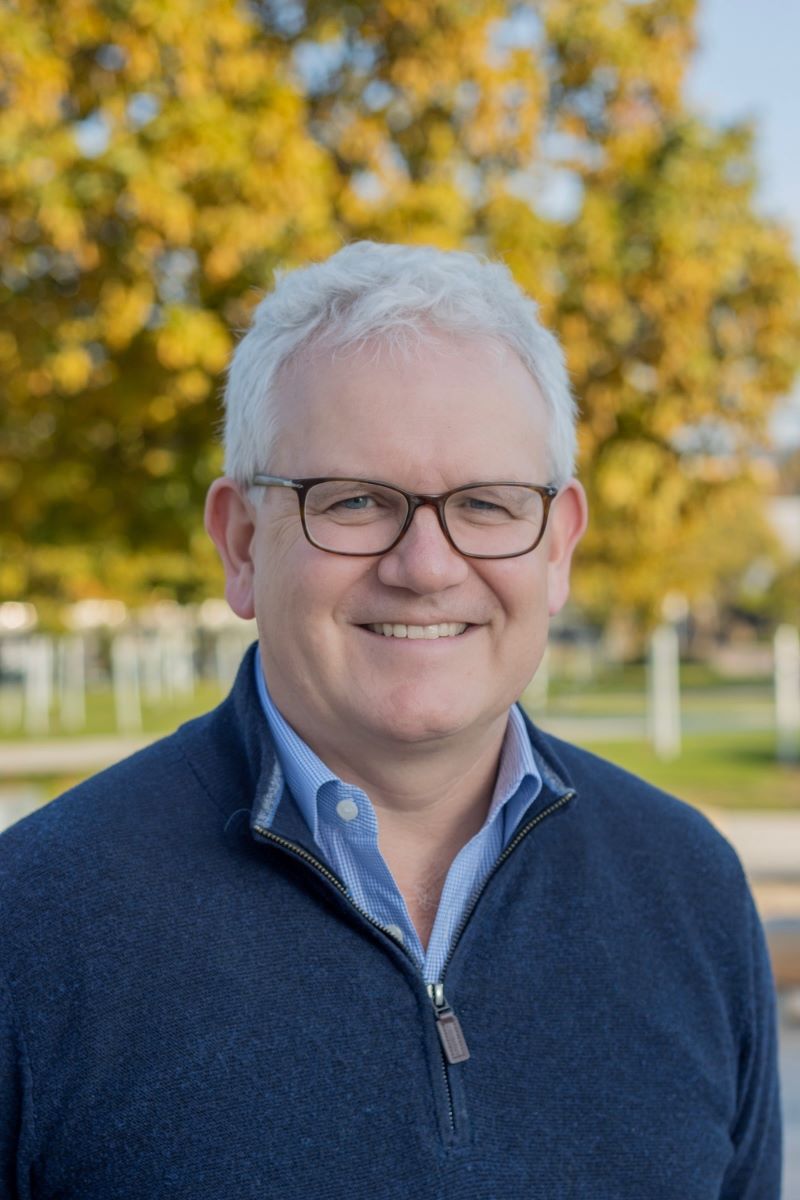
James Groom is an experienced lawyer, adviser and director. He was appointed to the University Council in 2019 and as Deputy Chancellor in December 2021. James is also Chair of the Strategic Resourcing Committee and a member of the Remuneration and Nominations Committee.
James has a BA (Hons)/LLB degree from the University of Tasmania. He has worked with leading commercial law firms in Australia, the United States and the United Kingdom.
James is currently a principal of Groom Kennedy Lawyers and Advisors and a director of public and private companies. He lives in Hobart with his wife Kate and their three children. His mother Gillian and four of his five siblings are also law graduates of the University of Tasmania.
- Term expires:
31 December 2026

Tania has a professional background in issues, media, and stakeholder management in the corporate and government arenas.
She moved to Tasmania in 2010 to pursue her interest in the visual arts and holds a PhD from the University of Tasmania School of Creative Arts and Media.
Tania is Chair of Hobart's Theatre Royal and is a former director of TasRacing and former board member of the Festival of the Voices.
- Term expires:
31 October 2026

Greg Lehman is a descendent of the Trawulwuy people of north east Tasmania and undertook his schooling in Ulverstone and Burnie, before completing a BSc at the University of Tasmania in 1984. Greg was awarded a Master of Studies at the University of Oxford in 2014, before returning to the University of Tasmania to graduate with a PhD in 2017. He is an award-winning curator and writer, a well-known Tasmanian art historian, and a regular public commentator on Indigenous history, contemporary identity and Reconciliation.
In 2017, Greg led the development of First Tasmanians, the Queen Victoria Museum and Art
Gallery’s first permanent Indigenous gallery. Together with Tim Bonyhady, he also co-curated The National Picture: the Art of Tasmania’s Black War, a major touring exhibition that won the 2019 Museums and Galleries Australia Award for Travelling Exhibitions. Their accompanying co-authored book won the Green Family Award for Australian History in 2021. Greg is a previous member of the National Museum of Australia’s Indigenous Reference Group, and Chair of the Tasmanian Museum and Art Gallery’s Aboriginal Advisory Council. He is currently a board member of the Tasmanian Land Conservancy.
Greg has worked in a number of Aboriginal community organisations, as well as Aboriginal heritage and education agencies. In 1991, together with Aunty Patsy Cameron, he established the Riawunna Centre for Aboriginal Education at UTas. He held positions at the Australian National University, Deakin University and University of Melbourne; returning to the University in 2020 as Pro Vice-Chancellor, Aboriginal Leadership and Professorial Fellow before retiring in 2026.
- Term expires:
4 March 2029

Garreth Dent is the appointed Student Council Member for 2025.
After graduating from the University of Cambridge with a Masters of Engineering, Garreth attended the Royal Military Academy at Sandhurst and was commissioned into the Corps of Royal Engineers in 2001. His subsequent military career spanned two decades and saw him lead numerous operational and training deployments around the world, including Iraq, Afghanistan, Kenya and Australia. Alongside his deployments, he gained advanced qualifications in civil and military construction engineering, complemented by leadership and personnel management expertise.
Since transitioning from military service, Garreth has held prominent roles, including Regional Manager at Google, Chief Strategy Officer for a U.S. tech startup, and founding his own engineering consultancy firm. He is a Chartered Engineer, Chartered Manager, and Fellow of the Chartered Management Institute, underscoring his diverse professional expertise.
A passionate advocate for lifelong learning, Garreth is currently pursuing a Bachelor of Paramedicine, reflecting his commitment to service and adaptability. Outside of work, he volunteers as a wildlife rescuer and enjoys endurance sports, mountaineering, and exploring remote corners of the world.
- Term expires:
31 December 2026

Sally is University Secretary and has been with the University of Tasmania since 2015.
Sally is alumni, having graduated with a Bachelor of Arts (Philosophy Honours) in 2000 and has over twenty years’ experience in administration at tertiary institutions with proven strengths in high level administration and an extensive understanding of the processes and governance structure of universities.
Sally has excellent communication and interpersonal skills dealing with academic and professional staff at all levels, students and external agencies.
University Council takes the following approach to identify and manage conflicts of interest:
- The University Secretary maintains a Register of Interests which records high level current interests of members such as directorships, memberships and regular involvement with other associations and businesses. Members are invited to disclose these interests when they are inducted and are responsible for advising the University Secretary of any changes when they occur. The Register of Interest is included in every University Council meeting agenda and is reviewed annually for accuracy.
- Members are asked to declare any additional conflicts at every meeting of Council. These are often (but not always) conflicts in relation to one item of business considered at a point in time, may not be known in advance of the papers being circulated and may not always be ongoing. Any conflicts declared are recorded in the minutes and are managed at the meeting through agreed actions. University Council practice, as agreed through the Standing Orders, is to ensure that a conflicted member removes themself from the room or simply abstains from voting on any formal decision. This is documented clearly in the Council minutes of each meeting and published on the University’s website.
Council committees
Council committees report to the University Council. Council normally makes appointments to its committees at either its last ordinary meeting for the year prior or; the first ordinary Council meeting, and in every alternate year after that.
The membership of the Council committees is as at 19 December 2025.
The Chancellor is an ex-officio member of every board, college and committee of the University, but is listed here only for those committees normally attended.
Council committees follow, each listed with their composition and terms of reference:
Chair
- Ms Alicia Leis
Term expires:
31 December 2027
Members
- Chancellor
Ms Alison Watkins AM
Term expires:
31 December 2028 - Mr Leigh Franklin
Term expires:
28 February 2027 - Mr Kane Ingram
Term expires:
31 December 2027 - Professor Peter Dawkins
Term expires:
31 March 2027 - Mr James Groom
Term expires
31 December 2026 - Professor Kristyn Harman
Term expires
31 December 2027
Secretary
- Mr Damien Maurice
- Review and oversee the integrity of the financial reports and accounting policies and make recommendations to Council in relation to the signing of the annual financial statements.
- Review and oversee the University Risk Management Framework (Framework) for identifying, monitoring and managing key risks across the University (including all entities and activities) and oversee the effectiveness of the Framework and internal control systems in identification of and response to potential key risks (including AI, cyber resilience and any other critical emerging risks).
- Review the University's insurance program annually having regard to the University's insurable risks.
- Oversee the University's Internal audit program through review and approval of the Internal Audit Charter, Annual Internal Audit Plan and activities for the internal audit function (including special investigations requested by the Committee or University Council).
- Endorse the appointment of any external internal audit contractors and ensure processes are in place to monitor the performance of the internal audit function annually.
- Review the External Audit Strategy and fees of the external auditor at the start of the annual audit process.
- Review findings of the external auditors, internal auditors and any other material external review and monitor management’s response to audits and external review recommendations.
- Provide oversight of the safety and wellbeing management system and framework to support Council in their responsibilities under the Work Health and Safety Act 2012 (Tas).
- Review and oversee the University's Legal Compliance Framework for identifying, assessing and managing laws and regulations
- Review and oversee the processes in place to ensure compliance with the obligations of any established charitable trust.
- Oversee the strategic management of the University’s financial position including the investment portfolio, assets, debt and related funding strategy, including related policy instruments.
- Monitor external rating agency assessments of the University and any impact on the financial strategy of the University.
- Provide oversight of major contracts and related material contractual obligations.
- Oversee and interrogate the annual budget process including the allocation of financial resources to material areas of strategy and risk management. Provide recommendations to Council for the approval of the annual budget and key financial metrics.
- Monitor and oversee any public reporting in relation to sustainability targets and performance.
Chair
- Chancellor
Ms Alison Watkins AM
Term expires:
31 December 2028
Members
- Deputy Chancellor
Mr James Groom
Term expires:
31 December 2026 - Council Member
Ms Tara Howell
Term expires:
1 April 2027
Secretary
- Ms Sally Paynter
- Identify important capabilities, experience and perspectives needed on Council and its Committees.
- Maintain a skills matrix and plan for succession and renewal of Council and Committees.
- Recommend remuneration for Council and Committee members.
- Oversee induction, training, and ongoing development for Council and Committee members.
- Consider and recommend to Council nominations for appointment to any position to which Council appoints, other than to Council itself.
- Ensure the University’s governance framework meets or exceeds requirements of the Higher Education Standards Framework, the Voluntary Code of Best Practice for Governance of Australian Universities and the considers the national picture in Australian University Governance
- Make recommendations to Council on appointment, extension and removal of the Vice-Chancellor.
- Set Vice-Chancellor remuneration (within bands approved by Council) and support the Chancellor in undertaking performance management and succession planning of the Vice-Chancellor.
- Review the Vice-Chancellor’s formal delegations from Council as required.
- Recommend the University’s remuneration model for senior managers and executives, including the setting of termination payment limits, to Council and monitor compliance.
- Periodically review the overall senior executive structure and any variations to senior executive remuneration outside the remuneration model.
- Advise on parameters for enterprise bargaining and alignment of people policies with university mission and values.
- Review Council workplan and stakeholder engagement plan periodically to ensure appropriate consideration of key strategic issues.
- Review annually the strategic deployment of honorary awards and confirmation of the direction for the ceremonial conferral of degrees.
- Review Council Committees Terms of Reference for assurance of strategic oversight.
Here is a link to the full Terms of Reference.
Chair
- Ms Sheree Vertigan AM
Term expires:
1 April 2027
Members
- Chancellor
Ms Alison Watkins AM
Term expires:
31 December 2028 - Vice-Chancellor
Professor Rufus Black
Term expires:
Ex officio - Dr Tania Price
Term expires:
31 October 2026 - Ms Karina Groenewoud
Term expires:
31 December 2026 - Associate Professor Aidan Davison
Term expires:
31 December 2026 - Mr Garreth Dent
Term expires:
31 December 2026 - Dr Greg Lehman
Term expires:
4 March 2029
Secretary
- Ms Nicky Bawle
- Ensure the University adopts a strategic approach to workplace practices, and process enablement that strengthens staff and student outcomes, advances equity and maintains alignment between Council and Academic Senate.
- Oversee people and culture strategy and organisational design effectiveness
- Oversee the strategies relating to Aboriginal and Torres Strait Islander staff, including monitoring the University’s approach and outcomes
- Oversee the University’s approach to diversity, equity and inclusion strategies relating to gender equity and disability inclusion and monitor the outcomes.
- Oversee approaches to prevent racial and religious discrimination, including racism, antisemitism, and Islamophobia.
- Monitor organisational culture, including strategic risks and opportunities.
- Provide strategic oversight of organisational restructuring and change management initiatives.
- Monitor the development of strategic leadership capabilities across the academic and professional portfolios.
- Oversee staff institutional initiatives associated with enhancing organisational culture, employee engagement and mental health and wellbeing.
- Monitor the University’s progress towards prevention of Gender Based Violence
- Monitor the Workplace Gender Equity Agency Reporting with oversight of relevant legislation.
- Provide advice to Council on key themes identified through the safety and wellbeing management system and framework under the Work Health and Safety Act 2012 (Tas).
- Oversee and monitor student engagement.
- Oversee the capability development initiatives for all staff.
- Monitor succession and development frameworks and outcomes.
- Consider any other items referred by the Chief People Officer or University Council.
Here is a link to the full Terms of Reference.
Chair
Vice-Chancellor (ex officio) or nominee
- Professor Tracey Dickson (nominee)
Term expires:
31 December 2027
Director Advancement (ex officio) or nominee
- Ms Rebecca Cuthill
Council appointed members
- Menzies Representative
Vacant - UTas Foundation and USA Board Member
Mr Mark Habner
Term expires:
31 December 2025 - Alumni representative
Associate Professor Ashley Townsend
Term expires:
31 December 2027 - Ms Susan Gough
Term expires:
31 December 2026 - Mr David Warren
Term expires:
31 December 2025 - Ms Lailani Mirkazemi
Term expires:
31 December 2026
Secretary
- Ms Sally Paynter
- The Terms of Reference for the Committee are included in the University Foundation Committee Ordinance (PDF 193.9 KB).
Council and Committee meeting dates
- 2026 University Planning Calendar (PDF 537.8 KB)
- 2027 University Planning Calendar ( PDF 518.7 KB)
- The calendar highlights the key dates of the performance cycle for the University as well as meeting dates for Governance and Executive Committees.
- For any additions and changes to the Planning Calendar please email uni.council@utas.edu.au.
For Key University Dates (Academic and Semester dates) please refer to Key Dates.