The 23rd International Symposium on Knowledge and Systems Sciences (KSS2024)
Knowledge and Systems Sciences with Responsible AI
Hobart, Australia, 16-17 November 2024
The 23rd International Symposium on Knowledge and Systems Sciences (KSS2024) is the annual meeting by the International Society for Knowledge and Systems Sciences. KSS2024 aims to promote the exchange and interaction of knowledge across disciplines and borders to explore the new territories and new frontiers. With more than 20-year continuous endeavors, attempts to define the knowledge science strictly still go on with very tolerant, broad-based and open-minded approaches. Knowledge science and systems science can be used for one another as methodology and tool and then benefit each other. Knowledge science and systems science can complement and benefit each other methodologically. International Society for Knowledge and Systems Sciences (ISKSS) was found during KSS2003 in Guangzhou. It is the 1st time for KSS event happens in Australia.
Symposium Details Keynote Speakers Attending
Travel Information Program Conference Proceeding Photos
Keynote Speakers
Title: Anomaly detection with graph learning
Abstract: Anomaly detection is crucial because it allows us to proactively identify problems like fraud and equipment failure, but also uncovers hidden patterns that might signal exciting new discoveries or opportunities, making it a powerful tool for managing data across various fields. Traditional anomaly detection methods often struggle with the complexities of interconnected data, where anomalies can manifest as subtle deviations in node properties, edge connections, or even entire sub-graphs. The advent of graph learning techniques has revolutionized anomaly detection, empowering us to uncover subtle deviations and irregularities within complex networks. This talk explores the frontier of anomaly detection through the lens of graph learning. We will provide an overview of graph learning, highlighting its capacity to capture rich relational information inherent in diverse datasets. Drawing upon real-world applications, we will then showcase the versatility of graph learning techniques, particularly graph neural networks, in detecting both node-level and structural anomalies across diverse domains, such as knowledge graphs, social networks, and healthcare. The talk will conclude with a glimpse into the future of anomaly detection with graph learning, highlighting ongoing research and promising directions for this dynamic field.
Bio: Dr. Feng Xia is a Professor of Computer Science at RMIT University, Australia. He is/was Associate/Guest Editor of over 20 journals (e.g., TKDD, TOMM, TAI, TNNLS, TITS, TETC, and TII). He has served as the General Chair, PC Chair, Workshop Chair, or Publicity Chair of over 30 conferences, and PC Member of over 100 conferences (e.g., IJCAI, AAAI, KDD, WWW, WSDM, SDM, CIKM, and NetSci). Dr. Xia has authored/co-authored over 300 scientific papers in journals and conferences (such as IEEE TAI, TKDE, TNNLS, TC, TMC, TBD, TCSS, TNSE, TETCI, TETC, THMS, TVT, TITS, TASE, ACM TKDD, TIST, TWEB, TOMM; IJCAI, AAAI, ICLR, WWW, SIGIR, WSDM, CIKM, JCDL, EMNLP, and INFOCOM). He was recognized as a Highly Cited Researcher (2019). Dr. Xia received a number of prestigious awards, including e.g. IEEE Vehicular Technology Society 2020 Best Land Transportation Paper Award, ACM/IEEE JCDL 2020 The Vannevar Bush Best Paper Honorable Mention, and WWW 2017 Best Demo Award. He has been invited as Keynote Speaker at several international conferences, and delivered a number of Invited Talks at international conferences and many universities worldwide. He is Vice-Chair of IEEE Task Force on Learning for Graphs. His research interests include artificial intelligence, graph learning, brain science, digital health, and robotics. He is a Senior Member of IEEE and ACM, and an ACM Distinguished Speaker.
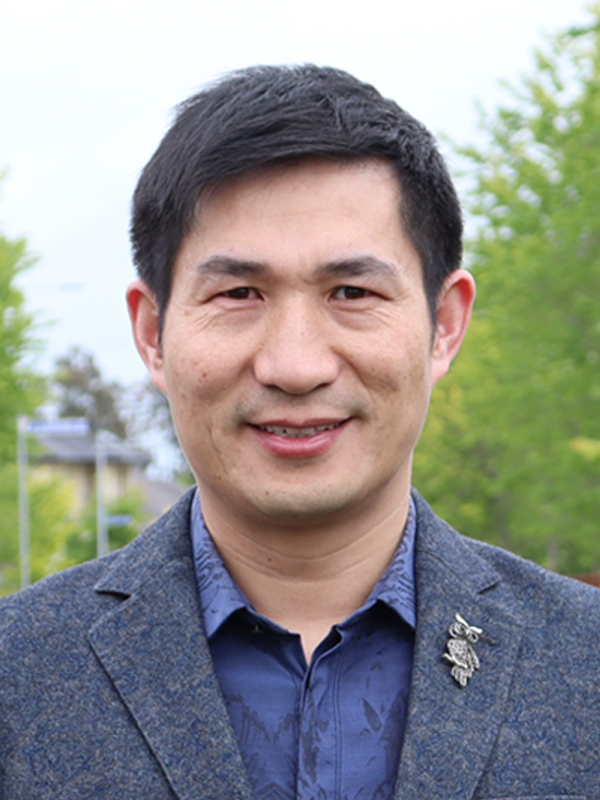
Feng Xia
Affiliation: RMIT University, Australia

Xiwei (Sherry) Xu
Affiliation: CSIRO Data61, Australia
Title: Responsible Agentic Navigation of Knowledge: A System Perspective
Abstract: Generative AI (GenAI) have revolutionized the creation of new content, such as text, images, and music, by leveraging learned patterns from existing data. But their integration into complex software systems introduces challenges such as hallucination, outdated knowledge, and non-traceable reasoning processes. These issues raise significant concerns for responsible AI, particularly in ensuring the reliability and accountability of GenAI-generated content. Retrieval-Augmented Generation (RAG) has emerged as a promising approach to address these challenges by enabling GenAI systems to dynamically incorporate external knowledge sources.
This keynote will provide a system-level perspective on designing and implementing responsible RAG systems. It will focus on the critical decision points and trade-offs involved in building these systems, highlighting how they can be designed to meet the demands of responsible AI. Additionally, it will cover the latest advancements in agentic RAG, where GenAI agents autonomously orchestrate retrieval processes, integrating both passive knowledge bases and active domain experts. This approach enhances the factual accuracy and adaptability of GenAI systems, ensuring they operate within ethical and responsible frameworks.
Bio: Dr. Xiwei (Sherry) Xu is a principal research scientist at CSIRO Data61. She is currently leading the software systems research group (SSRG). Xiwei is a conjoint senior lecturer with UNSW and is responsible for delivering a subject in Computer Science and Engineering School (CSE). Her current research areas include responsible AI (RAI), software engineering for AI-based systems (SE4AI) and designing blockchain applications. Xiwei is identified by the Bibliometric Assessment of Software Engineering Scholars and Institutions (2013-2020) as a top scholar and ranked 4th in the world as the most impactful SE researchers by JSS (Journal of Systems and Software).
Title: A Socio-Technical Approach to Build Safe and Ethical AI
Abstract: Building Safe and Ethical AI needs complementary approaches from both Sociology and Technology, both Protective thinking and Constructive thinking, both Reactive actions and Proactive actions. From the protective and reactive perspective, I will firstly introduce recent advancement on systematic AI Safety assessment, and how to quantify and control the balance between Safety and Capacity. In addition, I will discuss thinkings on AI safety redlines and the challenges to avoid catastrophic and existential risks. From the constructive and proactive perspective, I will introduce Safe and Moral AI, compared to AI Safety and Ethical AI, I will discuss Safety and Morality as first principles to develop AI, and will introduce preliminary results along this vision.
Bio: Dr. Yi Zeng is a Professor from Chinese Academy of Sciences, serving as the Director at the Brain-Inspired Cognitive Intelligence Lab, and the International Research Center for AI Ethics and Governance. He is the founding director of Center for Long-Term AI, and the Beijing Institute of AI Safety and Governance. He is a member of the United Nations High-Level Advisory Body on AI. He is also an expert in the UNESCO Ad Hoc Expert Group on AI Ethics, an expert in the WHO Expert Group on the Ethics/Governance of Artificial Intelligence for Health, and a board member of the National Governance Committee of Next Generation Artificial Intelligence in China. He has briefed at the UN Security Council (9381st Meeting) on AI for International Peace and Security and been listed as one of the TIME100 Most Influential People in Artificial Intelligence (TIME100/AI) in 2023. His major research interests focus on Brain and Mind inspired Artificial Intelligence, AI Ethics and Governance, AI Safety, AI for international peace and security, and AI for sustainable development.
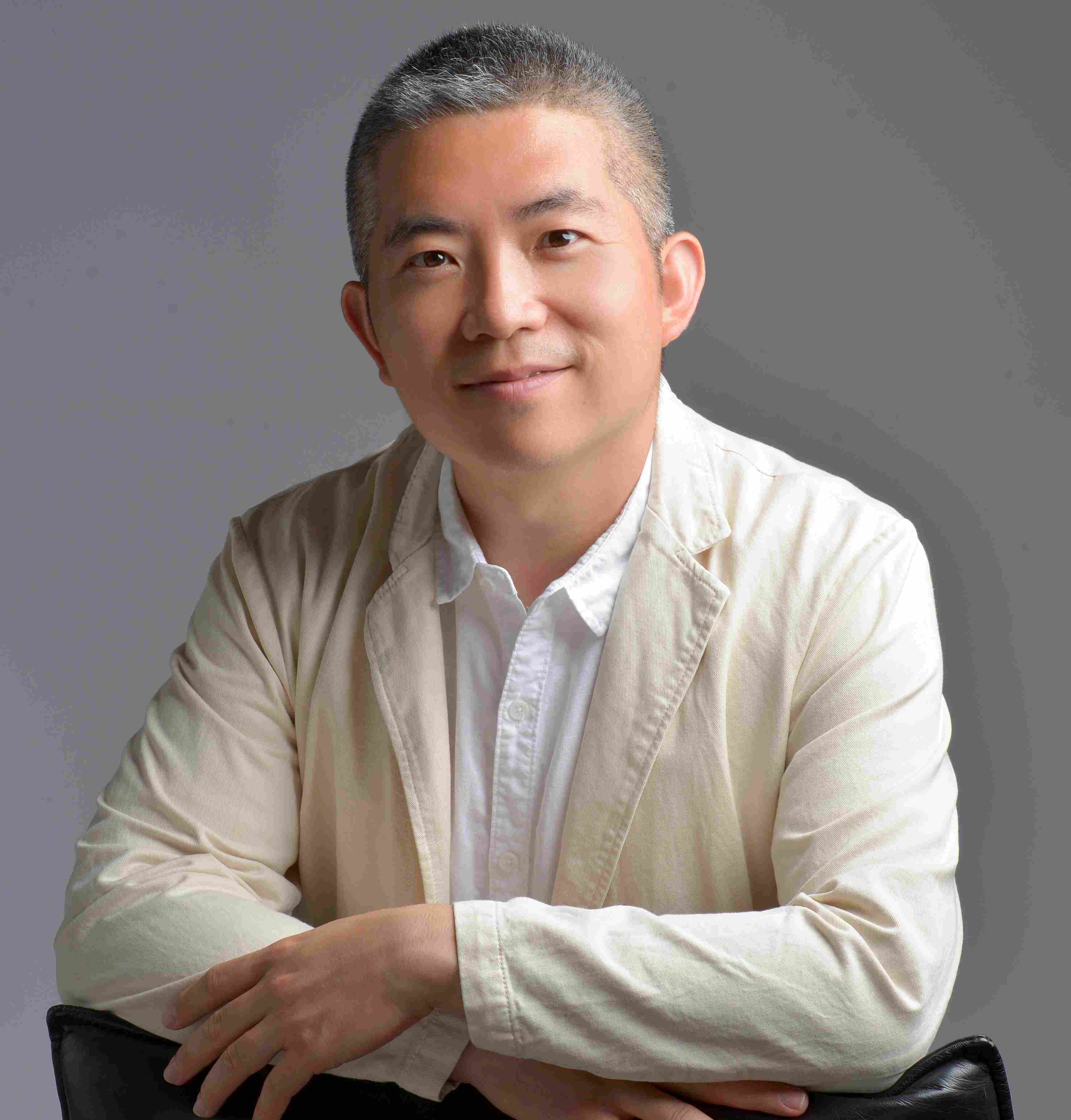
Yi Zeng
Affiliation: Chinese Academy of Sciences, China
Symposium details

16-17 November 2024

Venue
Harvard Theatres, Centenary Building
University of Tasmania
Sandy Bay Campus
Sandy Bay, Tasmania, Australia

Contact
For program and registration, please contact: iskss@iss.ac.cn
For local organisation, please contact: quan.bai@utas.edu.au
Program
Please find the PDF version of the symposium booklet, which is available for downloading. Alternatively, please save and scan the follow QR code for accessing.

Conference Proceeding
Please access Conference Proceedings on SpringerLink.
Photos
Event photos are now available for viewing and downloading.
Attending
Registration
To register for KSS 2024, please go to the registration link to fill in the registration form and pay the conference registration fees.
* For technical or registration questions, please contact: quan.bai@utas.edu.au
Payment Method
Payment is supported by the UTAS payment system, and there are several ways you can pay for your registration. Please select one of the following to proceed with your selections:
- Visa
- Mastercard
- JCB
- American Express
Please contact Assoc. Prof. Quan Bai at quan.bai@utas.edu.au if these payment methods are not applicable for you.
Fees
| Before the end of Sep 8, 2024 | Before the end of Oct 15, 2024 | After Oct 15, 2024 | |
|---|---|---|---|
|
Note: Each accepted full paper and abstract needs to have at least one full registration and it is not refundable. Student registration does not include the conference dinner, but a dinner ticket can be purchased through the registration system. Each full regestration includes one conference dinner ticket. Abstracts registered after Oct 15, 2024, will not be included in the symposium program. |
|||
| Authors with full paper accepted | 700 AUDs | ||
| Authors with abstract accepted | 700 AUDs | 750 AUDs | |
| Participants | 700 AUDs | 750 AUDs | |
| Student participants (full time students ONLY) | 500 AUDs | 500 AUDs | 500 AUDs |
| Extra conference dinner ticket: | 100 AUDs | ||
Travel Information
Conference Venue
- Venue: Harvard Theatres, Centenary Building, UTAS, Sandy Bay
- Address: University of Tasmania Sandy Bay, Grosvenor St, Sandy Bay TAS 7005 (Location map)
Nearest International Airport
Hobart International Airport offers Tasmania’s only international flight service, with direct flights to Auckland, New Zealand. Therefore, if you are flying internationally from outside Australia and Auckland is not your destination, you will need to connect through another Australian city that offers international flights. These cities include Melbourne, Sydney, Brisbane, Gold Coast, Perth, Canberra, and Adelaide. Airports for transfers such as Melbourne International Airport and Sydney Kingsford Smith International Airport have flight times to Hobart of approximately 1 hour 20 minutes and 1 hour 55 minutes, respectively.
Visa Information
Each visitor must have a valid passport to enter Australia. Additionally, participants from certain countries are required to obtain visas. To confirm your specific requirements, please visit the Department of Home Affairs of Australia website.
If you request an invitation letter for visa application, please send your request to quan.bai@utas.edu.au including:
- Your full name
- Your organisation
- Your registration confirmation
* Please kindly note that we cannot guarantee that the documents we issue will allow you to travel.
Travel Information
Hobart is the capital city of Tasmania, an island state of Australia. Located on the southeastern coast of the island, Hobart is known for its rich history, scenic beauty, and vibrant arts and culture scene. Founded in 1804 as a penal colony, it is Australia's second-oldest capital city after Sydney. The city has a mild temperate maritime climate, characterised by cool winters and mild summers. The average temperature in November is around 10° to 19°.
There are several local attractions in Hobart city like MONA, Salamanca Markets, Mt. Wellington, Cascade Brewery, etc.
Local Accommodation
There are several options of accommodations nearby the conference venue:
- Option 1: University of Tasmania Student Accommodation (short-term stay)
- Address: College Road, Sandy Bay (1.3km to the conference venue)
- Booking Note: Please book short stay accommodation at Hobart/Sandy Bay. Please select Single Room option.
- On the UTAS accommodation website, it may indicate that short stay accommodation is only available in early December. Please ignore this information and specify your check-in and check-out dates in the system. There will be rooms available for KSS2024.
- Option 2: Mantra One Sandy Bay Road and Mantra on Collins Hobart
- Address for Mantra One Sandy Bay Road: 1 Sandy Bay Rd, Hobart, TAS 7000 (2.4km to the conference venue)
- Address for Mantra on Collins Hobart: 58 Collins St, Hobart TAS 7000 (3.3km to the conference venue)
- Booking Note: Please go to all.com. In the search tool, enter the hotel name "Mantra One Sandy Bay Road" or "Mantra on Collins Hobart" based on your preference. Click on "Special rates". In the "Choose a rate" dropdown, select "Promo Code" and enter UTASCONF1124 to access your special rates. An example is like below:

- Option 3: Booking through Travel Agent
- Booking Note: Please email: Corporate AJT corporate@ajtravel.com.au and tell them your preference and staying period. Please put “KSS2024 Participant Accommodation Booking, Attention to Andrea” in the email title, and they will facilitate with the booking with a discount rate.
- Alternatively, you can also book your accommodation via www.booking.com . This website has plenty options as well. Please choose a hotel near UTAS Sany Bay Campus.
If you need any help for accommodation booking, please contact quan.bai@utas.edu.au
Organisation
KSS2024 is organised by the International Society for Knowledge and Systems Sciences, and hosted by the University of Tasmania, Australia.
- Xijin Tang (CAS Academy of Mathematics and Systems Science, China)
- Van-Nam Huynh (JAIST, Japan)
- Haoxiang Xia (Dalian University of Technology, China)
- Quan Bai (University of Tasmania, Australia)
- Yuxuan Hu (University of Tasmania, Australia)
- Shiqing Wu (UTS, Australia)