

Scientists are heading out with underwater robots to re-survey the coarse sands, sponge-covered reefs and mysterious gatherings of sharks at the Beagle Marine Park in Bass Strait.
The two-week voyage on marine research vessel (MRV) Ngerin left from Tasmania’s Beauty Point on Monday, to conduct the survey led by the University of Tasmania’s Institute for Marine and Antarctic Studies (IMAS) and funded by the Australian Government through the National Environmental Science Program.
The Beagle Marine Park covers almost 3,000 square kilometres of central Bass Strait waters, and is one of 60 Australian Marine Parks managed by Parks Australia. It surrounds the state-managed Kent Group Marine Reserve of Erith, Dover and Deal islands, and the Hogan and Curtis Island groups.

“These islands were once hills on the Bassian Plain – a landscape of dunes and grasslands that were immersed about 10,000 years ago by rising seas,” said IMAS researcher and voyage leader Dr Jacquomo Monk.
“The lithified dunes now form reefs 50 to 70 metres below the surface, and are covered with sponges and other invertebrates that are well fed by the tidal currents.”
Underwater robots give clear view of marine park health
When IMAS researchers first surveyed Beagle Marine Park in 2018, they only had very fuzzy maps of the seafloor to go by.
“Detailed mapping by the hub and the Australian Hydrographic Office has since provided an initial understanding of about 60% of the park’s seabed structure,” Dr Monk said.
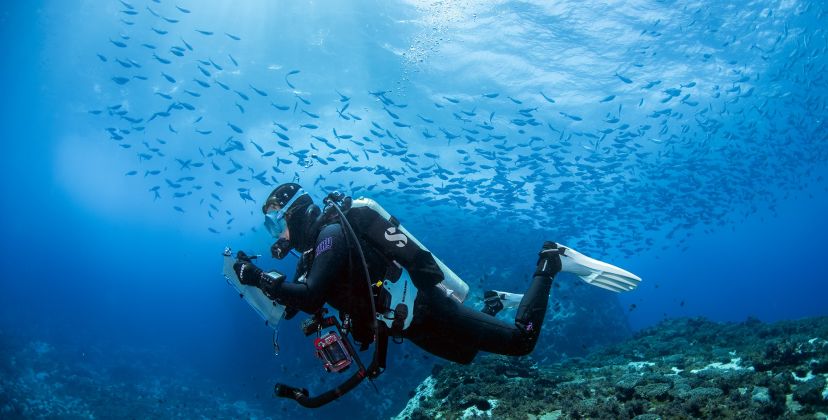
“We created an inventory of life in different depths and habitats, from tens of thousands of images captured using Automated Underwater Vehicles and extensive footage taken with Baited Remote Underwater Video.”
The datasets are publicly available on the interactive portal, Seamap Australia, which brings together imagery hosted on the IMOS SQUIDLE+ online platform that allows management, discovery and annotation of marine imagery.
“Combining this imagery dataset with mapping layers in Seamap Australia gives park managers a desktop view of the action, minus the gusting winds and choppy seas,” Dr Monk said.
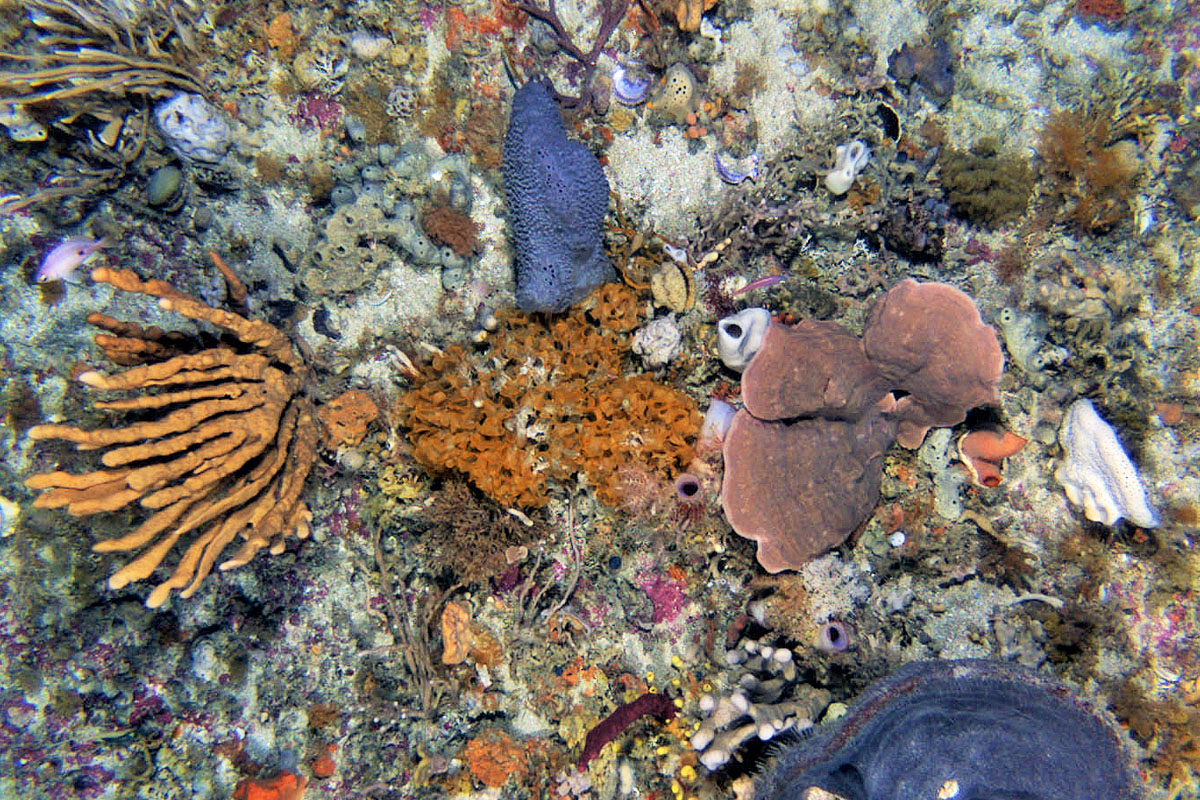
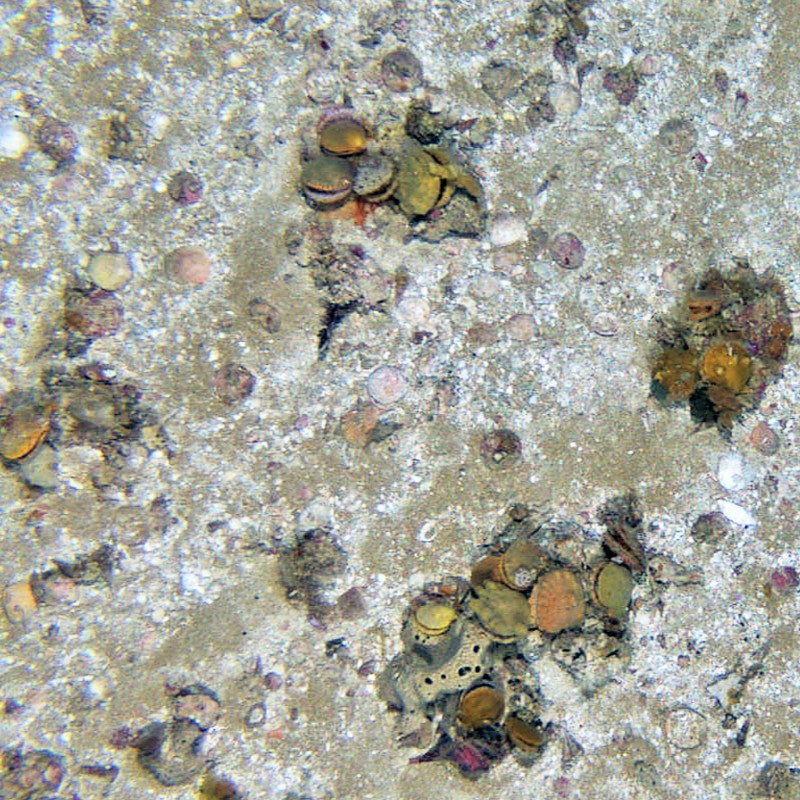
“They can virtually dive into the park and see mid-light (mesophotic) rocky reefs covered in diverse and colourful sponges, vast carpets of doughboy scallops, and short videos of more than 60 species of sharks and other fishes.
“On this voyage we’ll go back to the same sampling sites to see what may have changed.”
Checking seafloor recovery and catching up with old (shark) friends…
The IMAS team is interested to see how seafloor ecosystems are recovering a further seven years after trawl fishing and scallop dredging was banned in the area more than 15 years ago. The aim is to start quantifying the changes in the composition and size of fishes and the invertebrate life growing on the seabed over time.
“We’ve found that in other marine parks in the south-east, such as Tasman Fracture south of Tasmania, the abundance and size structure of fishes and sponges have changed since their protection 15 years ago. So it will be interesting to see if those patterns are also present in the Beagle.”
They are also keen to see their old friends the Port Jackson sharks.
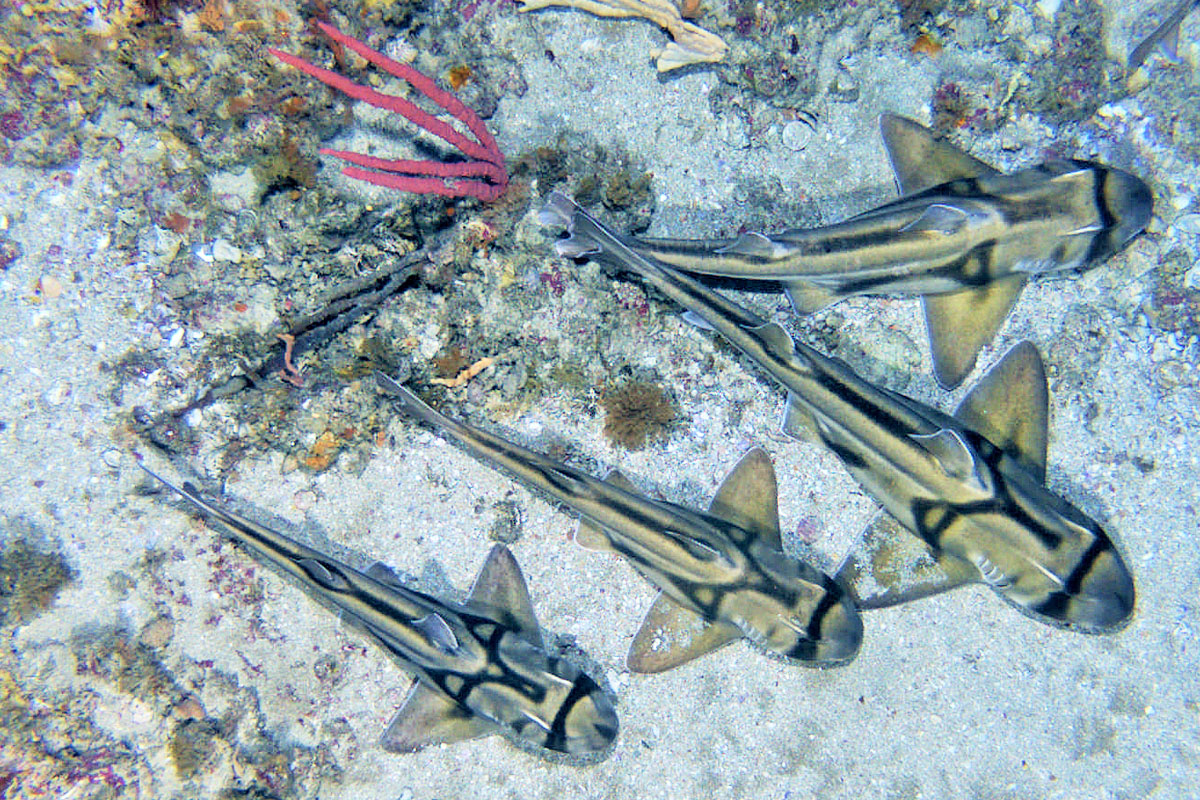
“Last time, we came upon a shark slumber party - there were thousands of them lounging among the reefs," Dr Monk said.
“It was such a cool aggregation, and it raised some interesting questions – was it a one-off or an annual gathering, and do they come to feast on scallops before heading off to their breeding ground? It could be Beagle’s very own longitudinal study.”
Dr Monk said Port Jackson sharks, also known as ‘Sleepy Joes’, often gather on ledges and other places, and appear to sleep – but they’re rarely seen in such large numbers.
“They usually lay their eggs in the coastal waters of Victoria and mid-to-southern NSW from late winter, so it might be a mating aggregation or simply a ‘buffet’ where the sharks fatten up before their long trip north – but we’ll be pretty excited to see them again,” he said.
Real-world benefits of good quality data
The survey will develop and trial protocols to standardise reporting on the condition and changes in the marine life that calls the Beagle home. This will deliver benefits for marine park managers, who can compare ecosystem conditions between management zones and across parks.
“Like all adaptive management, park managers need good quality data to allow them to accurately assess how well the parks are meeting conservation goals,” Dr Monk said.
“The repeat survey will also provide new data that will reveal how the marine park compares to nearby areas outside the park that are subject to development. And, with extensive areas adjacent to the Beagle being considered for offshore wind farms, the surveys will provide useful reference data for this emerging industry.”
SQUIDLE+ is an open software platform for the management, discovery and annotation of marine imagery developed as part of Australia’s Integrated Marine Observing System’s Understanding of Marine Imagery Facility. IMOS is enabled by the National Collaborative Research Infrastructure Strategy (NCRIS). Dive in to explore more images.
MRV Ngerin is operated by the South Australian Research and Development Institute (SARDI) and is part of the Southern Coastal Research Vessel Fleet.
Beagle MP Fast Facts:
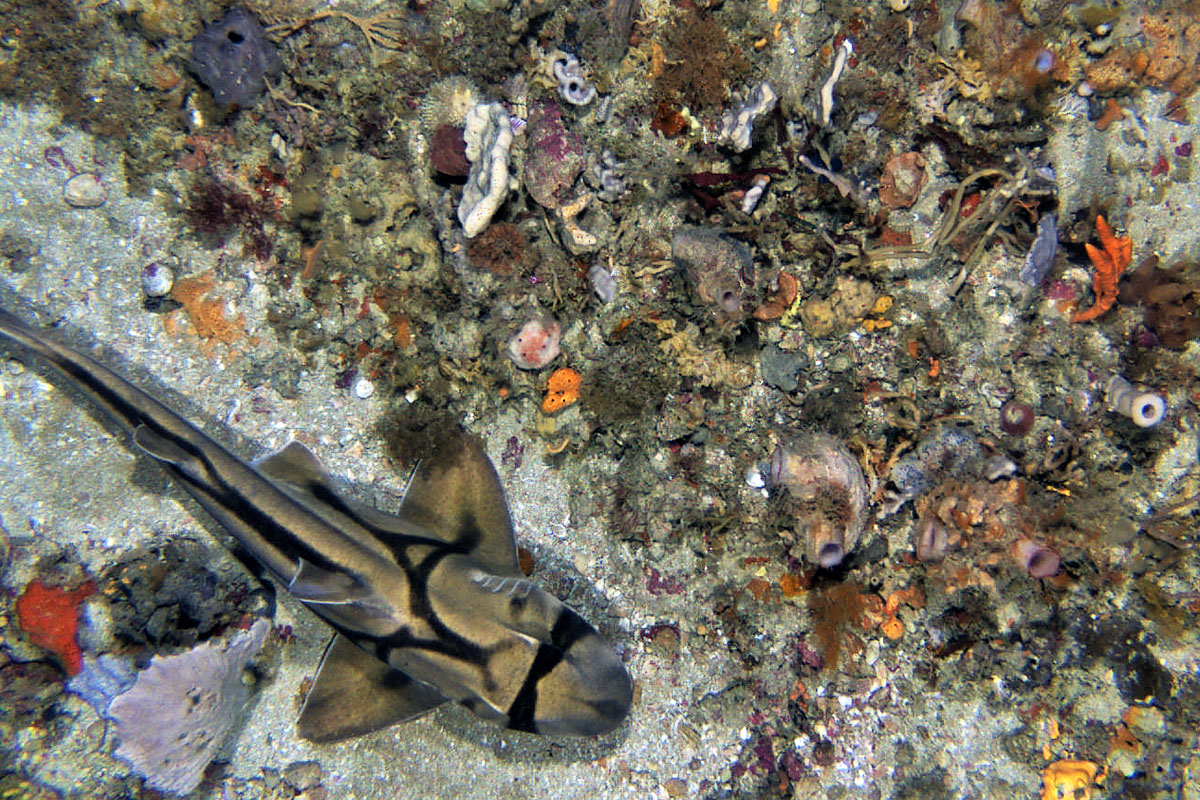
- Beagle Marine Park lies in the Bass Strait between Victoria's Wilsons Promontory and Tasmania's Flinders Island. lies in the Bass Strait between Victoria's Wilsons Promontory and Tasmania's Flinders Island. It is a shallow-water marine park surrounding a collection of Bass Strait Islands.The reefs of Beagle Marine Park provide a stable platform for attached invertebrates amid a broad carpet of shifting sediments.
- The reefs of Beagle Marine Park provide a stable platform for attached invertebrates amid a broad carpet of shifting sediments.
- Sponges are dominant, especially massive forms, with creeping, encrusting, branching and cup sponges also recorded. Other attached invertebrates include cnidarians, bryozoans and ascidians.
- The park’s former grassland plains host beds of doughboy scallops and New Zealand screw shells, while clumps of rubble (shell hash, bryozoan skeletons, scallops) in other areas provide other perhaps ephemeral hard surfaces for attached invertebrates.
- In the 2018 survey, fishes were abundant in the park, with some 60 species recorded. Most common were Degens Leatherjacket, Butterfly, Barber and Common Gurnard perches, Melbourne Silverbelly, Jackass Morwong, Rosy Wrasse, Cosmopolitan Leatherjacket, Sand Flathead and Draughtboard Shark. Apart from Jackass Morwong and rarer flathead species, few commercially or recreationally targeted species were recorded.
Banner image: MRV Ngerin on the Tamar
River heading for Beagle Marine Park