

For Neve Clippingdale, studying a Bachelor of Marine and Antarctic Science has meant learning in some of the most extreme and important environments on Earth, from research vessels to Antarctica itself.
Her one-of-a-kind degree has taken her well beyond the classroom and into real-world settings, where students are directly involved in the vital research that shapes how we understand and respond to climate change.
Early in her undergraduate studies, she embarked on her first research voyage, joining ten classmates aboard the RV Investigator on its journey from Fremantle to Hobart, an experience that set the tone for her degree.
"It was one of the most rewarding and inspiring experiences of my degree so far,” she said.
“The voyage provided so many opportunities to learn about life and operations aboard a research vessel. We were able to participate in bridge and engine room tours, interact with both the ship’s crew and science teams during meals, and even volunteer to assist with different scientific projects happening on board.”
During the voyage, Neve investigated microplastic pollution, sampled zooplankton, participated in seafloor mapping, and conducted seabird identification surveys. Each task added to her growing skillset, while also showing her the breadth of opportunities available in marine science.
Beyond the science, the voyage also helped her build connections with fellow students and industry professionals.
“That environment creates an amazing sense of community very quickly, and I formed friendships and professional connections that I know will stay with me throughout my career.”
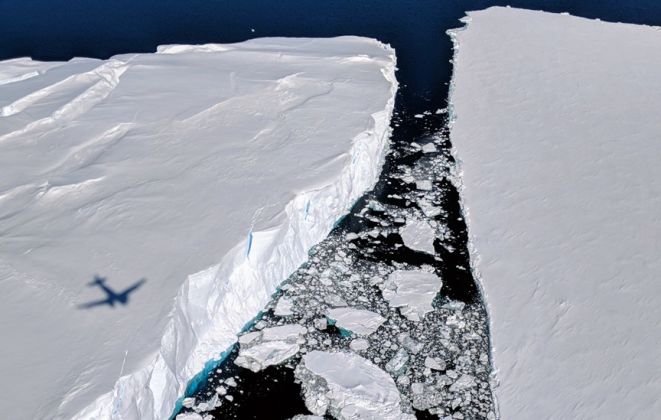
In her honours year she returned to sea for a second two‑month expedition, this time aboard the RSV Nuyina to Antarctica.
“There is something incredibly surreal about waking up each morning to icebergs outside your window and knowing that you are actively contributing to scientific research in Antarctica.”
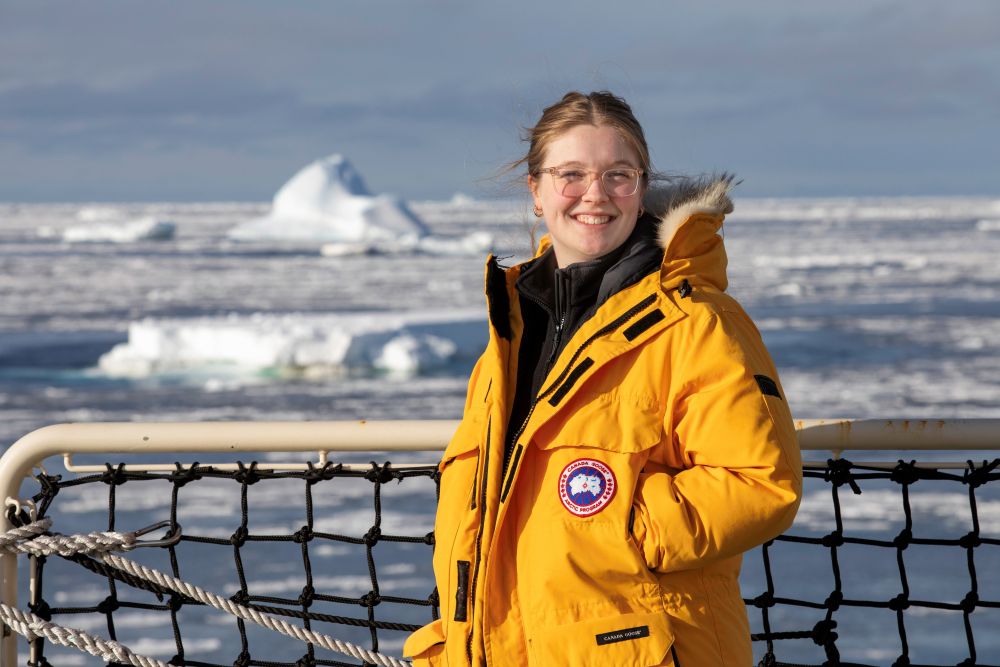
The voyage brought Neve face-to-face with the marine environments she hopes to protect, and became a defining moment in her development as a young scientist. The experience also equipped her with the confidence to advance her own research and commit fully to the career path she was building in marine science.
“I was able to collect samples for my own research project while also learning about a wide range of other sampling techniques and research programs from internationally respected scientists,” she said.
Neve’s fascination with paleoceanography – the study of the ocean’s past – guided her toward research that is helping to uncover how our oceans have changed and what that means for the planet’s future. Currently, she is pursuing her PhD on Fragilariopsis kerguelensis, a Southern Ocean alga that can help scientists understand past ocean conditions and climate patterns.
“Studying marine biology was never just about learning about the ocean, it was about understanding our planet and how we can better protect it,” she said.
“By understanding how the Earth responded to similar climate conditions in the past, scientists can provide information that helps governments, industries, and communities prepare for future change through better policies, planning, and adaptation strategies.”
Once her research is complete, Neve hopes to transform her expertise into science communication, climate education, outreach, and policy engagement, using her academic experience to help bridge the gap between scientific discovery and public understanding.
Interested in studying Marine and Antarctic Science?