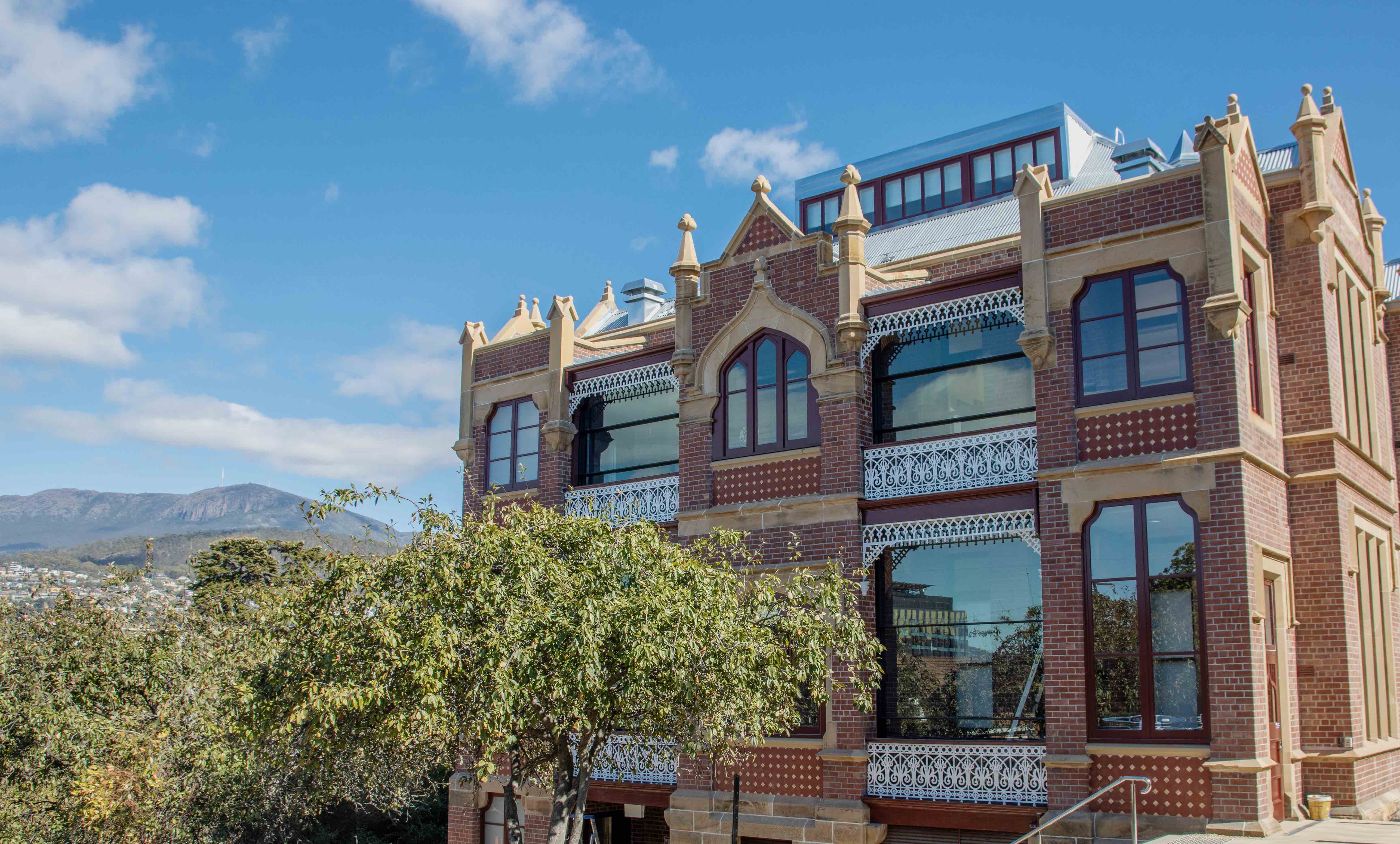
A heritage building on Hobart’s Domain will help address teacher shortages, train nurses, and support people to improve their English language skills when it reopens to the community as early as October this year.
The University of Tasmania has completed a $13.5 million restoration of the Philip Smith Centre, enabling educational activities to continue on site for future generations.
Originally built in 1910 as the State's first purpose-built facility to train teachers, the University took responsibility for teacher training after World War II and the Faculty of Education was established in the Philip Smith building in 1962.
Now, as part of the University's work to create central and accessible learning centres, teaching and learning programs that serve the community’s needs are returning to the building.
The International School will move to the space over the coming months and from next year, new courses will be delivered on site – the Diploma of Nature-Based Guiding and the Bachelor of Outdoor and Environmental Education which will provide pathways towards outdoor and environmental-related employment.
To help increase the number of local and national educators, the University is the only higher education provider in Australia offering this Bachelor’s degree with a combined Master of Teaching which can be completed in four years.
The neighbouring School of Nursing at The Domain will also use the Philip Smith Centre for its classes from 2025.
Pro Vice-Chancellor for Campus Life (South) Professor Nicholas Farrelly said the building, which held much historical significance for the University, would now be an exciting part of its future.
“Reopening the Philip Smith Centre is a milestone for the community and the University’s efforts to establish more centrally located learning spaces that are easier for people to access as they undertake their studies,” Professor Farrelly said.
“The building’s proximity to bushland reserve, the CBD and Medical Science Precinct make it possible to bring important University functions together in this historic location.
“Our thanks to everyone who has contributed to this restoration – teams from within the University, project partners and Glebe residents who have collectively helped us ensure these upgrades deliver the best outcomes for the community.”
Associate Professor Marcus Morse from the University’s School of Education will be coordinating the new Bachelor's degree and said offering it at the site presented an exciting opportunity for the community.
He said it was fitting to be delivering a course helping address teacher shortages within the building originally established in Tasmania to help train them.
“Students studying education in this space will have direct access to some of the best classrooms lutruwita / Tasmania has to offer – both indoor and out! The Phillip Smith Centre offers incredible light filled teaching spaces as well as access to place-based learning opportunities by virtue of its superb location within the Glebe community,” Associate Professor Morse said
“With outstanding access to the Domain students can look forward to learning with, and through, remnant grassy woodlands, vibrant cultural landscapes, and the waterways of the Derwent River.”
The University reacquired the Philip Smith Centre in 2020 from a group of Glebe residents which formed Hobart Discovery Inc (HDI) to ensure the building was preserved and made available for community use, next working with specialist heritage architects Lovell Chen, and construction firm Hansen Yuncken, to reinstate the building’s original intent as a teaching facility.
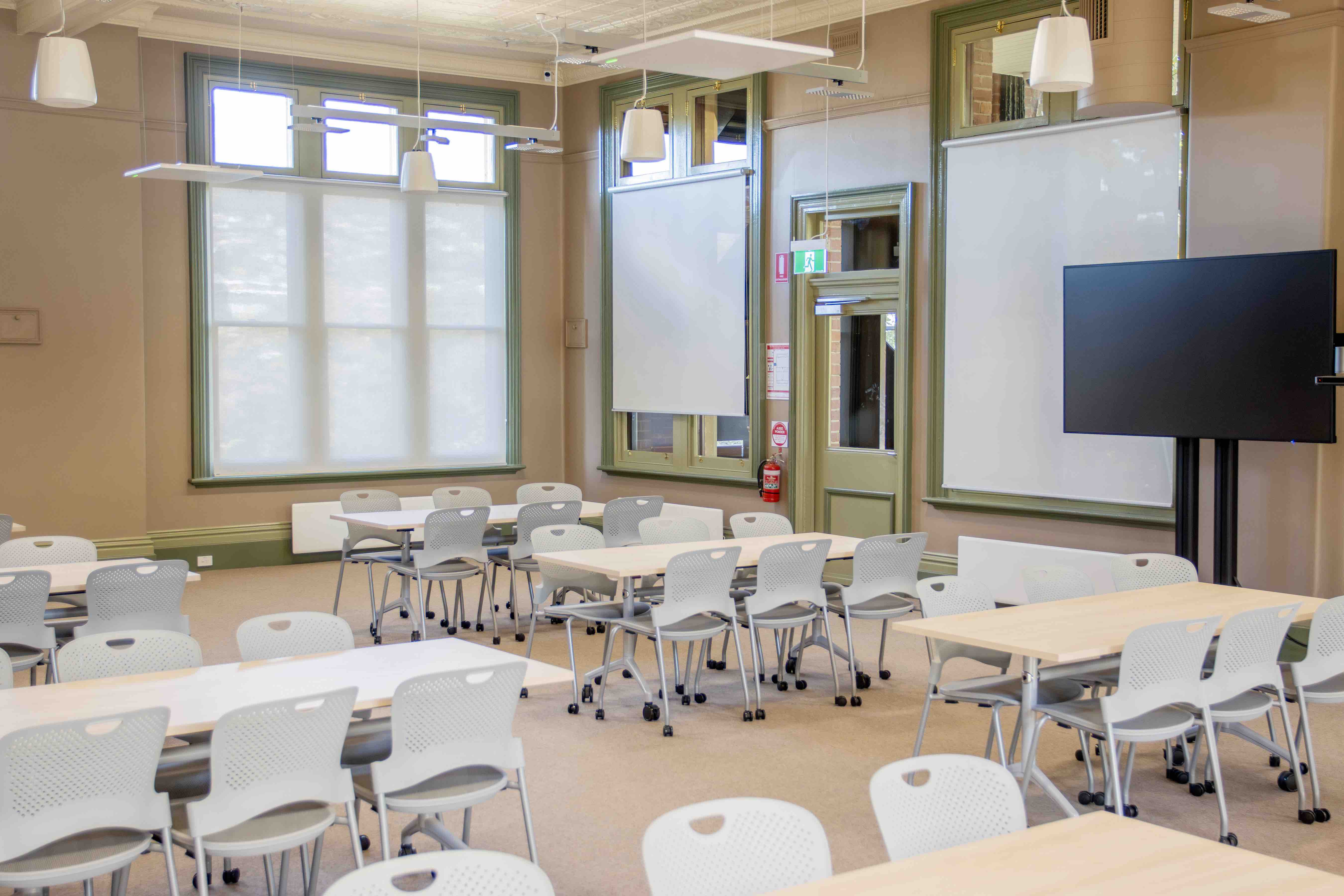
Significant conservation work was undertaken to bring the centre up to contemporary and comfortable standards. Flexible, multi-use teaching and learning spaces were added and the original verandas upgraded to become breakout spaces protected from the weather.
Roof upgrades have enabled high-performance insulation and airtightness while a heat recovery ventilation system moderates the internal temperature. There are also now accessible entrances, amenities, internal lifts and thoughtful interventions like touchless door operators that provide equitable access for all visitors.
The building was named in honour of Philip Thomas Smith, a prominent Tasmanian pastoralist, philanthropist and social reformer who believed strongly in the transformative power of education.
In 1874 Smith donated £1,000 towards establishing a training school for teachers in Tasmania but it wasn’t until after his death that this investment was used to bring the building to life.
The Philip Smith Training College was constructed between 1909 – 1910 and formally opened on 7 February 1911.
Over the years, the building has remained a home for education, hosting other groups including the Hobart Teachers’ College, the Southern Teachers’ Centre and University of the Third Age.
Discover the restored Philip Smith Centre by joining a community tour inside the building.
Everyone is welcome to attend. Register your attendance.