


Deep-sea canyons provide a pathway connecting warmer, deep ocean waters to the Antarctic Ice Sheet, allowing heat exchange that could accelerate glacial melting and rising sea levels.
Evidence of long term currents bringing ocean heat to toward the continental shelf was discovered by a team of international scientists led by Italy’s National Institute of Oceanography and Applied Geophysics (OGS).
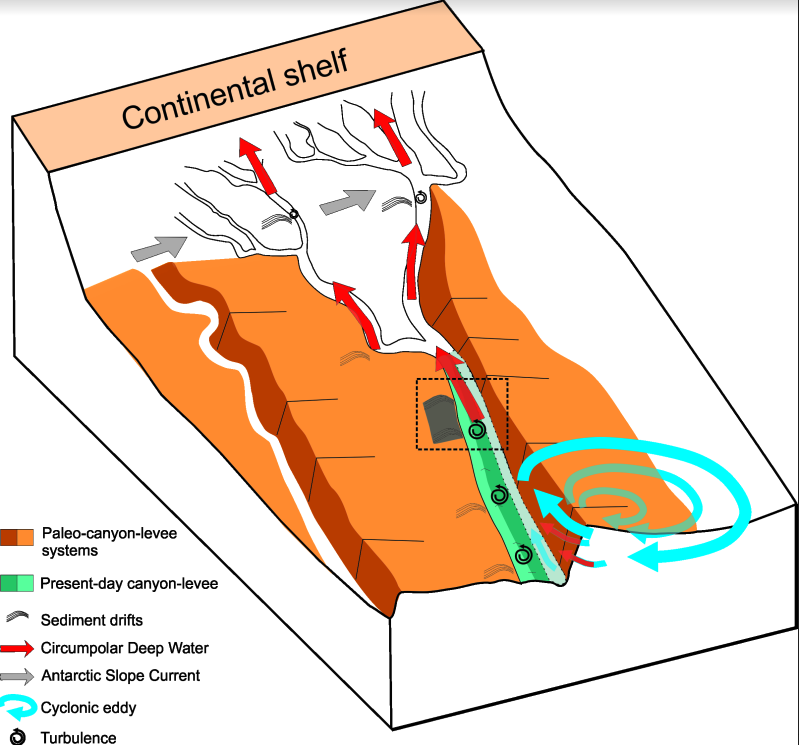
Published in Nature Communications, the study highlights the telltale sediment layers found within main underwater canyon systems, indicating persistent bottom currents flowing along the canyons and carrying the ocean's heat to the Antarctic continent.
“The results of this study emphasise the key role of submarine canyons in facilitating interactions between the ocean and ice sheet,” said study co-author Dr Taryn Noble, a marine geochemist with the University of Tasmania’s Institute for Marine and Antarctic Studies (IMAS).
“The interactions between the ocean and ice sheet help us identify the mechanisms associated with icesheet melting in the past and present, so we can more accurately predict future sea level rise.”
The research has important implications for understanding how global warming affects glaciers and ice sheets. It focused on the Totten and Ninnis glaciers, which lie at the mouth of the two most important subglacial features in East Antarctica: Aurora-Sabrina and Wilkes sub-glacial basins.
“The intrusion of relatively warm water (Circumpolar Deep Water) onto the continental shelf is widely recognised as a threat to the Antarctic ice sheet,” said OGS marine geologist and lead author, Dr Federica Donda.
“The analysis of geophysical and oceanographic data collected during an Italian-Australian multidisciplinary cruise led to the discovery of dome-shaped sedimentary bodies (sediment drifts) several thousand metres wide and 40 to 80 metres thick.
"The internal and external characteristics of those sediment drifts indicate they were formed by bottom currents directed towards the continental shelf.”
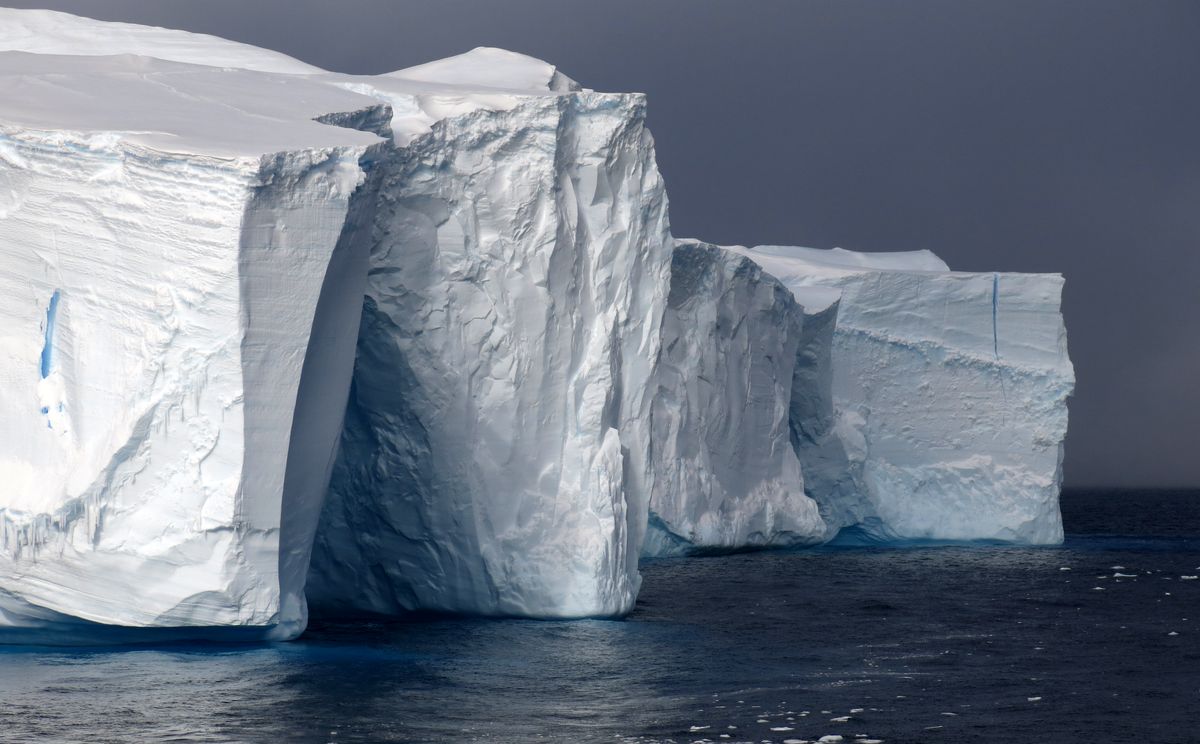
The East Antarctic ice sheet is attracting increasing attention in the scientific world because even partial melting could contribute significantly to sea level rise. Together, the Aurora-Sabrina and Wilkes sub-glacial basins hold the equivalent of over eight metres of global mean sea level rise.
The OGS-led international team included researchers from University of Southampton, Rutgers, State University of New Jersey, Colgate University, Geoscience Australia, All-Russia Scientific Research Institute for Geology and Mineral Resources of the Ocean, St Petersburg State University, University of Tasmania and Macquarie University.