

A microbiologist by training, when Alejandro Correa Lozano moved from Colombia to Tasmania, he brought with him a lifelong passion for science and discovery.
Now, after several years employed by the University of Tasmania as a plant science researcher, he’s combining that background with a new focus on information and communication technology.
Alejandro is studying the Diploma of ICT Professional Practice, building on his existing skills to explore the connection between data, automation, and biological research.
“I’d like to harmonise both ICT and biological research into data analysis and software development,” he said.
Alejandro completed his Master of Applied Science (Microbiology) at the University of Tasmania in 2019, followed by an Undergraduate Certificate in ICT Professional Practice, when he recognised the potential for ICT to open new doors in his field.
“I’ve always been fascinated by IT services, technologies and automation,” he said. “We rely on systems and software for our work, daily lives and wellbeing. Being knowledgeable in ICT is a necessity today.”
The diploma has given him a fresh perspective on the role of technology in research, particularly how digital systems can improve efficiency and accuracy in scientific data collection and analysis.
The decision to study at the University of Tasmania again for his diploma was an easy one.
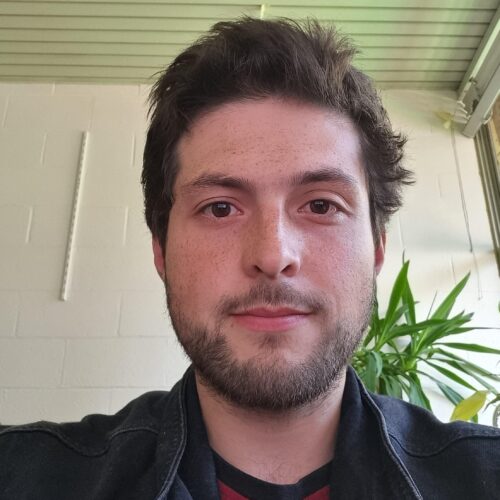
“I loved the Sandy Bay campus and everything it offered. UTAS has played a huge role in my professional and academic growth, so I hold it in a special place in my heart.”
Balancing full-time work with study has required discipline and careful planning for Alejandro, but he said the experience has reminded him how rewarding it can be to learn something new.
And studying online has allowed him to manage his workload and continue his role in plant science research.
“I study at night so I can balance work, family, and personal life. The flexibility is great.”
He said the online platforms he used during his studies not only enhanced his learning experience, but helped him stay connected with peers and lecturers, and enabled an exchange of ideas across disciplines.
Those connections and discussions allowed him to share insights from his scientific background with his classmates, and also to learn from their experience in software development, networking, and cybersecurity.
Alejandro said the course has reignited his curiosity and encouraged him to think creatively about his future, as he explores ways that data-driven technology could support scientific discovery, environmental monitoring, or agricultural innovation in Tasmania and beyond.
“Working in a company with a strong bioinformatics department or a biologically based industry that handles big data would be ideal.”
Study with us.
Find out more about studying Information and Communication Technology at the University of Tasmania.