

Pial Hossain has been passionate about the problem-solving potential of technology for much of his life.
Originally from Bangladesh, he came to Tasmania to study a Bachelor of Information and Communication Technology, and his interest in creating practical solutions led him to discover new and meaningful ways that technology can connect people, communities and ideas.
“I've always been someone who loves solving problems,” he said. “Back home I took part in a lot of ICT competitions and was fortunate enough to win a few.
“I also helped manage an international ICT festival as a student, which taught me a lot about organising, teamwork and bringing people together around technology.”
As his university studies progressed, he developed a broader understanding of the role technology can play in society, particularly in emerging fields such as Artificial Intelligence (AI).
“AI stood out to me because it's a field that can solve problems in so many different ways; it isn't limited to one type of task or industry,” he said.
“Studying AI has changed how I see technology. I've come to understand that AI is incredibly powerful, but that power comes with responsibility. It's not just about what technology can do, but how we choose to use it.”
That perspective proved valuable when Pial undertook a work-integrated learning unit called the Sustainability Placement Experience, in which students gain first-hand experience working on real sustainability-focused projects with various organisations.
Pial worked with regional tourism organisation Destination Southern Tasmania, helping them transform an existing printed guide into a user-friendly digital platform for promoting positive-impact tourism experiences.
“The Positive Impact Story Hub is a searchable online directory that helps visitors to Southern Tasmania find and choose tourism experiences that have a positive impact on the environment, on local communities, or both,” Pial said.
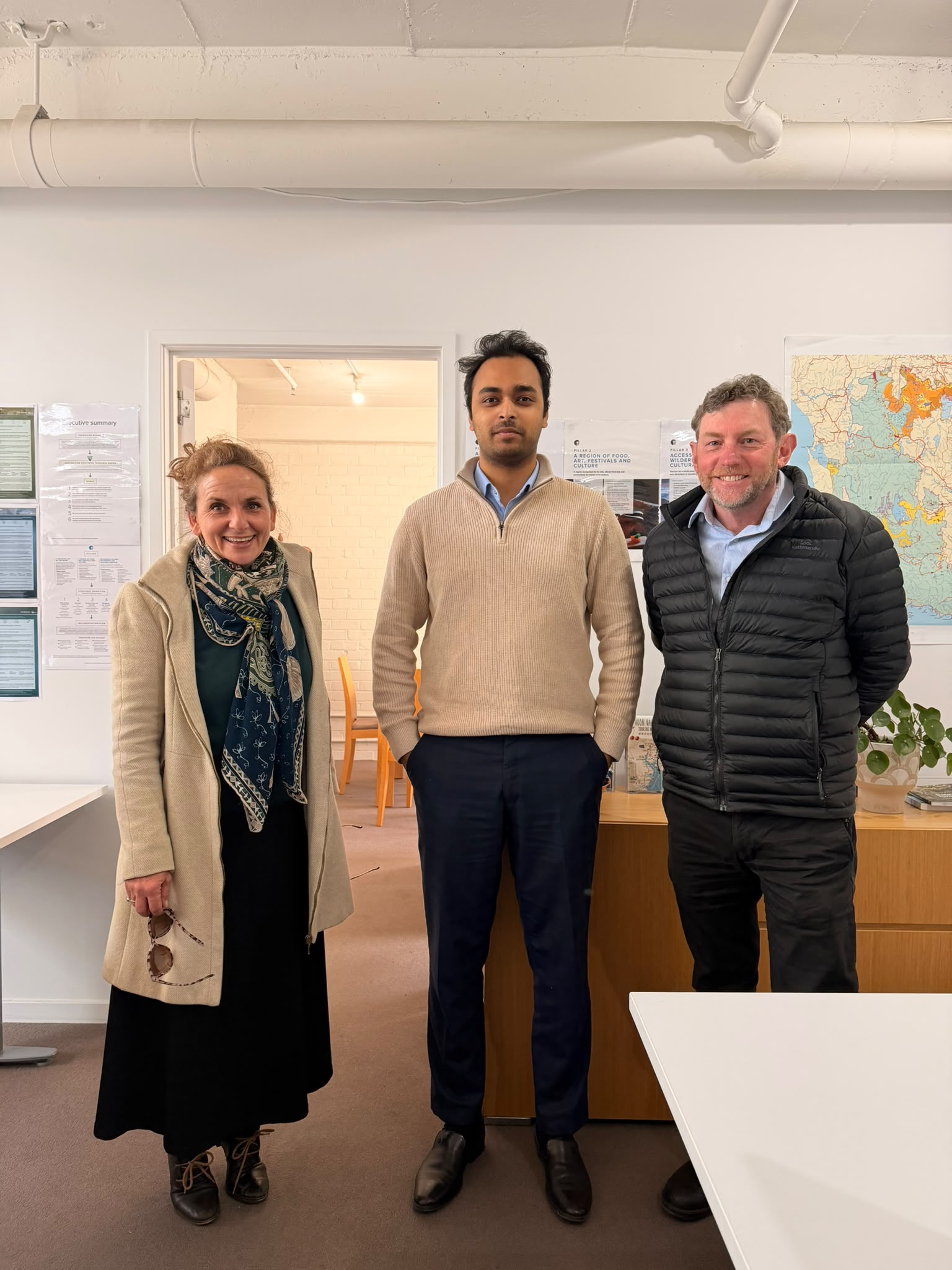
“When I started, the content existed only as a printed prospectus, a static document you had to read through page by page. By the end of my placement, it had become a live, searchable digital directory on the Hobart & Beyond website.”
The project required a combination of technical and communication skills. Pial worked on rebuilding the printed content as individual online listings, processing images, creating metadata, establishing filters, and reviewing content for accuracy. He also communicated directly with tourism operators as part of the publication process.
“On the UX [User eXperience] side, I focused on making the directory easy and intuitive to navigate, using filters for region, activity and impact type so visitors can quickly find what's relevant to them rather than scrolling endlessly.”
Pial said there were several proud moments for him during the project. One was the moment the first part of the online platform went live. But the others were far more personal, like reading the mid-placement feedback from his mentor.
“She said the team was ‘having trouble keeping up’ with me, which genuinely encouraged me,” he said.
“[And] it really landed when operators started replying to say they were happy with how their stories were represented, some with genuine enthusiasm.”
The experience also changed the way Pial thinks about sustainability.
“Before this, I thought of sustainability mostly in environmental terms. Now I see it as something broader and more human. It's about communities, culture, economies and choices, not just emissions or conservation.”
The placement delivered professional growth as well, as Pial developed confidence in his own judgement and abilities, learning to trust himself to put his own ideas forward.
He hopes to continue using technology to create meaningful outcomes for people and communities once he graduates and enters the workforce, and his Sustainability Placement Experience has shown him just how many directions an ICT degree can take him.
“Coming in as an AI and ICT student, I imagined my work would be much more technical and behind-the-scenes. I wouldn't have pictured myself helping tell sustainability stories or working with tourism operators.”