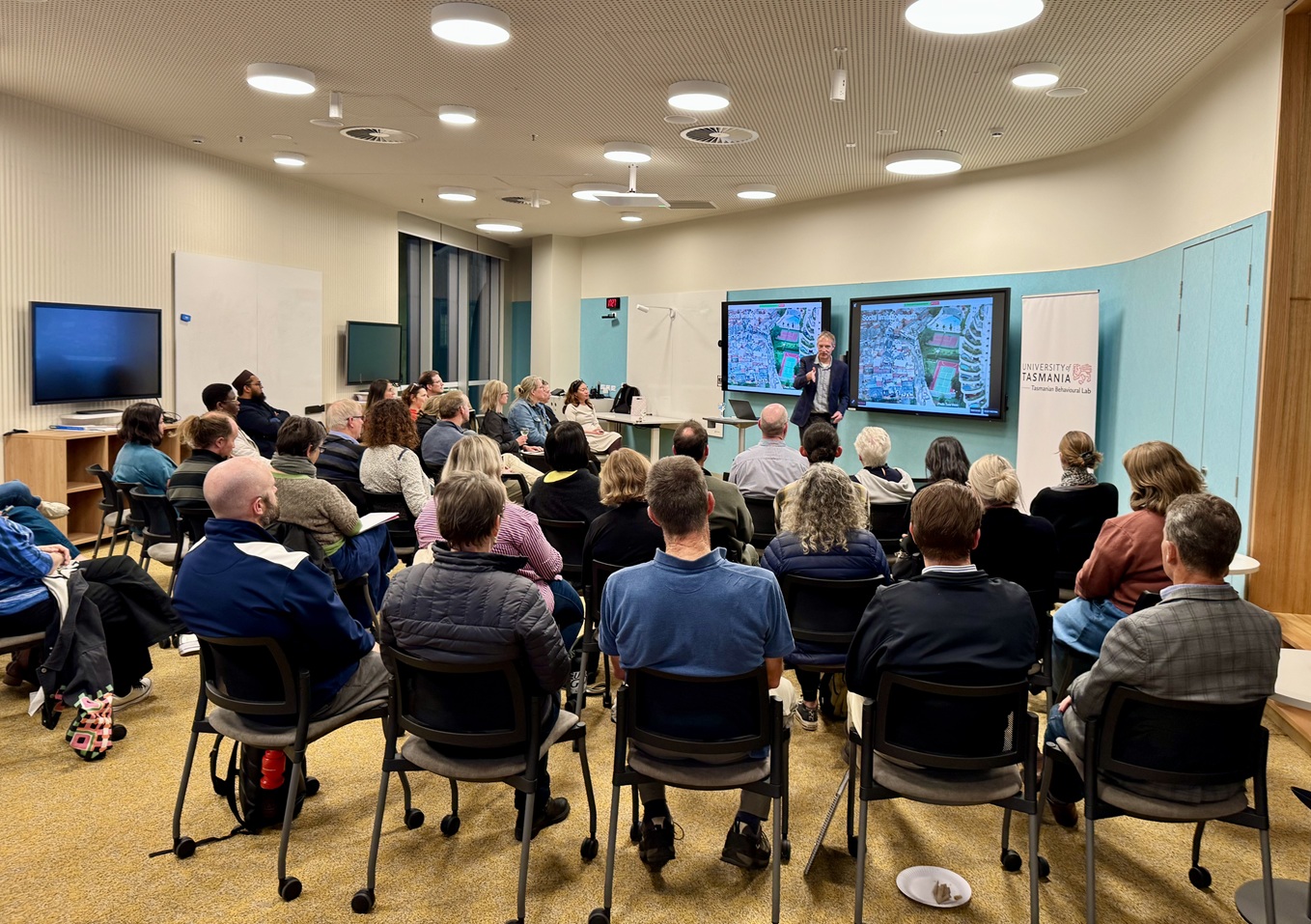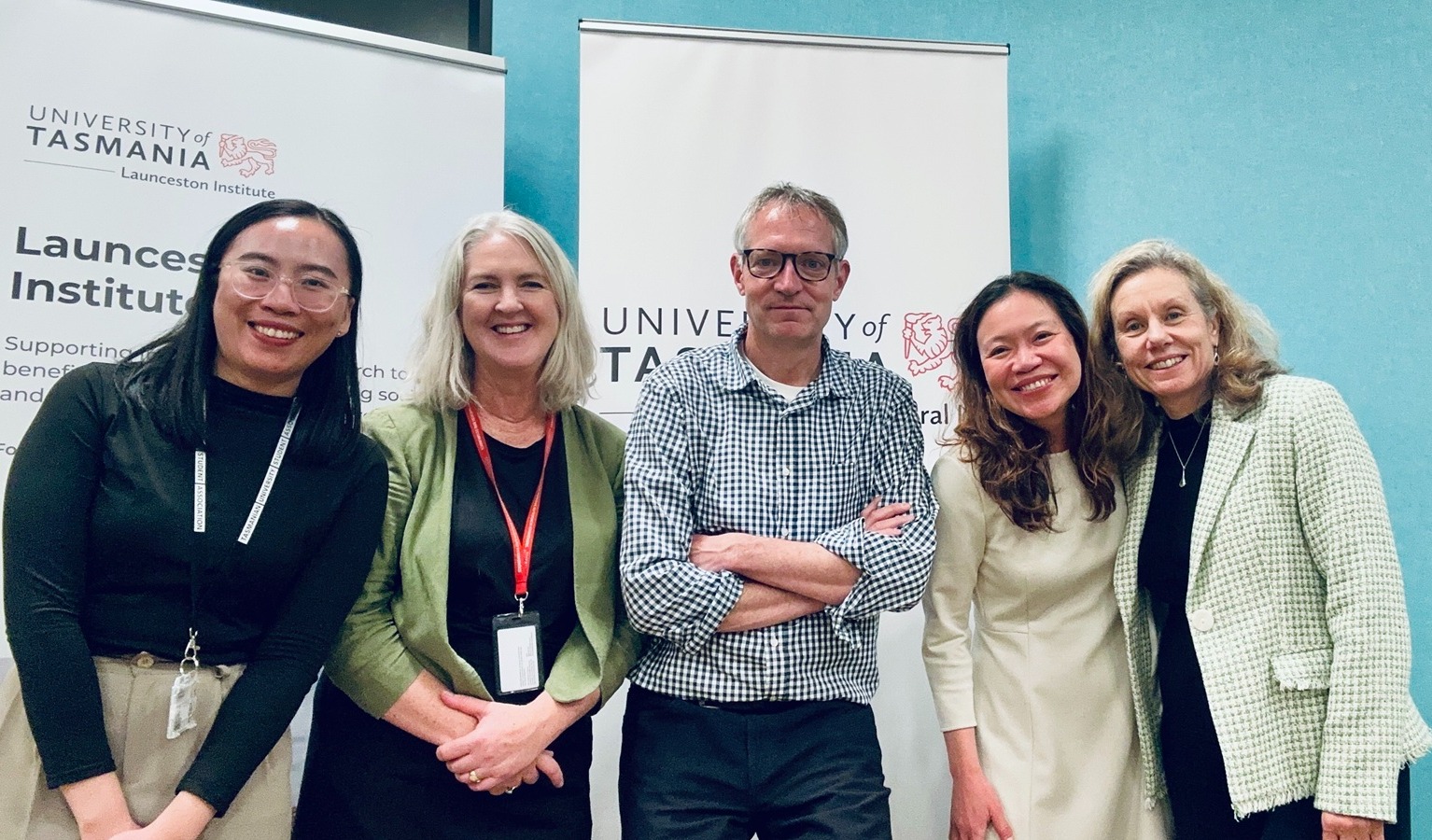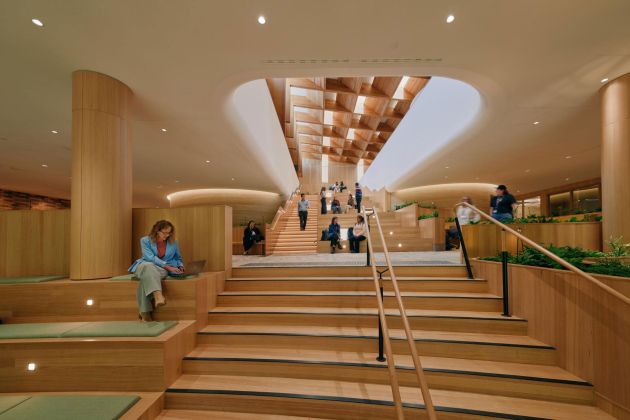


Over 40 participants from community and industry joined the Nudging for Sustainability workshop at the Inveresk Rivers Edge campus on Monday 12 May. Professor Swee-Hoon Chuah and Professor Rob Hoffmann from the UTAS Tasmanian Behavioural Lab presented the attendees with behavioural insights and frameworks for engaging with behaviours toward sustainability.
The session introduced participants to the concept of "nudging"—small, evidence-based changes to choice architecture that can lead to significant behavioural shifts with practical examples to employ in their roles in shaping policy, driving organisational change, or designing customer experiences, with actionable tools to support a sustainability agenda through behavioural innovation.
PhD student Kim Tram Tran found the Nudging for Sustainability: Applying Behavioural Insights in Business and Policy session to be an insightful and inspiring experience.
"Professors Swee-Hoon and Robert made behavioural economics accessible and deeply relevant to real-world challenges. They shared compelling examples from around the world and across contexts, from metro station stair/elevator use, littering, organ donation, hospital cancer treatment, to environmental sustainability with the reef and fisheries."
"Behavioural insights help us understand why people do what they do, and how policymakers, leaders, managers, and organisations can use this understanding to make better decisions or design more effective behaviour change interventions across policy, business, and community settings."
"This event was a powerful reminder of the importance of understanding human behaviour when tackling big issues like sustainability. I’m really looking forward to more events like this in the near future!” Kim said.
Professor Swee-Hoon Chua, Behavioural Lab Director shared her team's passion for working with Tasmanians to tackle social and environmental challenges.
"By using behavioural insights, we aim to help create practical, people-focused solutions that lead to positive outcomes for communities, organisations, and our State as a whole," Professor Chuah said.
Find out more about the Tasmanian Behavioiural Lab.