


Oceanographer, Professor Philip Boyd, is among over 90 outstanding researchers from across the world who have been elected to the prestigious Fellowship of the Royal Society, the UK’s national academy of sciences.
“I am honoured to be elected to the Fellowship of the Royal Society, and especially proud of this recognition for our important work to better understand the interactions between ocean biogeochemistry, Earth's carbon cycle, and climate,” said Professor Boyd, who is a biogeochemical oceanographer at the University of Tasmania’s Institute for Marine and Antarctic Studies (IMAS).
Professor Boyd’s research has revealed how environmental controls like the essential nutrient, iron, determine the scale of productivity in the modern, past and future ocean.
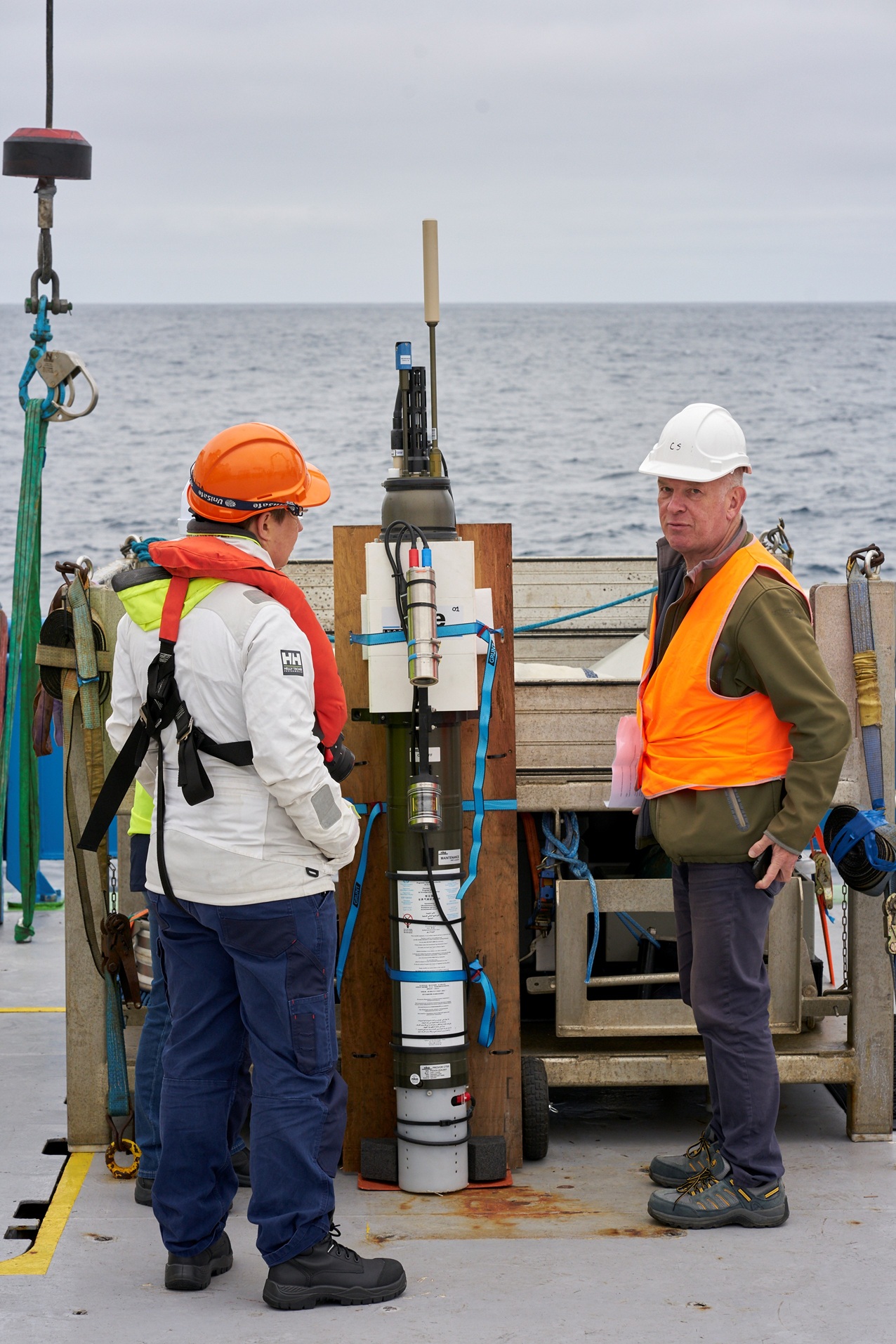
Along with assessing how much of the carbon fixed by photosynthetic Southern Ocean plankton sinks into the deep ocean, he has also transformed the understanding of what the fate of these organic carbon particles are as they are degraded and transported within the depths of the ocean.
“This gives us insights into both the potential and the challenges of deliberate human actions to influence the ocean’s carbon cycle, which aim to offset carbon dioxide emissions in the Earth’s atmosphere,” he said.
“These processes operate at the billion-tonne scale, but they each have major uncertainties and complex feedbacks, so we need to proceed with caution.”
The Royal Society is a Fellowship of many of the world's most eminent scientists and is the oldest scientific academy of continuous existence.
Royal Society President, Sir Adrian Smith, welcomed the latest cohort of outstanding researchers into the Fellowship, where they join the ranks of Stephen Hawking, Isaac Newton, Charles Darwin, Albert Einstein, Lise Meitner, Subrahmanyan Chandrasekhar and Dorothy Hodgkin.
“Their achievements represent the very best of scientific endeavour, from basic discovery to research with real-world impact across health, technology and policy,” Sir Adrian Smith said.
“The strength of the Fellowship lies not only in individual excellence, but in the diversity of backgrounds, perspectives and experiences each new member brings.
"This cohort represents the truly global nature of modern science and the importance of collaboration in driving scientific breakthroughs.”
Cover image: Professor Philip Boyd. Credit: Peter Mathew