


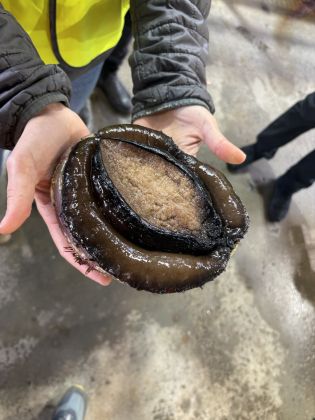
When reef ecologists consider creatures responsible for turning lush underwater forests into grazed seascapes, they usually think sea urchins. But new research on eastern Tasmanian reefs by the Institute for Marine and Antarctic Studies (IMAS) suggests a much smaller and often overlooked grazer can also leave a surprising ecological footprint.
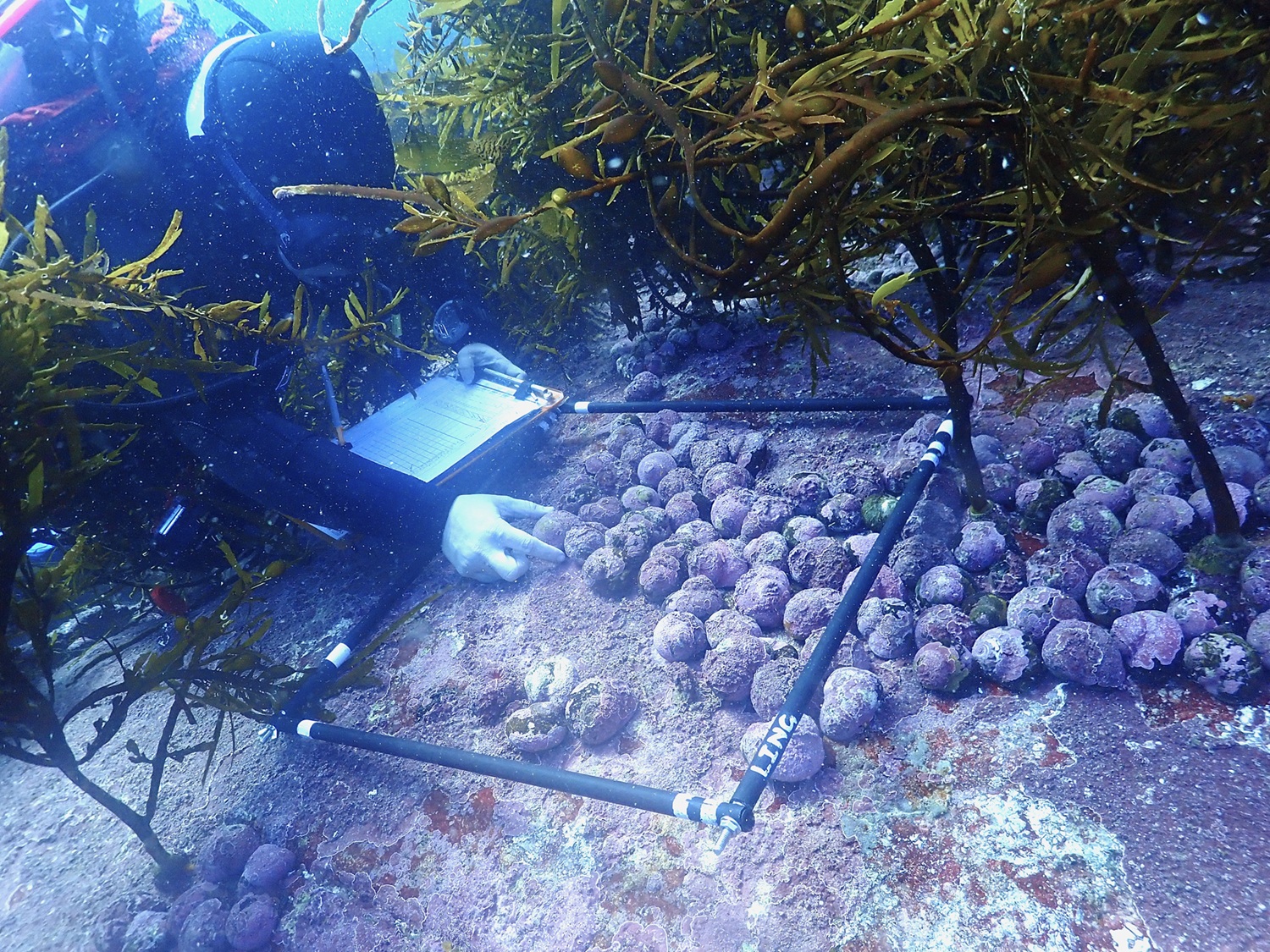
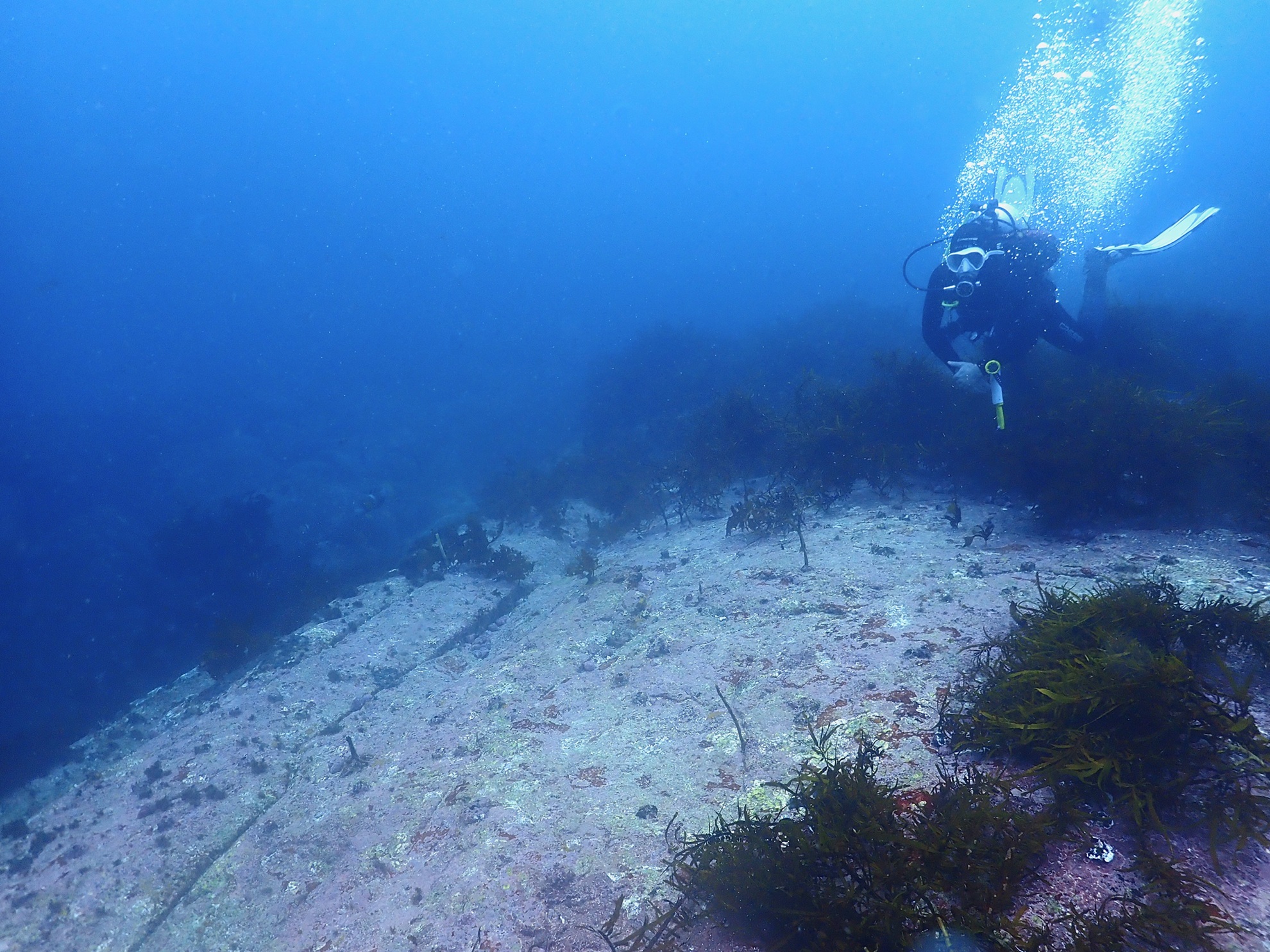
Researchers found that the turban snail Lunella undulata, also known as the 'turbo snail' or 'periwinkle', can create small but distinct patches of overgrazed reef when reaching hyperabundance within kelp beds. These patches, dubbed “peri-barrens”, cover tens to hundreds of square metres.
Dense groups of periwinkles keep seaweed cover low, leaving sparsely vegetated rock within surrounding kelp habitat.
Testing the impact of these often overlooked grazers
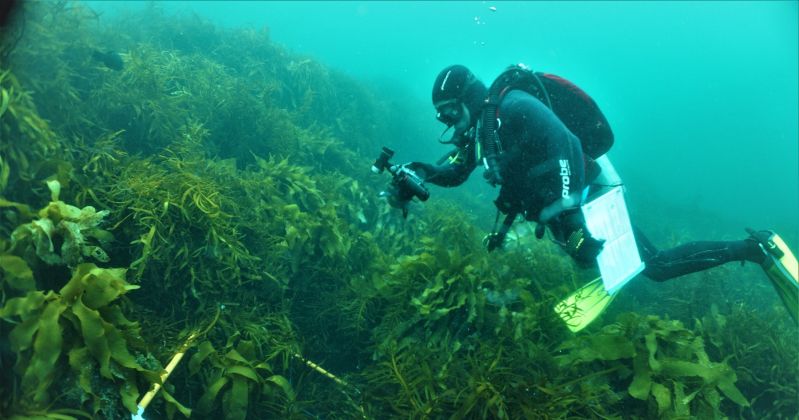
Researchers had observed dense groups of periwinkles in bare patches within kelp beds, but they needed to test if the snails were responsible. IMAS marine ecologist and study leader, Professor Scott Ling, is known for his work on grazing sea urchins.
He noticed the patches at St Helens Island in 2023, at a site where sea urchins had been monitored since 2001.
To test the snails’ role, Professor Ling and PhD students Matthew Rose and Paula Ruiz-Ruiz established a field experiment on a peri-barren.
They used cages to enclose or exclude periwinkles, alongside partial-cage and open control plots.
After four months, fleshy seaweeds covered nearly half the available reef surface in plots that excluded periwinkles.
Seaweed cover remained low where the snails continued grazing, demonstrating their ability to suppress seaweed growth.
At the edges of the peri-barren, researchers also observed periwinkles grazing kelp fronds and chewing through stipes, showing that dense groups of these snails could damage fully grown kelp.
During the study, commercial fishers harvested many of the large, legal-sized periwinkles from the local reef for the Australian domestic market. Kelp beds had re-established by the follow-up survey, 16 months after the initial observations.
Longspined urchins reshape the reef
The findings reveal that even subordinate grazers can become locally dominant and can transform habitats when ecological balances shift.
“The local emergence of these interesting peri-barren features may be linked to broader changes already underway in eastern Tasmanian reefs, where shifts in the locally dominant herbivore have occurred,” Professor Ling said.
Along Tasmania’s east coast, including at St Helens Island where the experiment took place, the range-extending Longspined sea urchin Centrostephanus rodgersii has become abundant in recent decades. These urchins have formed extensive urchin barrens, particularly below 10 metres deep.
Commercial harvesting of longspined sea urchins, supported by the Tasmanian Government’s Abalone Industry Reinvestment Fund, has reduced urchin numbers along the shallow margins of some reefs.
Tracking Reef Change
“As species distributions shift and as fisheries have a cascading influence on food web dynamics, surprising ecological phenomena may become more common, especially on rapidly warming reefs,” Professor Ling said.
“Continued monitoring of reefs is essential to pick up on ecosystem changes,” Professor Ling said. Field experiments, such as the periwinkle study, help researchers identify the processes shaping kelp ecosystems and assess how they might change in future.
This study was funded by the Australian Research Council Future Fellowship scheme (FT200100949) with support from IMAS and the University of Tasmania. This article was originally published by the Great Southern Reef Foundation.
Cover image: Grazing damage to Ecklonia radiata at
the edge of the peri-barren. Photo: Scott Ling IMAS