


A series of community forums recently held by the University of Tasmania's Institute for Marine and Antarctic Studies (IMAS) has shed light on a major monitoring program designed to assess reef health in an iconic and valued Tasmanian waterway. The five-year ‘Reef health in the D’Entrecasteaux Channel’ project began in November 2025 through a partnership between IMAS and the Pennicott Foundation.
Reef ecosystems in the D’Entrecasteaux Channel are prized by local communities for their recreational and environmental value. But concerns around the health of these ecosystems and the mounting pressures they face have increased over recent decades.
These concerns prompted local tourism operator Robert Pennicott to invest in a comprehensive IMAS-led research program through his philanthropic Pennicott Foundation, to assess the health of the Channel reefs and to understand what may be influencing them.
Now, community members in the Channel region have been given insights into this research program and initial impressions from the first round of monitoring.
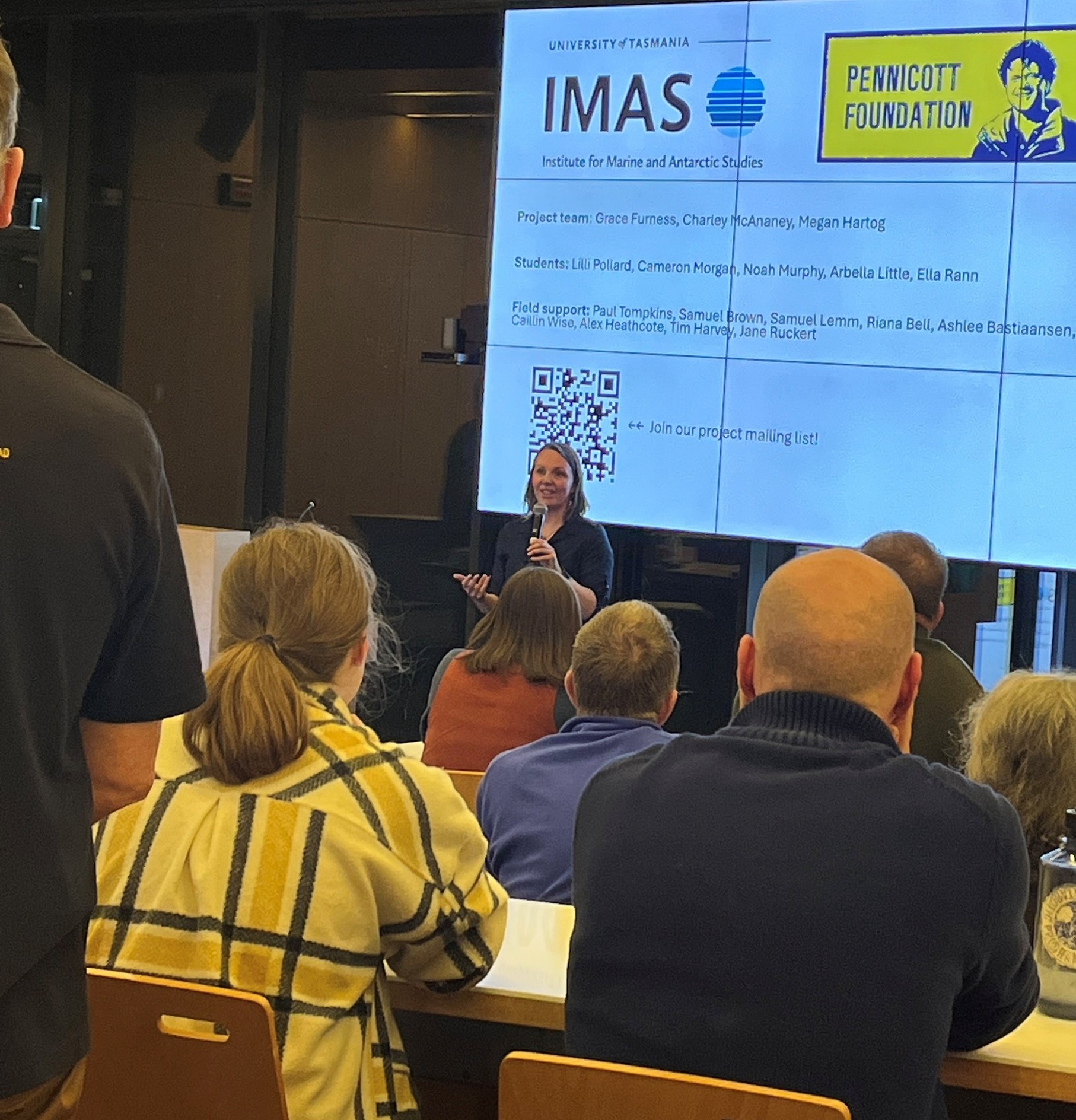
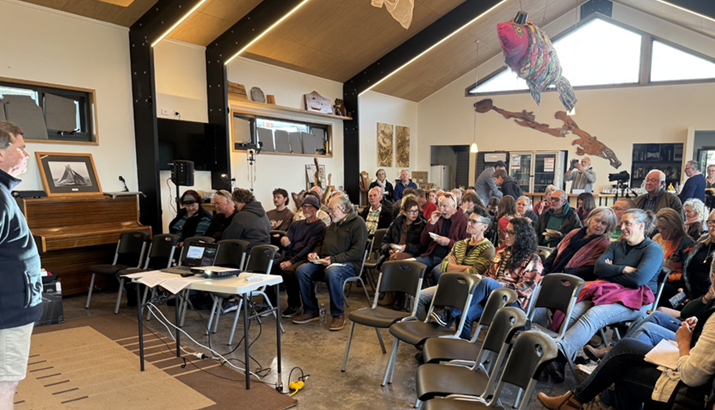
At a series of three sold-out forums held on Bruny Island and in Dover and Hobart, the community heard about the latest research in the Channel from IMAS marine ecologist and project lead, Dr Camille White – and had the opportunity to join the conversation during a Q&A session chaired by Robert Pennicott.
Dr White said the forums were organised in response to the very high level of community interest in the project.
“This project is significant in providing robust scientific context to community concerns around reef health in the Channel. Given the level of public interest, it's important that the community comes along for the journey as this project unfolds."
Almost 190 community members attended, highlighting the significant value placed by the community on the reef ecosystems of the Channel. During the forums, Dr White outlined the dynamics of temperate reef ecosystems and the methods used to measure reef health in the Channel, including both diver and camera-based surveys.
“Outreach will continue to be a really key component of this project, so we can ensure that our findings are easily accessible by the many people who care deeply about this waterway,” Dr White said.
This will be achieved through a series of public reports, videos and interactive platforms such as Tasmania’s Marine Atlas. Those interested in receiving updates about the progress and results of the project can sign up to a dedicated mailing list here.
Learn more about the Reef health in the D'Entrecasteaux Channel project here. This research is funded through a partnership between IMAS and the Pennicott Foundation.
Images from top:
- Banner: IMAS diver conducts a Rapid Visual Assessment survey in the Channel. Credit: IMAS
- Project lead Dr Camille White speaks about the Channel reef health project to a Hobart audience. Credit: Louise Creely IMAS
- Dover community members engage in a Q&A session chaired by Robert Pennicott. Credit: IMAS