


New research has revealed that the environmental footprint of aquaculture feeds depends more on where feed ingredients are sourced than on whether they are fish- or plant-based.
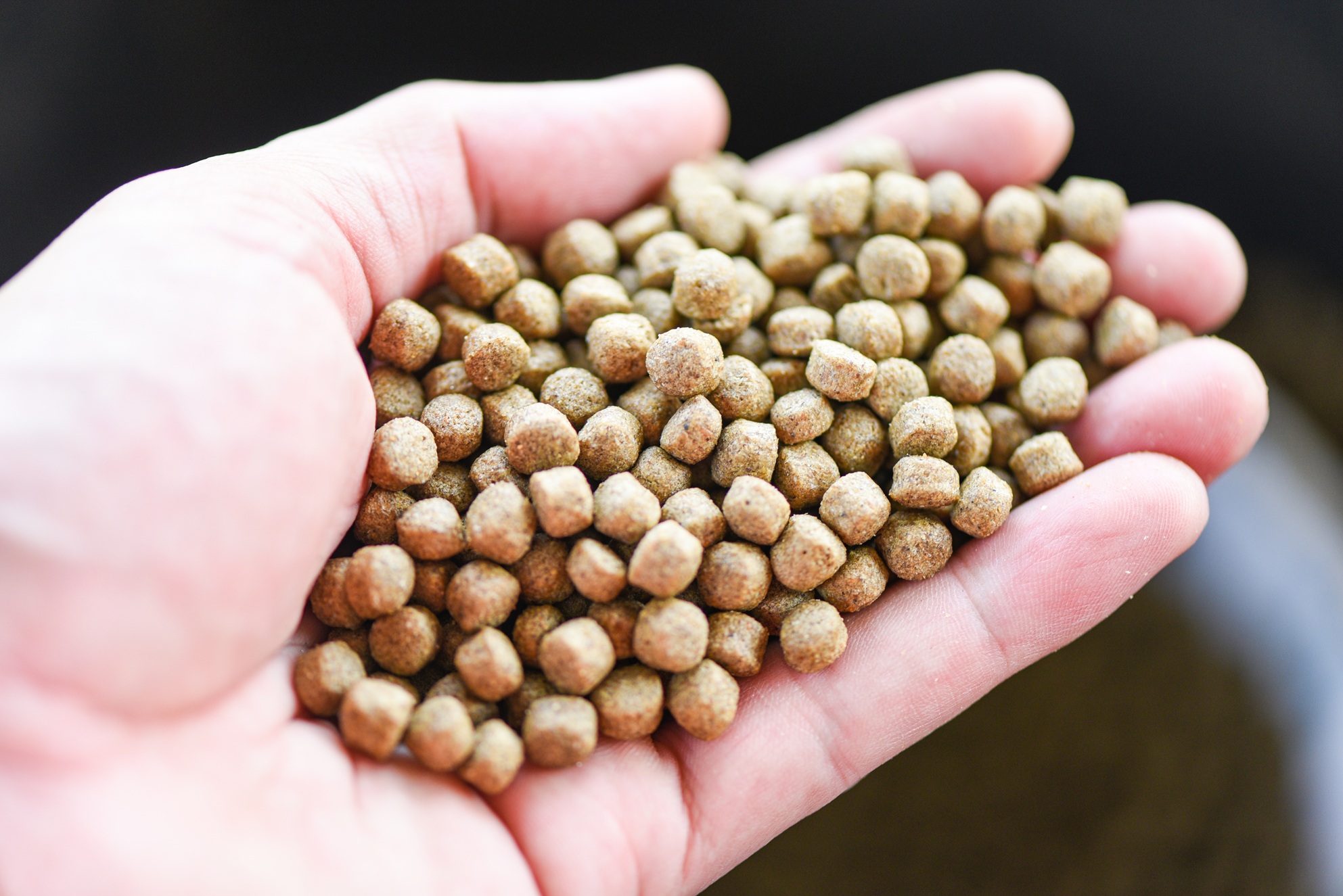
Using Atlantic salmon farming as a model, researchers compared two feed types – one dominated by fishmeal and oil, and the other by plant-based ingredients.
They found that the environmental footprint, including greenhouse gas emissions, habitat disturbance, nutrient pollution and water use, varied more based on the geographic origin of ingredients than the feed composition itself.
Published in Nature Food, the international study led by the University of Tasmania’s Institute for Marine and Antarctic Studies (IMAS) offers critical insights for improving sustainability in the rapidly growing aquaculture industry.
“Our research challenges the assumption that plant-based feeds are inherently more sustainable,” said IMAS researcher and lead author, Dr Richard Cottrell.
“It shows that responsible sourcing – knowing where and how ingredients are produced – is the key to reducing environmental footprint.”

The study combined spatial real-world aquafeed industry data with a cumulative pressure index (CPI) used for assessing the environmental footprint of the global food system.
“Too often people look at just climate change pressures, or just pollution pressures, and don’t account for how these pressures can vary dramatically around the world,” said Professor Ben Halpern from the University of California Santa Barbara, who led the project that originally developed the CPI.
"By combining multiple environmental pressures and tracking exactly where different feed components are sourced, our paper upended our understanding of the environmental sustainability of feed.”
While the study focuses on creating a footprint for different types of environmental pressures, measuring their real impacts requires more research. The team’s focus is on developing new tools that combine cutting-edge environmental modelling with real-world industry data, to help aquaculture producers make more environmentally sustainable sourcing decisions.
“Given the growing importance of aquaculture, we are really motivated to develop new tools that could lead to a more holistic understanding of what environmentally sustainable aquafeeds look like, now and into the future,” Professor Julia Blanchard said.
This research is co-funded by the Australian Government through the Australian Research Council (ARC) Linkage Grant Scheme project: Optimising aquafeeds to support ecosystem-based management. Led by Professor Julia Blanchard, the project brings together researchers from the University of Tasmania, University of California Santa Barbara, University of Manchester, and Charles Darwin University, in collaboration with industry partner BioMar Group, one of the world’s largest manufacturers of feed for the global aquaculture farming industry. Visit the project website to learn more.
Fast facts:
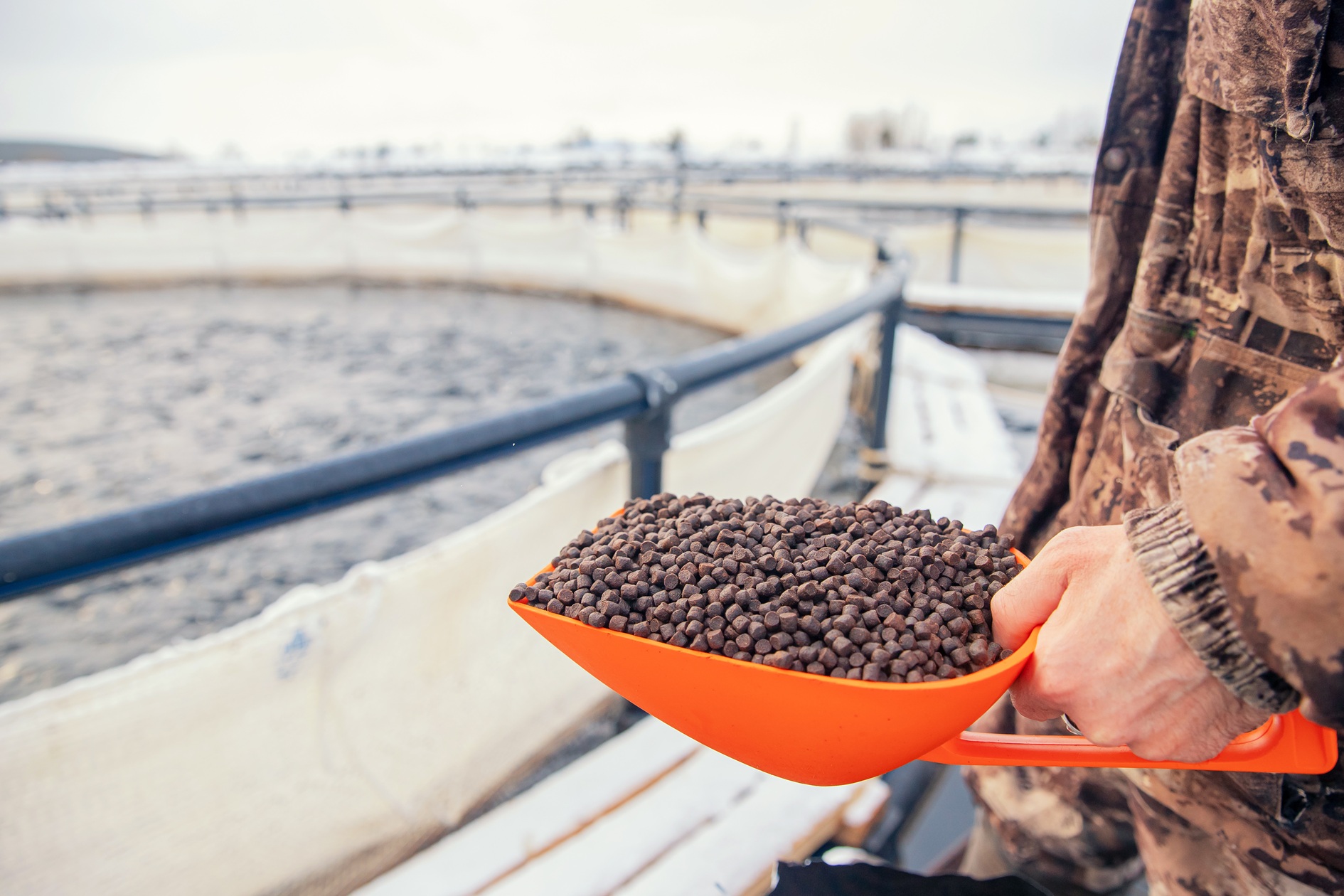
- The research calls on industry leaders, policymakers, and certification bodies to prioritize transparency and sustainability in ingredient sourcing.
- In a study led by IMAS PhD student Gage Clawson and recently published in Cell Reports Sustainability, the team has explored the potential biodiversity impacts of different combinations of feed ingredients.
- Key points for industry, policymakers and the community:
- Industry: Feed formulation alone is not enough – supplier practices and regional efficiencies must be considered
- Policymakers: Regulations and incentives should support responsible sourcing and traceability across supply chains
- Community: Sustainable seafood depends not just on what fish are fed, but where those feed ingredients come from.
Cover photo: Shutterstock