

Once an iconic feature of Tasmania’s east coast, forests of giant kelp Macrocystis pyrifera have been reduced from extensive dense areas to a few isolated patches in less than half a century. This decline has largely been driven by a strengthening East Australian Current, which has delivered warmer, nutrient-poor waters into eastern Tasmania.
But there is more to the story, in the history of these ecosystems and their importance to people.
Scientists from the University of Tasmania’s Institute for Marine and Antarctic Studies (IMAS) have taken a deep dive into the archives to reveal the history, methods and scale of a largely forgotten industry – commercial giant kelp wild harvesting.
“Giant kelp was commercially harvested here for alginate production from 1964 to 1973, which coincided with a time when climate change was beginning to transform Tasmanian waters into an ocean warming hotspot,” said Hunter Forbes, who is an IMAS PhD candidate, 2025 Westpac Future Leaders Scholar, and lead author of the Open Access study published in the Journal of Phycology.
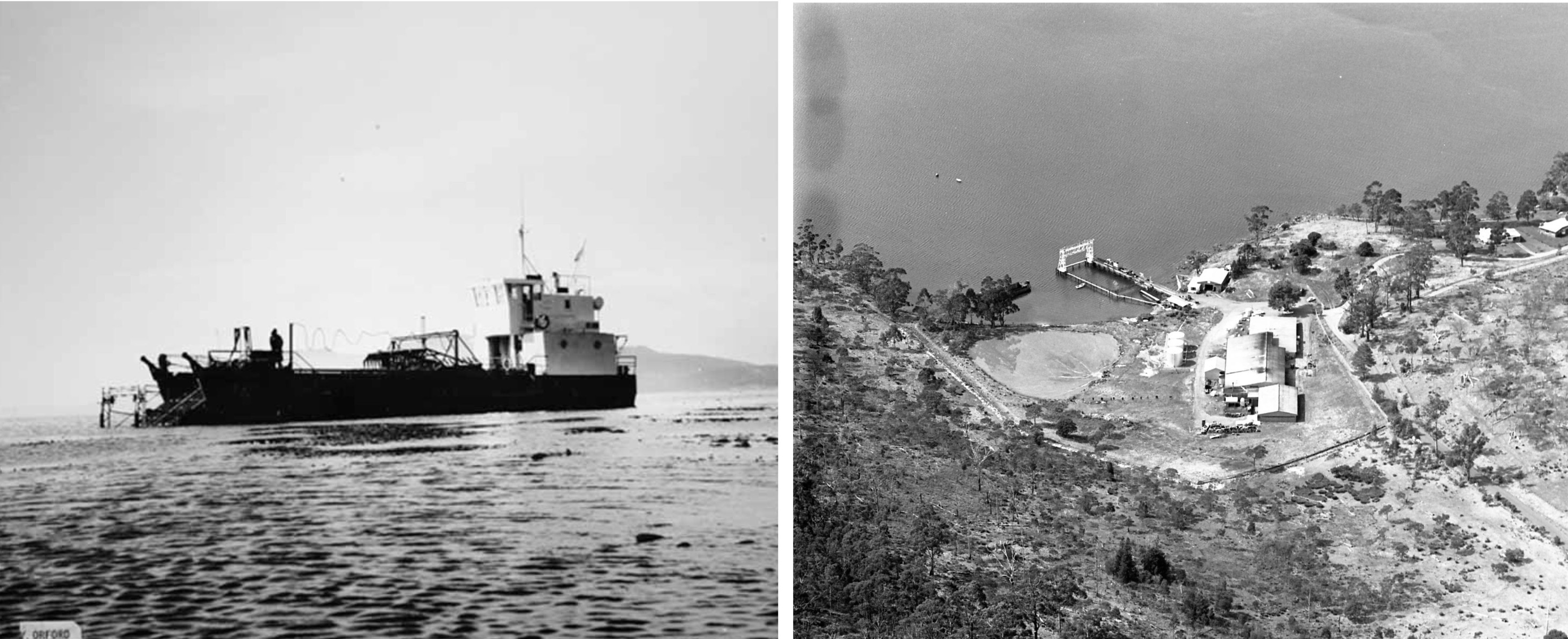
“But in just the few decades since then, this harvesting effort has largely been forgotten, with few records of this industry and limited knowledge of the ecosystem it relied on. Looking back into this history is critical, so we can better understand the legacy of change in our oceans.”
The study found that the industry expanded rapidly, on average harvesting 6,500 tonnes (wet weight) each year over its decade of operation, making it one of the largest wild harvest industries to ever exist in the region.
“We found that, for various reasons, they seem to have over-estimated how much giant kelp was actually available, so as they struggled to meet production demands the harvest grew wider and more intensive, especially during summer months when stocks were lowest,” Hunter said.
“While it’s probably impossible to know whether harvesting contributed to the decline of Tasmania’s giant kelp forests, it could have reduced the kelp’s resilience and exacerbated other stressors, especially in heavily harvested areas.
“What we do know is that the scarcity and instability of giant kelp biomass would ultimately drive the industry’s closure in less than a decade,” he said.
While commercial giant kelp harvest in Tasmania ended in 1973, the collection of beach-cast southern bull kelp Durvillaea evolved as the giant kelp industry declined, and still remains an important industry. Today it produces around five percent of the world's alginates.

“This historical review was a rare opportunity to examine the past scale and use of now-endangered Macrocystis forests – and to help inform how we manage and conserve our seaweed resources today,” said IMAS researcher and co-author, Associate Professor Jeff Wright.
“There are important differences between today’s Durvillaea industry and the past Macrocystis fishery, particularly with the harvest method, as Durvillaea is only collected as beach-cast material. But there are also some important similarities. Both industries rely on a species that is vulnerable to ocean warming, which will struggle as climate change intensifies,” he said.
“Despite only collecting beach-cast material and having management measures in place that limit licenses, collection zones and quantities for the Durvillaea industry, there are signs of change in the health of this kelp population, and the harvest on King Island appears to be declining.”
The Tasmanian giant kelp harvest industry provides a cautionary tale of a seaweed industry sector already lost to over-expansion, limited management, and lack of resources and knowledge in the face of climate change.
“Our improved understanding of this past industry offers insights for the seaweed industry now developing in Australia, and for kelp conservation and management more broadly,” Hunter said.
“Understanding more about these natural resources will help to future-proof harvest industries, so they can continue to benefit societies and economies, without collapsing or compromising increasingly vulnerable ecosystems.”
Our researchers are pioneering restoration techniques to rebuild these super productive forest habitats. Your donation will directly fund research and hands-on efforts to revive kelp forests and protect the species that depend on them. Donate today to help restore our underwater forests and safeguard our oceans.
Cover image: Giant Kelp
Photo: Hunter Forbes