

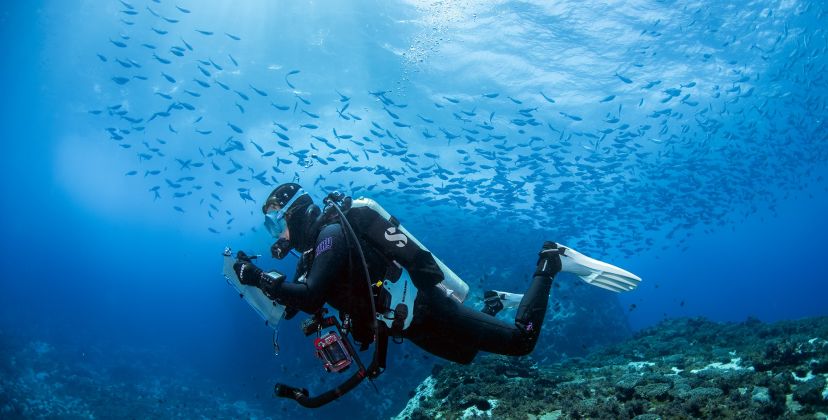

From magnificent underwater forests to undulating seagrass meadows and sleeping sharks, marine education is making its way to classrooms across the state – not through worksheets, but through a strategic card game.
The Big Fish card game, successfully crowdfunded during 2024 and officially launched last September, is aiming to raise awareness about the plight of big fish and has been making waves in Tasmania ever since.
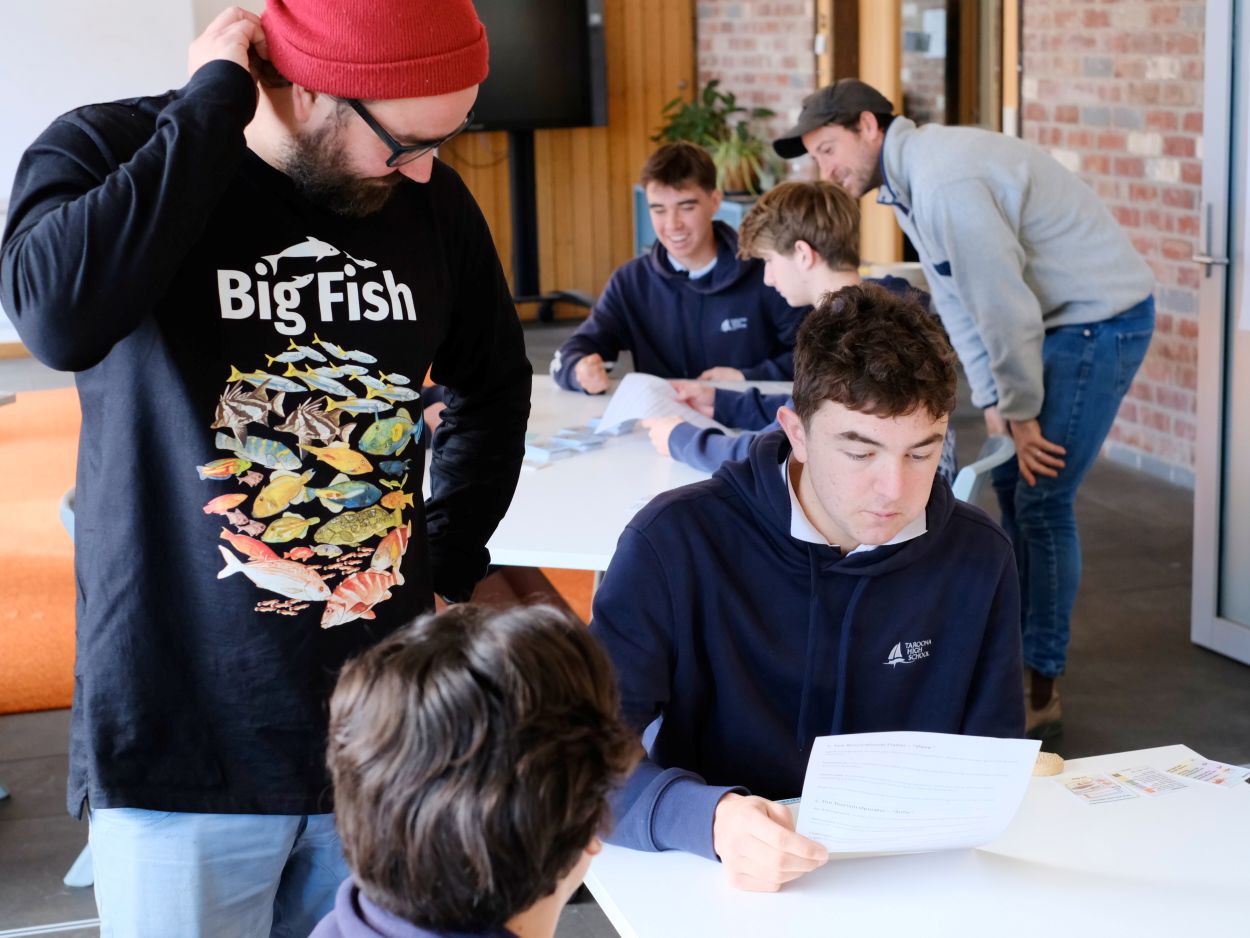
Now it's landing in schools, teaching students about marine ecosystems and sustainable recreational fishing in a fun and engaging way.
"Many fishers remember that fish were bigger in the past, but most of us have no idea just how massive the problem really is,” said Dr Asta Audzijonyte, Big Fish developer and a researcher at the University of Tasmania’s Institute for Marine and Antarctic Studies (IMAS).
"Estimates show that we have now caught and eaten nearly 90% of fish larger than 1kg in size across the entire planet.
“These global numbers can be depressing, but the amazing thing is that many fish grow fast and with the right actions we can restore them within a decade or two. And that is one of the main messages from the Big Fish game.”
While it is just a game, it has all the key elements for an engaging class activity including complex strategy required to win, interactive components, and one-of-a-kind illustrations drawn by former IMAS PhD candidate Amy Coghlan.
Players can unleash 'heatwaves', 'pollution' or 'illegal fishing' on each other, and elements like the arrival of sea urchins that will decimate the fishing spot you’re trying to manage, or algal blooms that will stop you from catching fish you need to win the game.
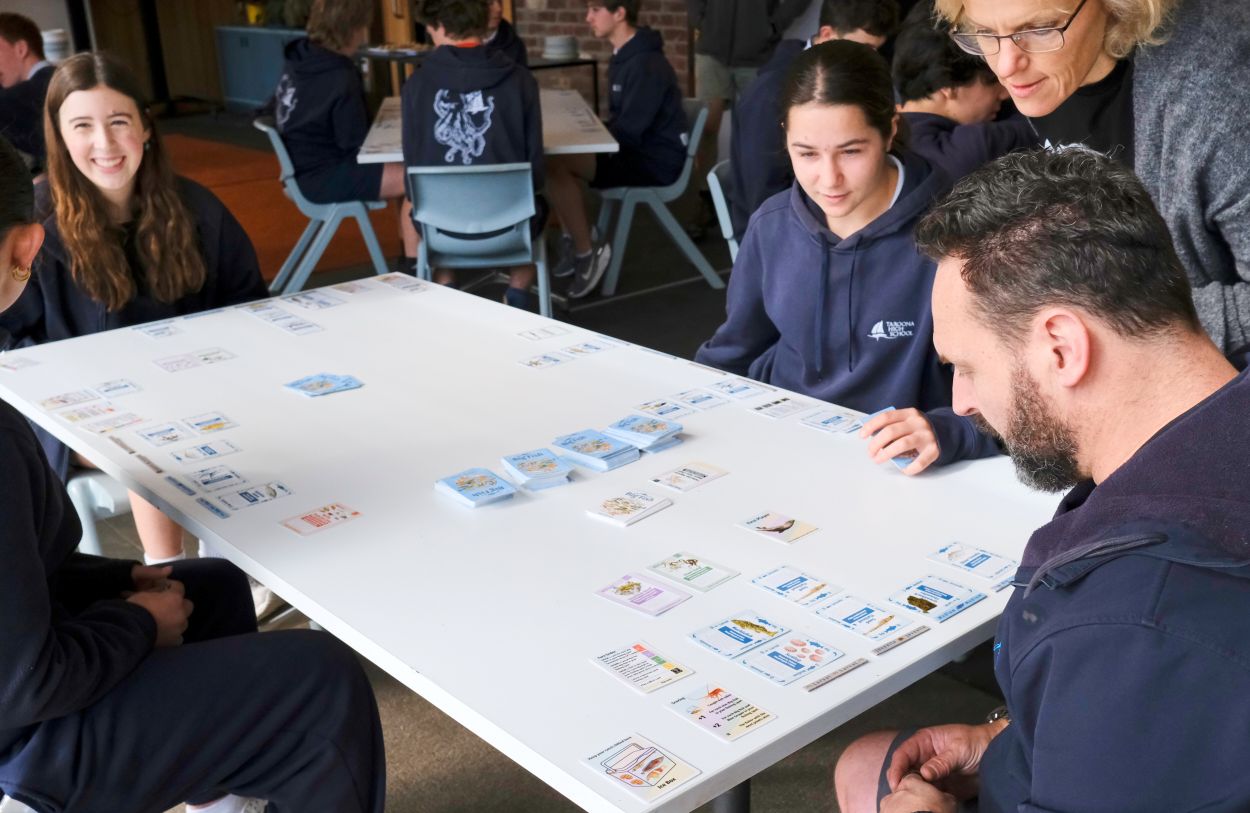
Over spring this year, lead game developer and IMAS technical officer Matt Testoni visited four secondary schools and colleges to teach students about the ocean through strategic gameplay.
“Our marine biology students found the Big Fish game and its associated activities to be both engaging and highly educational. The beautiful artwork, featuring local Tasmanian fishes, immediately captured their attention and proved to be far more effective than a traditional fish ID book,” Hobart College science teacher Jan Seiler said.
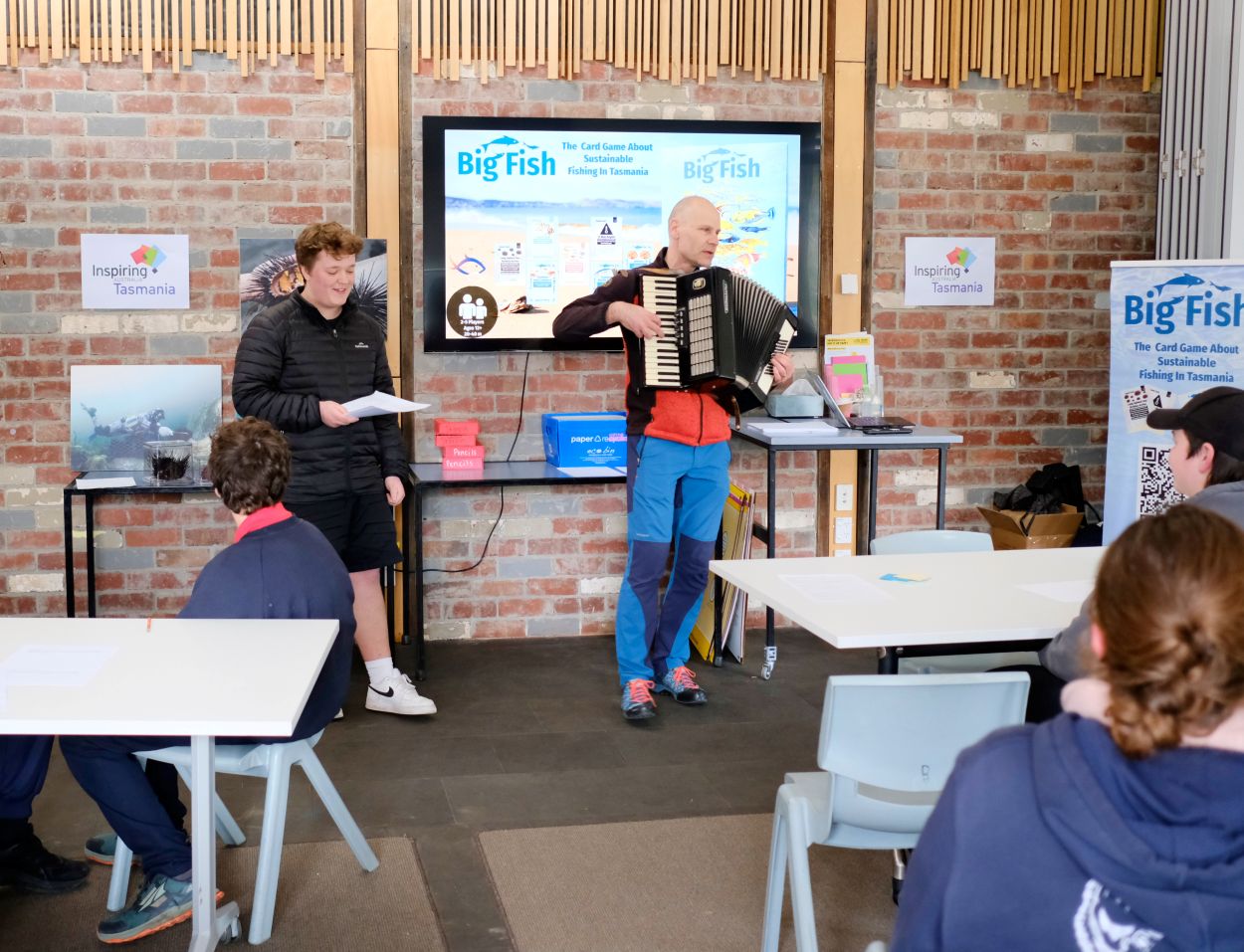
“The game provided a welcome respite from more formal study, while still aligning perfectly with the curriculum. The scenarios presented on the event cards were particularly valuable, serving as fantastic conversation starters and a natural way to launch into deeper learning.
“Once the students became confident with the rules, the game transformed into an eye-opening experience. They quickly grasped the ecological importance of big fish within marine ecosystems, and the gameplay reinforced this concept in a way that was both memorable and enjoyable.”
The Big Fish game was developed and led by Matt Testoni, Asta Audzijonyte and Amy Coghlan from University of Tasmania’s Institute for Marine and Antarctic Studies (IMAS). School engagement activities for the Big Fish game team were supported by a grant from Inspiring Tasmania.