


Strawberries are juicy, bursting with flavour and packed with essential nutrients. But wouldn’t it be great if their shelf life could be extended to keep them fresher for longer.
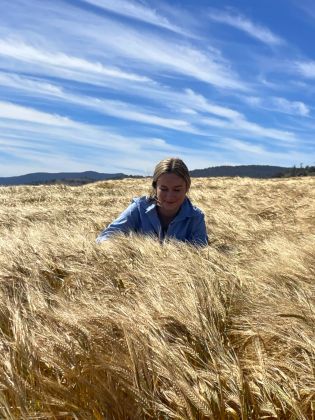
Bachelor of Agricultural Science Honours student, Fin Walton, has been researching whether it’s possible to extend the shelf life of strawberries using fermented Leatherwood honey. The natural byproduct from the honey industry could be used as an edible coating to prolong the shelf life of the popular fruit.
“Strawberries have a very short shelf life and anything we can do to increase that and reduce food wastage is beneficial for the industry,” Fin said.
Fin is experimenting with dipping the strawberries in an edible Leatherwood honey coating. The coating then forms a thin layer over the strawberries to protect them during post-harvest storage.
The research is investigating whether adding fermented leatherwood honey in the edible coating can improve the shelf life of strawberries.
“I’m quite passionate about food wastage. This research has enabled me to take the fermented leatherwood honey waste product and apply it to strawberries in the hope of reducing their post-harvest loss as well,” Fin said.
Fin is one of 10 students who presented research at the Student Research Seminar at the University of Tasmania’s Sandy Bay campus on Tuesday October 6. The students are from the Master of Agriculture and Food Sciences and Agricultural Science Honours courses, delivered by the Tasmanian Institute of Agriculture (TIA).
The event offered valuable insights into the diverse student research being undertaken across the agriculture sector.
Other presentation topics included reducing methane in ruminants such as cattle and sheep, sensory profiling of Tasmanian cherries and grapevine productivity.
“This student research seminar provides a wonderful opportunity to showcase the breadth and quality of research being undertaken by students at the Tasmanian Institute of Agriculture. The research spans a diverse range of topics across agriculture and highlights the important work being done to address the opportunities and challenges facing the sector,” TIA Research Honours Coordinator Dr Apeh Omede said.
“Our students are contributing fresh ideas and perspectives to some of the key issues facing agriculture. This event gives them a platform to share their research and demonstrates the depth of knowledge and innovation emerging from our students.”
Presentations:
Honours Research Presentations
Finlay Walton - Can a fermented Leatherwood honey edible coating improve the shelf life of strawberries?
Ella Gair - Phyllosphere microbiome differences in Pinot Noir sub-clones
Aurianne Lee- Temperature pasture herbs for reducing enteric methane in ruminants
Harrison Nield- Investigating grapevine productivity and wine composition of Tasmanian Pinot noir "Smart" clones
Shiyu Wu - Investigating sweet cherry fruit firmness through cell wall characterisation and GA treatment
Irhamnie Fawzie- Regrowth of white clover and ryegrass dominant patches after selective grazing in irrigated dairy pastures
Lilli Steel- Physiochemical and sensory profiling of Tasmanian sweet cherry cultivars
Master's Research Presentations
Xingyu He - The synergistic potential of natural bioactive compounds to reduce methane in ruminant livestock
Selma Johnson- Effects of crop condition on soil infiltration and bulk density in a centre-pivot irrigated field
Anita Rai - Early detection of microbial growth using an electronic nose