


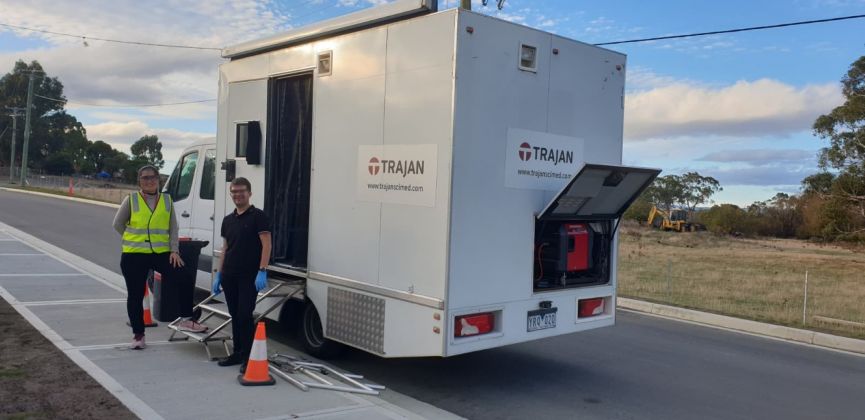

Civil engineering student Alistair Crane spent his childhood playing with Lego and Scalextric slot cars and has always loved trying to figure out how things work.
And those lifelong interests converged once more during his studies at the University of Tasmania, as he developed an interest in traffic engineering.
“Looking at how cars and vehicles flow through a road network and how those things can be upgraded to reduce queue times,” he said.
“And make sure that also everybody's safe on the road and head towards that zero road deaths goal.”
Alistair chose to study a Bachelor of Engineering (Specialisation) with Honours because he wanted a degree focused on problem-solving that would allow him to work both indoors and outdoors.
“I've really enjoyed studying engineering,” he said. “It's got a really good balance of the theory and the technical work.
“But also a lot of design projects where you're building and making different things, like we made a robotic car and a rat trap boat.”

Alistair was pleased he was able to remain in Tasmania to study an accredited engineering degree. Receiving an early offer through the Schools Recommendation Program also made the application process easier, reducing the stress of year 12.
“I'm pretty keen to stay in Tassie. I've got a good community around me, a good network of people, and it's just a really beautiful state, and I don't really want to leave.
“I love studying in Tasmania because it's just so green and fresh. Like, there's so, so, so many spots where you can go outside and study and just be in nature … it's just really good for de-stressing.”
Alistair said there were big advantages to studying in a close-knit, interconnected community like Tasmania, rather than at a much larger university in a big city on the mainland.
“You definitely make connections in the industry really quickly. There's lots of opportunities through career expos or people from the industry coming in to talk in your different classes.”
“You get that connection really quickly and you're able to get work placement, get internships, and you always have access to an engineer from industry to ask questions to.”
Alistair received two industry scholarships to support his studies. He said there were plenty of scholarships available to students, and that he found the application process straightforward. He has also had the opportunity to undertake paid work with the University as a student ambassador and in outreach roles, supporting prospective and new students, as well as helping to run the University's social futsal club.
As busy as it all sounds, Alistair said he has had no trouble maintaining a good study–life balance, thanks to the accommodating and understanding academic staff, the ability to watch lectures online if necessary, and a supportive community of fellow students.
“I'm also really proud of the network that I've been able to create, and I haven't shrunk back into my shell or just stayed at home all the time.
“I've actually gotten out there and made new friends and new connections that'll last a lifetime.”
Alistair said he was looking forward to finishing his degree and finding a job as an engineer so he can start helping the community.
“The Bachelor of Engineering has Engineers Australia accreditation, so you know that once you finish your degree, you have all the competencies needed to go out into the workforce.”