


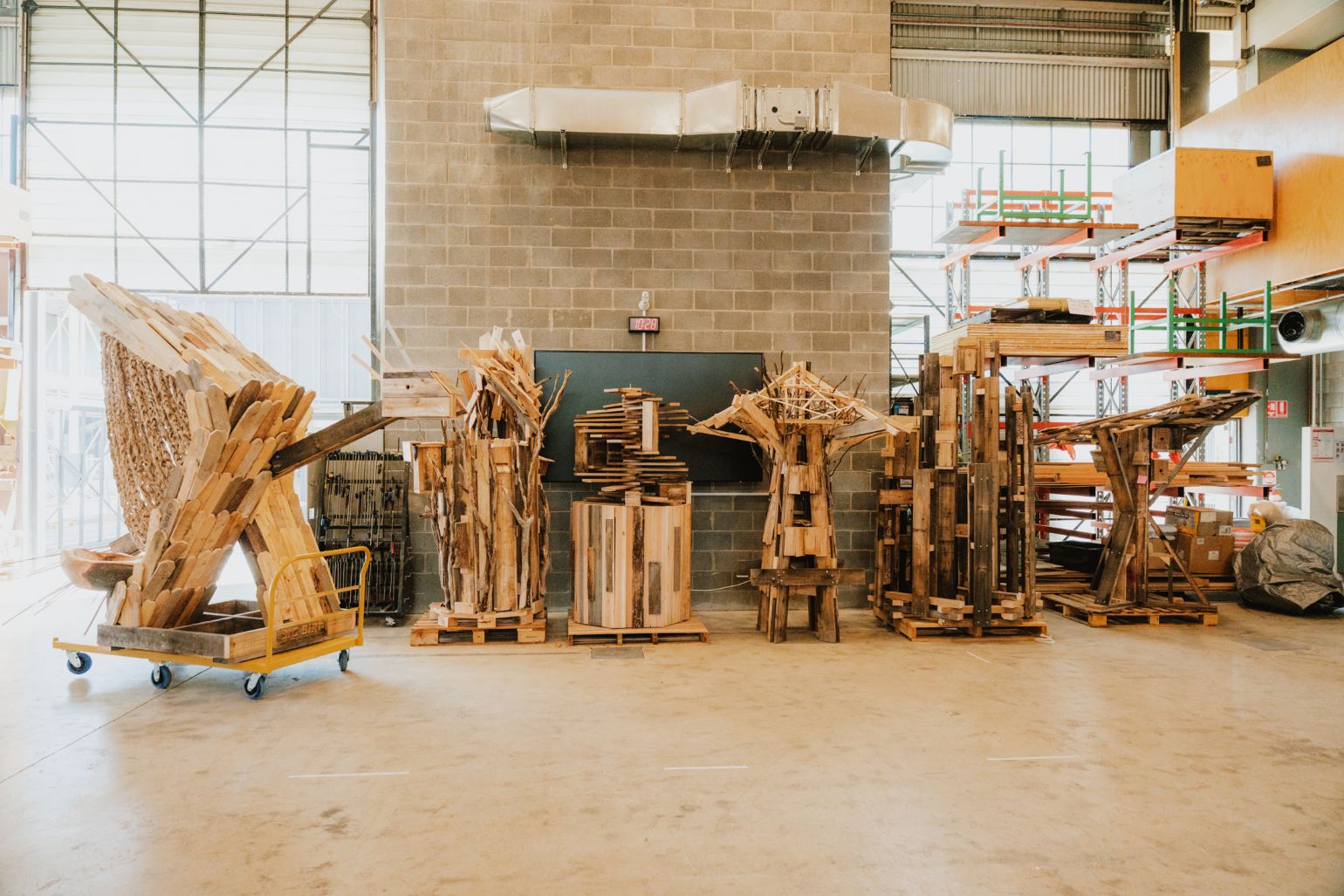
The University of Tasmania’s award-winning Species Hotel project is celebrating ten years of creating bespoke timber sculptures, which also serve as homes for threatened native animal species.
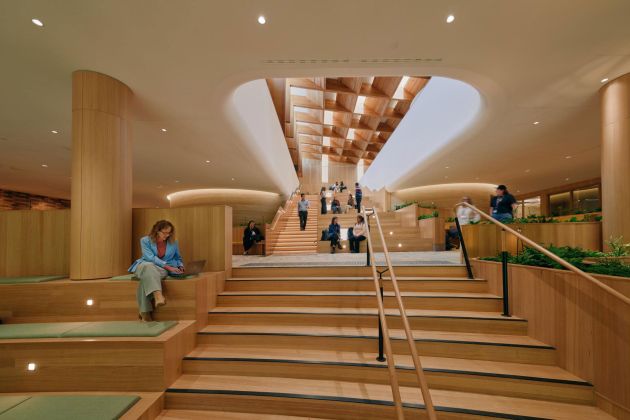
The project started in 2016 at the University’s Inveresk campus in Launceston, as a one-off project for first-year architecture students, designing and building the sculptural habitats as part of their coursework.
Ten years on, the project is still a compulsory part of the Bachelor of Architecture and Built Environments course, and even won the Creating Impact Award at the 2023 Green Gown Awards Australasia.
To date, over 30 hotels have been built and installed at Ross in Tasmania’s Midlands, creating much-needed homes for native species including microbats, native bees, and pardalotes.
And the six new hotels created this year are destined to be installed somewhere new: at Hagley Farm School in Tasmania’s north.
Associate Professor of Architecture at the School of Architecture and Design, Louise Wallis said Species Hotels started out as a project to help draw attention to trees that were planted as a wilderness corridor at Ross.
But it was such a success, it went on to become a crucial learning-by-making experience for all first-year architecture students.
“I have strong belief that you need to understand the whole materials and construction process in order to be a good designer,” Louise said.
“And the students have to build their own design. So they’re invested in it, there are no short cuts, and it makes you realise things you might not have seen before.”
By installing the new species hotels at Hagley Farm School, they will help students learn about the interconnectedness of their local ecosystem, as well as being a reminder of the role farming plays in preserving and restoring the environment.
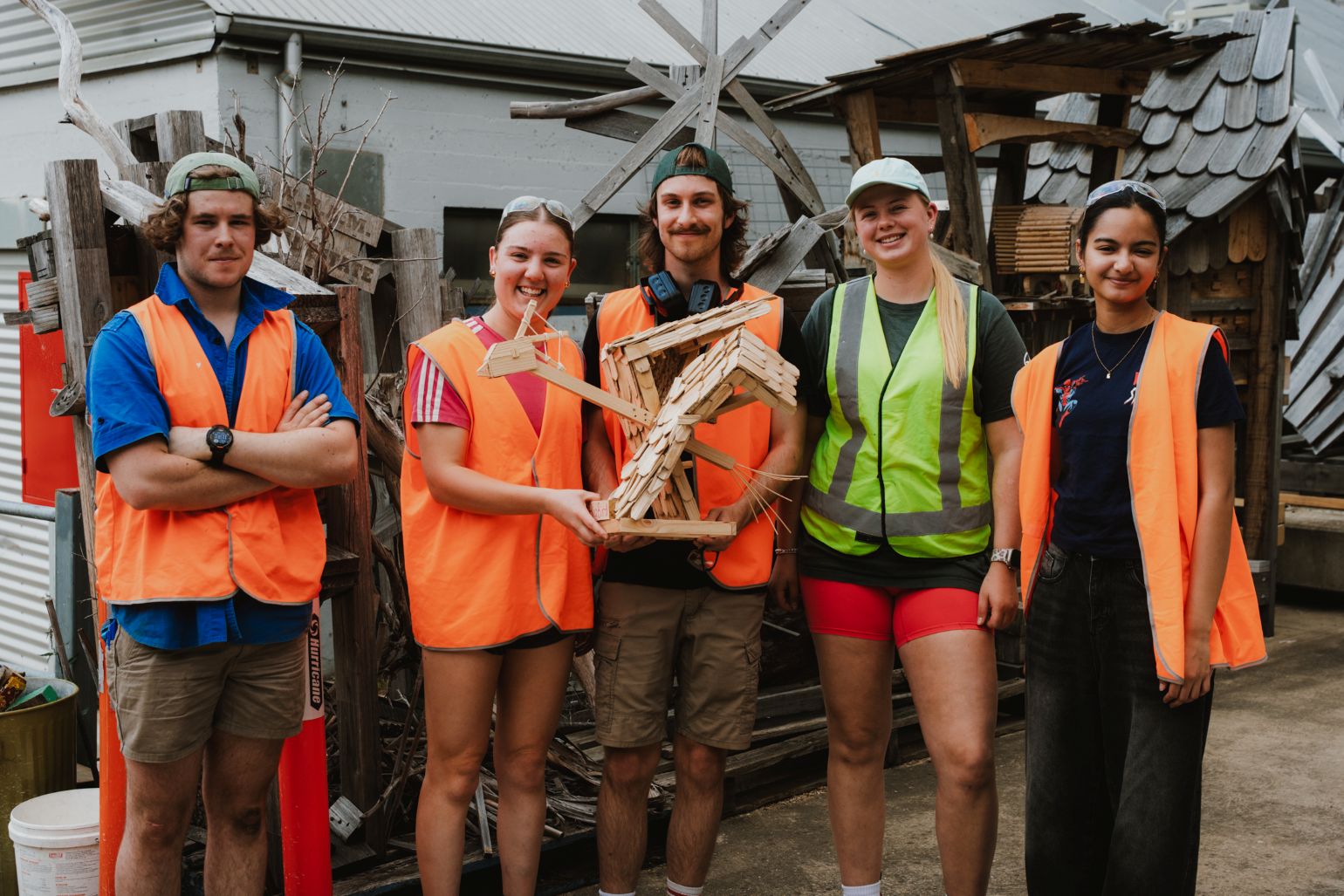
First-year architecture student Macy McCullagh was part of a group working on a pardalote habitat nicknamed “Big Bird”, and said the whimsical design was a deliberate way of making it appealing to the children who will see it at the school every day.
“Kids will get to interact with it, they can walk in and look at all the things inside it,” Macy said.
“The kids can identify visually what it’s trying to do, that it’s trying to help the birds who can’t find a home in the pasture out there, because they’re struggling to get the trees to grow and stay stable.
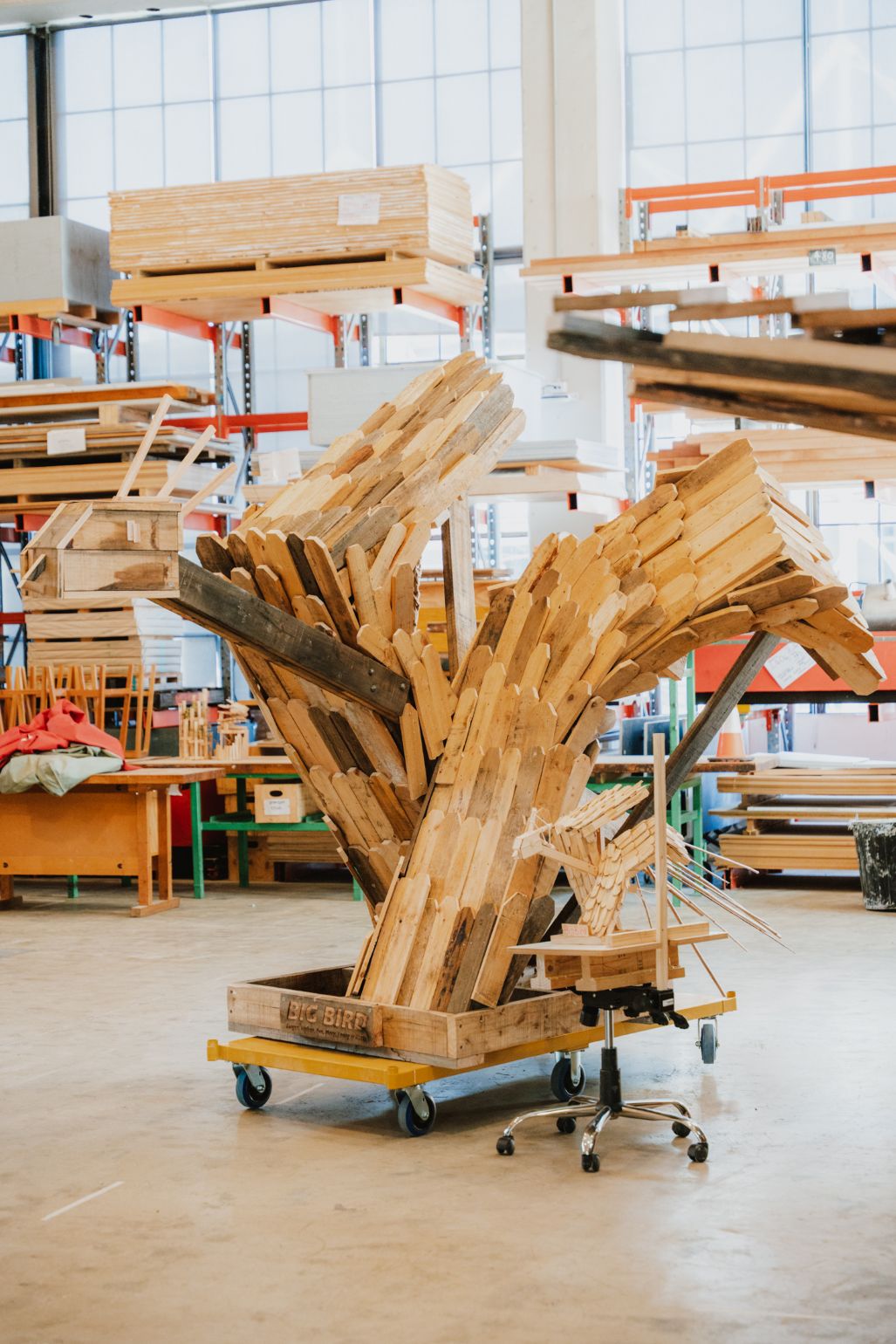
“So, it’s a visual for the kids to understand all of that in a different way.”
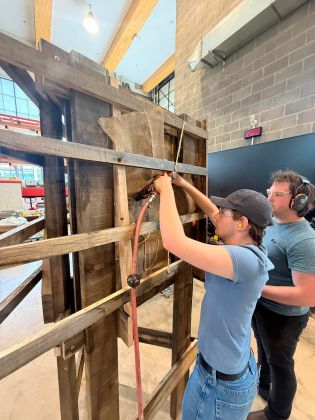
Working in teams, students are given a design brief and then work their way through concept designs, scale models, and finally construction of the full-sized hotel out of recycled timber and other natural materials.
The structures need to provide a safe environment for animals: shelter for them to nest and be protected from wind, sun, rain and weather.
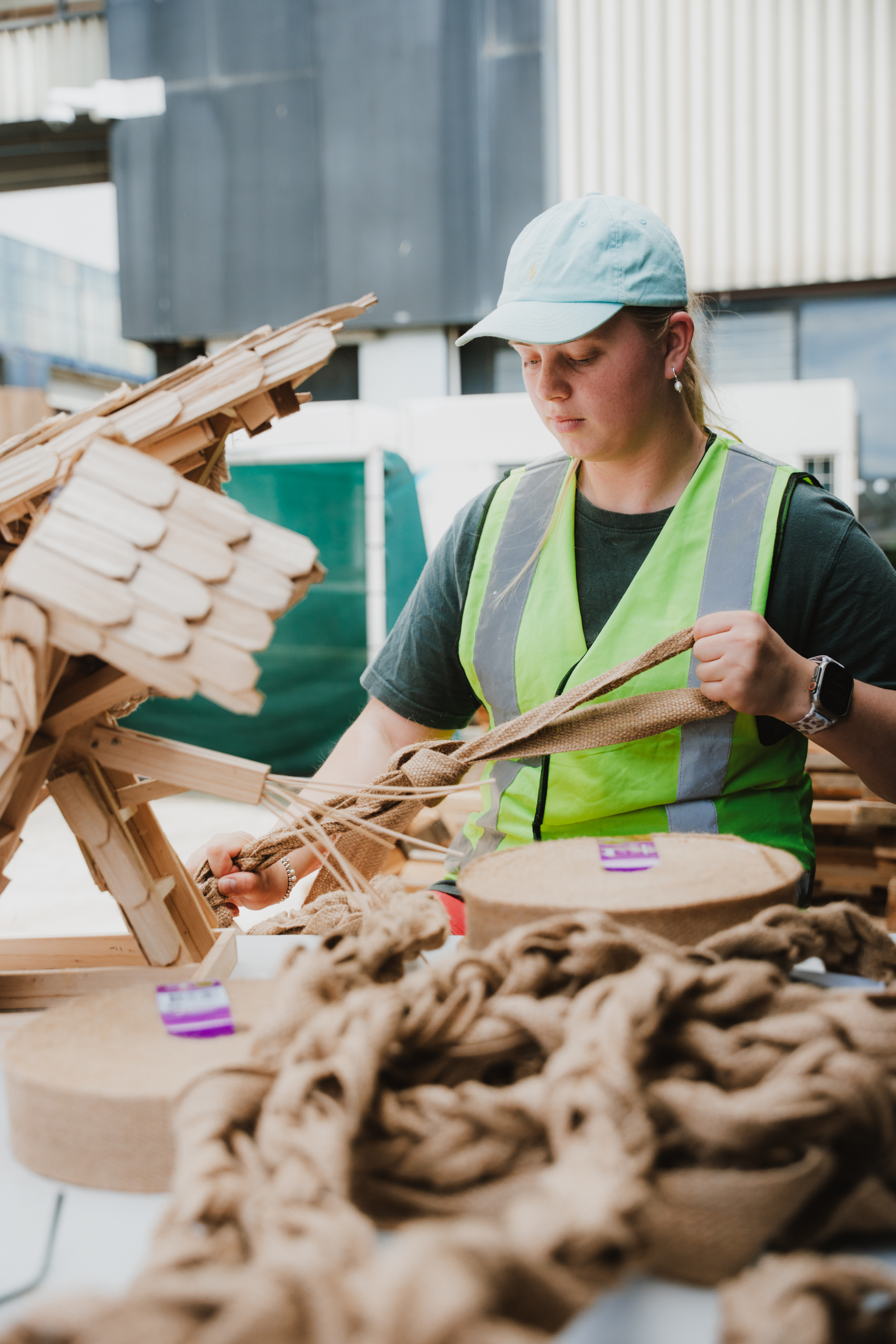
Big Bird features “feathers” made from wooden shingles, and woven jute flaps under the wings to help block wind and sun while still allowing a natural airflow.
“For birds, we had to learn different things, things you don’t normally take into account,” Macy said.
“You need to learn what environments they’re comfortable in, what sizes, that was all new knowledge and learning.”
Macy, 20 from Launceston, had long dreamed of becoming an architect and was thrilled to be able to study it at Inveresk, without needing to move away from home.
“My father is a builder, so I’ve been around job sites a lot and really liked the idea of being able to design the houses,” she said.
“I’ve been fortunate enough to live in quite a few cool interestingly designed houses, so I understood some of those smaller aspects of nice architecture that other people might not notice.”
Bachelor of Architecture and Built Environments
Learn more about studying architecture and design and how it could help you design the world you want to live in.
Learn more