



New research from Macquarie Harbour shows that oxygen can be added to low-oxygen waters at depth without adverse environmental impacts.
The Macquarie Harbour Oxygenation Project was designed as a pilot-scale trial, progressively injecting increasing loads of oxygenated water to assess how it moved and interacted within the estuarine environment.
“This work demonstrates that oxygen can be delivered to the parts of the harbour where it is most needed, while maintaining the natural structure of the system,” said Professor Jeff Ross, lead researcher at the University of Tasmania’s Institute for Marine and Antarctic Studies (IMAS).
Oxygenated water was injected at depth using a purpose-built system mounted on a barge and researchers tracked its movement and behaviour through the water column.
“We found oxygen could be successfully delivered and retained within targeted deep-water layers. While oxygenated water spread laterally, it remained largely confined vertically, and the harbour’s natural stratification was maintained throughout the trials,” Professor Ross said.
“No adverse environmental responses were detected across water quality, sediments, or biological indicators.”
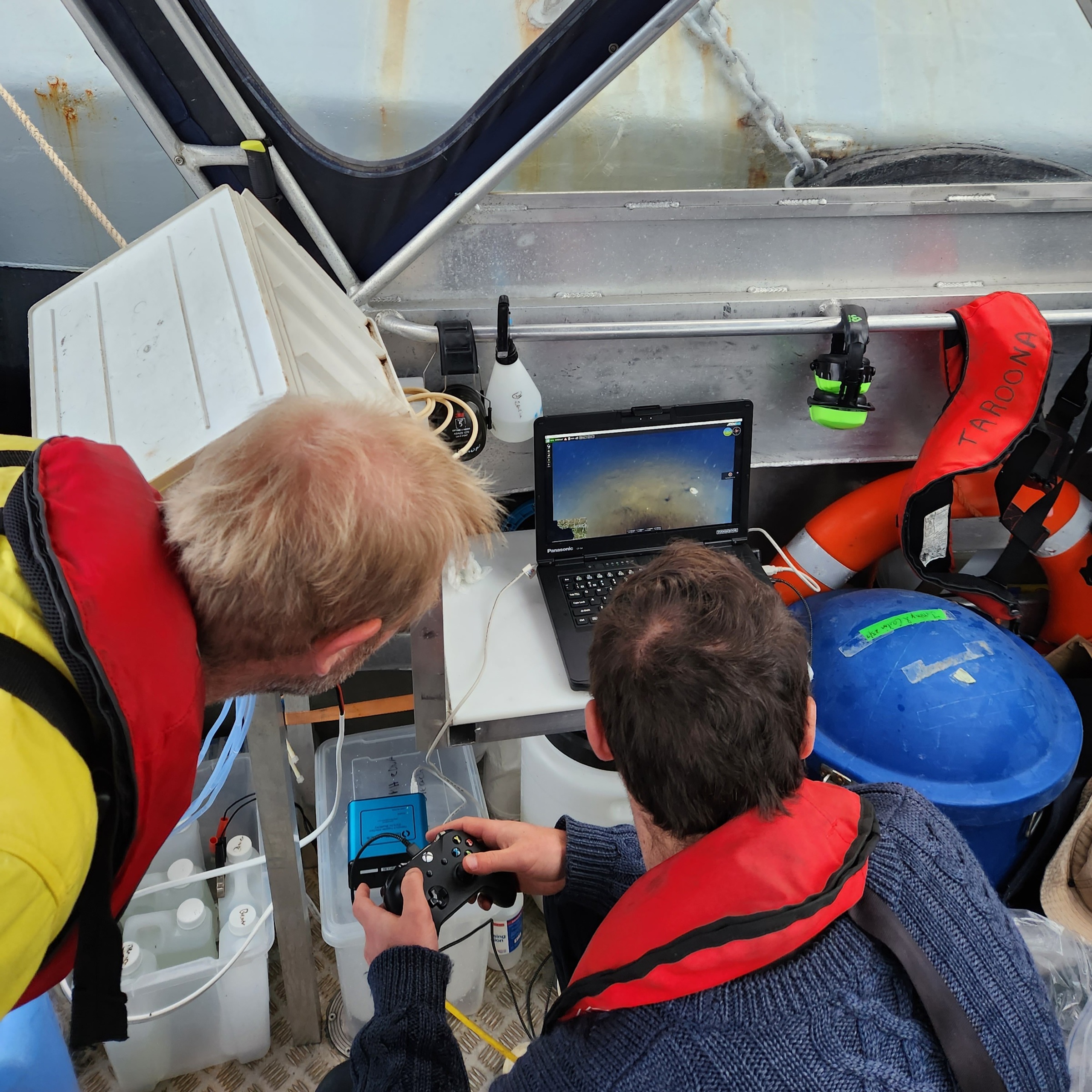
The study combined detailed field observations with hydrodynamic and plume modelling to provide new insight into how oxygenation interacts with the harbour’s physical structure and how it may perform under different environmental conditions.
Together, these findings provide a robust, pilot-scale assessment of how deep-water oxygenation performs in a real-world, stratified system and its potential as a tool to help manage oxygen conditions in the harbour.
The research comes amid ongoing interest in low oxygen levels in Macquarie Harbour, which are linked to concerns about potential impacts on the endangered Maugean Skate.
Professor Ross said oxygen dynamics in Macquarie Harbour are shaped by multiple interacting natural and human-driven factors, and that oxygenation needs to be considered within that broader context rather than as a standalone solution.
A companion report, Estimating the oxygen demand from finfish aquaculture and considerations for mitigation, provides a standardised framework for understanding oxygen demand associated with aquaculture and where interventions may be most effective.
The results from this work provide a foundation for the next phase of work under the Oxygenation Offset Program for Macquarie Harbour (OOPMH), which will build on these findings to assess how oxygenation can be scaled and applied to offset the oxygen demand attributable to salmonid aquaculture and integrated into broader environmental management strategies.
“This work provides a detailed assessment of how oxygenation performs in a large, stratified estuarine system and provides a critical evidence base for future research and decision-making,” said Crispian Ashby, General Manager Research, Development and Investment at the Fisheries Research and Development Corporation.
This research was supported by the Fisheries Research and Development Corporation (FRDC) on behalf of the Australian Government via project. The full report is on the FRDC Website 2023-087 The Macquarie Harbour Oxygenation Project (MHOP) was established as a joint initiative between FRDC and Salmon Tasmania, with IMAS leading the independent scientific evaluation of the trial to assess system performance and environmental response.
Fast facts
- In July 2023, the National Recovery Team for the Maugean Skate was formed to develop a conservation plan and coordinate its implementation. The team includes representatives from governments, industry, research organisations and the community, who have a strong interest in Maugean Skate (Zearaja maugeana) conservation.
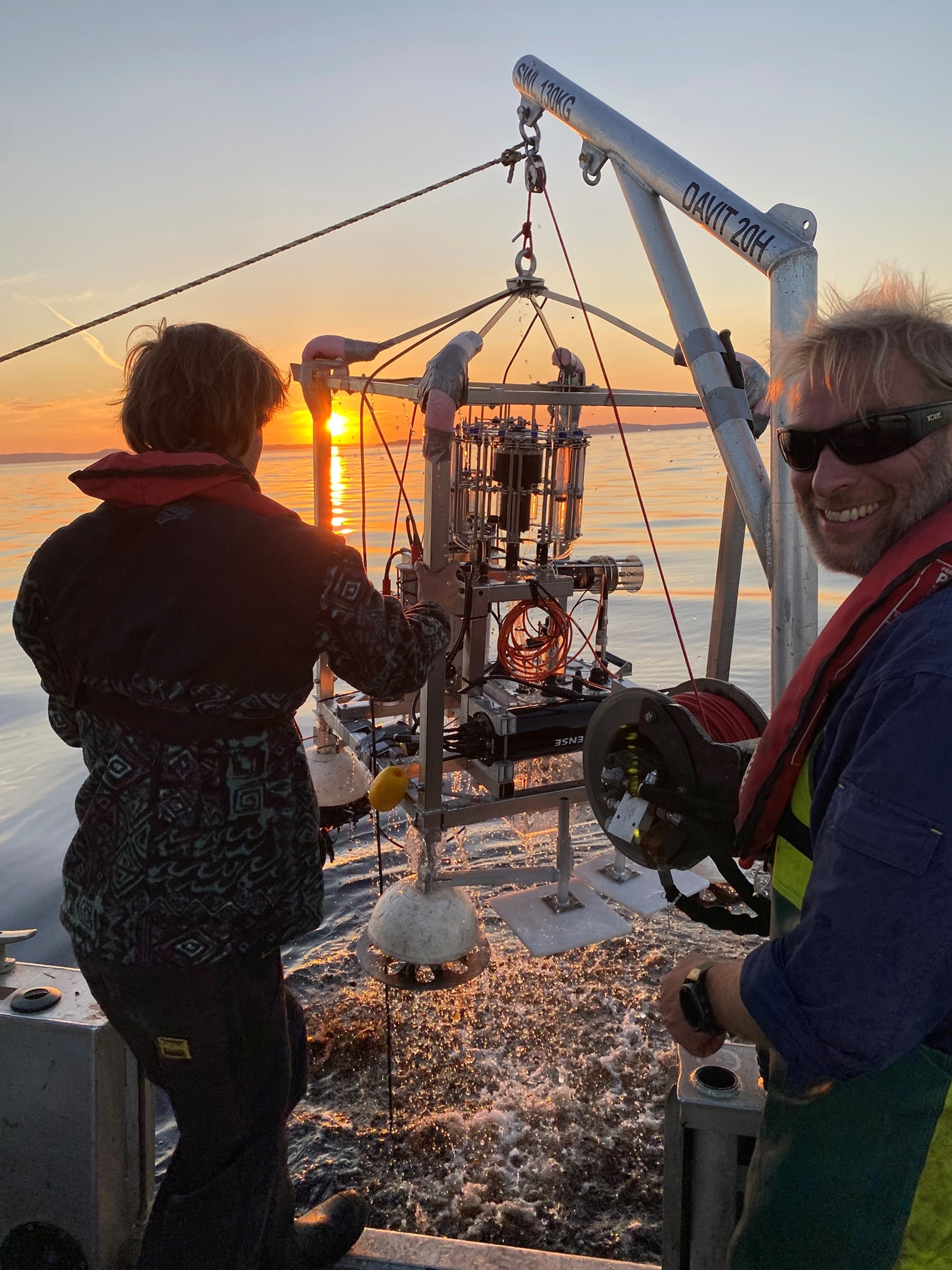
- The Macquarie Harbour Oxygen Project (MHOP) was developed in response to one of the urgent conservation actions to reduce or offset the impacts on dissolved oxygen from salmon farming. The project centres around three packages of work:
- Engineering and operating the oxygenation plant and how the oxygen is delivered into the water column
- Measuring the ecosystem response to oxygenation across nutrient concentrations, metal availability, microbial activity, and sedimentary and mobile fauna
- Computer modelling to predict the diffusion of the oxygen plume and spread, both locally and more broadly.
- Building on lessons from the Macquarie Harbour Oxygenation Project (MHOP), the Department of Climate Change, Energy, the Environment and Water has funded the Oxygenation Offset Program in Macquarie Harbour (OOPMH) to address the management of dissolved oxygen (DO) levels in Macquarie Harbour.
- More information on MHOP and the scientific evaluation will be available soon on our Aquaculture Environment Team website.
Cover image: The MHOP barge, the ‘Wombat’,
in Macquarie Harbour. Photo: IMAS
