

On International Day of Women and Girls in Science, we meet the University of Tasmania researchers bringing STEMM to communities across three continents
Roberta Mensima Amoah is about to change 150 girls' lives.
Soon, they'll meet her at their school in rural Ghana. They'll do hands-on experiments, ask questions, and see that science isn't something distant or foreign. It's theirs.
Across the world in northern China, Liqun Guan is preparing workshops about something most people never think about: how the buildings around us affect our health, our comfort, even our ability to learn. She lived it as a child. Now she's teaching it.
And in remote regions of Iran, Kimiya Padidar will help equip a high school laboratory and teach students about heart health through biology experiments. Her research shows how pregnancy complications can affect women's hearts decades later. But she's not waiting decades to make a difference.
Three researchers. Three continents. One mission: make sure the next generation of scientists includes everyone.
They're the 2026 fellows of the Inspiring Women in STEMM grant, a University of Tasmania programme that does something unusual. It doesn't just fund research. It funds the researcher.
"This programme not only supports women in STEMM, it empowers them to inspire and enable the next generation of young learners to discover and pursue STEMM pathways," says Dr Emily Flies, the programme's founder and director from the School of Geography, Planning and Spatial Sciences.
"Science is most powerful when everyone is able to participate in, contribute to, and benefit from it."

Roberta Mensima Amoah: Building confidence in Ghana
Roberta is a PhD student in the University of Tasmania's School of Nursing, researching on how to enhance child health through a preventive integrated approach. But for her, research and action go hand in hand.
Over the coming months, she'll work with 150 girls at a Girls' Model Basic School in rural Ghana, supplying hands on STEMM learning resources and offering inspiring mentorship sessions.‑on STEMM learning resources and offering inspiring mentorship sessions.
"I hope these girls get to understand that science is not distant or reserved for others, it is already part of who they are," says Roberta.
"For many, this will be the first time they see science come alive in their own classroom in a way that feels familiar and exciting."
She knows what representation means.
"I want young girls to know that where you start should never limit how far you can go. When a girl sees someone who shares her background in STEMM, it makes possibility feel real: if she did it, I can too."
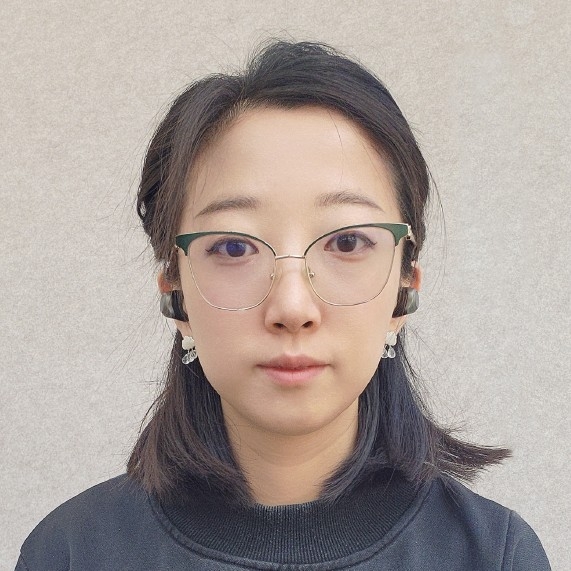
Liqun Guan: The science of healthy homes
Liqun knows something most people don't connect to science: your home affects everything.
Growing up in northern China, she saw how unhealthy homes affected comfort, wellbeing, and even how well children could learn.
Now she's a PhD student at the School of Architecture researching energy-efficient homes in Australia. Her programme, Healthier Homes for Future Scientists, will bring that knowledge to girls through hands-on workshops.
"I hope young people begin to see science as part of their everyday lives rather than something distant or untouchable," says Liqun.
"I want communities where women and girls feel more confident to pursue science pathways and feel supported during critical points in their lives, so they are more likely to persist."
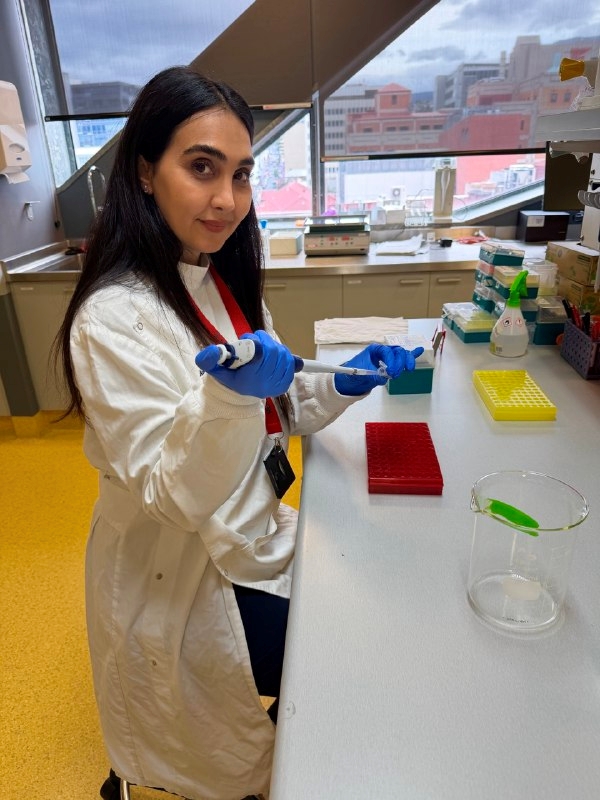
Kimiya Padidar: Understanding women's hearts
Kimiya's path to research started over ten years ago, volunteering in underserved communities and supporting women through basic healthcare and education. Seeing health inequality up close shaped her commitment to women's heart health.
Now she's at the Menzies Institute for Medical Research, investigating why pregnancy complications increase women's risk of heart disease later in life.
Her grant work brings that commitment full circle. She'll help equip a laboratory in remote regions of Iran and run workshops combining biology experiments with heart health education.
"I hope young people, especially girls, gain confidence that science can be a powerful tool to care for others and improve lives," says Kimiya.
"I want young girls to know that they belong in science, even when the path feels challenging. When girls see someone like them in research, it builds confidence and hope."
The next generation
Most research grants fund projects. The Inspiring Women in STEMM grant funds people.
Started in 2018 with a Vice-Chancellor's Award and now supported by Inspiring Tasmania and the University of Tasmania, it gives fellows not just money for their programmes, but media training and support to become science communicators and leaders.
Over the coming months, all three will be running their programmes in Ghana, China, and Iran, as well as working with schools in Tasmania.
On this International Day of Women and Girls in Science, their message is simple. The future of science isn't just about the next breakthrough. It's about who gets to make it. And these three researchers are making sure the next generation knows: it could be you.
The 2026 theme for International Day of Women and Girls in Science is "From Vision to Impact: Redefining STEM by Closing the Gender Gap."