


Bachelor of Design student Imogen Coote didn’t want to use her degree to just sell stuff to people.
So, instead, she used it to encourage people to share, while fighting food insecurity at the same time.
“Since I was pretty little, I've always wanted to do design,” she said.
“I’d be flopping around between ‘I'm going to be a fashion designer, I'm going to be a product designer, I'm going to do packaging’, and just all the graphic design stuff.”
As she started looking into potential careers, though, she realised she wanted to do something a little more meaningful than the traditional commercial design pathways.
“In terms of my personal beliefs … a lot of the employment opportunities are very based around marketing and I don't like the idea of just convincing people to consume and buy things – I don't really believe that ethos.”
Originally from Sydney, she was also determined to escape big city life somehow. So, moving to Hobart to study her Bachelor of Design ticked both boxes nicely.
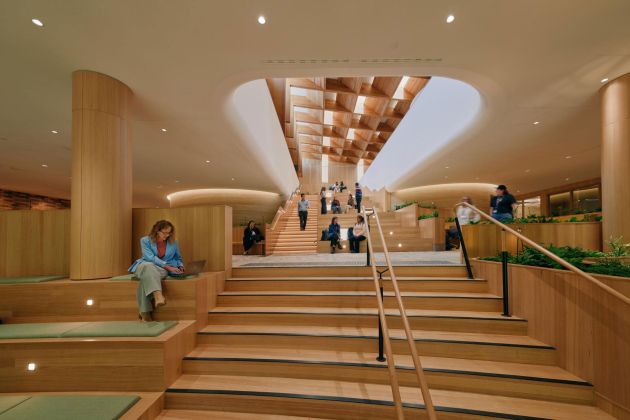
Discovering that the University of Tasmania’s course allowed her to explore less traditional areas of design was also a big bonus for Imogen, who was interested in designing public spaces that could actively encourage community interaction.
“I remember, as a kid, setting up this community fairy garden in the local park. Just a bunch of fairies set up in the trees.
“And it was so fun, because every time you go past that tree, other families have added more fairies to create this magical place.
“It's so rewarding to see people just adding on to it, interacting with it, like, making it theirs, contributing to it.”
During her studies, Imogen took an interest in the issue of food sovereignty and set out to design some sort of public infrastructure that would make it easier for people to share and access food as a community.
“It was really apparent to me that so much of the produce that is grown in Tasmania is luxury goods,” she said. “Things that the majority of people can't afford to eat every day, like farmed salmon and cheeses.
“But we're actually surrounded by abundance, even though the food industry itself is really quite driven on creating the sense of scarcity.”
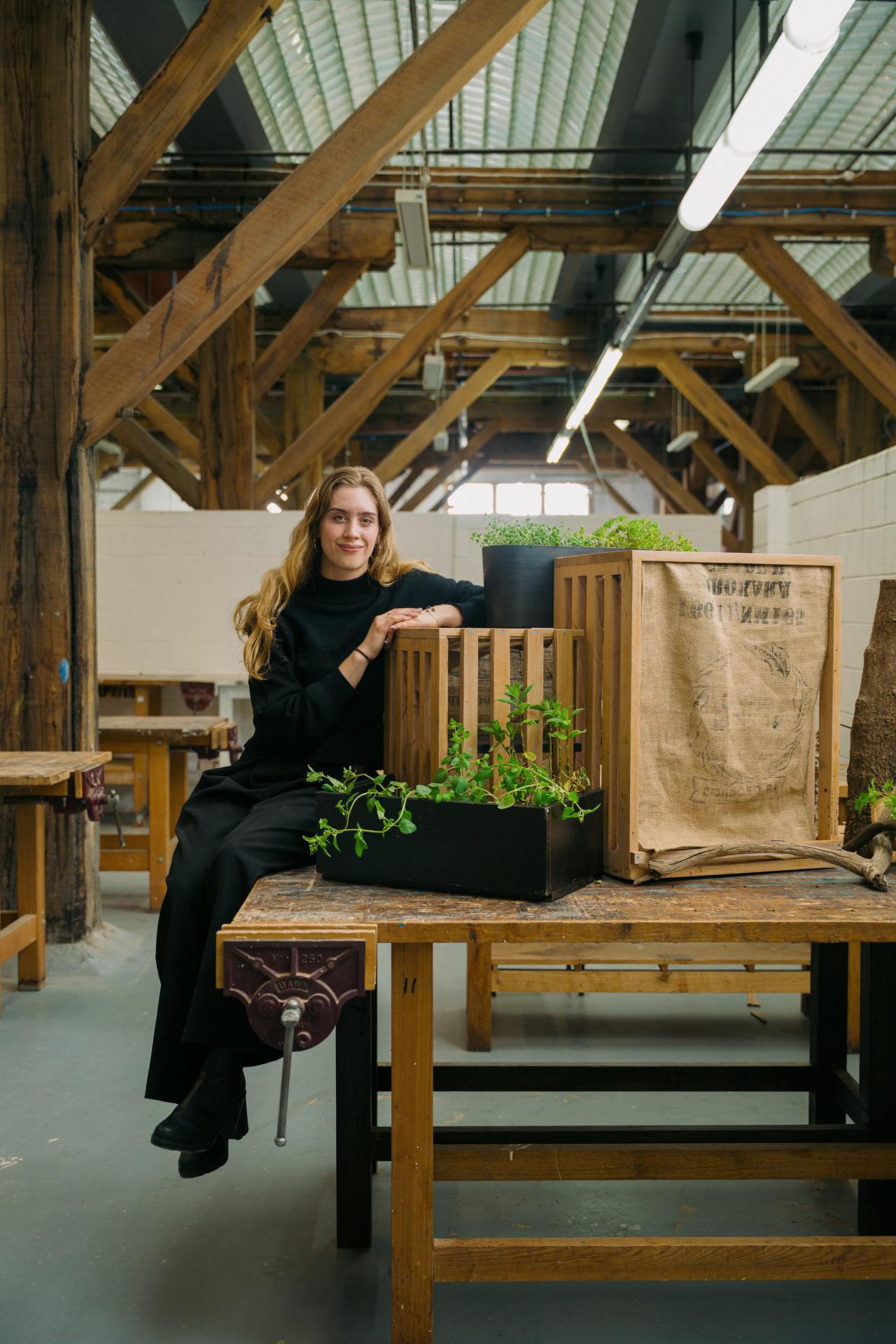
The solution she created is called the Giving Tree and was inspired by other initiatives like community pantries.
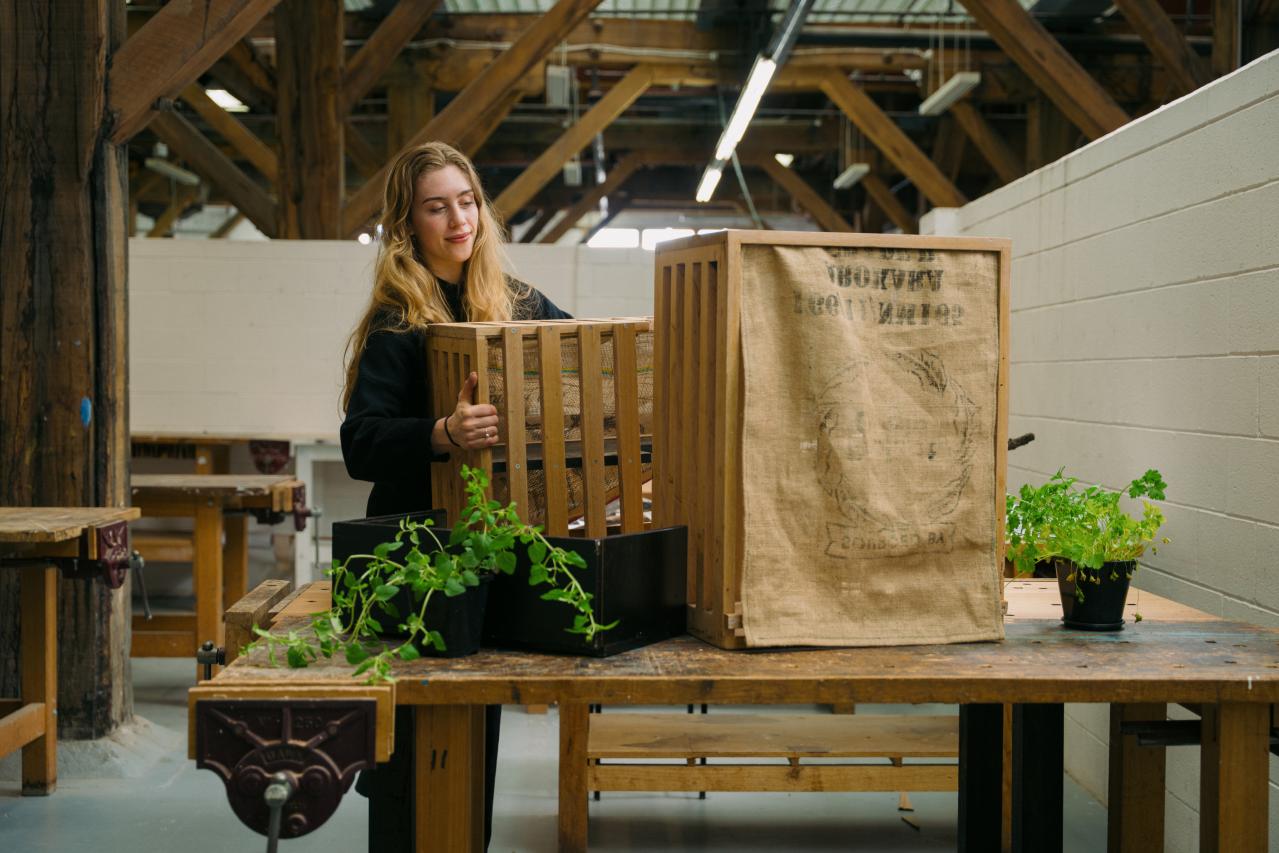
It is system of modular, self-cooling crates to store produce from community gardens in public spaces, while also presenting it in a way that makes it more enticing for people to take what they need.
“When I was staying in student accommodation we had community gardens, but I didn't feel comfortable harvesting from them, because I didn't want to take too much, so I just kind of avoided them.
“The Giving Tree is an invitation to access the produce from the community garden, by creating a central point, like a meeting point, so it connects community.”
Imogen’s system uses the science of an old-fashioned Coolgardie safe: the wooden frame is shaded with wet hessian, which constantly wicks moisture up from a water source, keeping the food cool inside as the moisture evaporates.
The individual segments are easy to transport and can be stacked or arranged in a variety of ways to suit every individual location.
The Giving Tree project illustrates the high value Imogen places on face-to-face human experience, especially in an era of small screens and online interaction. And she believes we need to design better three-dimensional spaces in order to cultivate those real-life social habits again.
“Everything is digital now and I’m kind of sick of sitting on computers, especially since covid,” she said.
“That’s one of the reasons I moved to Hobart as well – I didn’t want to do uni on a computer. I wanted face-to-face time with actual people.
“My dad was a carpenter, and my grandfather was an architect, and they worked together to build houses. And it’s my dream now to build public spaces, infrastructure and parks.
“In designing and organising urban spaces I think there’s so much room to really shape the world and community that we live in.”
Bachelor of Design
Learn more about the Bachelor of Design and the ways you can use your creativity to help solve some of society's most pressing challenges.
Learn more